Artwork
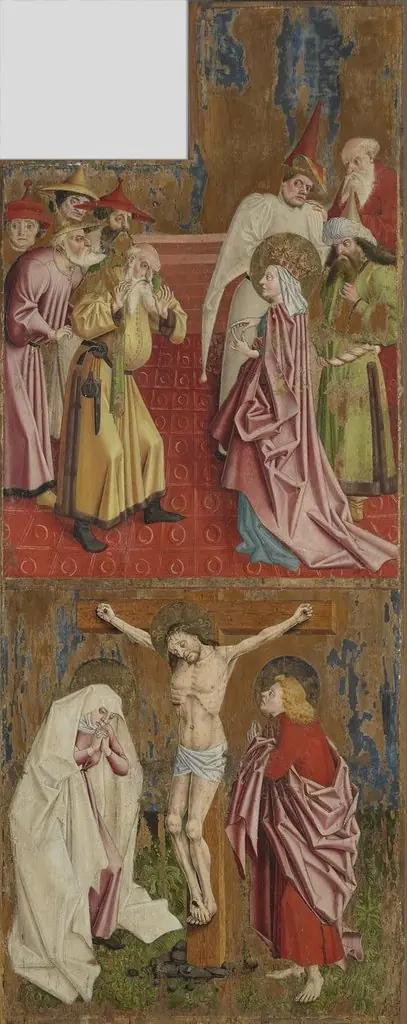
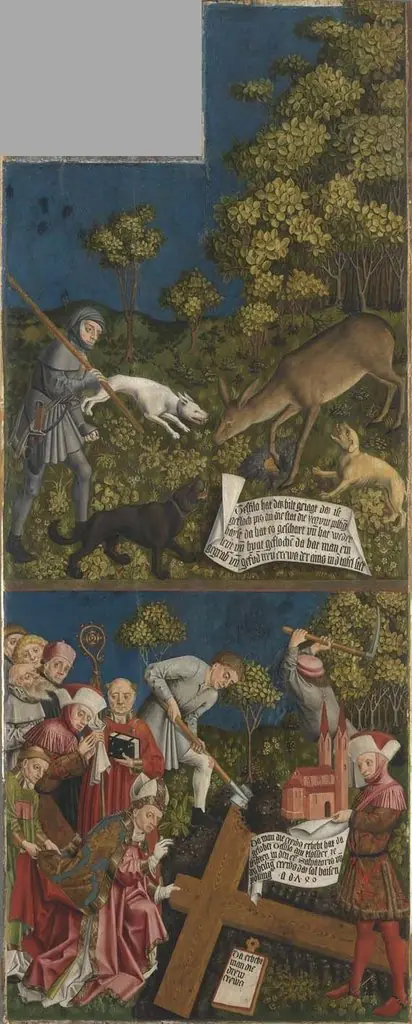
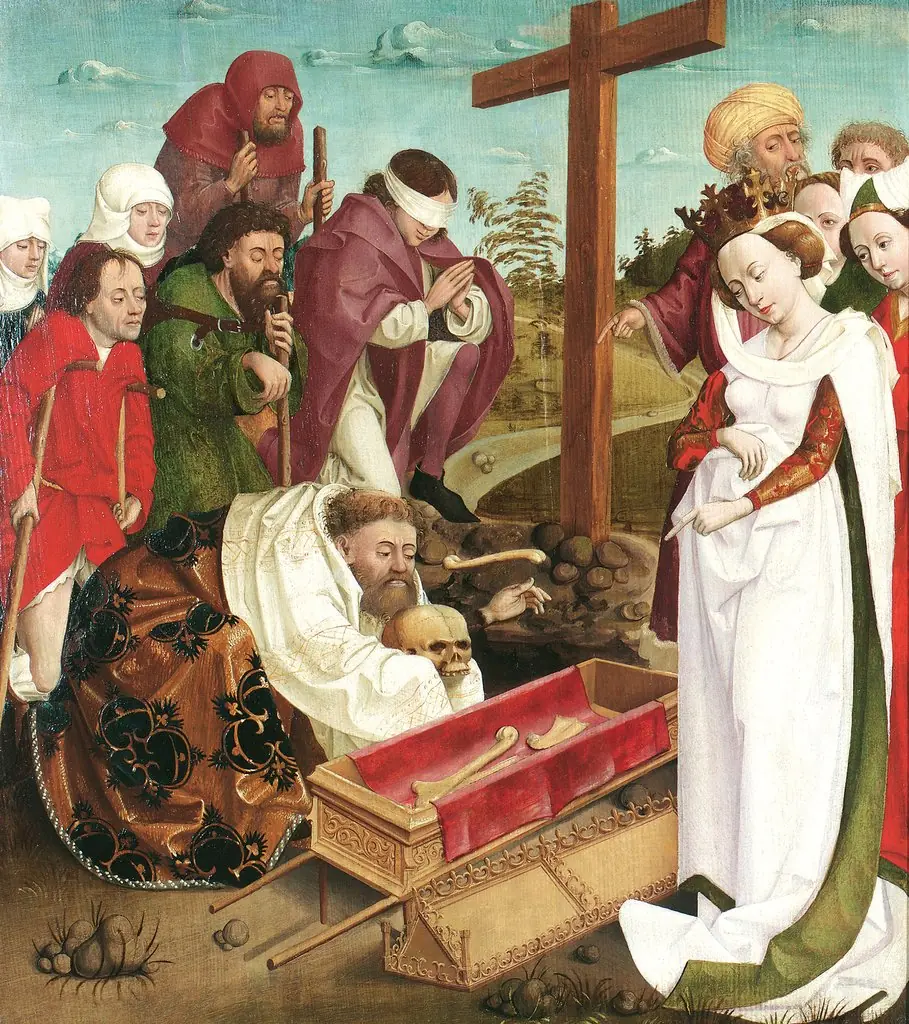
Kreuzaltar, Flügelaußenseite: Kaiserin Helena findet das wahre Kreuz Christi und Erprobung des Kreuzes
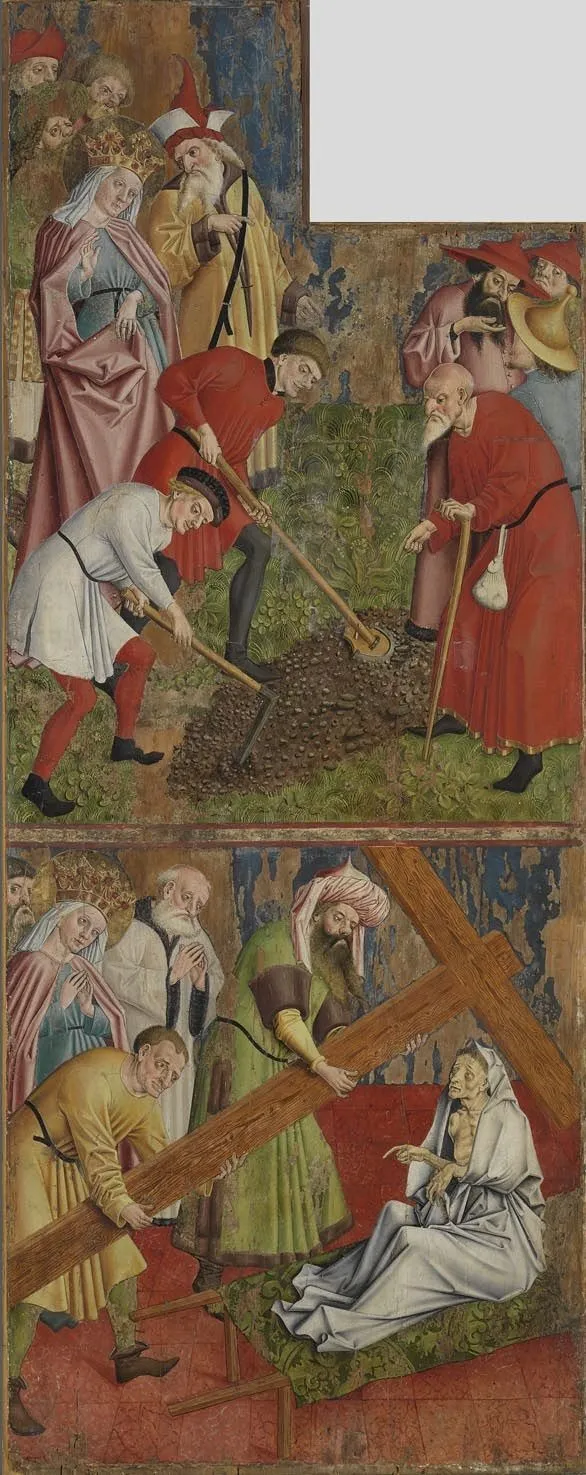
Kreuzaltar, Flügelaußenseite: Kaiserin Helena findet das wahre Kreuz Christi und Erprobung des Kreuzes is an unspecified painting by the Northern Renaissance artist Master of the Polling Panels. It dates from 1450 and is held in the collection of the Bavarian State Painting Collections.
About this work
Overview
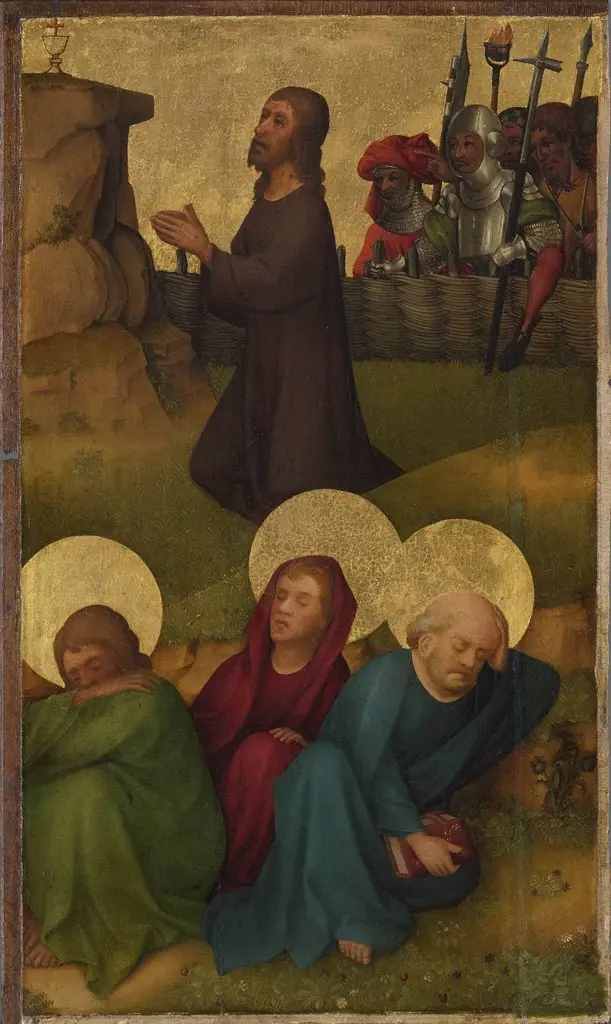
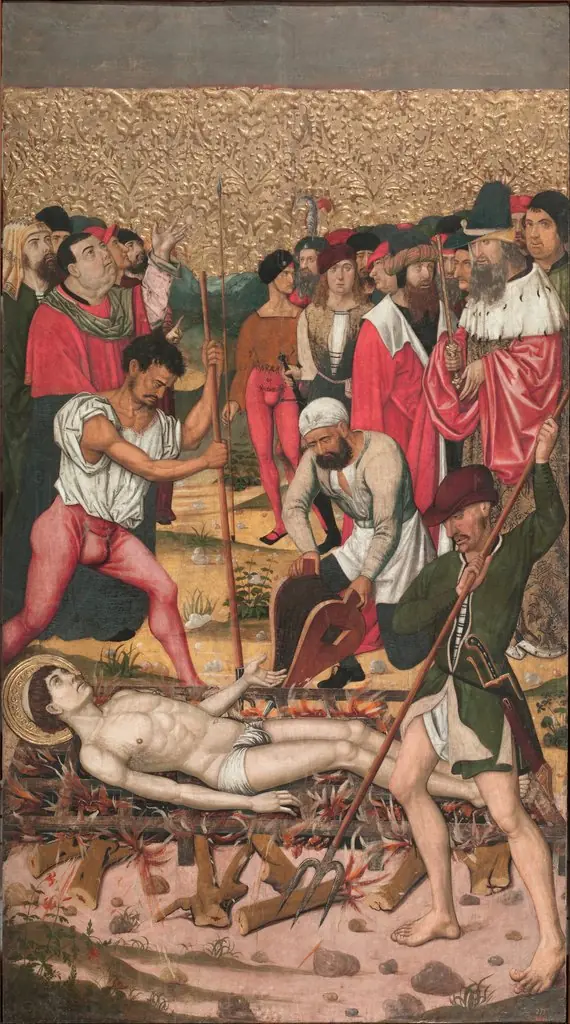
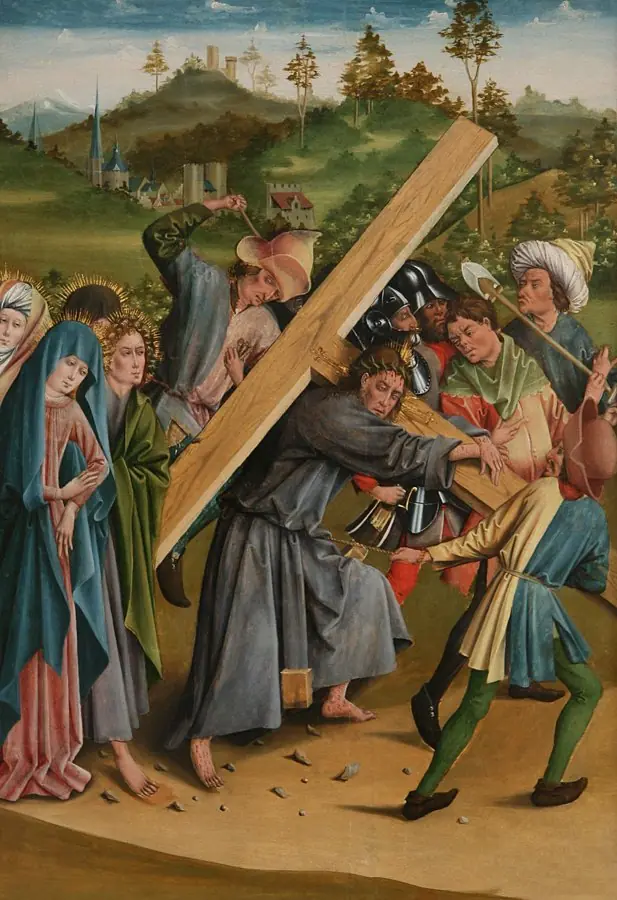
Created around 1450, this panel painting belongs to the oeuvre of the anonymous Master of the Polling Panels. It forms part of a larger altarpiece and is currently exhibited in Munich’s Alte Pinakothek. The work presents two narrative scenes arranged vertically, each populated by numerous figures engaged in distinct actions related to the discovery and testing of the True Cross.
Subject & Meaning
The upper register depicts Empress Helena’s entourage, clothed in vivid garments, collectively searching for the relic of Christ’s cross.
The upper register depicts Empress Helena’s entourage, clothed in vivid garments, collectively searching for the relic of Christ’s cross. A man in red appears to direct the effort, while others dig and support the excavation. In the lower register a fallen figure lies on the ground as other participants transport the wooden cross and associated tools, suggesting the moment of the cross’s verification and the solemnity of its handling.
Technique & Style
The composition employs a flat, bold palette dominated by reds, blues, and greens, giving the scene a decorative quality typical of mid‑15th‑century northern painting. Figures are rendered with a stiff, almost sculptural rigidity, their faces solemn and their postures reminiscent of wooden cut‑outs. The background is densely populated with miniature observers, adding narrative depth without disrupting the overall planar emphasis.
History & Provenance
Attributed to the Master of the Polling Panels, an artist active in the mid‑1400s whose identity remains unknown, the panel has been part of the Alte Pinakothek’s collection since the museum’s early acquisitions. Its survival in relatively good condition allows scholars to study the workshop practices and devotional imagery prevalent in Germanic regions during the late Gothic period.
Artist & collection