Artwork
St. Peter, St. Paul, St. George, and St. James the Greater
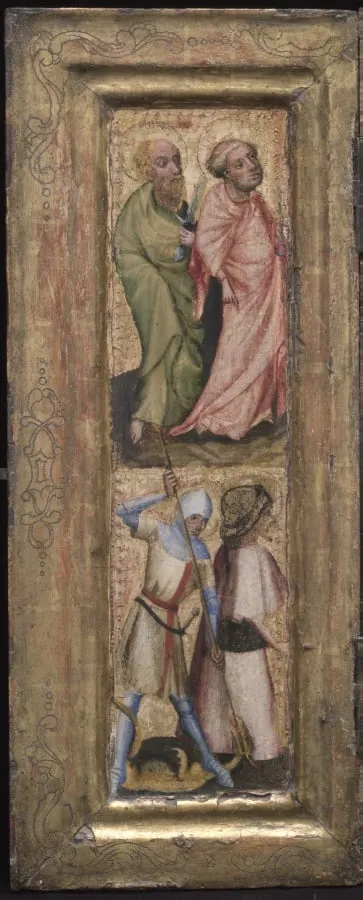
St. Peter, St. Paul, St. George, and St. James the Greater is an unspecified painting by the Early Renaissance artist Unknown. It dates from 1424 and is held in the collection of the Cleveland Museum of Art.
About this work
Overview
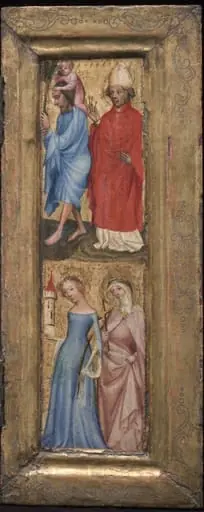
This panel forms one wing of a compact triptych, originally designed as a portable devotional object for private worship rather than a public altar. The composition presents four saints—Peter, Paul, George, and James the Greater—arranged side by side against a luminous gold field, each distinguished by a halo and an attribute, either a book or a sword.
Subject & Meaning
The selected saints embody key virtues of early Christian tradition: Peter and Paul represent apostolic authority, George signifies martial piety, and James the Greater denotes pilgrimage and martyrdom. Their close grouping and individualized symbols suggest a personalized intercession, inviting the owner to contemplate a range of spiritual protections within a single, intimate visual setting.
Technique & Style
The painter employs a vivid palette of reds and blues for the garments, contrasting sharply with the metallic sheen of the gold background. Halos are rendered as thin, reflective plates, emphasizing a luminous sanctity. The figures are rendered with a flat, iconic quality typical of small devotional panels, yet the careful modeling of drapery conveys a subtle three‑dimensionality.
History & Provenance
Created for a domestic setting, the panel likely belonged to a portable wooden altarpiece that could be folded and carried like a prayer book. Its modest size and intimate scale indicate a private patron, possibly a wealthy household in the Salzburg region, where similar personal altarpieces were common in the late medieval period.
Artist & collection

 Domestic Scene
 Giacomo and Cardinal Marco, investing Andrea, Abbot of San Zeno, with his Benefice
 The Nymph of Fontainebleau
 Portrait of a Woman
 Madonna and Child with Saints in the Enclosed Garden
 Venus and Minerva
 Family Group of Four on Sofa
 Wall painting from Room H of the Villa of P. Fannius Synistor at Boscoreale
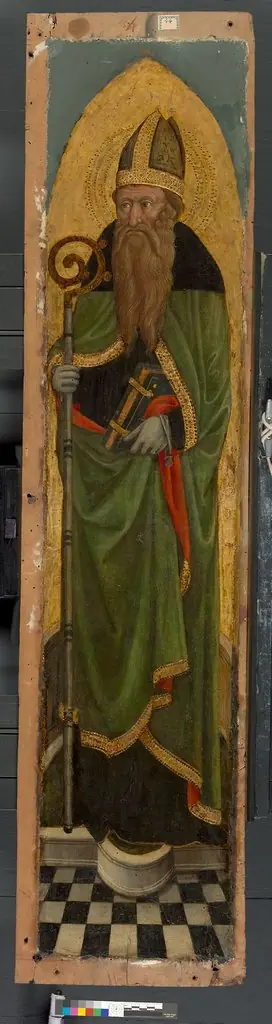 Bishop Saint from an Augustinian altarpiece
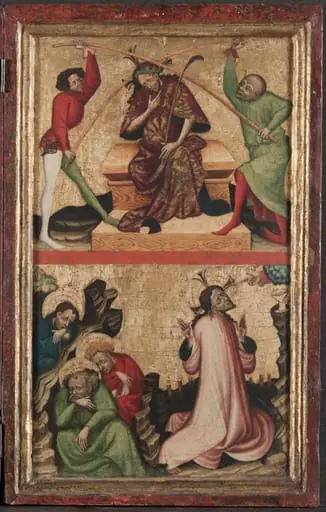 Diptych with the Passion of Christ (right wing): Crowning with Thorns and Agony on the Garden
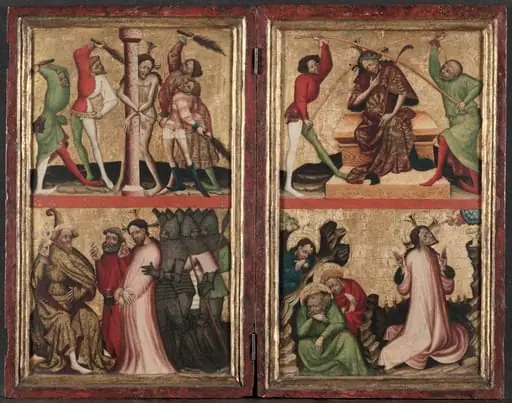 Diptych with the Passion of Christ
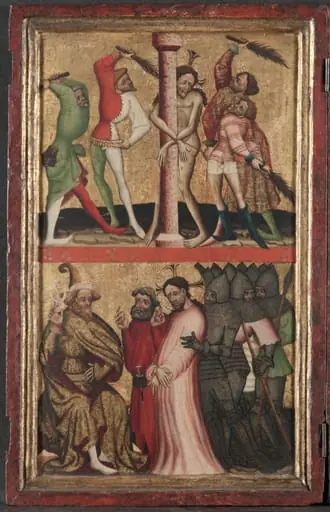 Diptych with the Passion of Christ (left wing):Flagellation and Christ Before Pilate
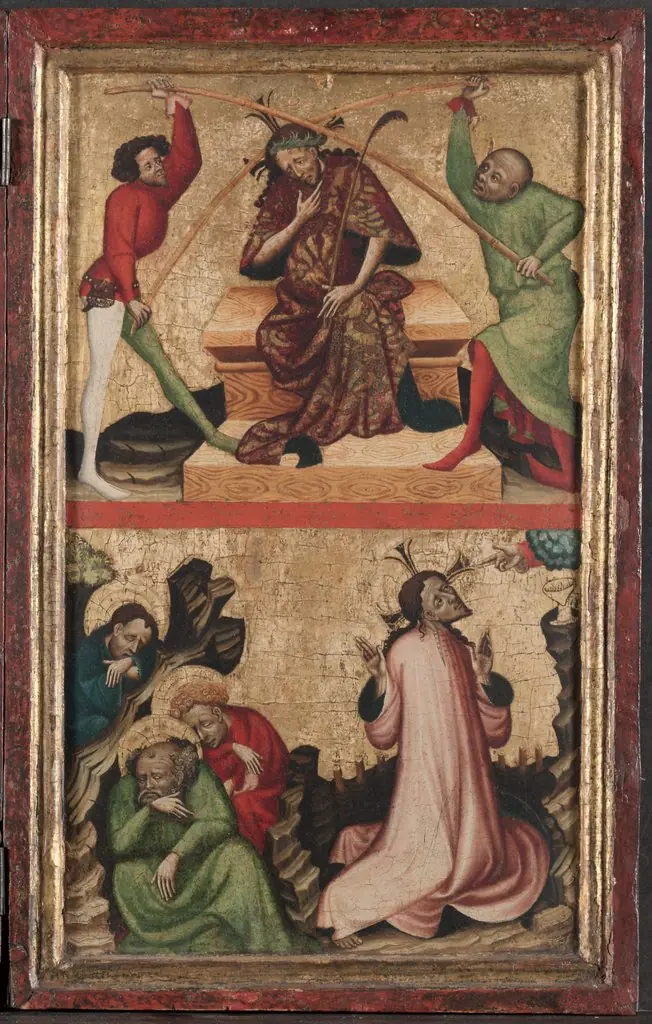 Diptych with the Passion of Christ (right wing): Crowning with Thorns and Agony on the Garden
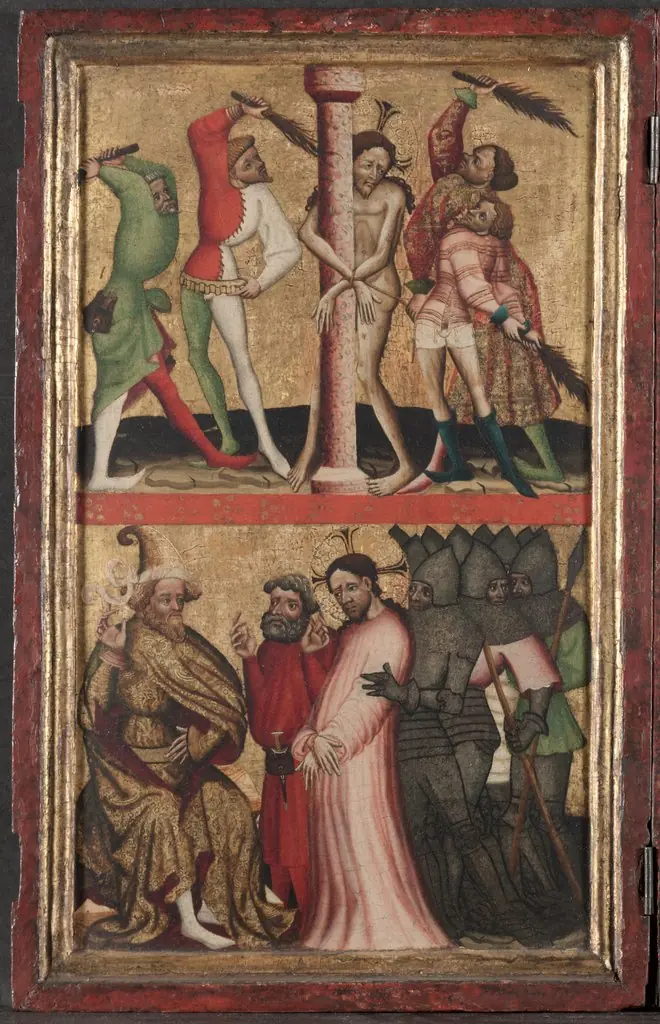 Diptych with the Passion of Christ (left wing):Flagellation and Christ Before Pilate
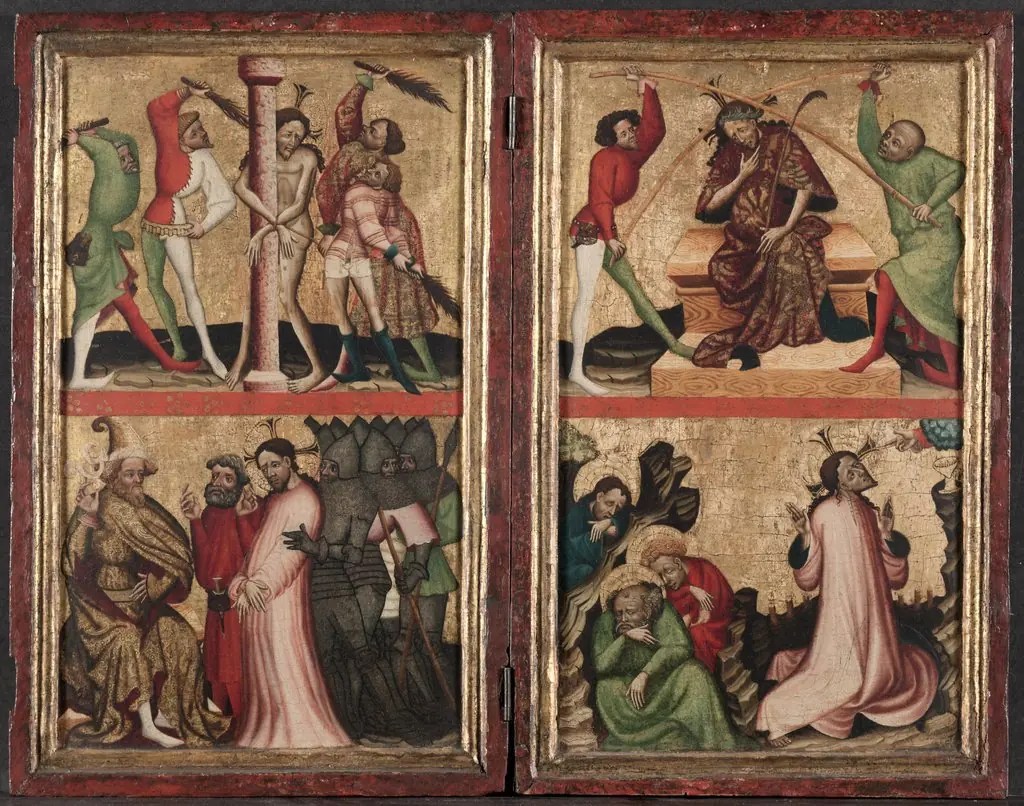 Diptych with the Passion of Christ
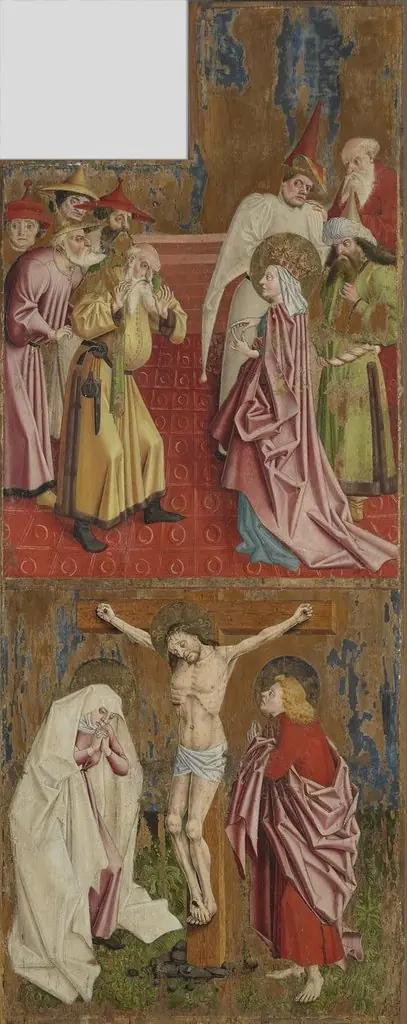 Kreuzaltar, Flügelaußenseite: Die Kaiserin Helena befragt die Juden und Kreuzigung Christi
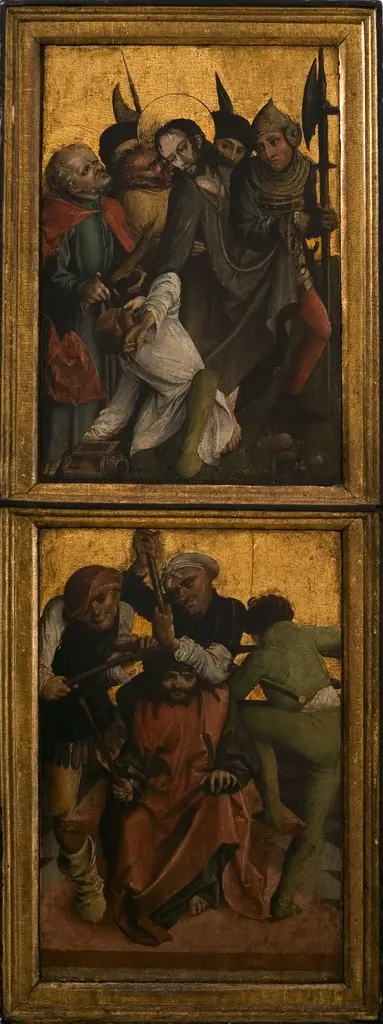 Annunciation, Adoration of the Shepherds (carved obverse); Capture of Christ, Crowning with Thorns (painted reverse). Inner left wing of the altar retable from Lusina
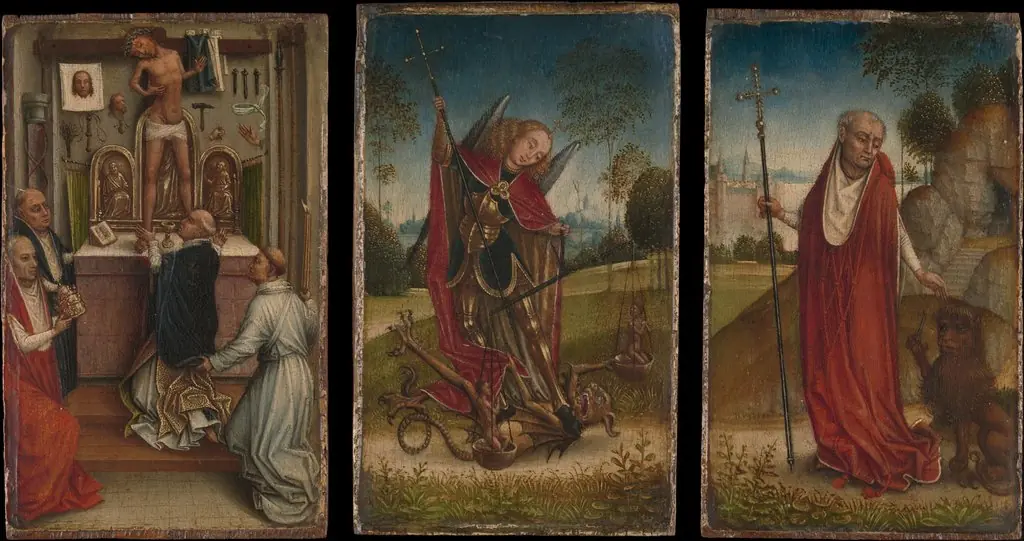 Saint Michael; The Mass of Saint Gregory; Saint Jerome
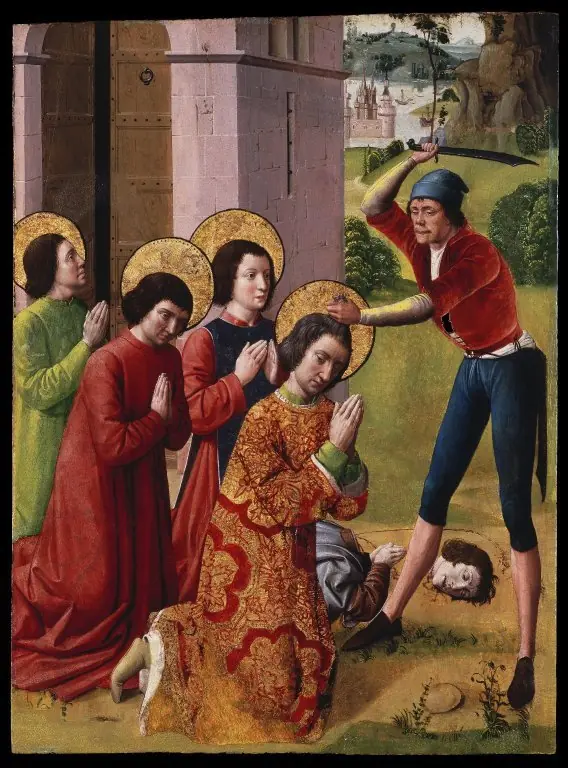 Martyrdom of Saints Cosmas and Damian with their Three Brothers, part of an altarpiece
 St. Christopher, St. Erasmus, St. Barbara, and another female saint