Artwork
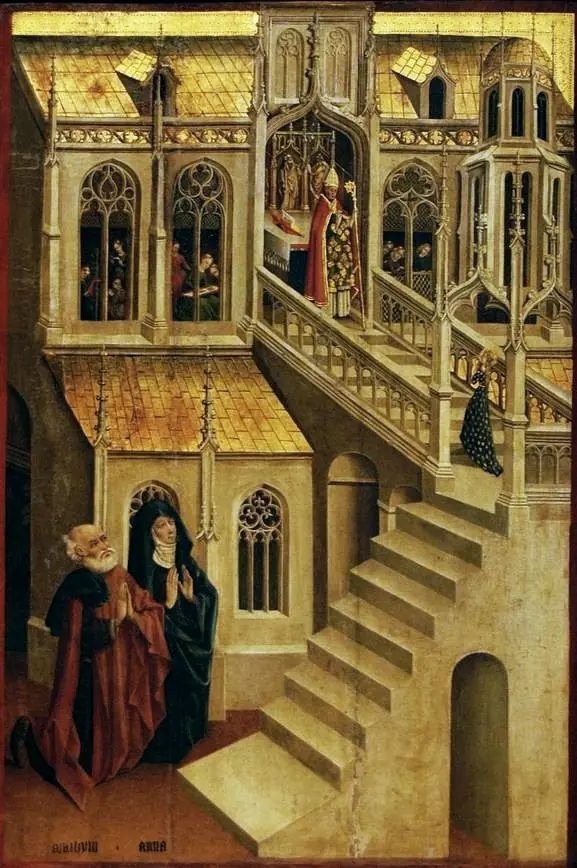
The Presentation of the Virgin Mary in the Temple of Jerusalem
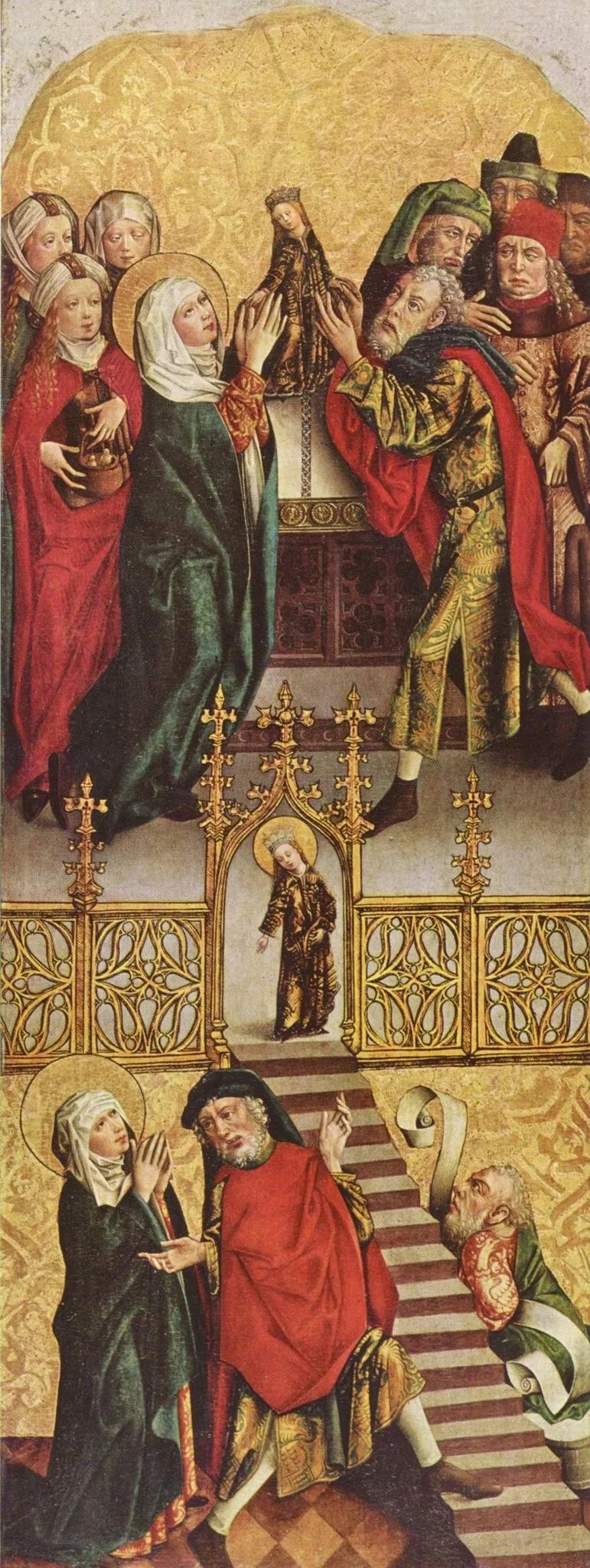
The Presentation of the Virgin Mary in the Temple of Jerusalem is a wood painting by the Northern Renaissance artist Master of the Regular Canons' Altarpiece. It dates from 1450 and is held in the collection of the Bavarian State Painting Collections. Created circa 1450, this wooden panel portrays the biblical episode of the Virgin Mary’s presentation in the Jerusalem temple.
About this work
Overview
Created circa 1450, this wooden panel portrays the biblical episode of the Virgin Mary’s presentation in the Jerusalem temple.
Created circa 1450, this wooden panel portrays the biblical episode of the Virgin Mary’s presentation in the Jerusalem temple. Executed by the anonymous Master of the Regular Canons’ Altarpiece, the work belongs to the Northern Renaissance tradition and is presently housed in Munich’s Alte Pinakothek. The composition gathers several figures within an opulently gilded interior, emphasizing the solemnity of the ritual.
Subject & Meaning
The scene captures the moment when a young Mary, accompanied by a child, is led to a modest altar within a richly decorated sanctuary. Attendants in vivid red, gold and green robes observe and gesture, their restrained expressions underscoring the religious significance of the dedication. The painting thus reflects medieval devotional practices that linked the Virgin’s early life to themes of purity and covenant.
Technique & Style
Executed in tempera on a wooden panel, the work employs extensive gold leaf to illuminate the architectural setting, creating a warm, luminous atmosphere. Figures are rendered with calm, linear precision typical of Germanic painting of the period, while the use of bright pigments and careful modeling of drapery convey both material richness and spiritual gravitas.
History & Provenance
The artist, active in the Erfurt region during the fifteenth century, remains unidentified beyond the notname derived from a related altarpiece. The panel entered the collection of the Alte Pinakothek in the 19th century, where it has been conserved as part of the museum’s representation of early Northern Renaissance religious art.
Artist & collection
Artist
Master of the Regular Canons' Altarpiece
The Master of the Regler Altar (German: Meister des Regler-Altars), also known as the Master of the Erfurt Regler Altarpiece, was a German painter active in the area around Erfurt during the fifteenth century.

 Adoration of the Kings
 Retablo de la Epifanía
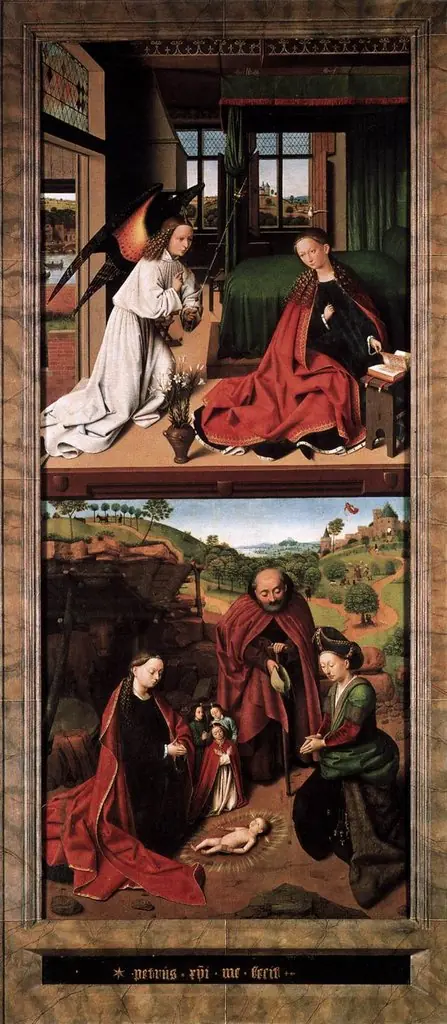 The adoration of the Christ Child; in the background the annunciation to the shepherds
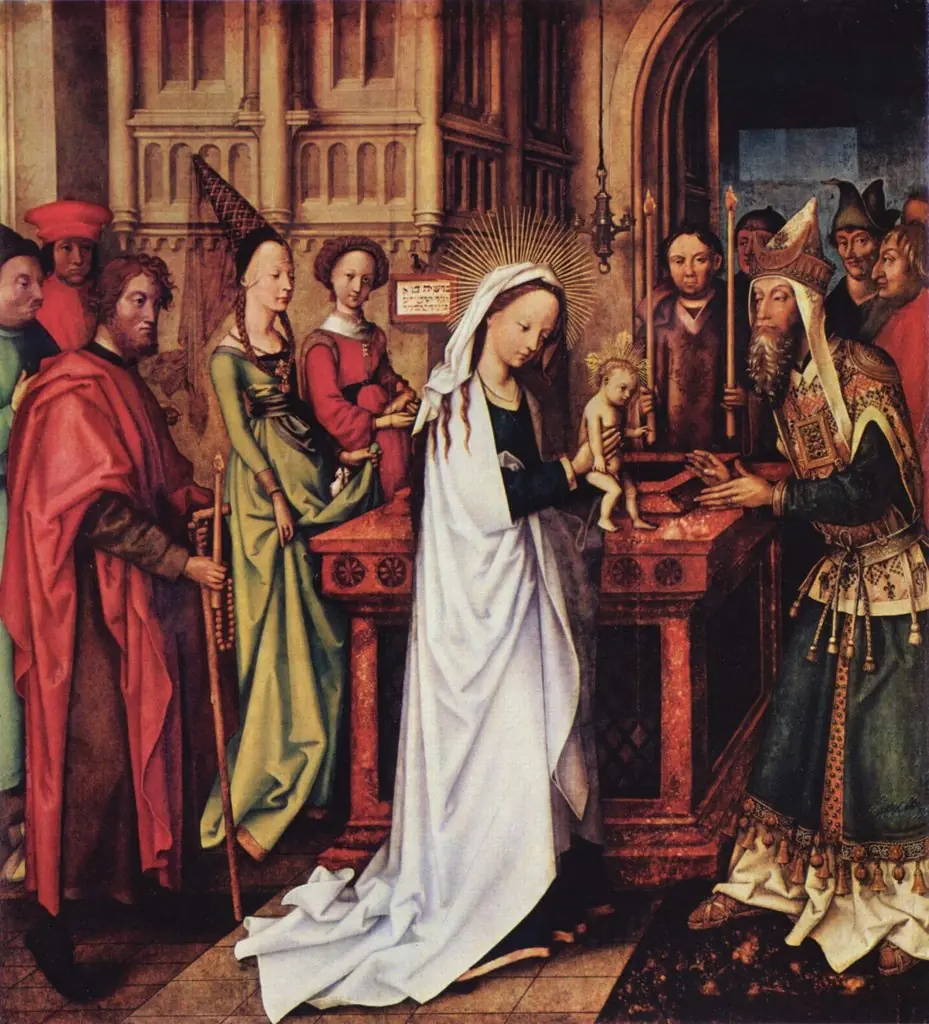 Presentation of Christ Child in the temple
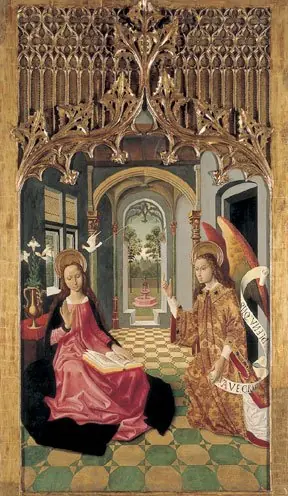 The Annunciation (Meister from Canapost)
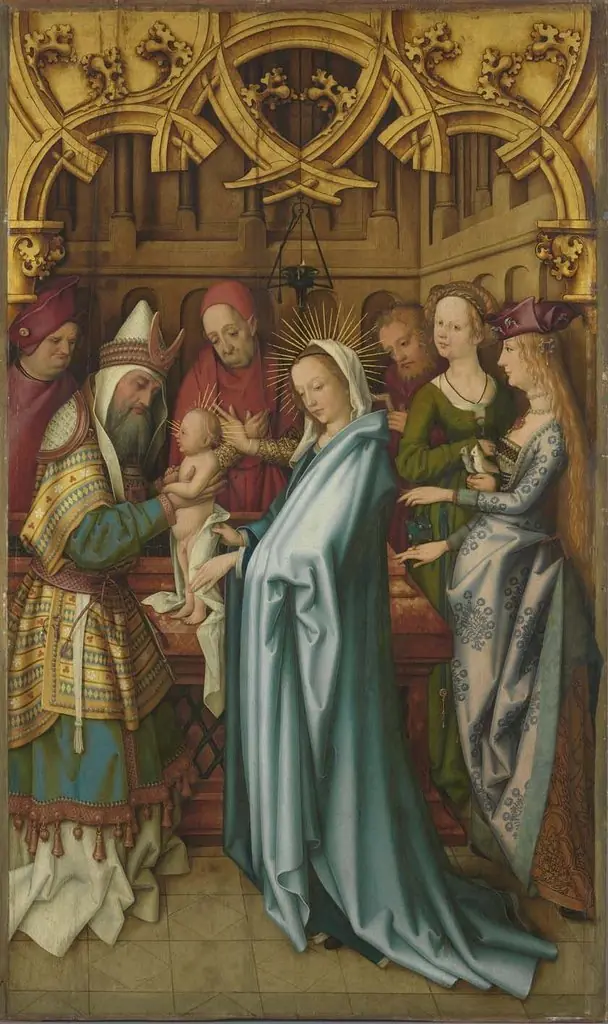 Kaisheimer Altar: Darbringung im Tempel
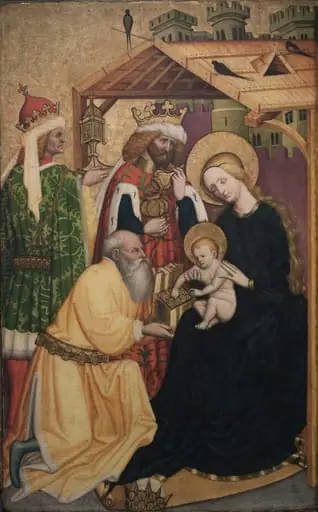 Adoration of the Magi
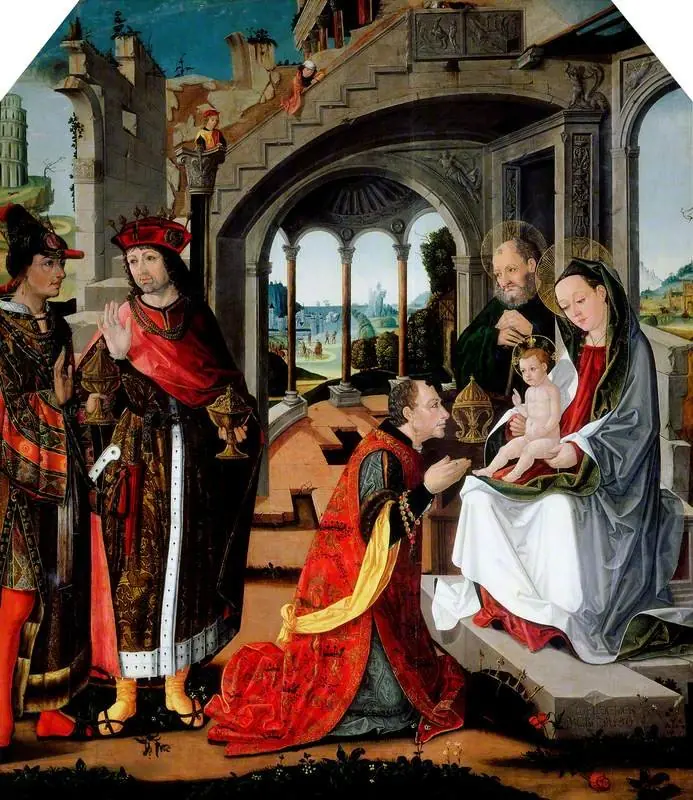 The Adoration of the Magi
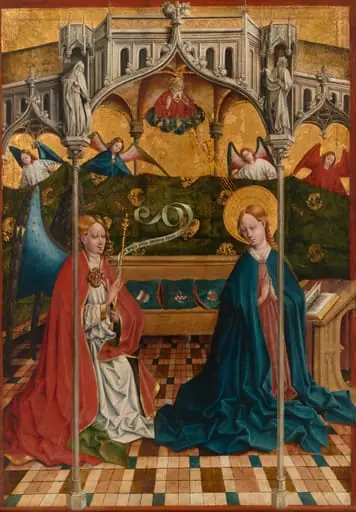 The Annunciation
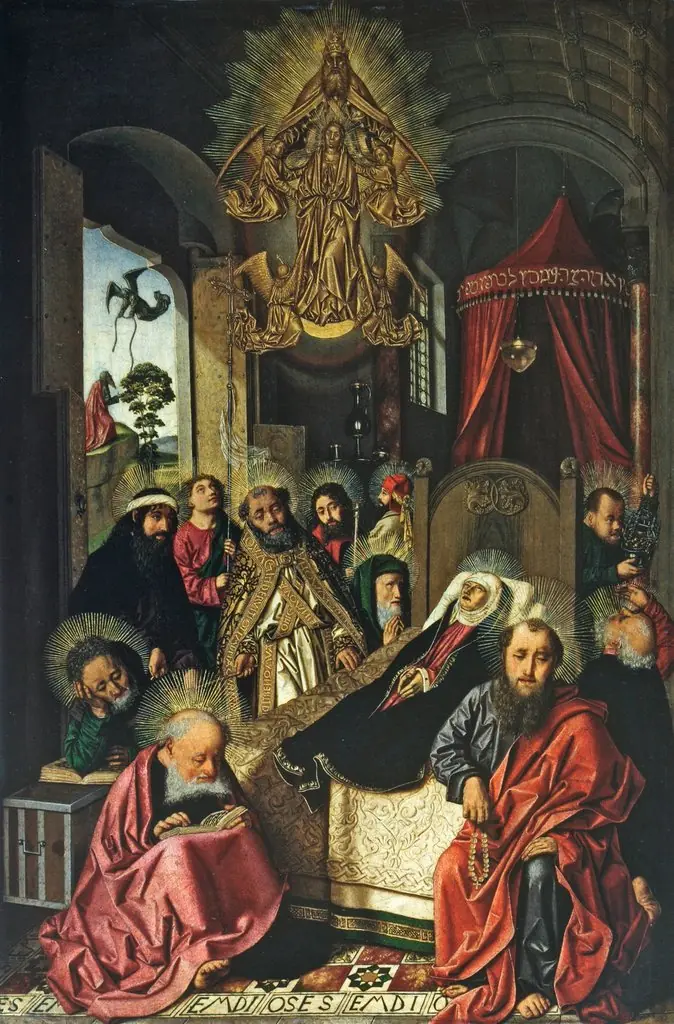 Death and Assumption of the Virgin Mary
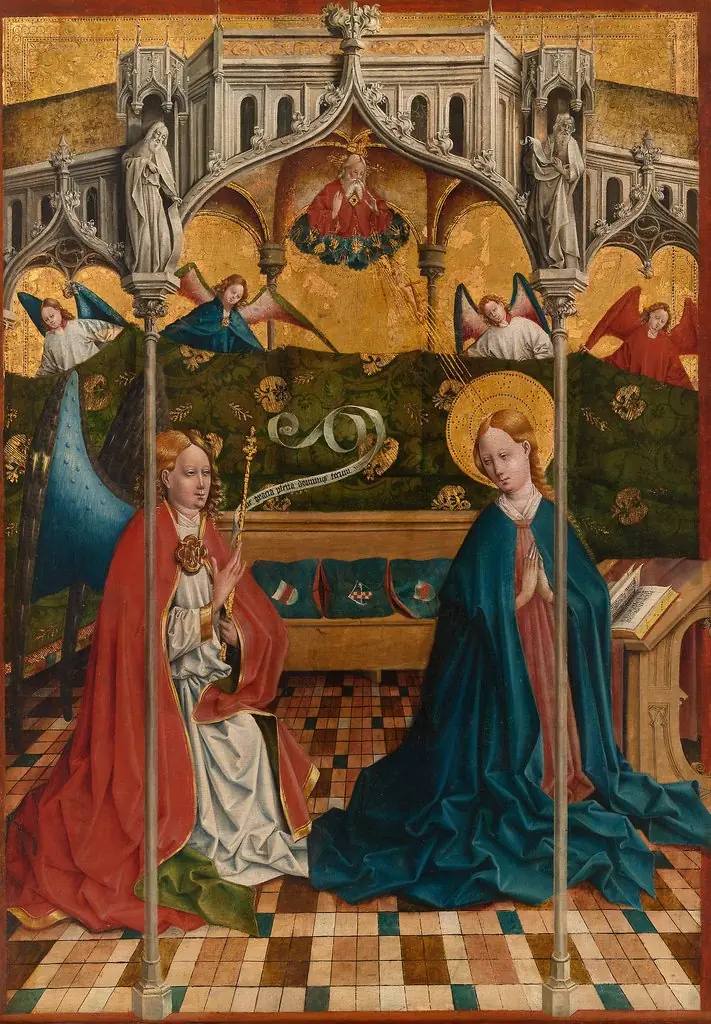 The Annunciation
 The Presentation of the Virgin Mary in the Temple of Jerusalem