Artwork
The Annunciation (Meister from Canapost)
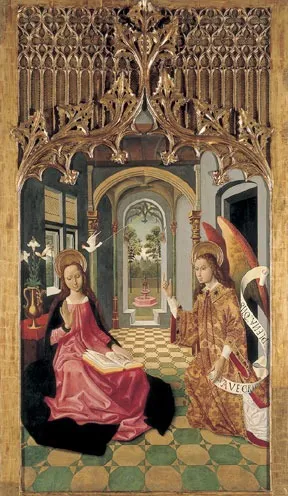
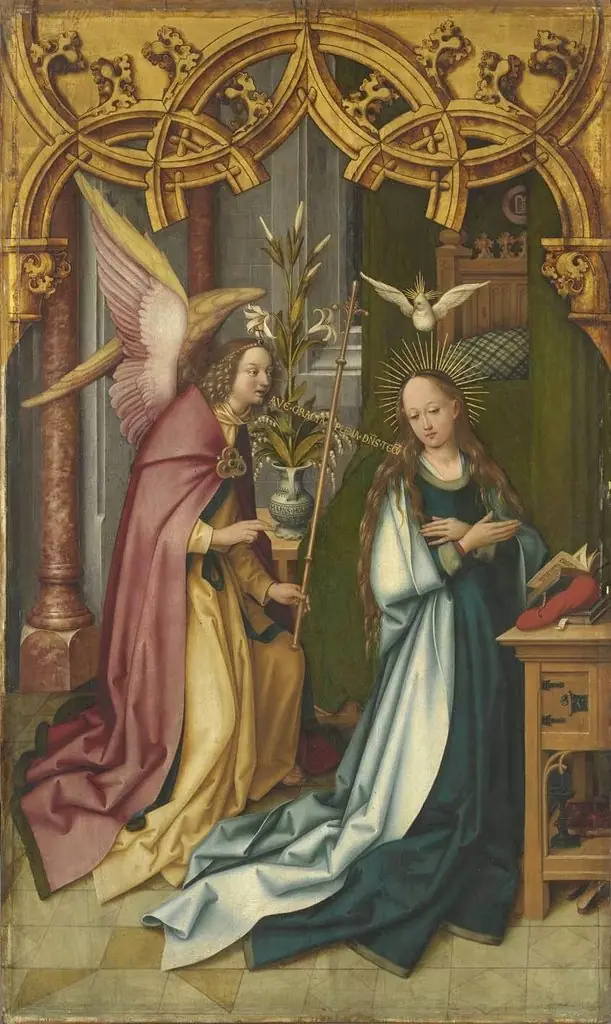
The Annunciation (Meister from Canapost) is an oil painting by the Northern Renaissance artist Master from Canapost. It dates from 1498 and is held in the collection of the Museu Nacional d'Art de Catalunya.
About this work
Overview
Created in 1498 by an anonymous artist known as the Master from Canapost, this plaster painting illustrates the Annunciation, a key moment in Christian theology. It is preserved at the Museu Nacional d'Art de Catalunya and reflects the devotional art traditions of late medieval Catalonia. The composition is contained within a modest interior space, emphasizing spiritual intimacy over grandeur.
Subject & Meaning
The inclusion of a book suggests Mary’s piety and readiness to receive revelation, reinforcing themes of obedience and sacred knowledge.
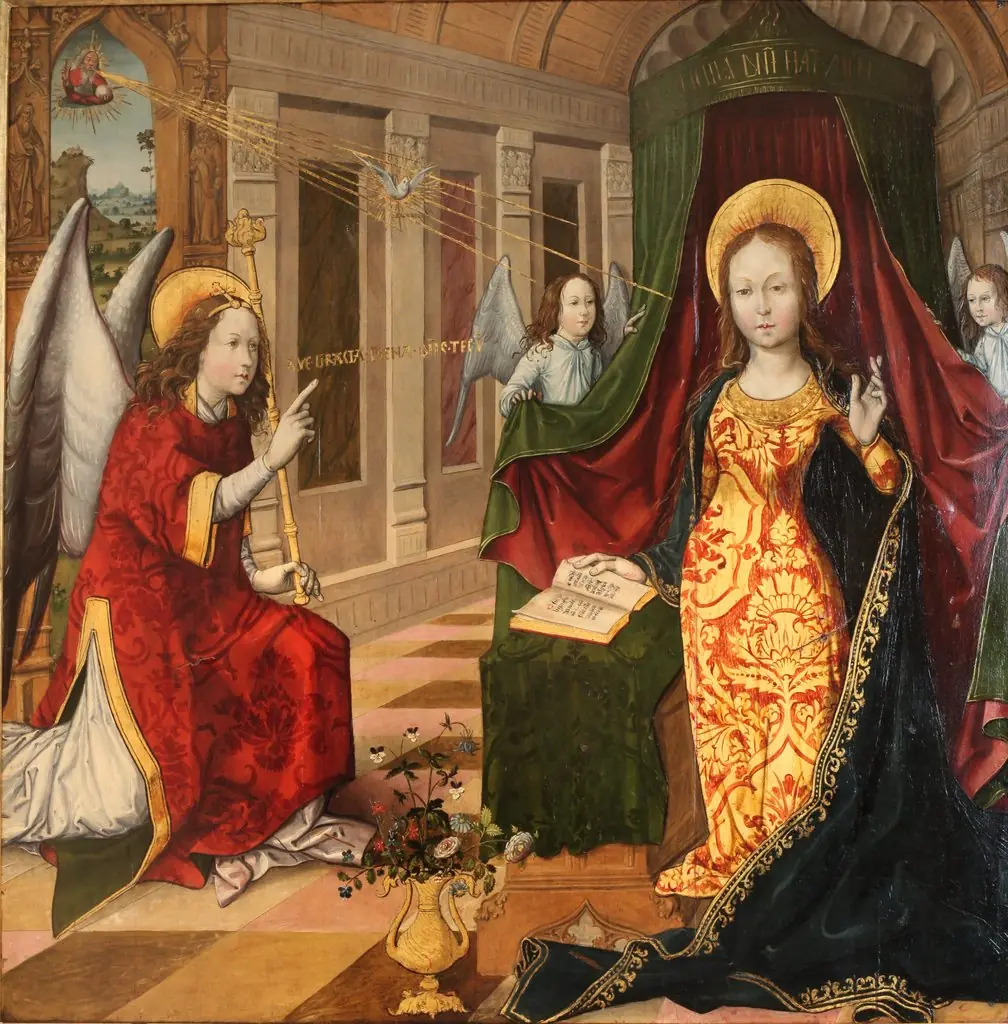
The scene captures the moment the archangel Gabriel announces to Mary that she will bear the Son of God. Mary, seated and reading, responds with quiet contemplation, her posture conveying humility. Gabriel, standing with a banner inscribed 'Ave Maria,' delivers the divine message. The inclusion of a book suggests Mary’s piety and readiness to receive revelation, reinforcing themes of obedience and sacred knowledge.
Technique & Style
The artist employs subtle chiaroscuro to model forms and suggest volume within a shallow space. Colors are restrained—Mary’s red robe and black cloak contrast with Gabriel’s golden garment, drawing attention to their roles. The tiled floor and arched doorway provide spatial depth, while the window reveals a distant landscape, linking the sacred event to the natural world. The style is linear and deliberate, typical of regional Gothic traditions.
History & Provenance
The painting originated in the region of Canapost, likely from a small chapel or private devotional setting. It entered the collection of the Museu Nacional d'Art de Catalunya in the early 20th century, having been preserved through centuries of religious and political change. Its survival as a plaster work on panel is unusual, suggesting local materials and techniques were favored over more costly media.
Context
Made during a period of intense religious devotion in Catalonia, the painting reflects the influence of Flemish and Italian devotional imagery adapted to local tastes. Its intimate scale and domestic setting align with the rise of personal prayer practices in the late Middle Ages. Unlike grand altarpieces, this work was likely intended for private meditation rather than public liturgy.
Legacy
Though the artist remains unidentified, the painting stands as a representative example of late medieval Catalan religious art. It contributes to the understanding of regional styles that blended Northern European detail with Iberian simplicity. Its preservation allows scholars to study how devotional themes were visually communicated in smaller, non-urban contexts across medieval Europe.
Artist & collection
Artist
This artist left behind only a few fragile plaster reliefs, all made in one small Spanish village in the late 1400s.

 The Annunciation
 The Annunciation
 The Annunciation
 The Annunciation
 The Annunciation
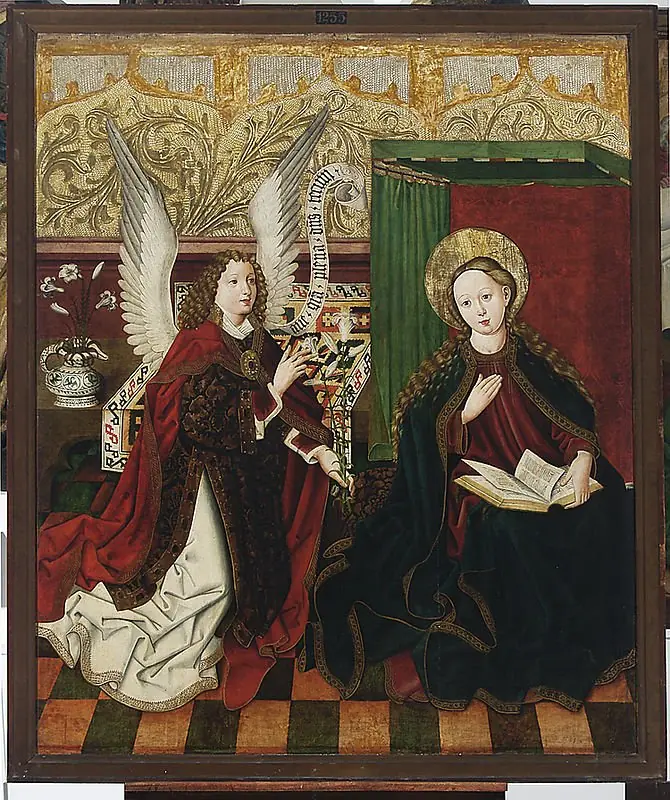 Legnica polyptych - left wing internal - upper panel - obverse: Annunciation; reverse: St Lawrence, St Vincent the Levite. St John the Baptist
 The Annunciation
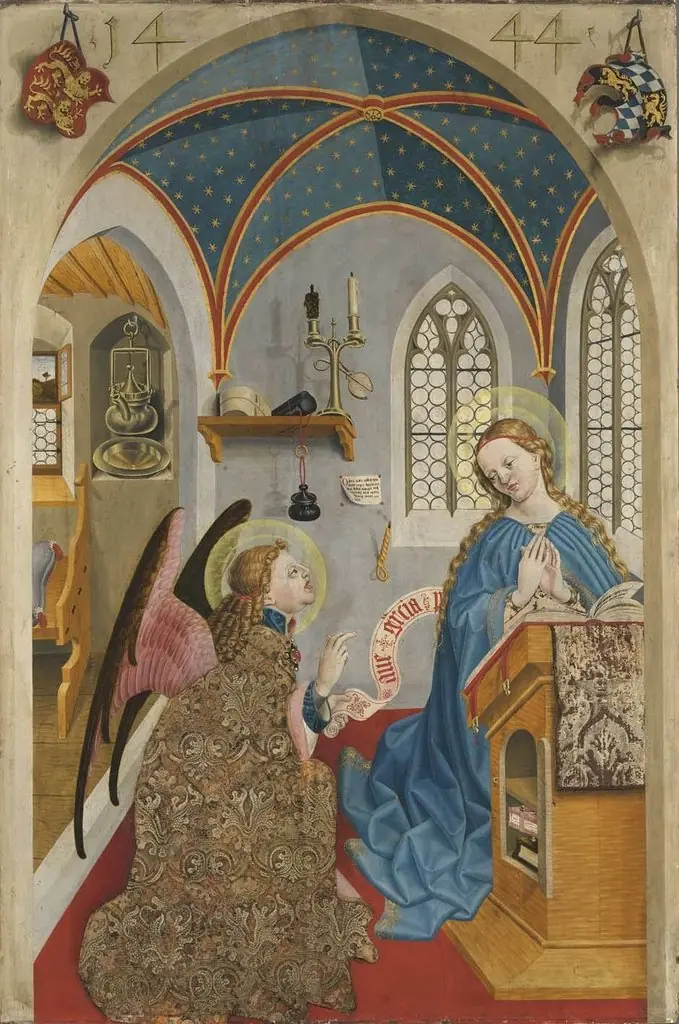 Altar of Mary: Annunciation to Mary
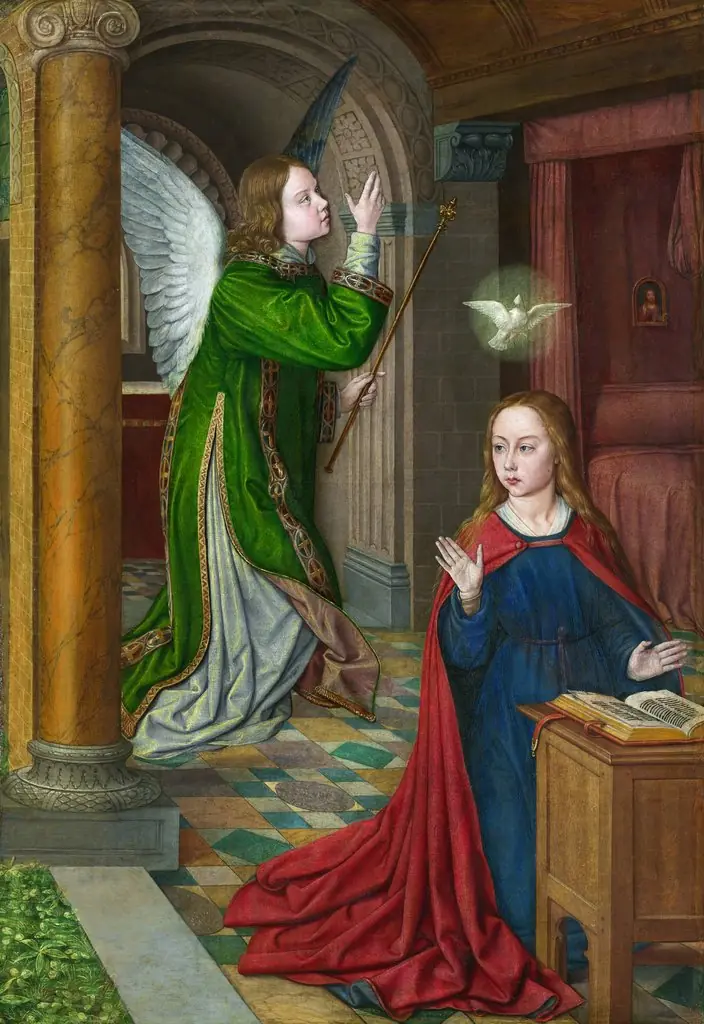 The Annunciation
 L'Annonciation
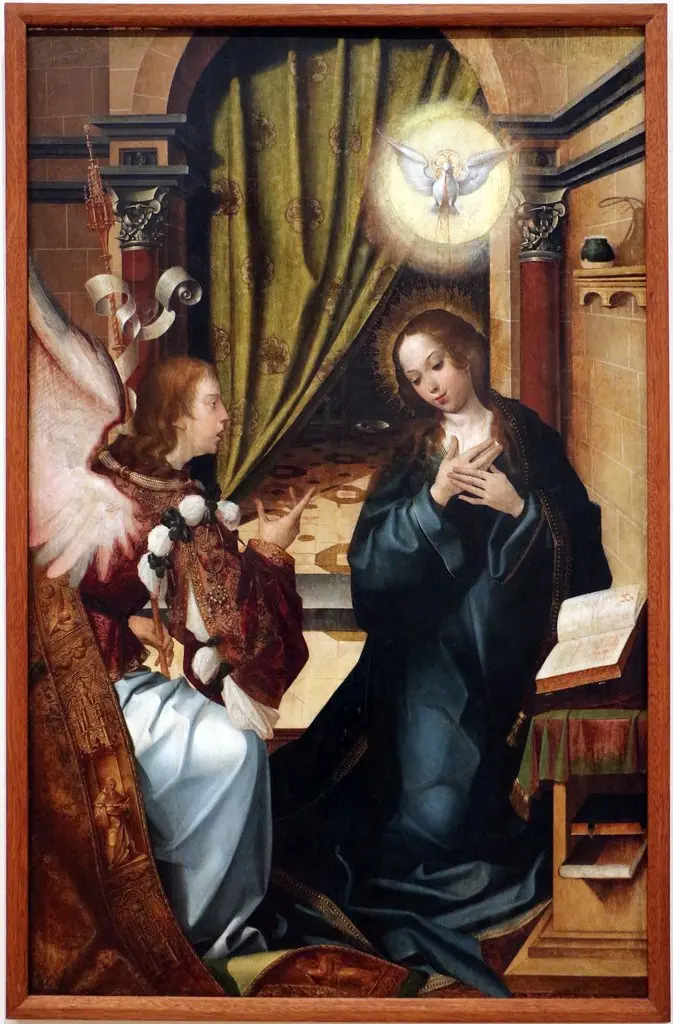 Anunciação
 Kaisheimer Altar: Verkündigung Mariens