Artwork
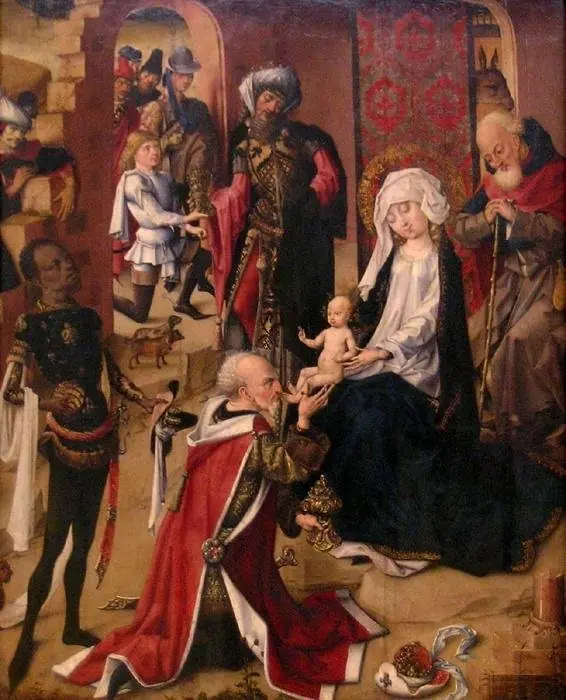
The Meeting of the Three Kings, with David and Isaiah (recto); The Assumption of the Virgin (verso)
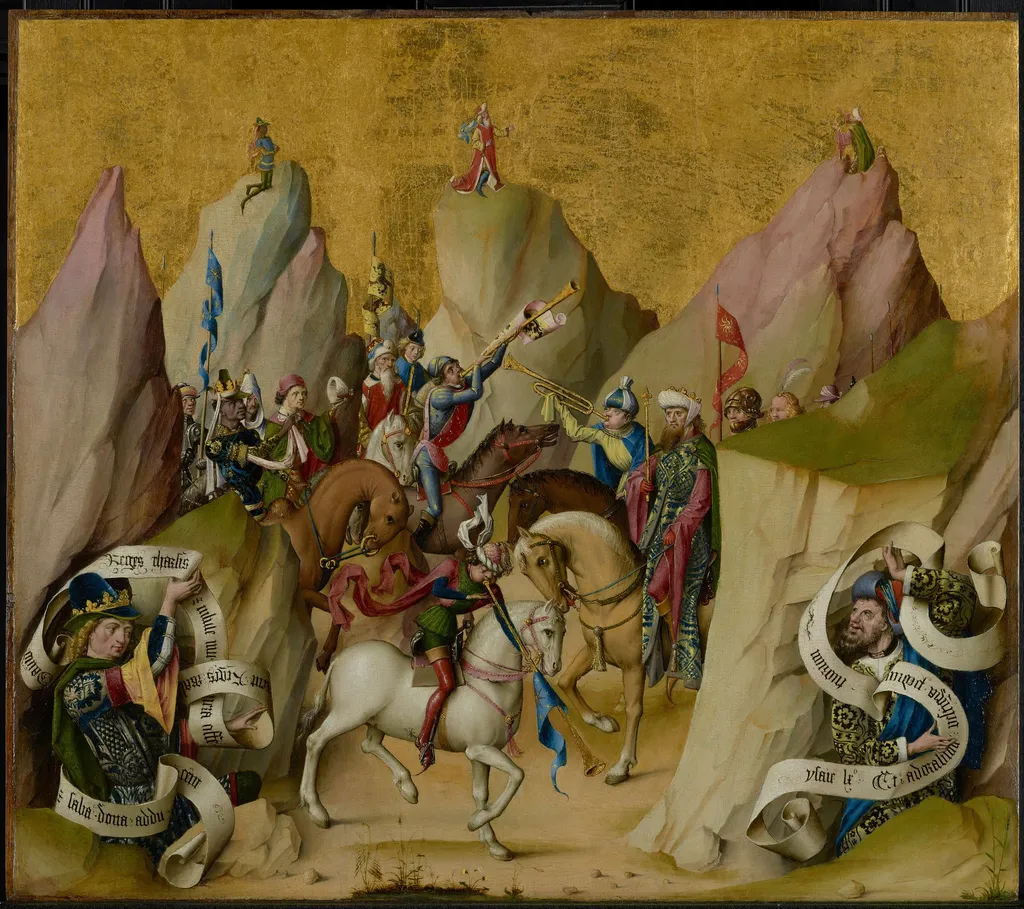
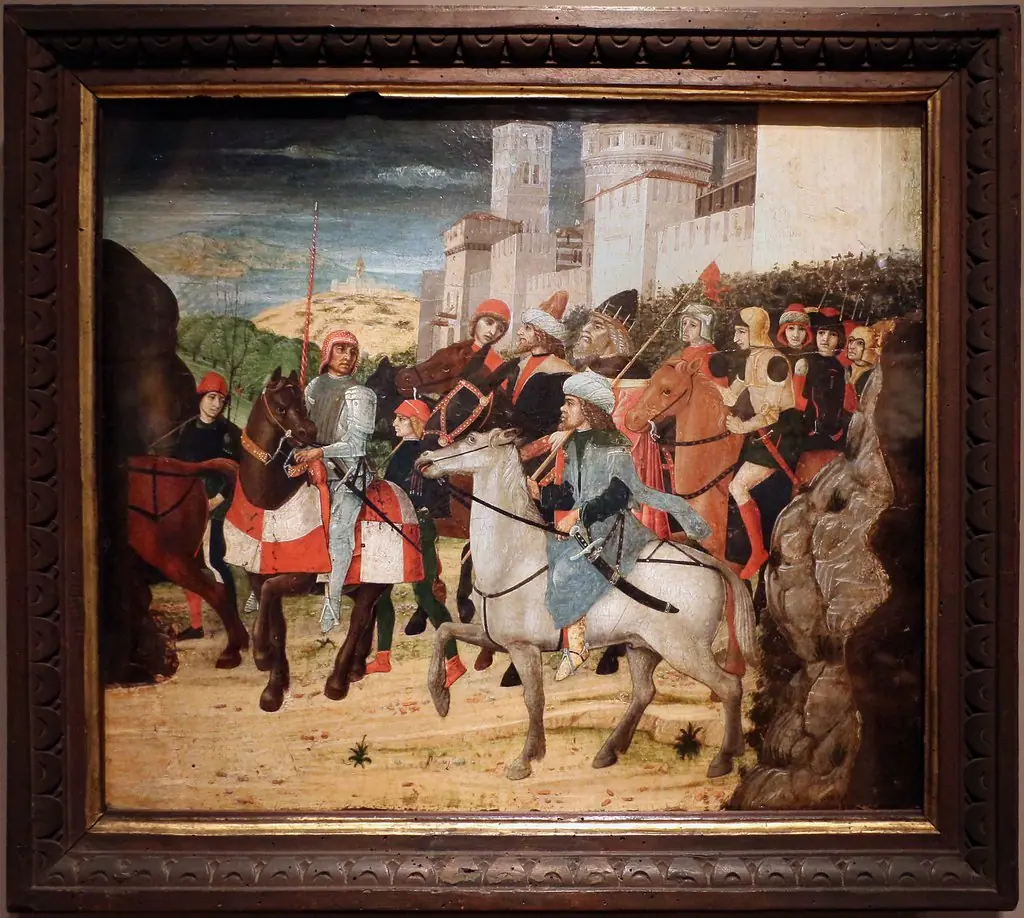
The Meeting of the Three Kings, with David and Isaiah (recto); The Assumption of the Virgin (verso) is an unspecified painting by the Northern Renaissance artist Master of the Saint Bartholomew Altarpiece. It dates from 1490 and is held in the collection of the J. Paul Getty Museum.
About this work
The artist likely drew inspiration from biblical stories, which is interesting because it shows how art was often used to depict important religious scenes.
The painting is called The Meeting of the Three Kings, with David and Isaiah, made by the Master of the Saint Bartholomew Altarpiece.
It was created around 1480.
The artist likely drew inspiration from biblical stories, which is interesting because it shows how art was often used to depict important religious scenes.
You can learn more about the artist's style and other works at the J. Paul Getty Museum.
Overview
This double‑sided panel, dating from the late 1480s to about 1490, is attributed to the anonymous Master of the Saint Bartholomew Altarpiece, an Early Netherlandish painter active in Cologne between roughly 1475 and 1510. The work exemplifies Northern Renaissance religious painting, with one side portraying a gathering of the Magi alongside biblical figures David and Isaiah, and the reverse illustrating the Virgin’s Assumption.
Subject & Meaning
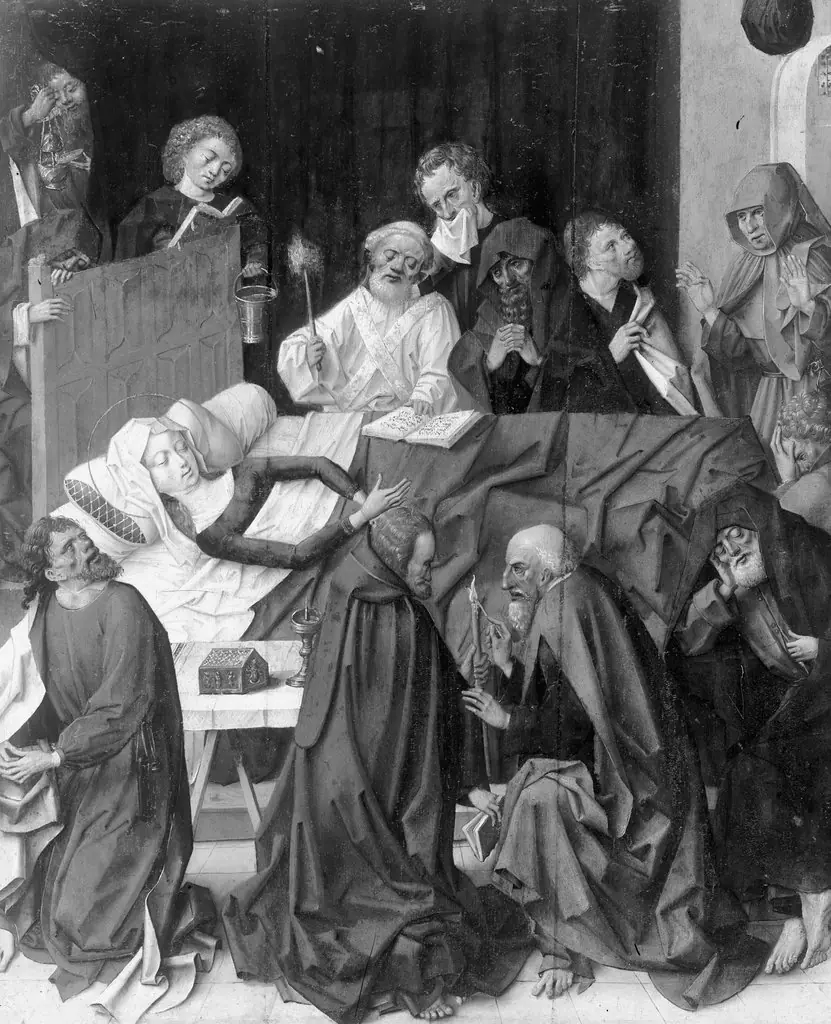
The recto combines the episode of the three kings’ meeting with the prophetic presence of David and Isaiah, linking Old Testament anticipation with the New Testament narrative of Christ’s birth. The verso presents the Assumption of the Virgin, a theme emphasizing the Virgin Mary’s heavenly elevation and her role as intercessor, reflecting the devotional focus of late medieval worship.
Technique & Style
Executed in oil on wood, the panel displays a meticulous attention to detail and a luminous colour palette characteristic of the Northern Renaissance. The artist’s handling of light and texture diverges from contemporary Cologne workshops, suggesting an individual visual language that has allowed scholars to identify a corpus of roughly twenty‑five works sharing similar compositional and stylistic traits.
History & Provenance
The panel’s origins lie in a devotional context, likely commissioned for a church or private chapel in the Cologne region. Over the centuries it entered various collections, eventually being studied by art historians who linked it to the Master of the Saint Bartholomew Altarpiece through stylistic comparison, though its early ownership records remain fragmentary.
Context
Positioned at the transition between late Gothic sensibilities and emerging Renaissance naturalism, the work illustrates how German painters incorporated Netherlandish techniques while retaining local iconographic traditions. The anonymity of its creator underscores the collaborative workshop environment of the period, and the panel continues to inform scholarly understanding of regional artistic networks in the early modern Holy Roman Empire.
Own this work as a print
Artist & collection
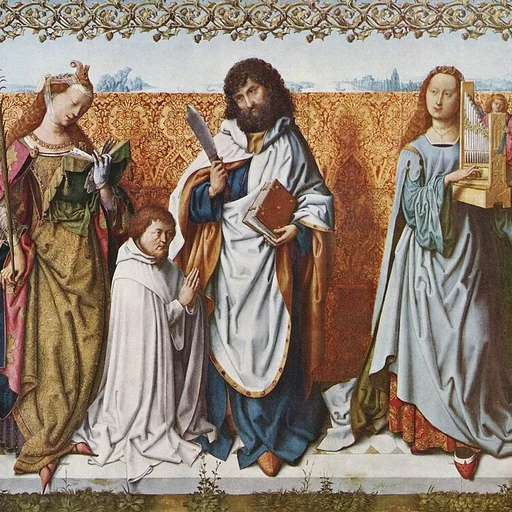
Artist
Master of the Saint Bartholomew Altarpiece
The Master of the Saint Bartholomew Altarpiece (sometimes called the Master of the Saint Bartholomew Altar) was an Early Netherlandish painter active in Germany, mostly Cologne, between 1475/1480 and 1510.