Artwork
Anna, Tochter des Pfalzgrafen Wolfgang von Zweibrücken-Veldenz
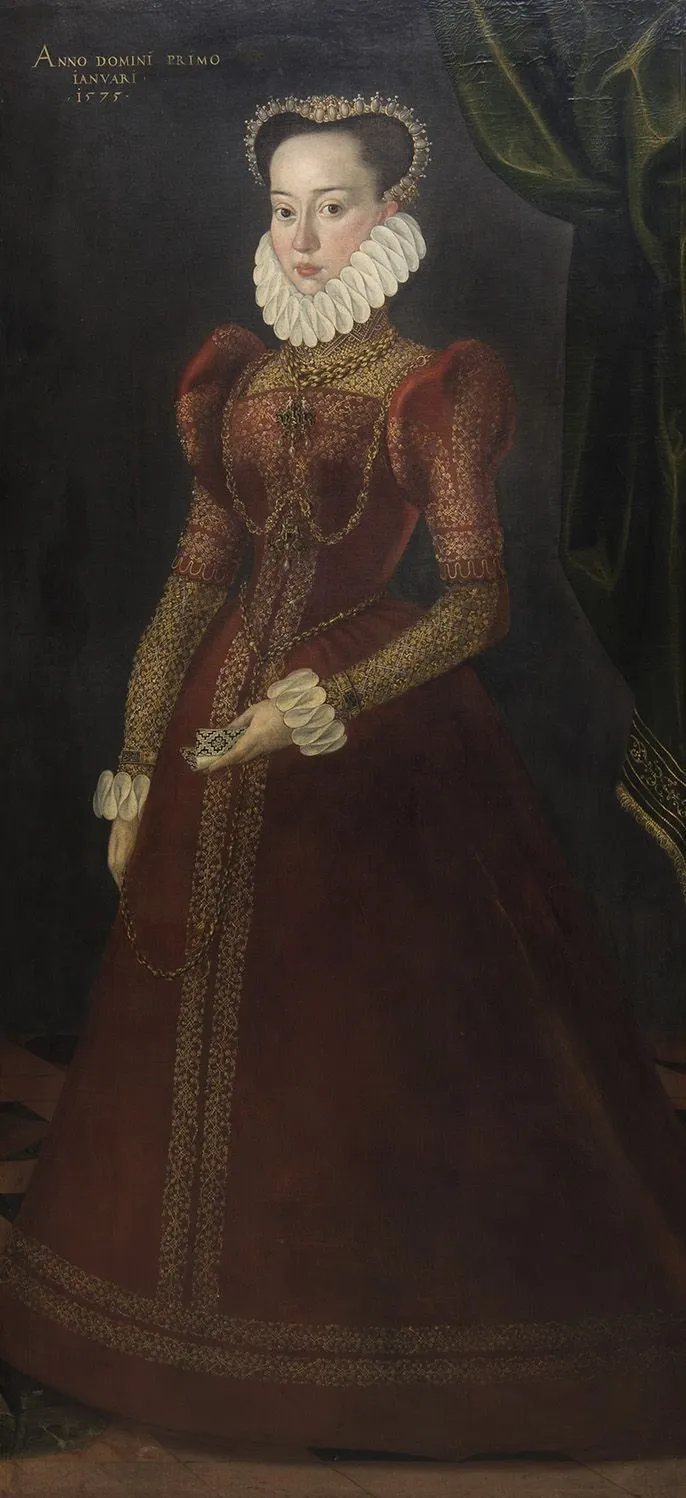
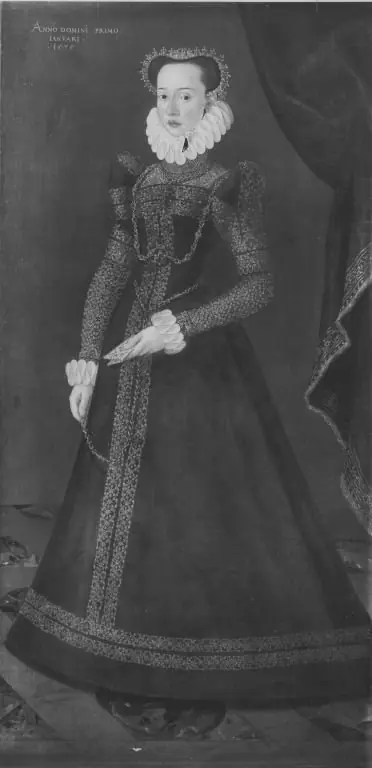
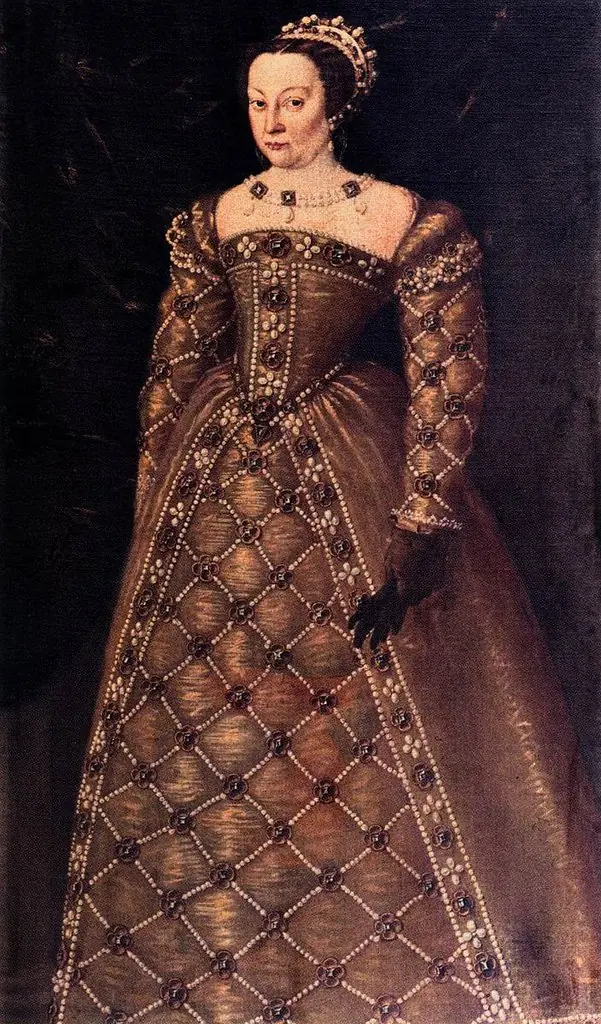
Anna, Tochter des Pfalzgrafen Wolfgang von Zweibrücken-Veldenz is an oil painting by the Mannerist artist Master of the Vohenstrauss Portrait. It dates from 1575 and is held in the collection of the Bavarian State Painting Collections. This oil portrait, dated 1 January 1575, presents a young woman in a dark red gown trimmed with gold embroidery.
About this work
Her white ruff collar is stiff and starched, and her dark hair is pulled back under a small, jeweled cap.
This painting shows a woman in a dark red dress with gold embroidery. She’s standing straight, holding a white glove in one hand. Her white ruff collar is stiff and starched, and her dark hair is pulled back under a small, jeweled cap.
The date on the painting—January 1, 1575—is written at the top in Latin. The dark background makes her dress stand out, and her face looks calm and serious.
Next, check out the technique: chiaroscuro.
Overview
This oil portrait, dated 1 January 1575, presents a young woman in a dark red gown trimmed with gold embroidery. She stands upright, grasping a white glove, her stiff white ruff framing a composed, serious expression. The figure is set against a deep, neutral background that accentuates the richness of her attire.
Subject & Meaning
The sitter is identified as Anna, daughter of Count Palatine Wolfgang of Zweibrücken‑Veldenz. Her poised stance and modest gesture reflect the expectations of noble femininity in the late‑Renaissance German courts, emphasizing both lineage and decorum.
Technique & Style
Executed by the Master of the Vohenstrauss Portrait, the work employs chiaroscuro to model the figure’s form, using subtle gradations of light to render the texture of fabric and skin. The crisp, starched ruff and the jeweled cap are rendered with fine brushwork that highlights the painter’s attention to detail.
History & Provenance
Created in 1575, the painting entered the collection of the Alte Pinakothek in Munich, where it remains on display. Its provenance traces back to the Palatinate family, reflecting the region’s patronage of portraiture during the period.
Context
The portrait belongs to a broader tradition of German court portraiture that combined Northern realism with Italianate compositional elements. The use of a dark backdrop and the emphasis on luxurious dress align with contemporary depictions of aristocratic identity.
Artist & collection
Artist
Master of the Vohenstrauss Portrait
Master of the Vohenstrauss Portrait (1549–1599) was an artist.

 Erzherzogin Barbara (1539-1572), Herzogin von Ferrara in ganzer Figur
 Possível Retrato de Maria Barreto
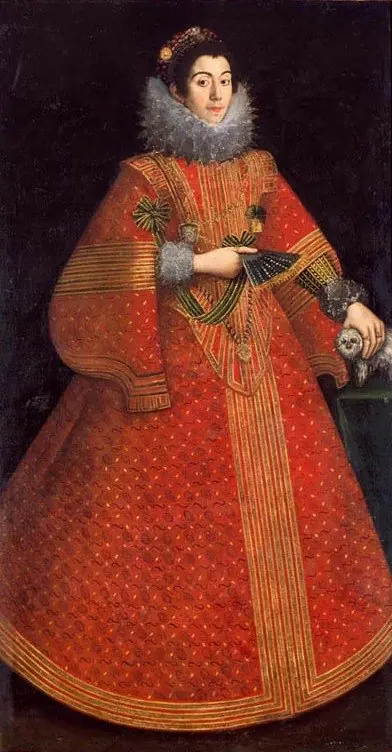 Retrato de Senhora
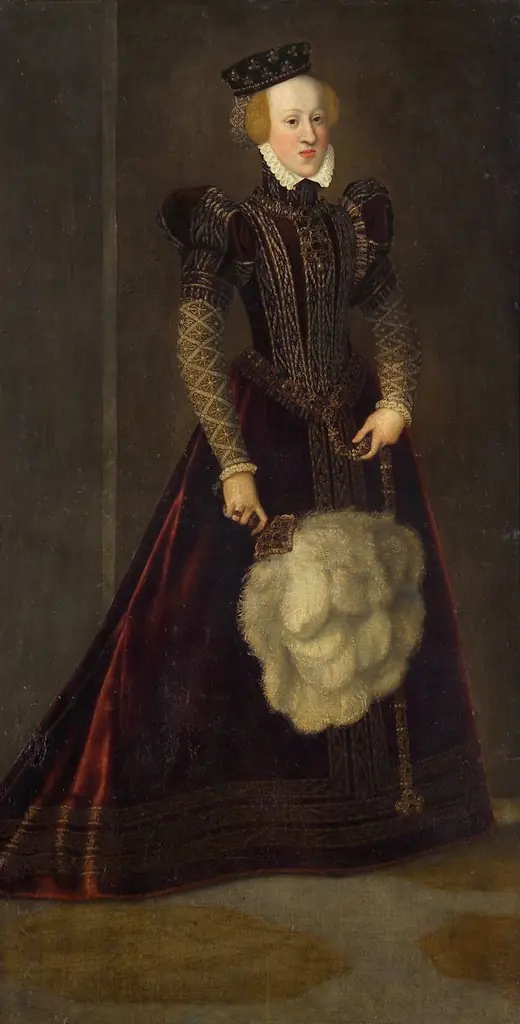 Erzherzogin Johanna (1547-1578), Großherzogin von Toskana, Bildnis in ganzer Figur
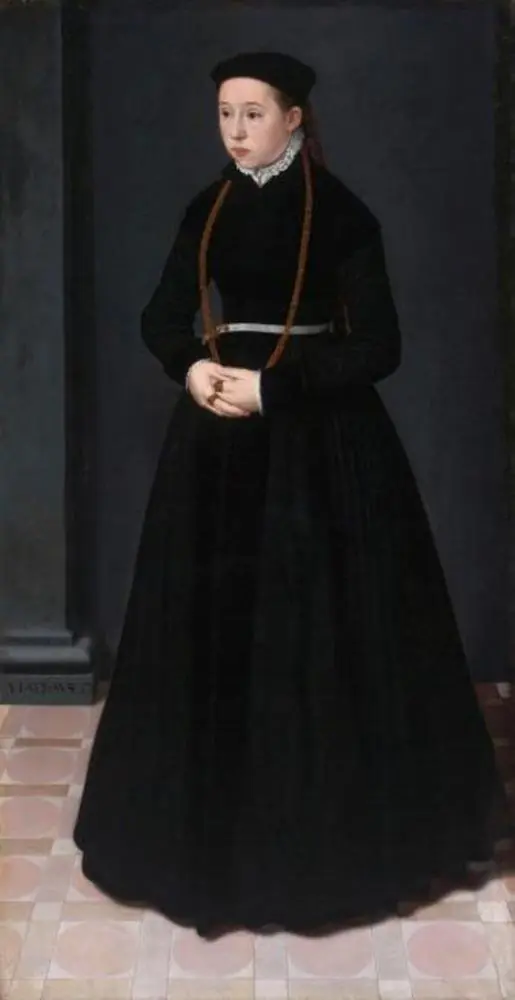 Portrait of Margaretha Mertha (Merthen), the Wife of Heinrich Pilgram
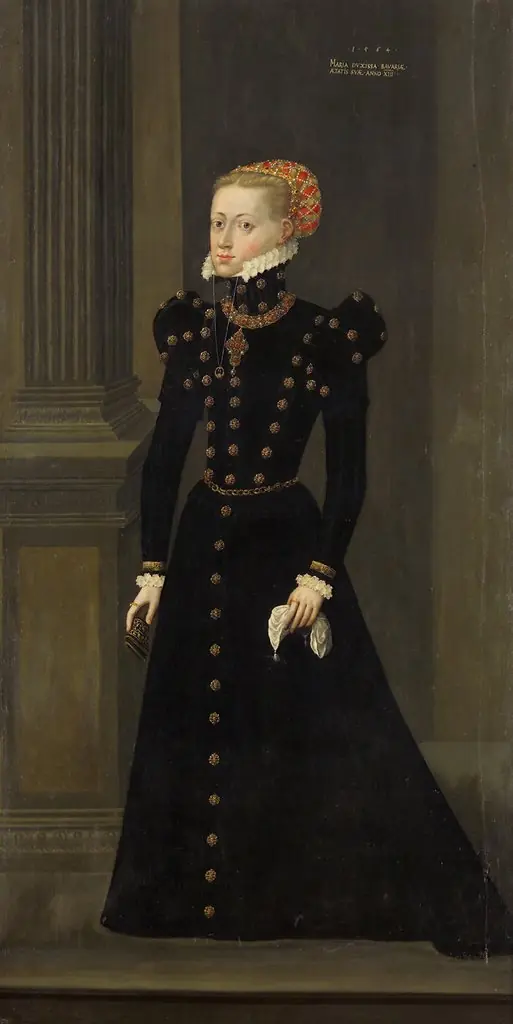 Maria (1551-1608), Herzogin in Bayern, Erzherzogin, im Alter von 13 Jahren
 Mrs. Henri Leys-Van Haren
 Portrait of Irena Solska
 Anna of Denmark, Duchess of Saxony
 Saint Catherine
 Portrait of Catherine de’ Medici