Artwork
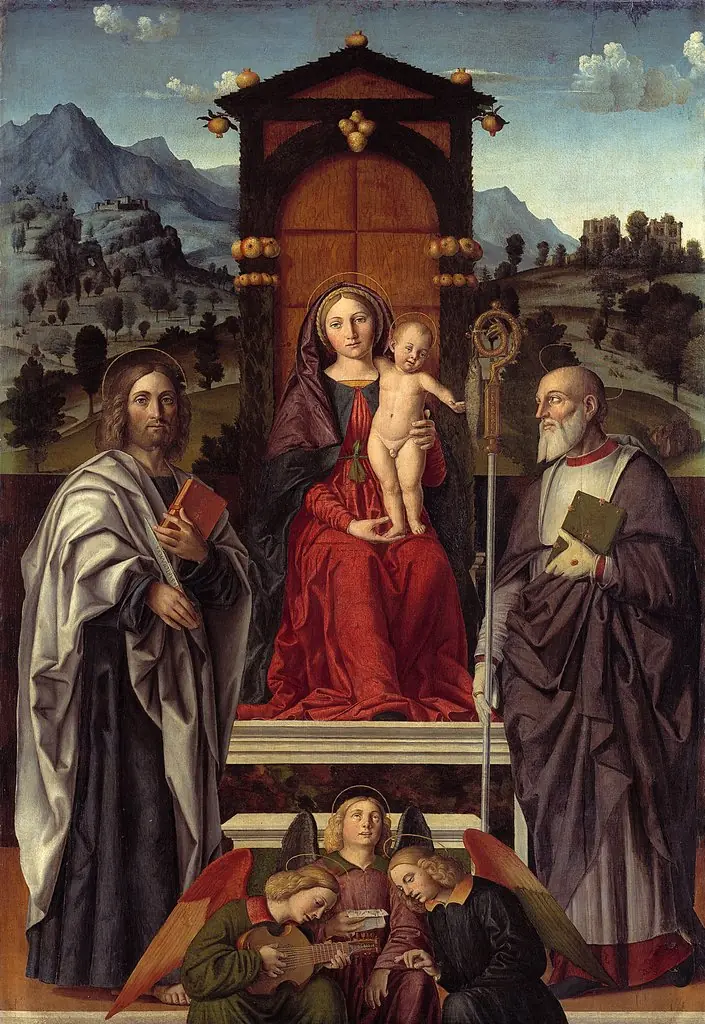
Mary and child enthroned with St. Barbara and St. Margaret
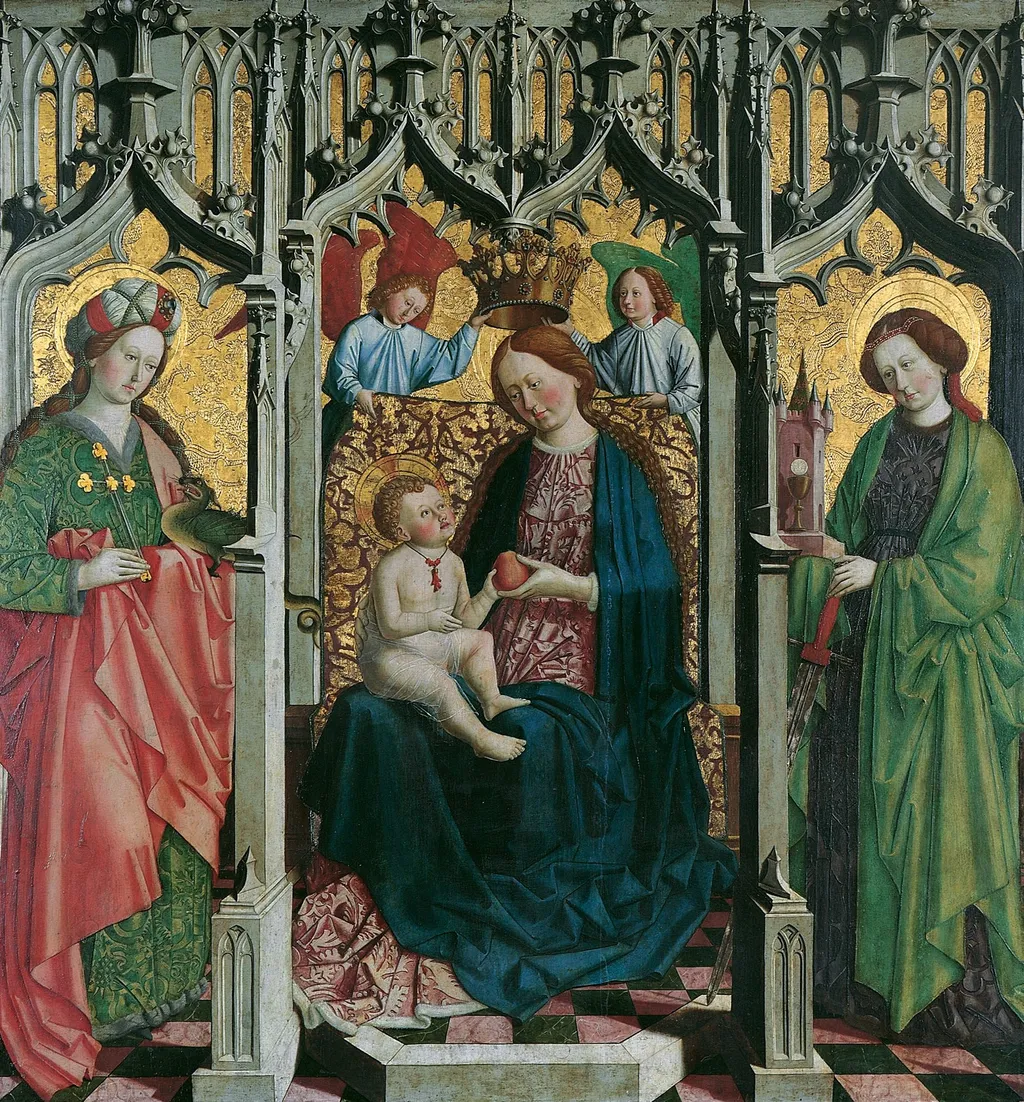
Mary and child enthroned with St. Barbara and St. Margaret is an oil painting by the Northern Renaissance artist Master of Uttenheim. It dates from 1465 and is held in the collection of the Kunsthistorisches Museum.
About this work
Overview
This oil painting, dated around 1465, is attributed to the Master of Uttenheim, an anonymous artist active in the Rhineland region. It depicts the Virgin Mary seated on a throne with the Christ Child, flanked by two female saints. The work is part of the collection at the Kunsthistorisches Museum in Vienna, where it remains a representative example of late medieval devotional panel painting.
Subject & Meaning
The composition reflects a common devotional arrangement, inviting viewers to seek intercession through these holy figures.
The Virgin Mary, holding the Christ Child and an apple, symbolizes both maternal care and the reversal of original sin. To her left, Saint Barbara holds a book, referencing her scholarly devotion and martyrdom; to her right, Saint Margaret grips a sword, alluding to her execution. The composition reflects a common devotional arrangement, inviting viewers to seek intercession through these holy figures.
Technique & Style
The painting employs oil paint to achieve fine detail in the textures of garments, jewelry, and architectural elements. The figures are rendered with delicate modeling and rich coloration, while the background features a gold leaf ground adorned with stamped patterns. This technique enhances the sacred atmosphere, grounding the scene in a celestial realm rather than a physical space.
History & Provenance
The painting’s early history is undocumented, but it likely originated as an altarpiece in a private chapel or monastic setting in the Upper Rhine area. It entered the Kunsthistorisches Museum’s collection in the 19th century, following the consolidation of ecclesiastical and noble holdings after secularization. Its attribution to the Master of Uttenheim stems from stylistic comparisons with other unsigned works from the same region.
Context
Created during the late Gothic period, the work reflects the enduring popularity of Marian devotion and saintly intercession in northern Europe. Artists of this era often combined symbolic attributes with luxurious materials to elevate religious imagery. The use of gold leaf and intricate detail aligns with regional traditions in the Rhineland, where panel painting remained central to private and communal worship.
Legacy
Though the Master of Uttenheim remains unidentified, this painting contributes to the understanding of anonymous workshop practices in 15th-century Germany. It exemplifies how devotional imagery was standardized yet personalized through regional stylistic choices. The work continues to inform scholarly study of late medieval iconography and the role of saints in everyday piety.
Artist & collection
Artist
This anonymous painter from the late 1400s made small, sharply focused altarpieces.

 Madonna with two Angels Adoring the Christ Child in a landscape
 Madonna with child
 The Madonna of Humility
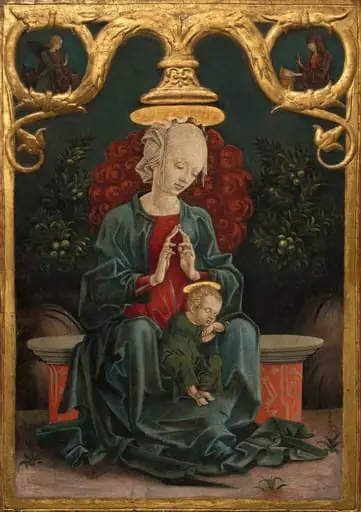 Madonna and Child in a Garden
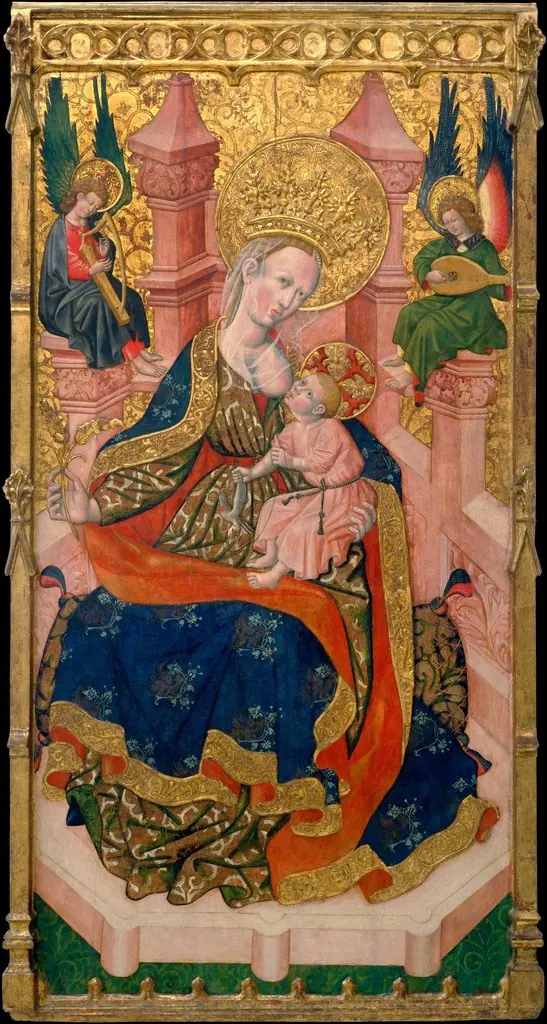 Virgin Suckling the Child
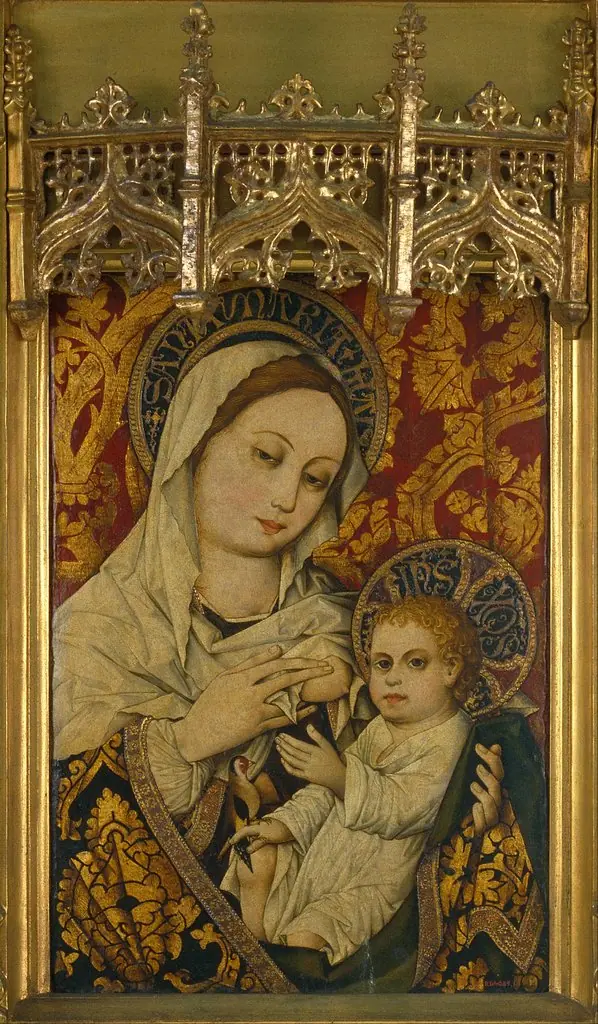 Virgin Suckling the Child
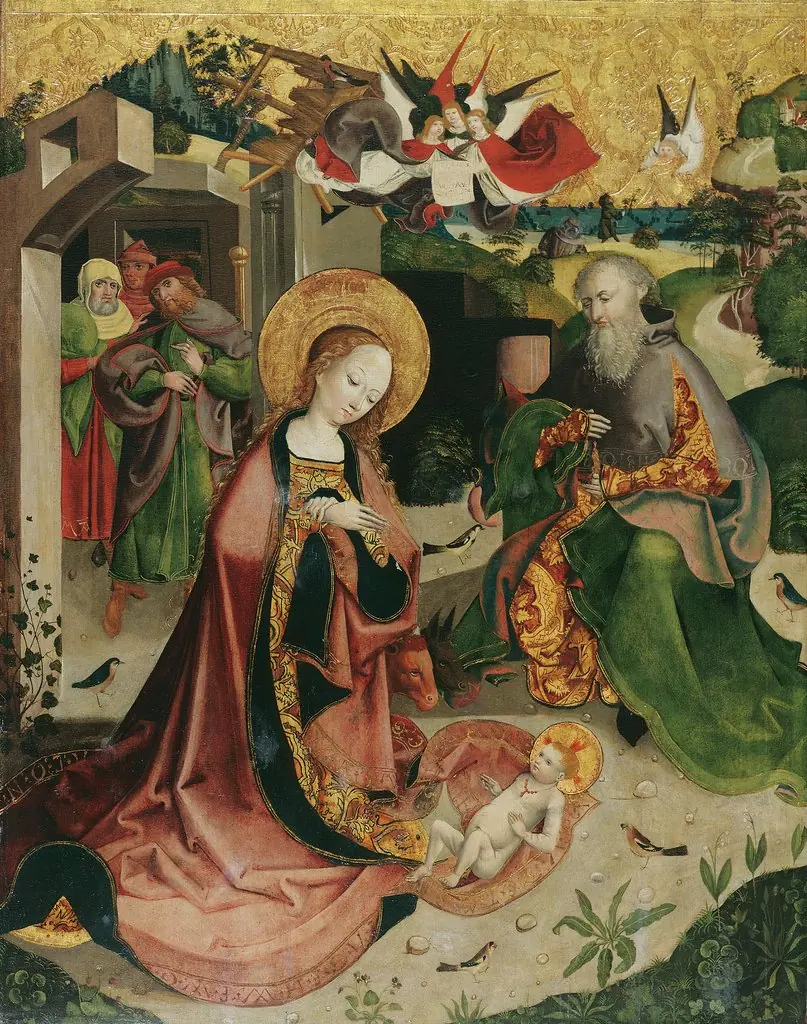 Geburt Christi
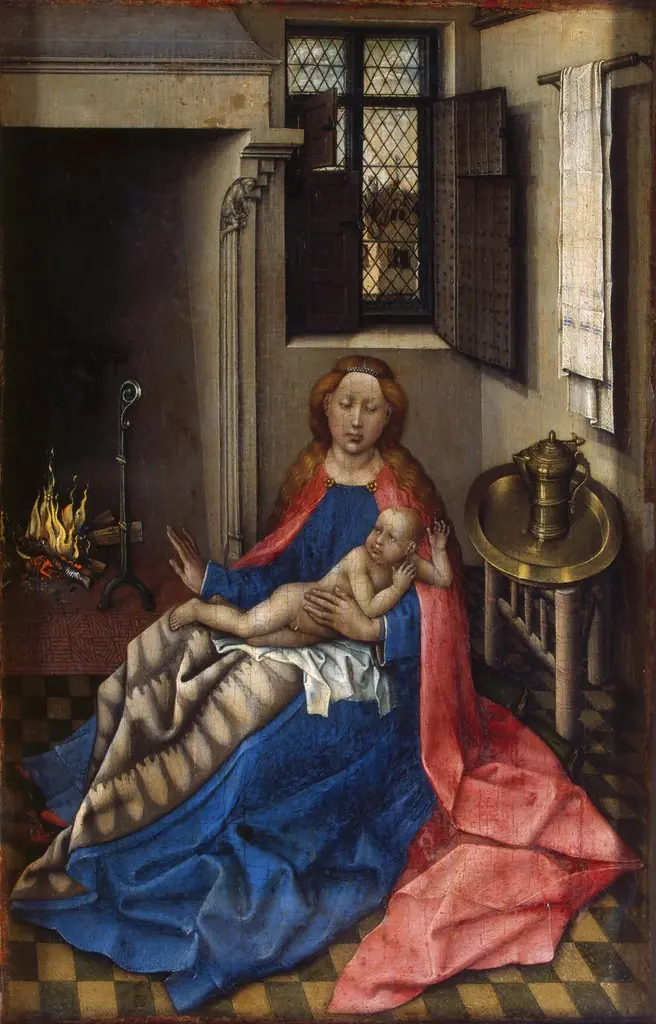 The Virgin and Child by a Fireplace (Right Wing of a Diptych)
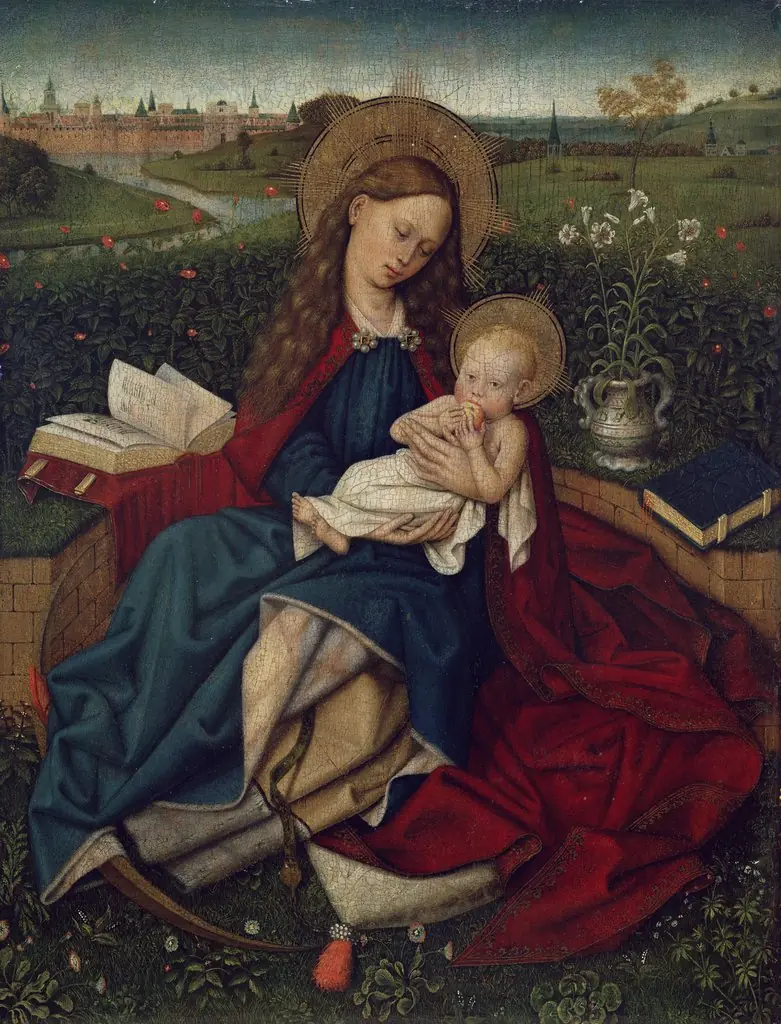 The Madonna of Humility
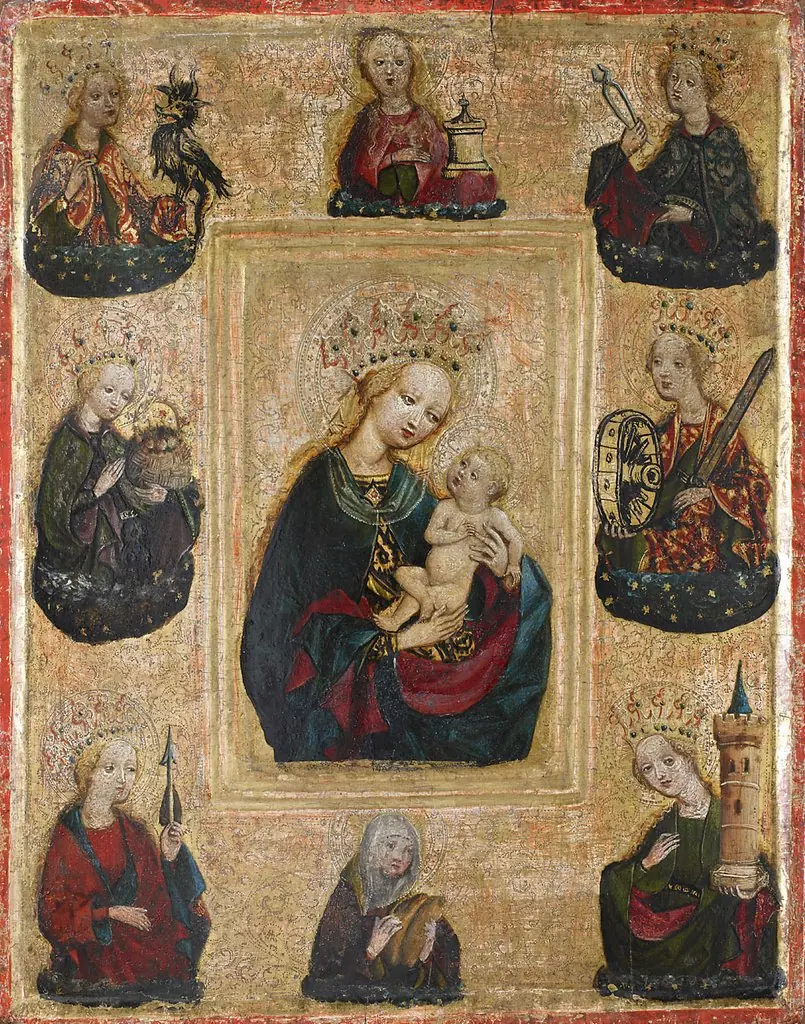 Maria mit Kind
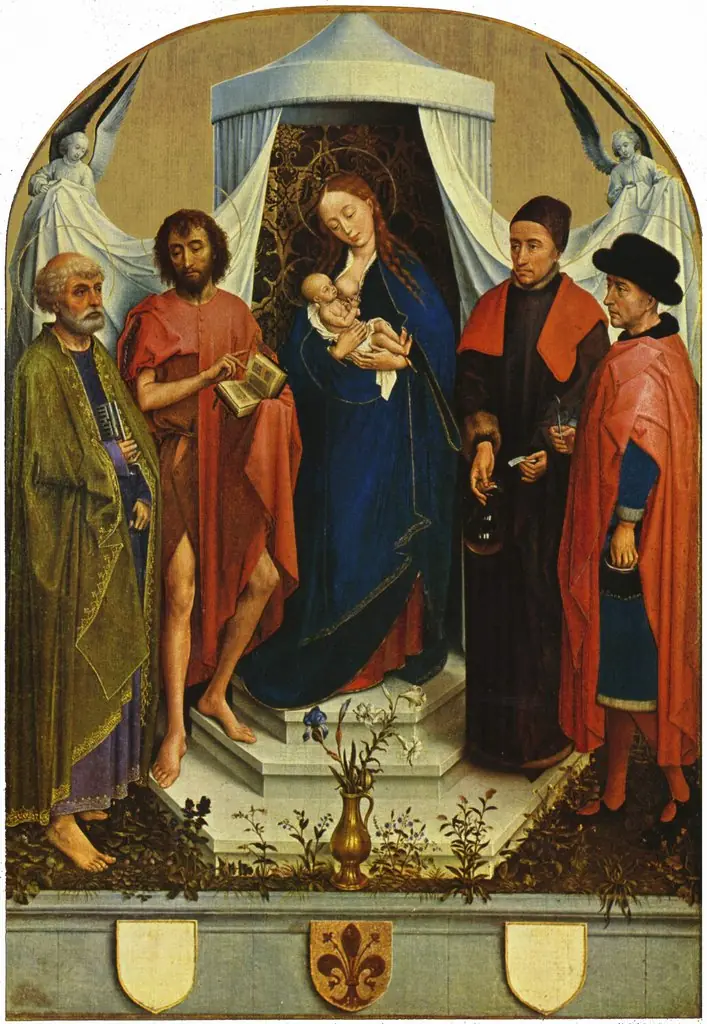 Medici Madonna
 Mary and Child Enthroned with Saints