Artwork
Oriental Woman with a Waterpipe
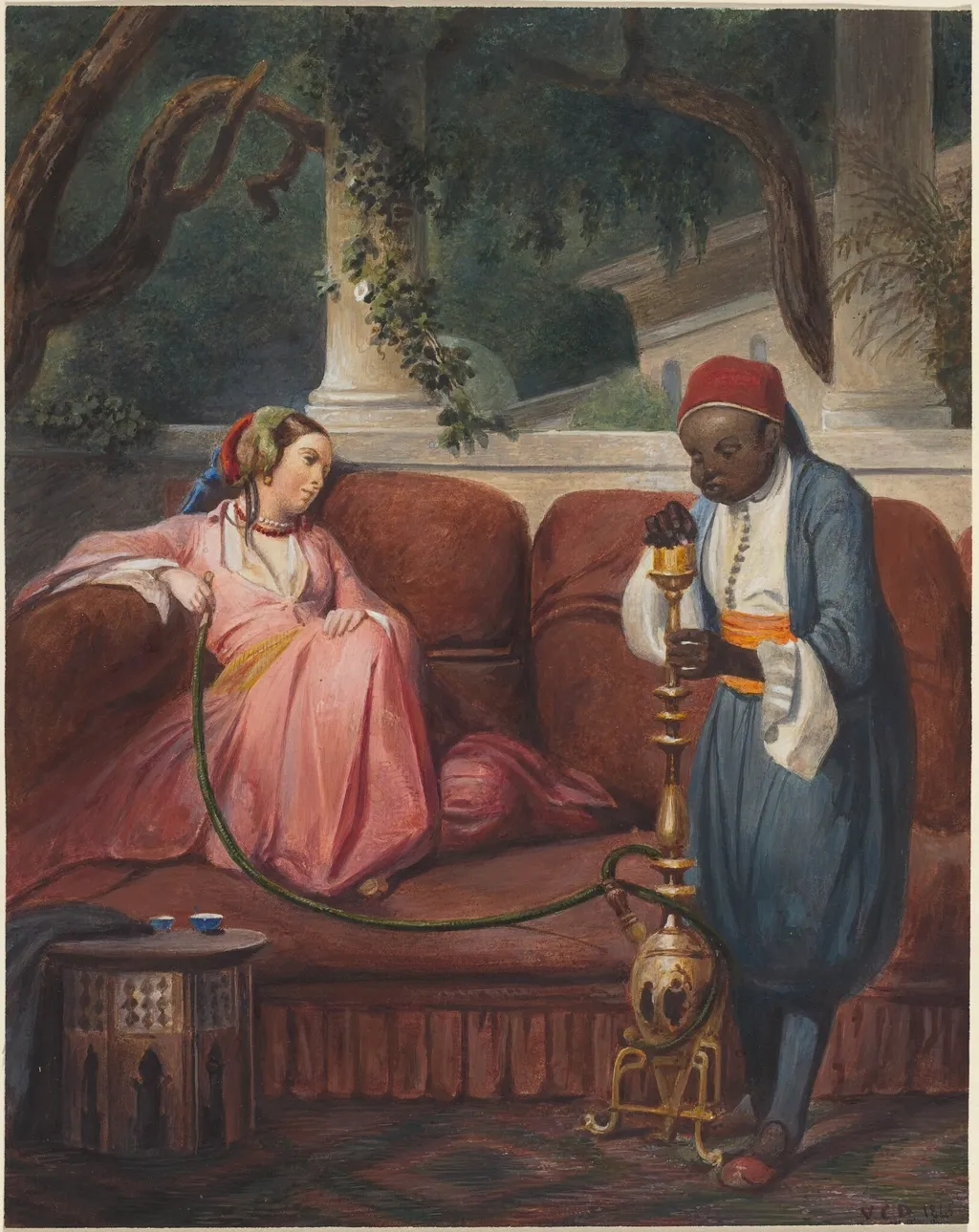
Oriental Woman with a Waterpipe is a gouache drawing by the Romanticist artist Master VCD. It dates from 1845 and is held in the collection of the National Gallery of Art.
About this work
Overview
It portrays a quiet moment between two figures in an outdoor setting, rendered with delicate layers of pigment.
Created around 1845, this drawing by Master VCD combines watercolor and gouache over graphite on wove paper. It portrays a quiet moment between two figures in an outdoor setting, rendered with delicate layers of pigment. The medium lends a muted, atmospheric quality, emphasizing stillness and subtle detail over bold definition. The work belongs to a tradition of 19th-century Orientalist drawings that sought to capture imagined or observed scenes from the Eastern Mediterranean and Near East.
Subject & Meaning
A woman sits relaxed on a low couch, holding a long waterpipe, her gaze directed beyond the frame. Beside her, a man stands, cradling a golden cup, his attention fixed downward. Their postures suggest a moment of pause, perhaps after a shared ritual. The figures are dressed in stylized garments—pink and blue robes, red accessories—that signal cultural specificity without literal accuracy. The scene evokes contemplation rather than narrative, inviting quiet observation over explicit storytelling.
Technique & Style
The artist employed translucent watercolor washes layered with opaque gouache to build soft tonal transitions and delicate highlights. Graphite underdrawing guides the forms with precision, while the foliage and background are rendered in loose, fluid strokes. The palette is restrained—pinks, blues, and earth tones—enhancing the tranquil mood. The handling of light and texture suggests influence from both European academic drawing and regional decorative traditions, though the style remains distinctly personal.
History & Provenance
The work is attributed to Master VCD, an artist active in the mid-19th century whose identity remains partially obscured. It likely originated in a studio context, possibly in the Ottoman Empire or a European center with Orientalist interests. The paper type and pigments align with materials used in diplomatic or travel-related commissions of the period. Its early ownership is undocumented, but it entered institutional collections by the late 19th century.
Context
This drawing emerged during a period when European and Ottoman artists increasingly depicted Eastern subjects for Western audiences. While rooted in observed detail, the scene reflects idealized tropes of leisure and exoticism common in Orientalist art. The focus on private, intimate moments—rather than public or political life—mirrors broader trends in 19th-century visual culture that prioritized atmosphere over historical accuracy.
Legacy
Though not widely exhibited, the work contributes to a body of drawings that document the visual language of Orientalism beyond major oil paintings. Its quiet composition and refined technique offer insight into how artists of the period negotiated authenticity and fantasy. Today, it serves as a case study in the intersection of technical skill and cultural representation within 19th-century graphic arts.
Artist & collection


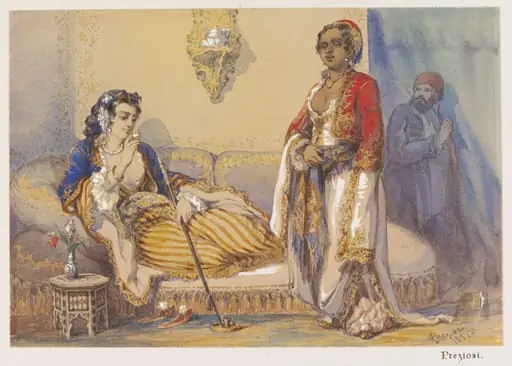 Interior of a Harem
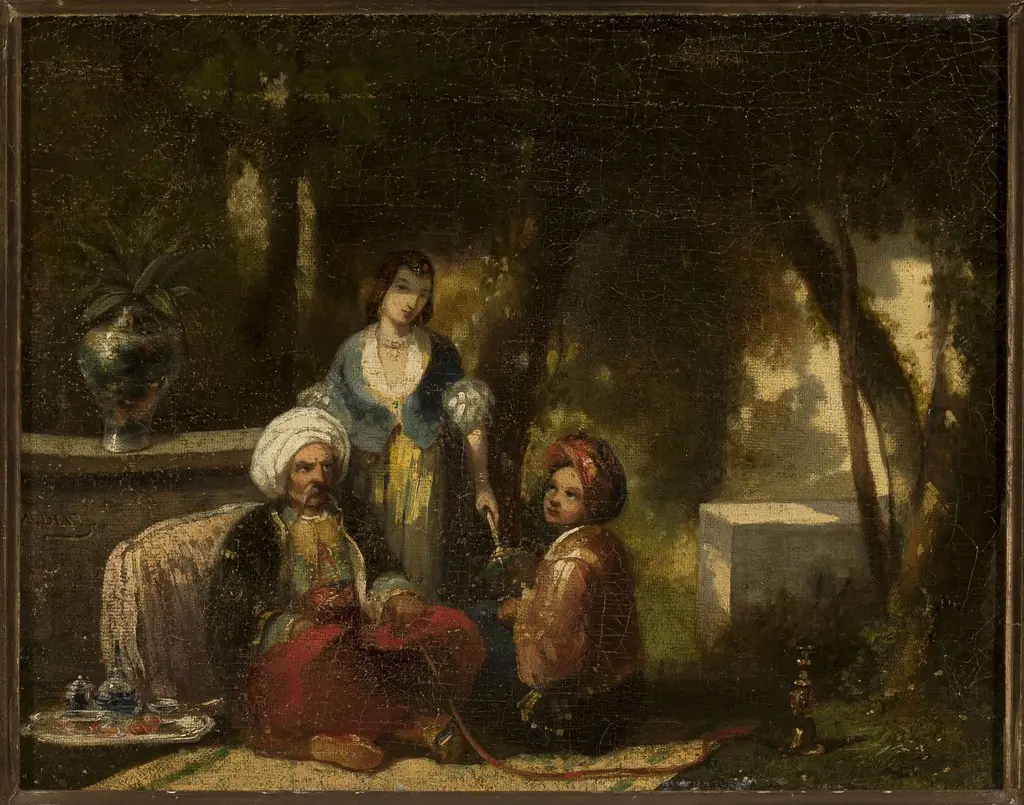 Man with a narghile against forest landscape
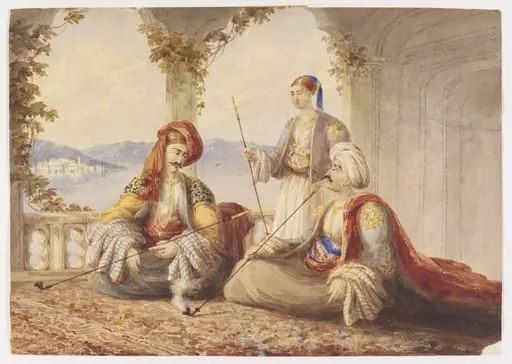 Two Turks, with a Servant, smoking on a Terrace overlooking a Lake or Sea in Turkey or Greece
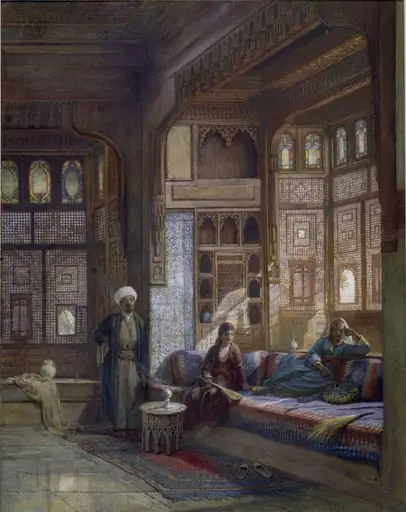 A room in the house of Shayk Sadat, Cairo
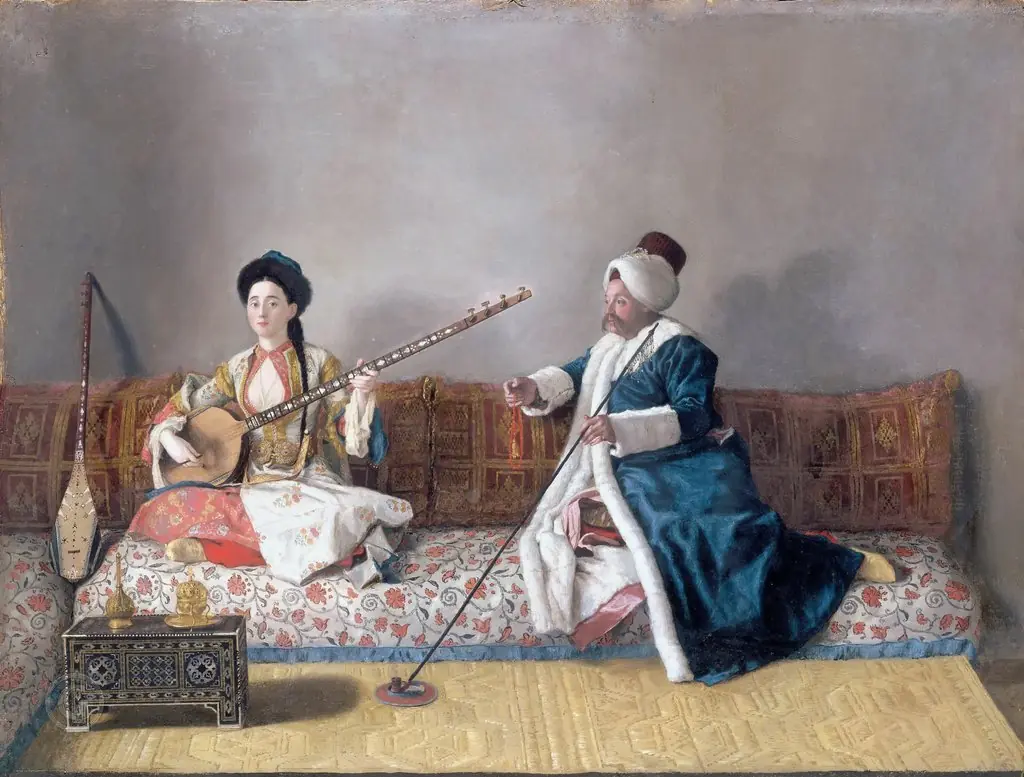 Monsieur Levett et Mademoiselle Glavani
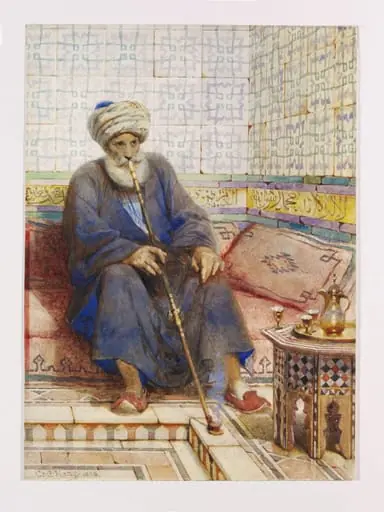 Abu Daood, Shaikh of the Coptic Quarter, in Cairo
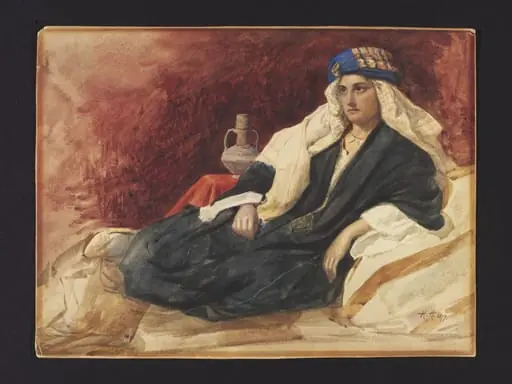 Young Person in Arab dress
 Scheherezade erzählend
 The Beautiful Stranger poisond by her Sister
 Interior de serai
 Feramorz relating he story of the Peri
 A Turkish Coffee-House, Constantinople