Artwork
The Flute Player
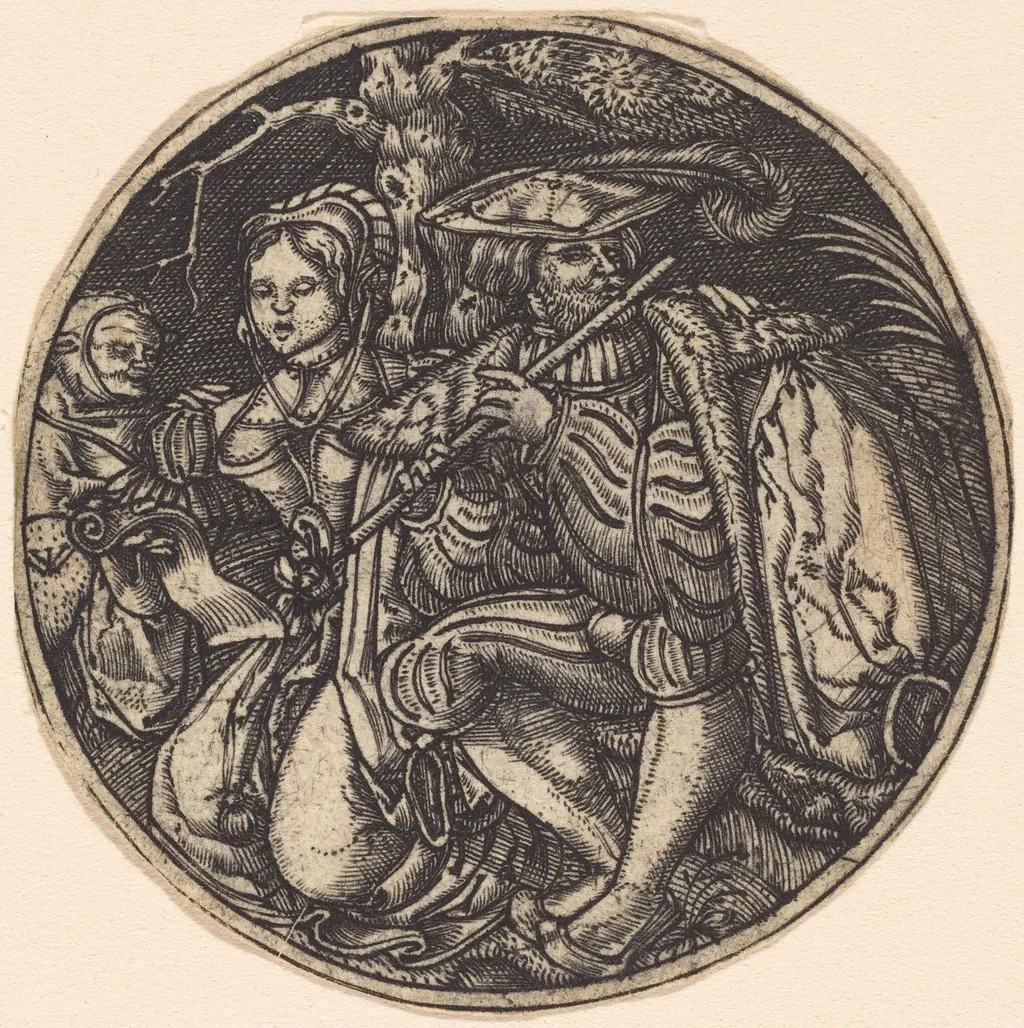
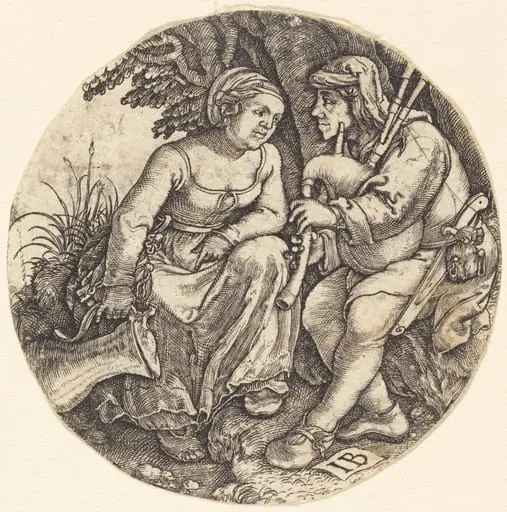
The Flute Player is an ink print by the Renaissance artist Master WI. It dates from 1506 and is held in the collection of the National Gallery of Art.
About this work
Overview
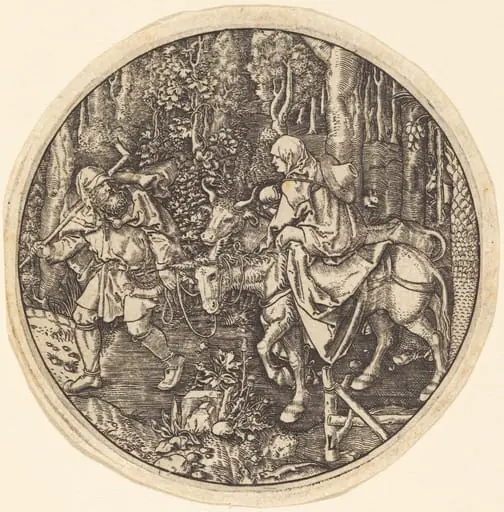
The Flute Player is an early 16th‑century engraving attributed to the artist known as Master WI, dated to 1506. Executed as a print, the work is organized around a circular frame that contains two standing figures surrounded by vegetal motifs.
Subject & Meaning
Within the composition a male figure on the right, clad in a hat and cloak, holds a flute to his lips, while a female figure on his left, covered by a headscarf and dressed in a modest gown, watches. The pairing suggests a domestic or courtly scene centered on music as a shared activity.
Technique & Style
The image is rendered through fine cross‑hatching, a line‑based shading method that builds tonal variation and a sense of three‑dimensionality. This technique also defines the textures of clothing, foliage and the surrounding space, giving the engraving its characteristic depth.
History & Provenance
Created in 1506, the print bears the signature of Master WI, a name associated with a small workshop active in the early Renaissance. No further ownership records are noted, but the piece exemplifies the period’s print culture and the spread of musical iconography.
Context
During the early 1500s, engravings served both artistic and didactic purposes, often illustrating everyday life and leisure. The inclusion of a flute player aligns with contemporary interest in music as a symbol of harmony and social interaction, common in Northern European visual traditions.
Artist & collection