Artwork
Dance of Death III
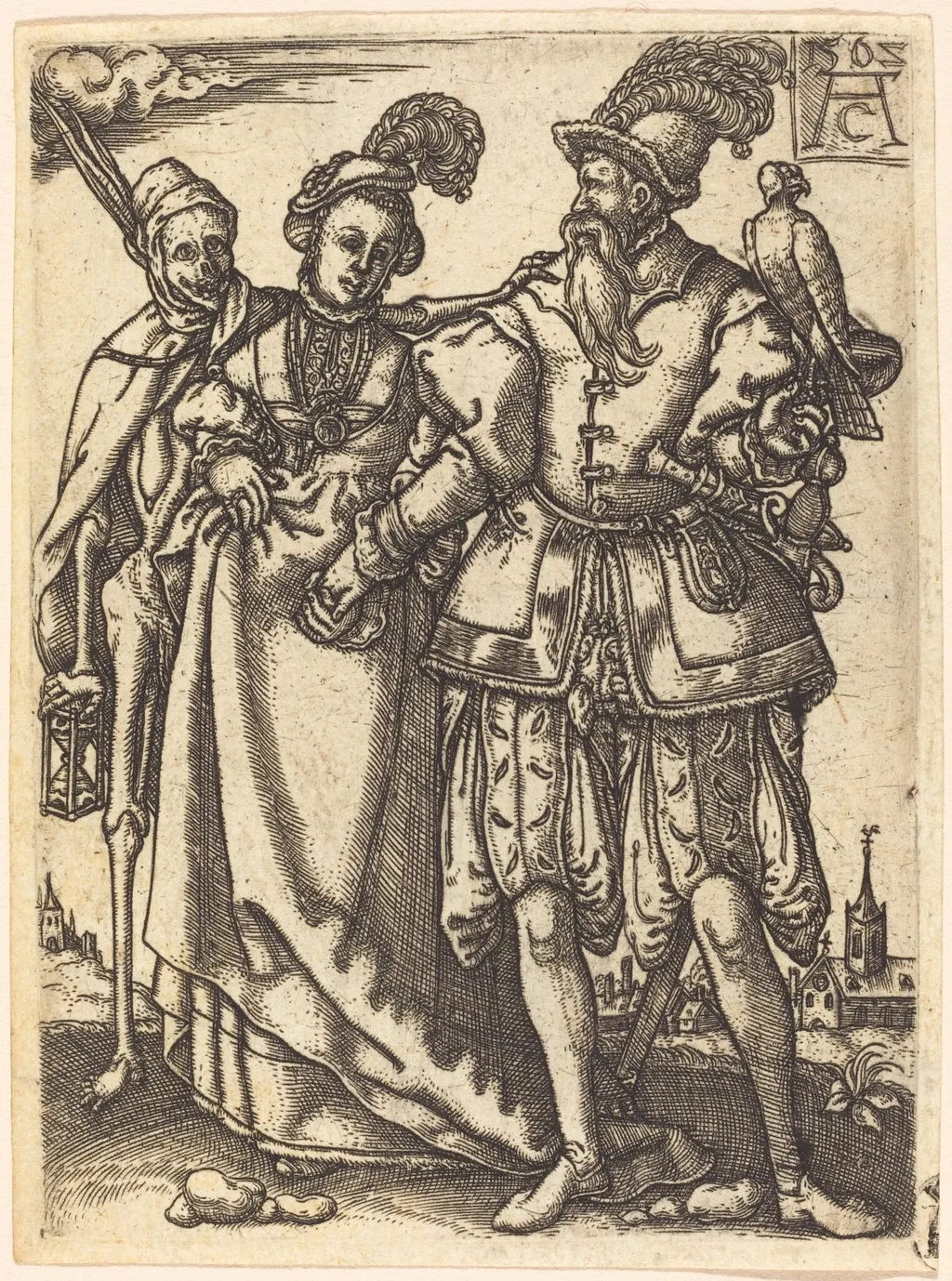
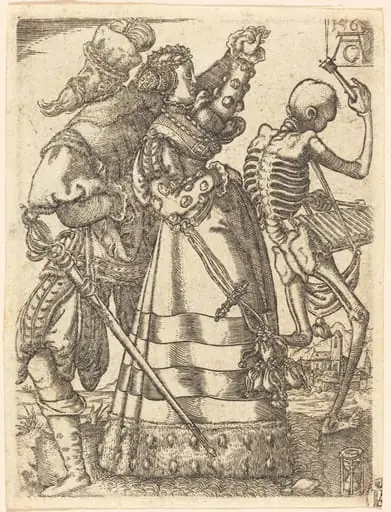
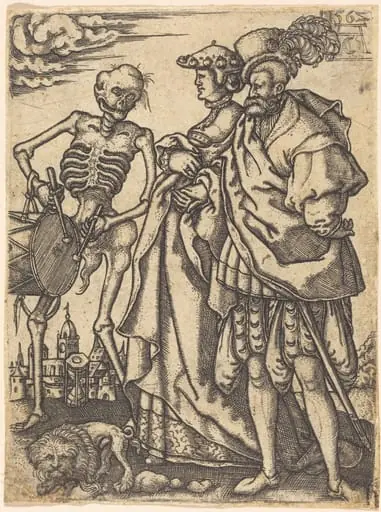
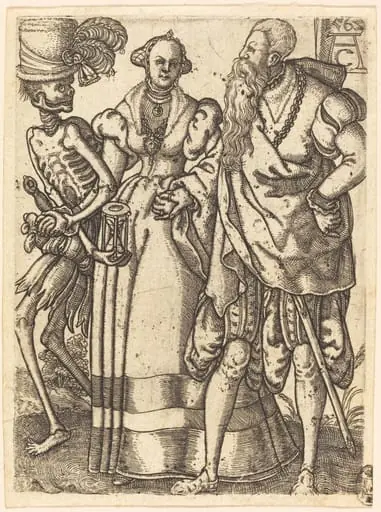
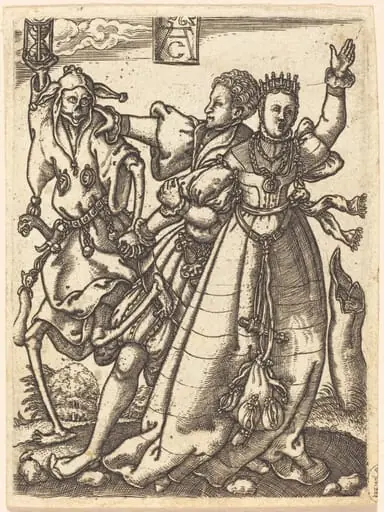
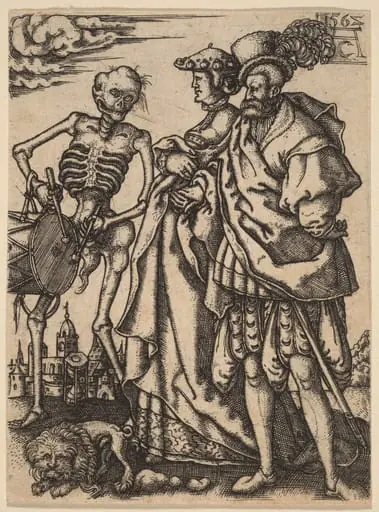
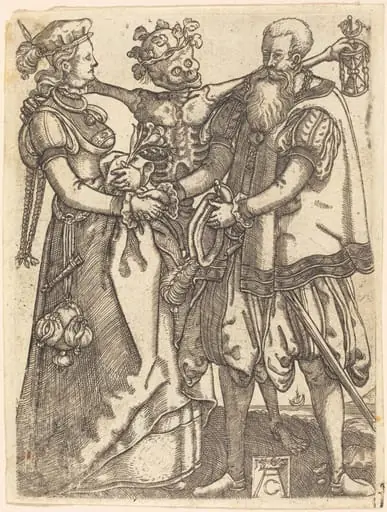
Dance of Death III is an ink print by the Renaissance artist Allaert Claesz. It is held in the collection of the National Gallery of Art.
About this work
Overview
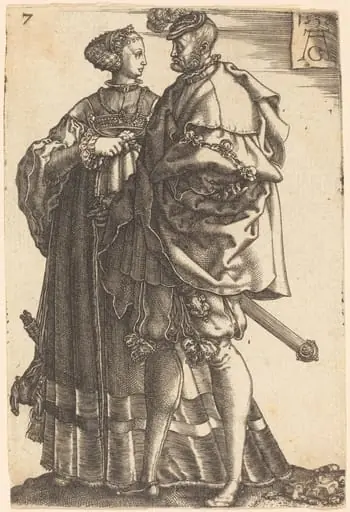
The composition centers on their interaction, with minimal background detail, drawing attention to the symbolic presence of death embedded within the scene.
Dance of Death III is an engraving from 1562 by Allaert Claesz, part of a broader series exploring mortality through allegorical scenes. The print depicts three figures in contemporary attire engaged in a formal dance, their movements subtly guided by an unseen force. The composition centers on their interaction, with minimal background detail, drawing attention to the symbolic presence of death embedded within the scene.
Subject & Meaning
The three figures represent individuals from different social strata, united in a dance that mirrors the inevitability of death. The staff topped with a skull, held by the leftmost figure, serves as a quiet emblem of mortality, transforming the dance from a social ritual into a moral allegory. The bird and bag suggest worldly concerns, while the church spire in the distance hints at spiritual reckoning, reinforcing the theme that death claims all, regardless of status.
Technique & Style
Claesz employed fine, precise lines characteristic of 16th-century engraving to render texture and form with clarity. The figures are rendered with delicate shading and intricate detailing in their clothing, contrasting with the sparse, flat background. The skull on the staff is rendered with subtle emphasis, its presence neither exaggerated nor obscured, allowing its symbolism to emerge through restraint rather than spectacle.
History & Provenance
Created in 1562, this engraving belongs to a series produced during a period when the Dance of Death motif was widely circulated in Northern Europe, particularly in response to plague and religious upheaval. While the full series is not fully documented, surviving prints suggest Claesz contributed to a tradition that visualized death as an equalizing force. The work likely circulated among urban elites as both devotional imagery and moral instruction.
Context
In mid-16th-century Europe, the Dance of Death theme was a common visual response to widespread mortality from disease and war. Claesz’s version reflects the humanist concern with earthly transience, aligning with broader Reformation-era anxieties about salvation and the futility of worldly pride. Unlike earlier medieval versions, his figures wear contemporary dress, grounding the allegory in the viewer’s own reality.
Legacy
Claesz’s engraving contributed to the enduring visual language of mortality in Northern European art. Its restrained symbolism and focus on everyday figures influenced later prints that continued to explore death’s universality. Though not widely known today, it remains a quiet example of how printmaking extended moral discourse beyond religious texts into the domestic sphere.
Artist & collection