Artwork
The Pass at Aden
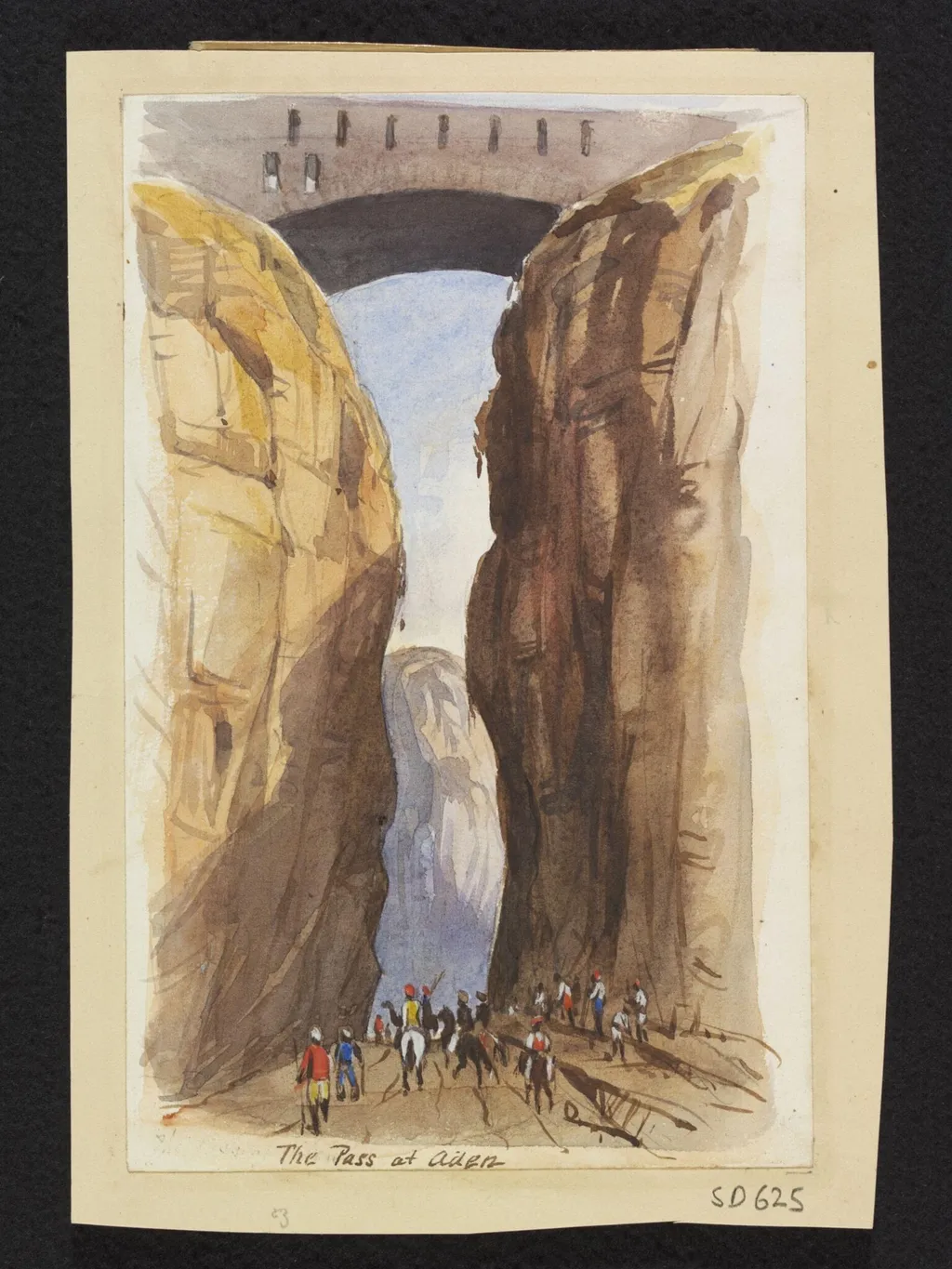
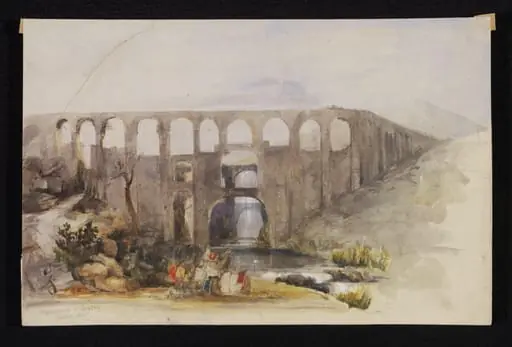
The Pass at Aden is a watercolor work on paper by the Impressionist artist William Godfrey Rayson Masters. It dates from 1859 and is held in the collection of the Victoria and Albert Museum.
About this work
Overview
A watercolour sketch titled *The Pass at Aden* was executed by Captain William Godfrey Rayson Masters, a Royal Marine Light Infantry officer.
A watercolour sketch titled *The Pass at Aden* was executed by Captain William Godfrey Rayson Masters, a Royal Marine Light Infantry officer. Created during his service, the work was acquired by the museum in June 1972 through a purchase from the dealer Sabin for £34. It reflects the artist’s direct engagement with the landscape of southern Arabia, rendered with immediacy and minimal embellishment.
Subject & Meaning
The scene depicts a narrow mountain pass in Aden, where a small party of figures and pack animals traverse a stone bridge beneath towering cliffs. The presence of red-coated soldiers suggests a military procession, grounding the image in the colonial context of British presence in the region. The composition emphasizes the isolation and physical challenge of the route, conveying a sense of movement through a rugged, inhospitable terrain.
Technique & Style
Masters employed loose, rapid brushwork to capture the texture of the cliffs and the fleeting quality of light. The muted earth tones of the rock faces contrast with the vivid red of the uniforms, drawing attention to the human element within the landscape. Watercolour was used with economy—no heavy layering or detail—suggesting the sketch was made on-site, likely as a field record rather than a polished composition.
History & Provenance
The work entered the museum’s collection in 1972 after being acquired from the dealer Sabin. Its prior ownership is undocumented, but its subject matter and style align with Masters’ known service in Aden during the late 19th or early 20th century. As a military officer, he likely produced such sketches for personal or official documentation, though no record of its original purpose survives.
Context
Aden, a strategic British naval base from the mid-19th century, was frequently documented by military personnel. Masters’ sketch reflects a broader tradition of British officers recording landscapes and infrastructure during imperial postings. The pass depicted would have been a key transit route, and its depiction underscores the logistical challenges of maintaining control over remote territories.
Legacy
Though not widely exhibited, the sketch contributes to a modest corpus of watercolours by military artists who documented colonial landscapes with practical precision. Its value lies in its unembellished observation, offering a quiet counterpoint to more romanticized imperial imagery. It remains a tangible record of a specific place and time, preserved through institutional acquisition rather than artistic fame.
Artist & collection
Artist
William Godfrey Rayson Masters
William Godfrey Rayson Masters created watercolours of places like Aden. His works, such as The Pass at Aden and Aden, both from 1859, showcase his focus on this location. The Pass at Aden, for example, highlights his…

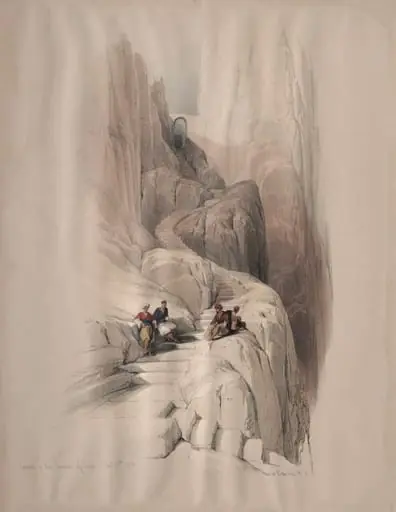 Ascent to the Summit of Sinai
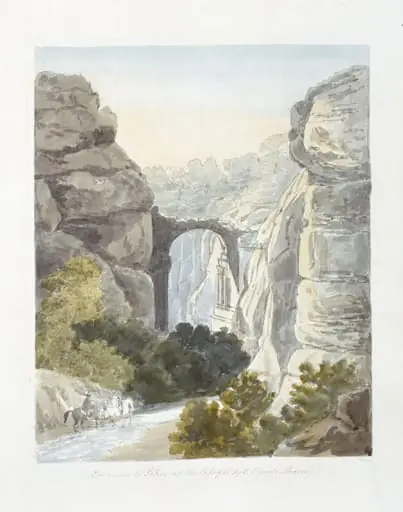 `Entrance to Petra at the Pass of El Syk, Waadi Moosa'
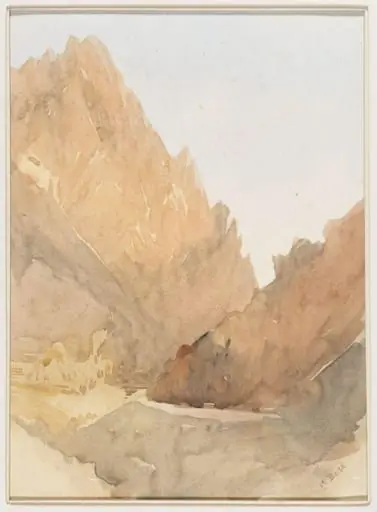 The Gate of the Desert
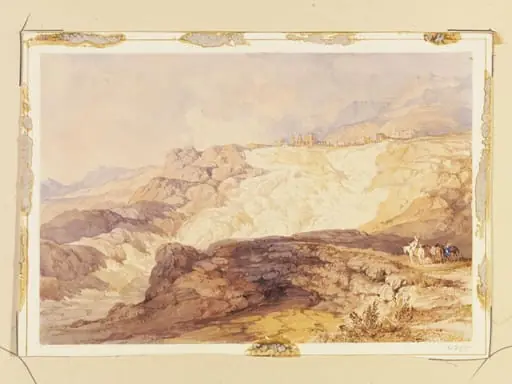 The Ruins of Hierapolis
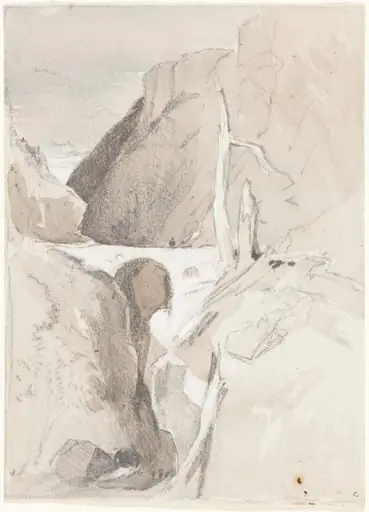 Gorge with Tree Stumps
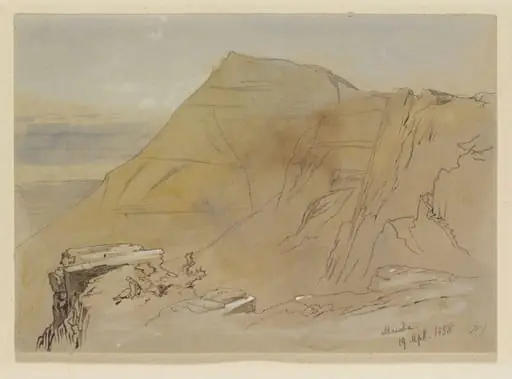 Masada
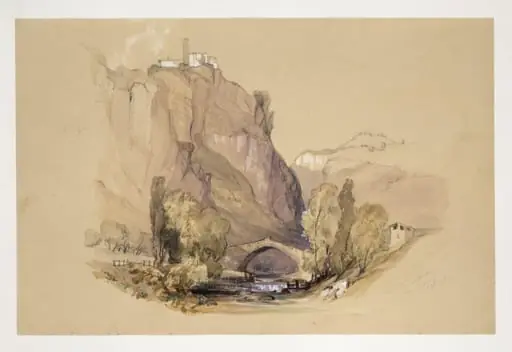 San Pietro, near Porlezza, Lake Lugano
 A Seated Man Contemplating a Sunlit Mountain Valley
 Ascent of the Lower Range of Sinai
 Triumphal Arch Crossing the Ravine Leading to Petra
 Entrance to the Bolan Pass from Dadur
 Aqueducts nr. Smyrna