Artwork
Aqueducts nr. Smyrna
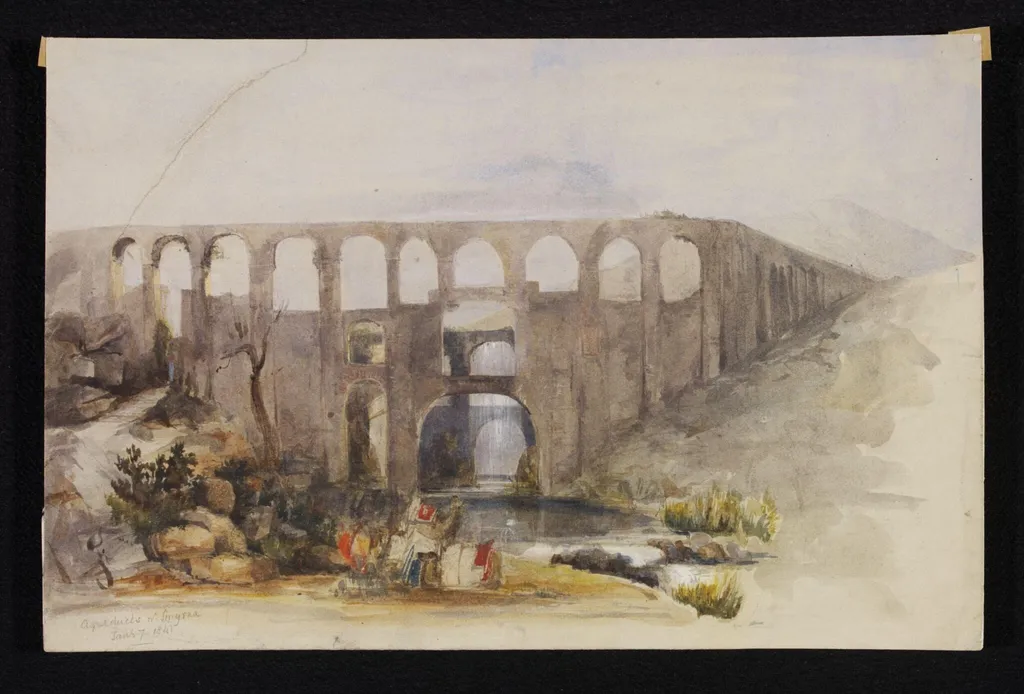
Aqueducts nr. Smyrna is a watercolor work on paper by the Romanticist artist Unknown. It dates from 1841 and is held in the collection of the Victoria and Albert Museum.
About this work
Overview
Created in 1841, this watercolour depicts a stone aqueduct near Smyrna, attributed once to Sir George Scharf but now considered the work of an unknown hand.
Created in 1841, this watercolour depicts a stone aqueduct near Smyrna, attributed once to Sir George Scharf but now considered the work of an unknown hand. It resides in the Searight Archive, where it is catalogued as a topographical study. The piece reflects a quiet observational approach, prioritizing architectural form over dramatic narrative, and aligns with 19th-century travel documentation practices common among amateur and professional draftsmen of the period.
Subject & Meaning
The aqueduct stands as the central subject, its enduring stone structure suggesting the persistence of ancient engineering amid a subdued natural landscape. The absence of human figures or overt symbolism points to a focus on architectural legacy rather than historical storytelling. The setting implies a contemplative engagement with ruins, possibly reflecting contemporary interest in classical antiquity and the passage of time, without romantic embellishment.
Technique & Style
Rendered in muted greys and browns, the watercolour employs delicate washes to define the aqueduct’s individual stones and the play of light across its arches. The structure is rendered with precise, controlled detail, while the surrounding hills and vegetation are suggested with looser, more atmospheric strokes. This contrast emphasizes the monumentality of the ruins while grounding them in a tangible, unidealized environment.
History & Provenance
The work was previously attributed to Sir George Scharf, a known illustrator of antiquities, but later research in the Searight Archive reclassified it as anonymous. Its presence in this archive suggests it was collected as part of a broader effort to document architectural remains in the Eastern Mediterranean during the early 19th century. No record of exhibition or public display exists prior to its archival inclusion.
Context
Produced during a period of growing European interest in the classical heritage of Anatolia, the drawing aligns with travel sketches made by antiquarians and military officers. Unlike grand Romantic landscapes, this work avoids theatricality, instead offering a restrained, almost documentary view. Its tone reflects the scholarly, rather than sentimental, approach to ruins prevalent among British and German collectors of the time.
Legacy
Though unsigned and unattributed to a major artist, the watercolour contributes to a body of lesser-known visual records that helped shape Western understanding of ancient infrastructure in Asia Minor. Its preservation in the Searight Archive ensures its continued use as a reference for architectural historians studying the representation of Roman-era engineering in 19th-century visual culture.
Artist & collection

 Domestic Scene
 Giacomo and Cardinal Marco, investing Andrea, Abbot of San Zeno, with his Benefice
 The Nymph of Fontainebleau
 Portrait of a Woman
 Madonna and Child with Saints in the Enclosed Garden
 Venus and Minerva
 Family Group of Four on Sofa
 Wall painting from Room H of the Villa of P. Fannius Synistor at Boscoreale
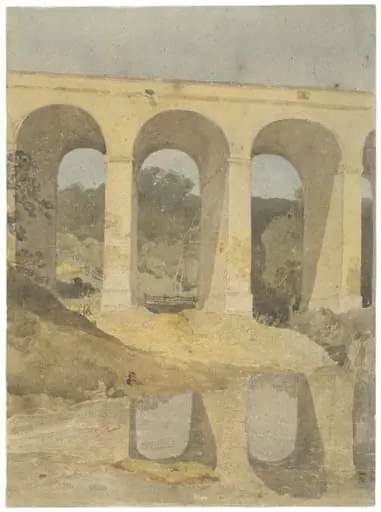 Crambe Beck Bridge, near Kirkham, Yorkshire. Formerly called 'Chirk Aqueduct'.
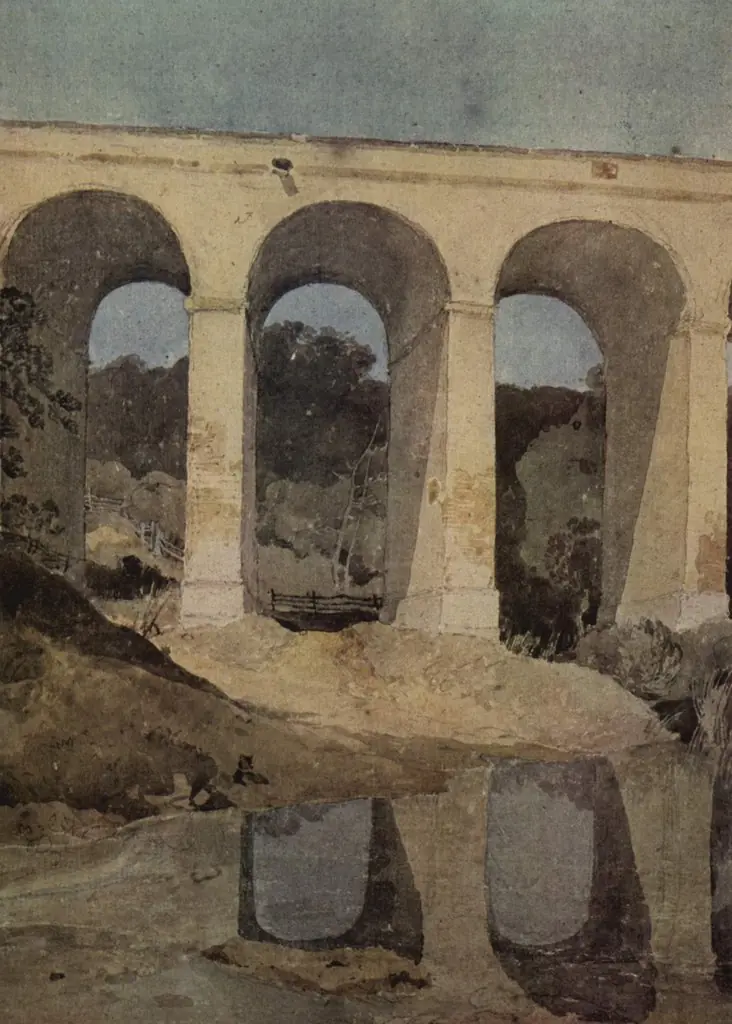 Crambe Beck Bridge, near Kirkham, Yorkshire
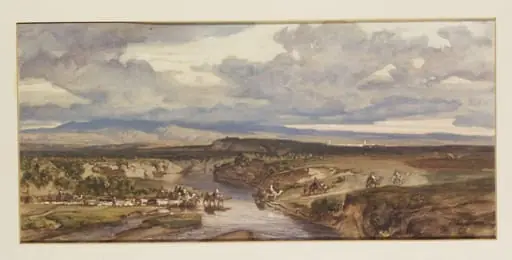 A Bedouin Caravan fording the River Jordan below Lake Tiberias
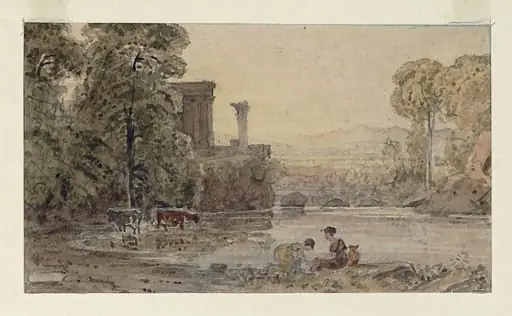 Classical landscape
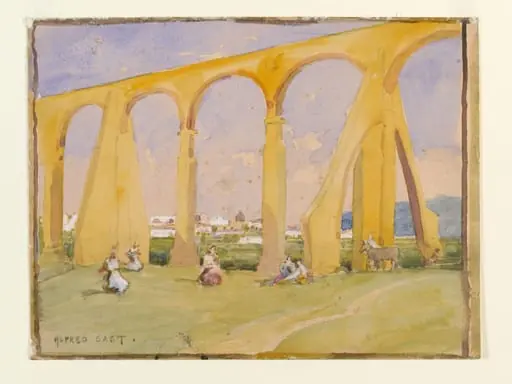 The Viaduct, Algeciras
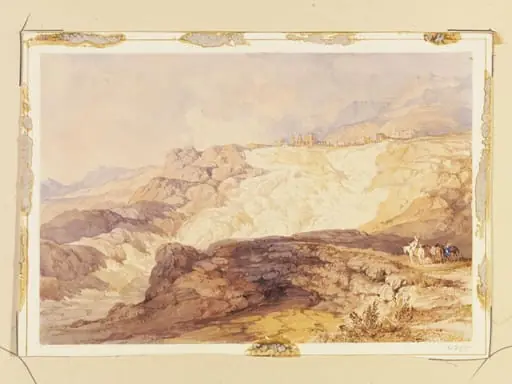 The Ruins of Hierapolis
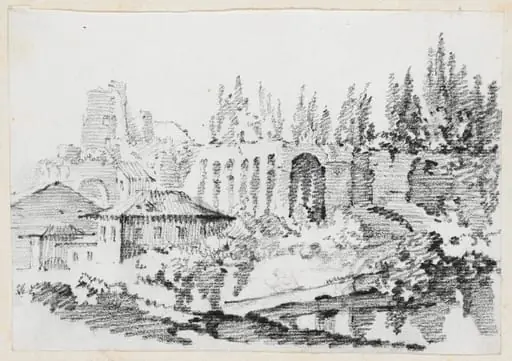 Ruins of the Imperial Palaces on the Palatine Hill
 Gothic ruins at Famagusta
 Tan y Bwlch
 The Casa, Macao, in the gardens of which is Camoens' Cave (the residence of Lady Pereira), Macao
 The Aqueduct - Ephesus
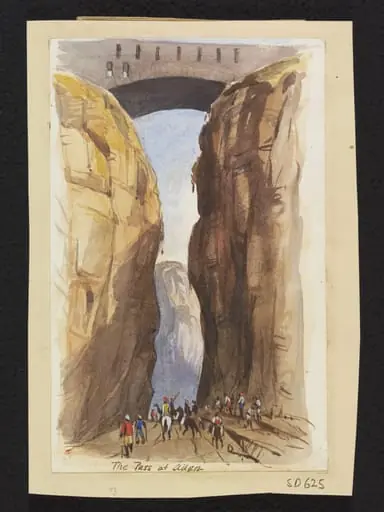 The Pass at Aden