Artwork
Immaculate Conception
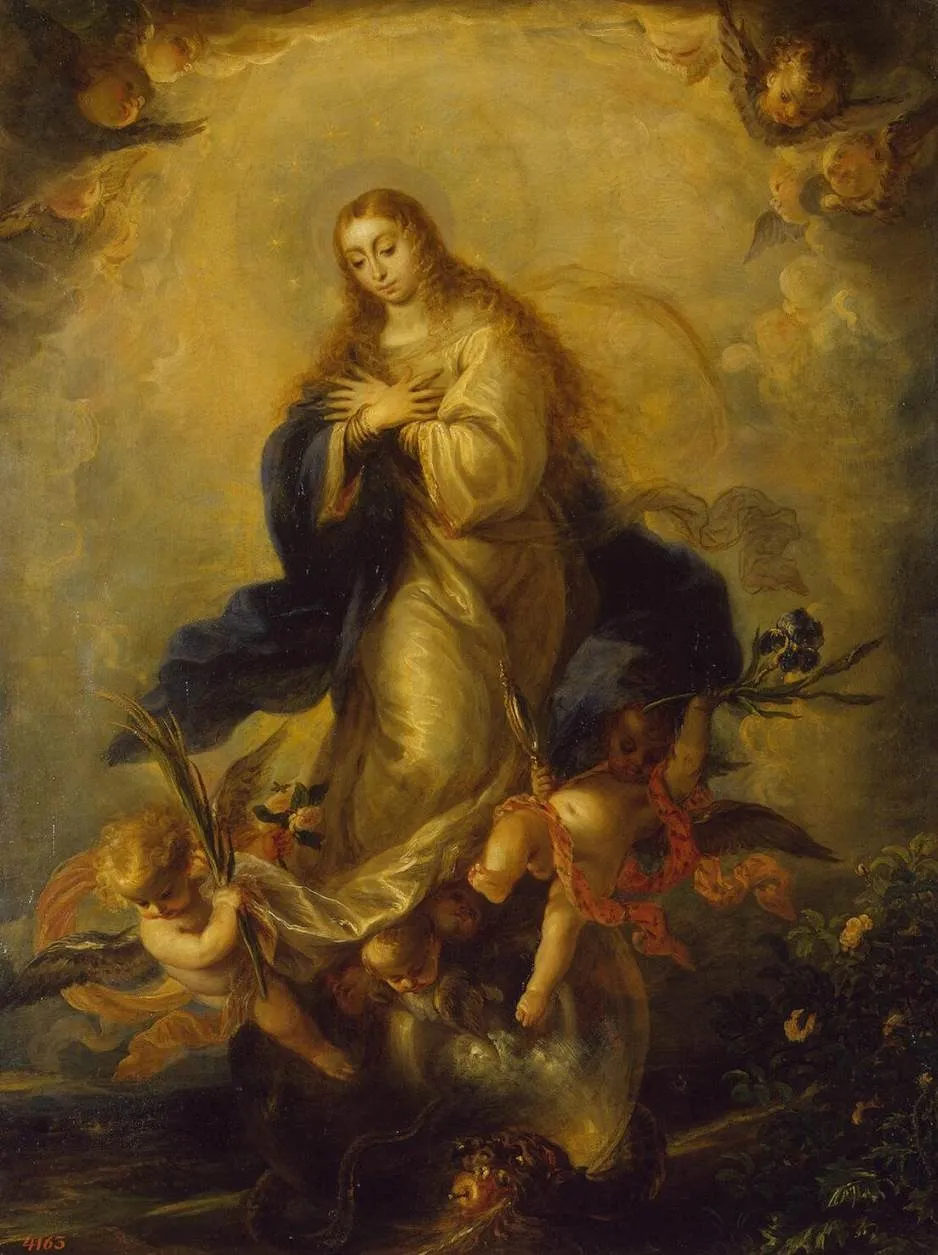
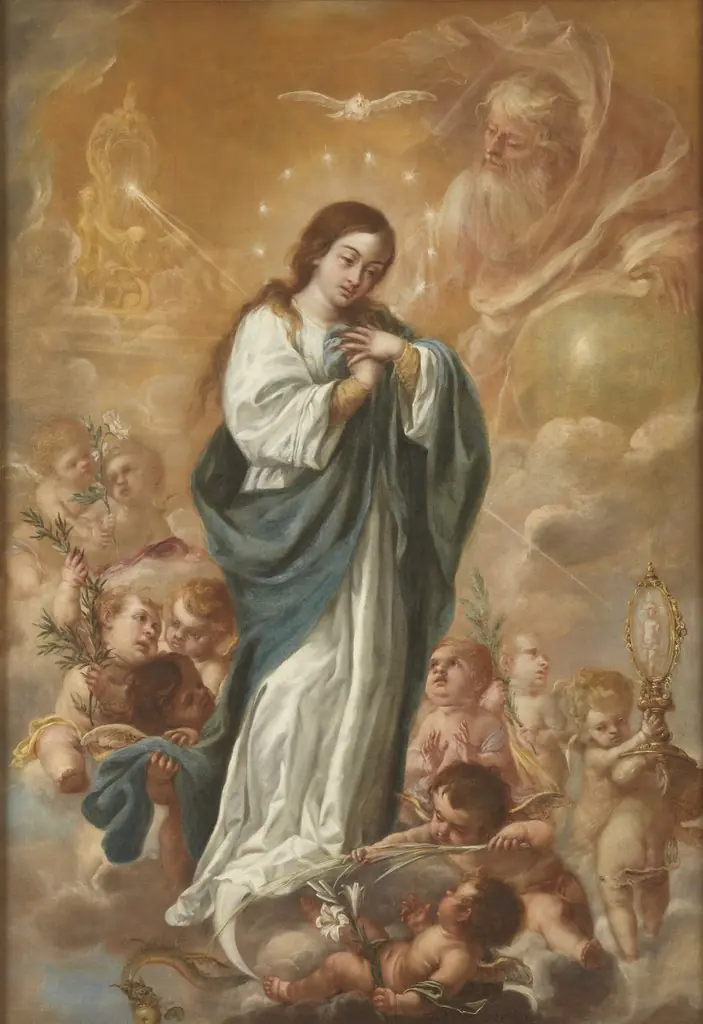
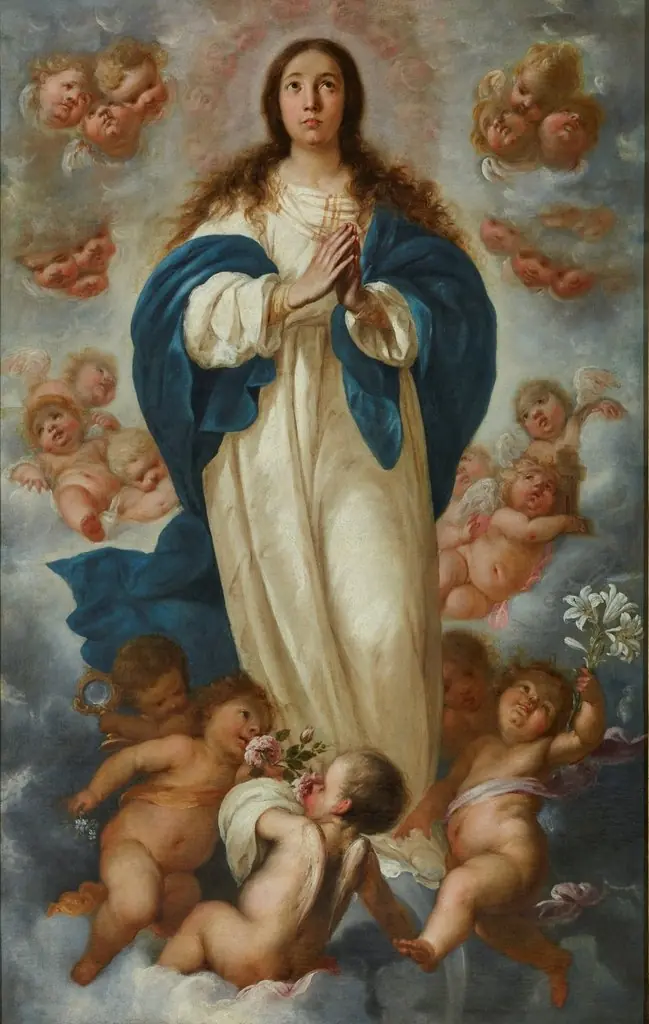
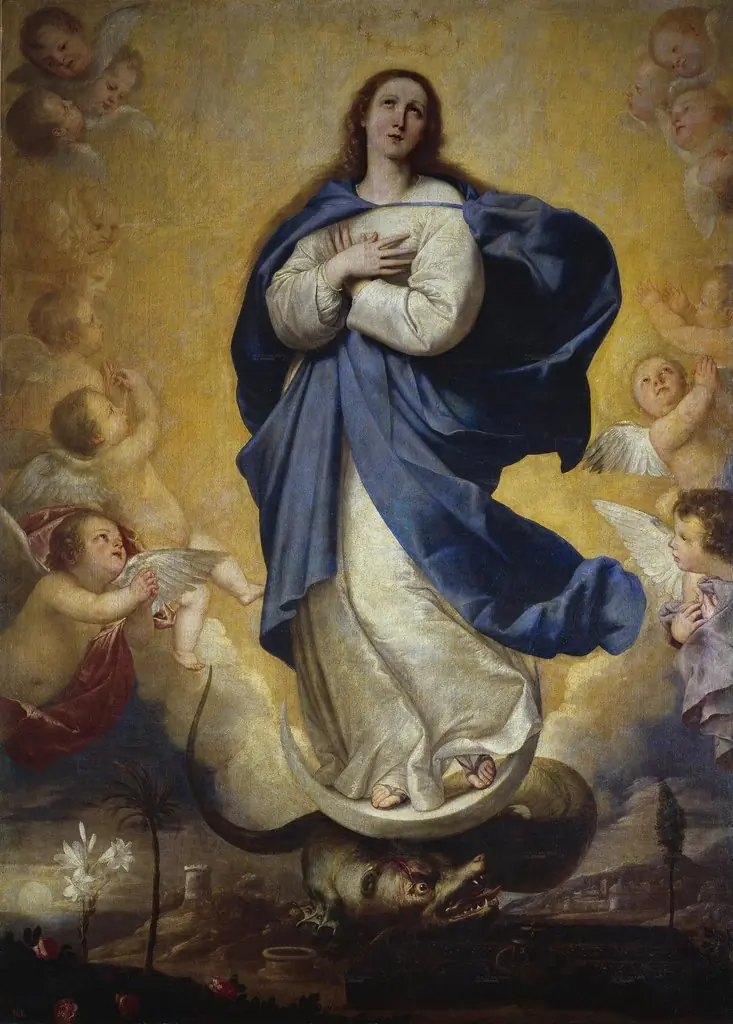
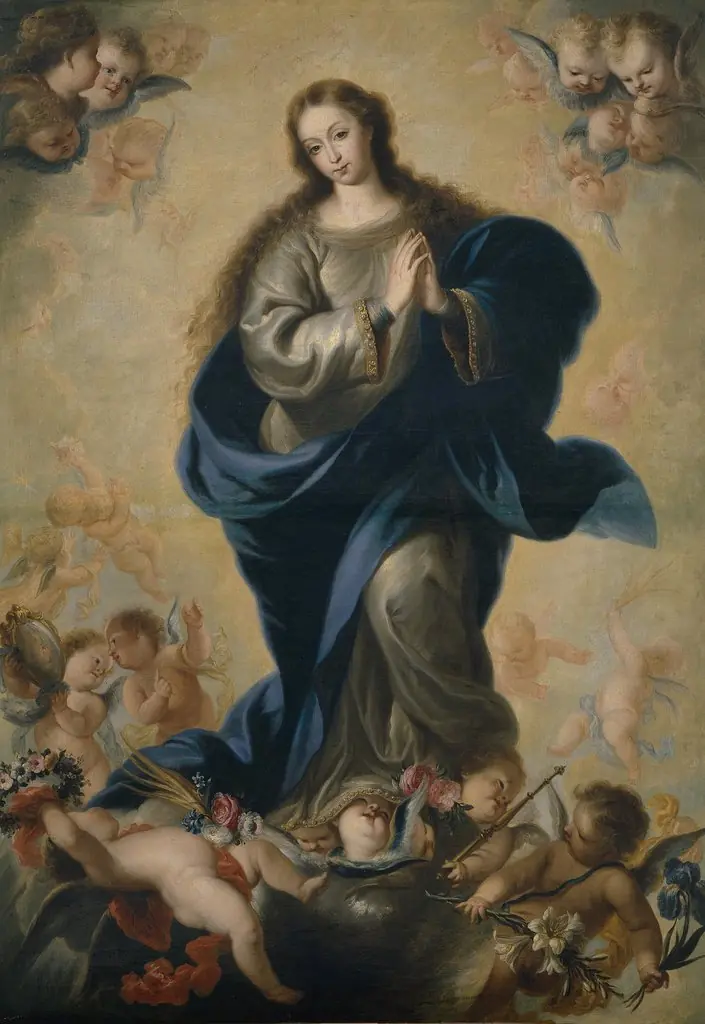
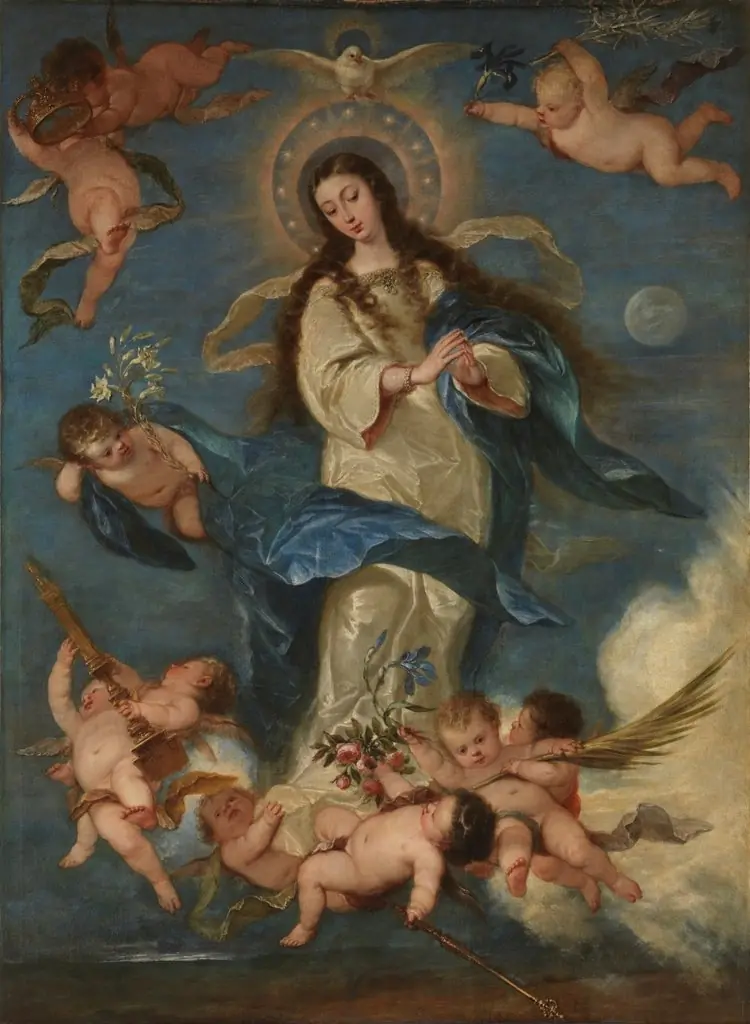
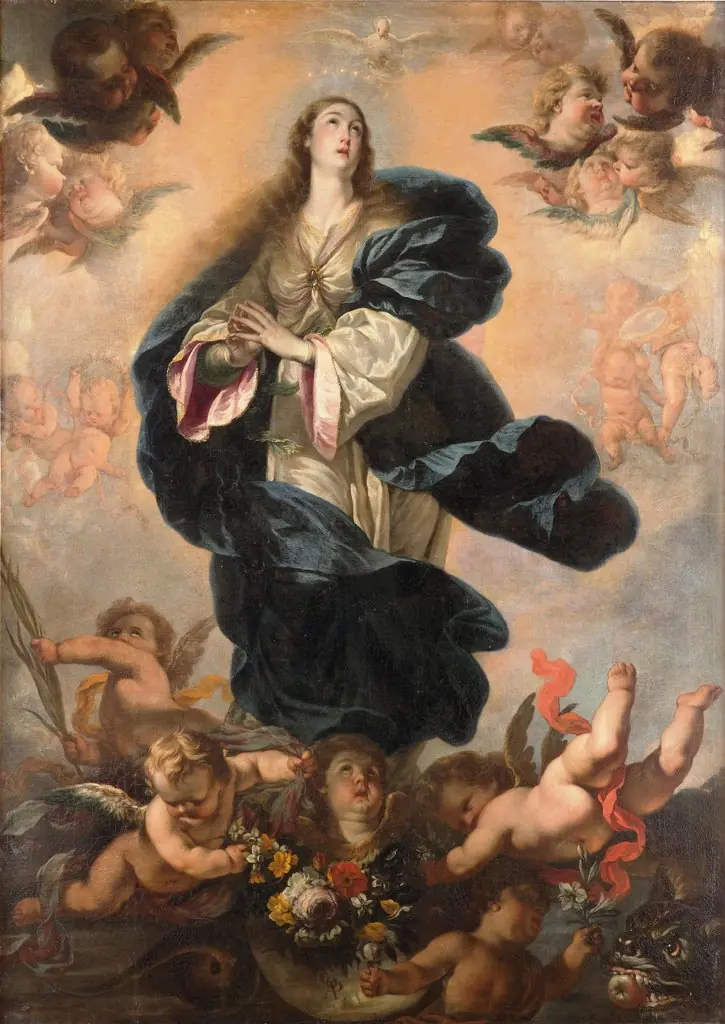
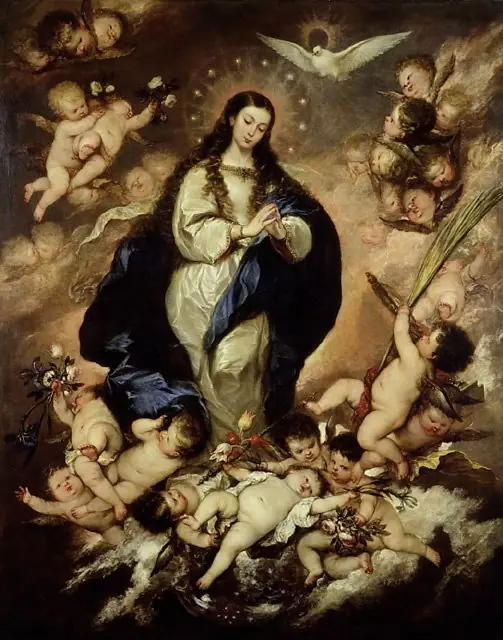
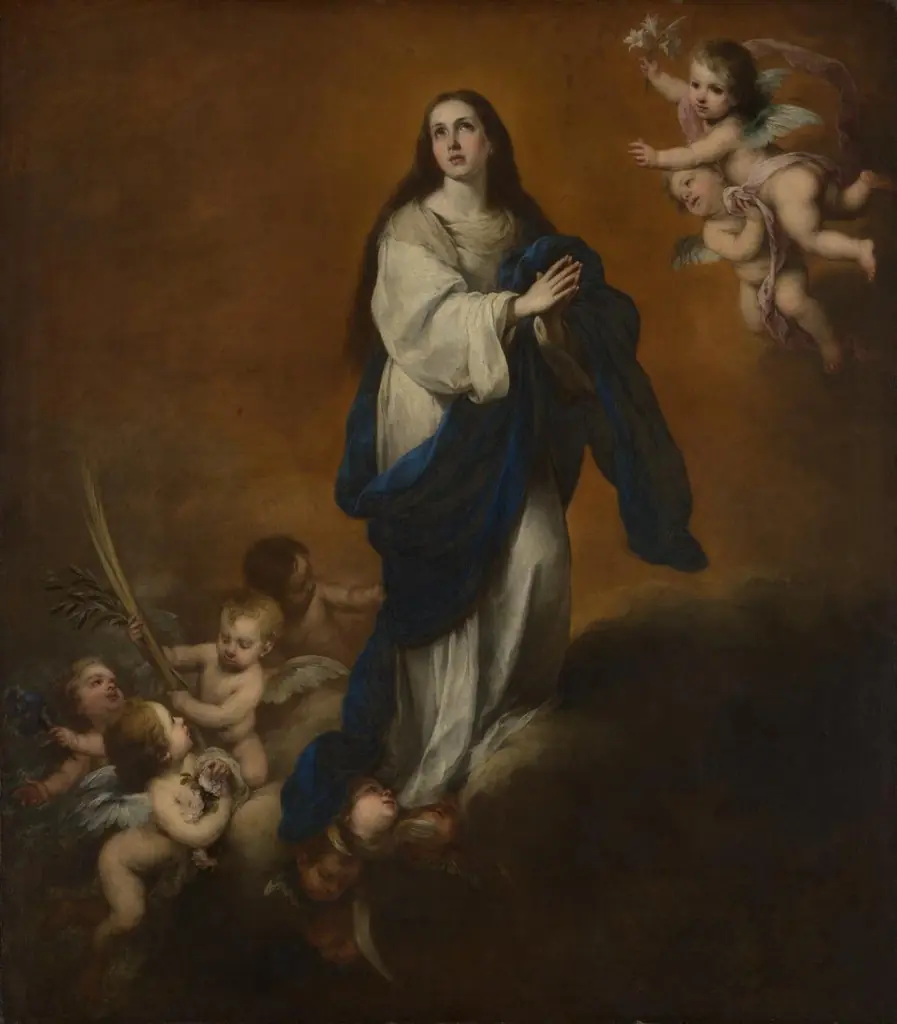
Immaculate Conception is an oil painting by the Early Baroque Italian artist Mateo Cerezo. It dates from 1664 and is held in the collection of the Hermitage Museum.
About this work
Overview
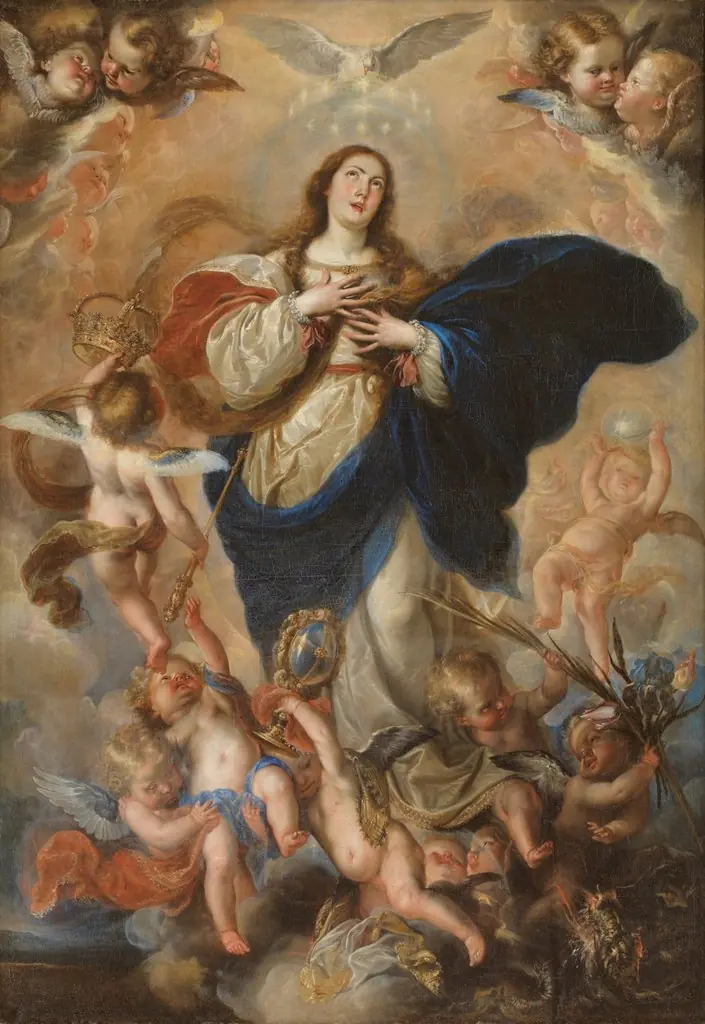
Painted in 1664 by Spanish artist Mateo Cerezo, this work depicts the Immaculate Conception on a copper panel. It reflects the influence of early Baroque Italian styles, adapted through a distinctly Spanish devotional sensibility. The painting is part of the State Hermitage Museum’s collection, where it remains as an example of 17th-century religious artistry in a rare medium for its time.
Subject & Meaning
The subject is the Virgin Mary as conceived without original sin, a doctrine central to Catholic theology. She is shown elevated above a rocky landscape, symbolizing her purity and separation from earthly corruption. Surrounding angelic figures, some bearing symbolic objects like flowers or feathers, reinforce her divine status, while the celestial setting underscores her spiritual transcendence.
Technique & Style
Cerezo employed chiaroscuro to model the Virgin’s form with luminous precision, using soft gradations of light and shadow to create a sense of volume.
Cerezo employed chiaroscuro to model the Virgin’s form with luminous precision, using soft gradations of light and shadow to create a sense of volume. The copper support allowed for fine detail and a smooth, reflective surface that enhances the glow of her garments. The hazy sky and delicate rendering of floating figures contribute to an ethereal atmosphere, characteristic of devotional imagery of the period.
History & Provenance
Commissioned during the height of Spanish Baroque religious art, the painting entered the Hermitage collection in the 18th or 19th century, likely through imperial acquisitions of European works. Its survival in good condition reflects careful preservation, and its copper support—less common than canvas—suggests a patron seeking a durable, refined surface for a sacred image.
Context
In mid-17th-century Spain, devotion to the Immaculate Conception was intensifying, culminating in its official dogma in 1854. Artists like Cerezo responded to this spiritual climate with images that emphasized Mary’s purity and celestial authority. The work aligns with broader trends in Counter-Reformation art, where visual clarity and emotional resonance served doctrinal ends.
Legacy
Though not widely exhibited, the painting remains a representative example of Spanish Baroque religious painting on copper. It illustrates how regional styles absorbed Italian compositional techniques while maintaining a distinct emotional tone. Its presence in the Hermitage underscores its recognition as a significant, if modest, contribution to European devotional art.
Artist & collection
Artist
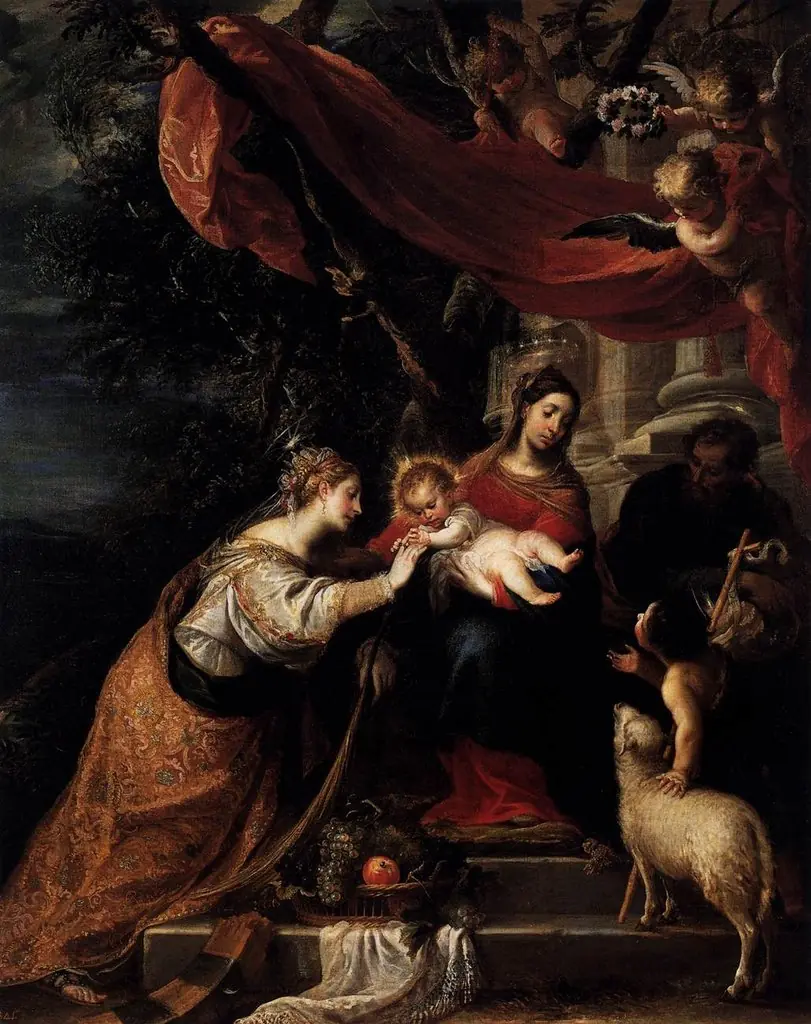
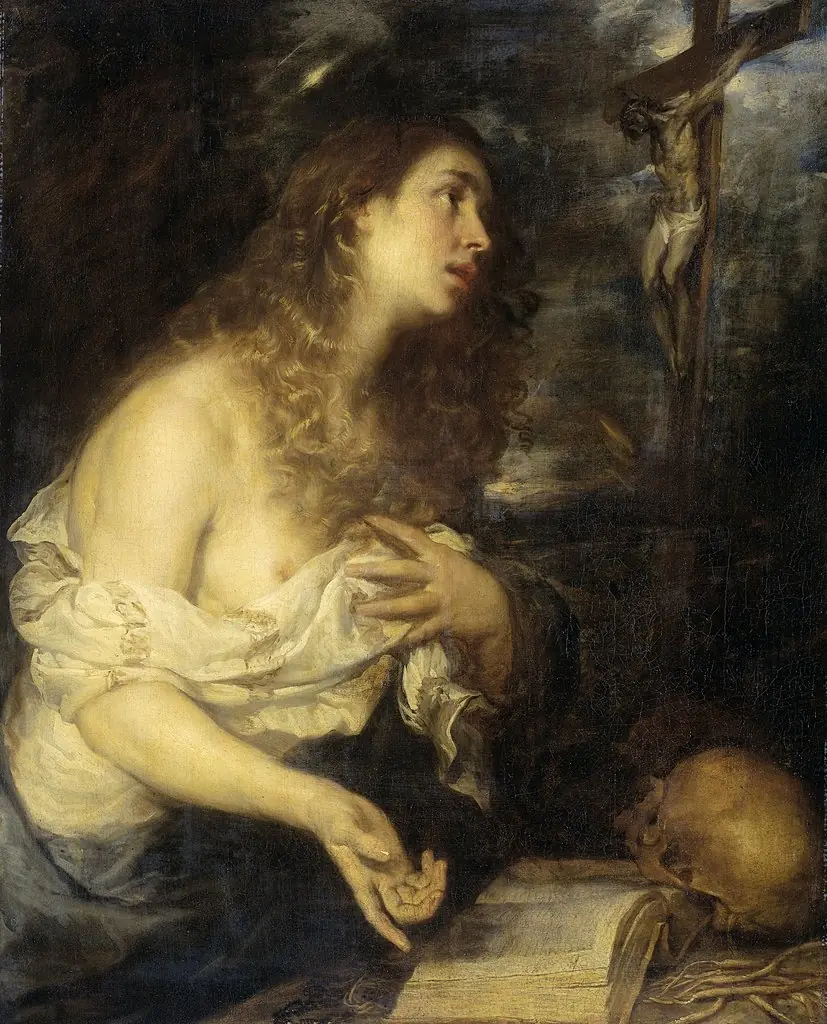
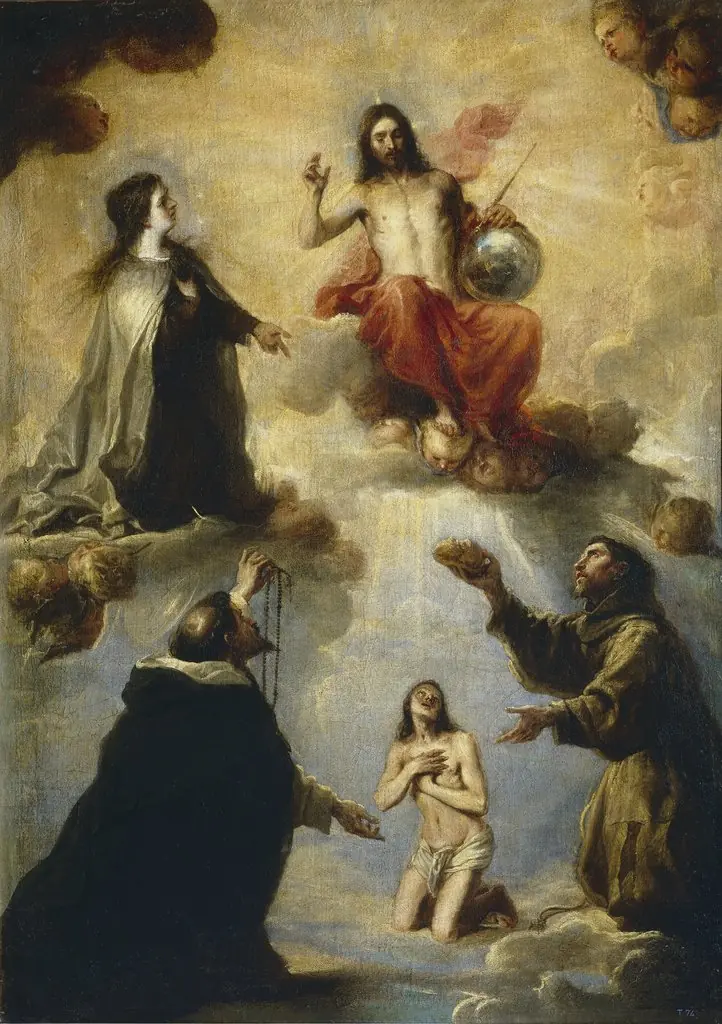
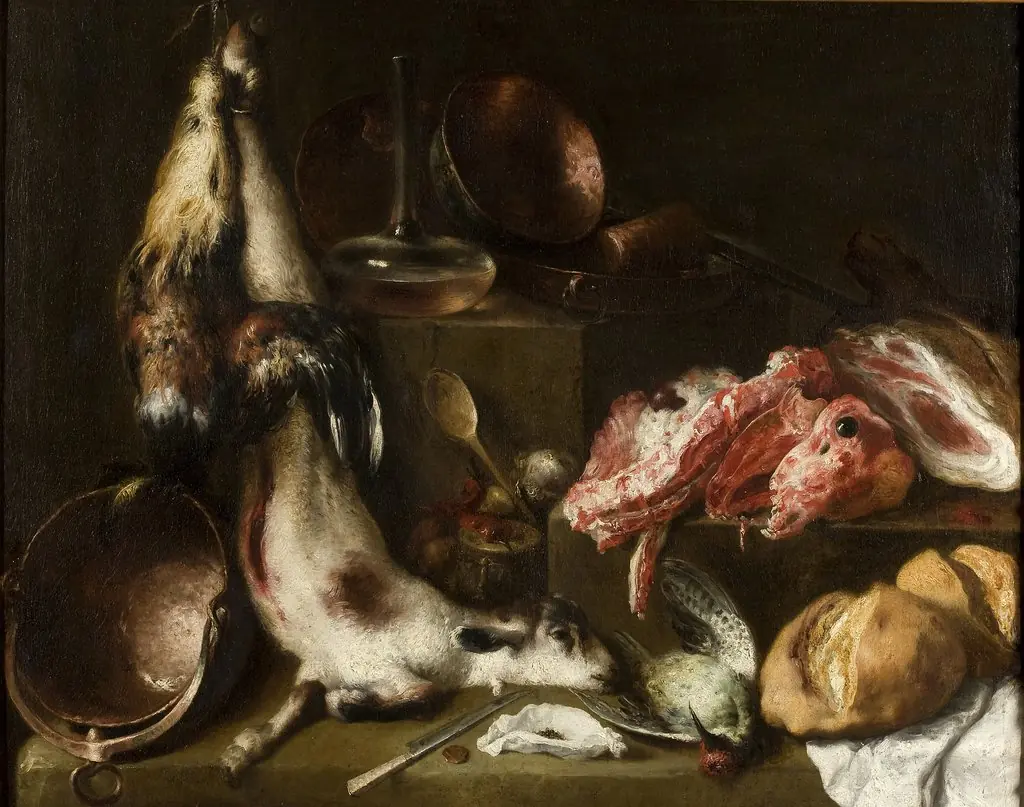
Mateo Cerezo, sometimes referred to as Mateo Cerezo the younger, (19 April 1637, Burgos – 29 June 1666, Madrid) was a Spanish Baroque painter, known primarily for religious works and still-lifes.