Artwork
Estigmatización de San Francisco
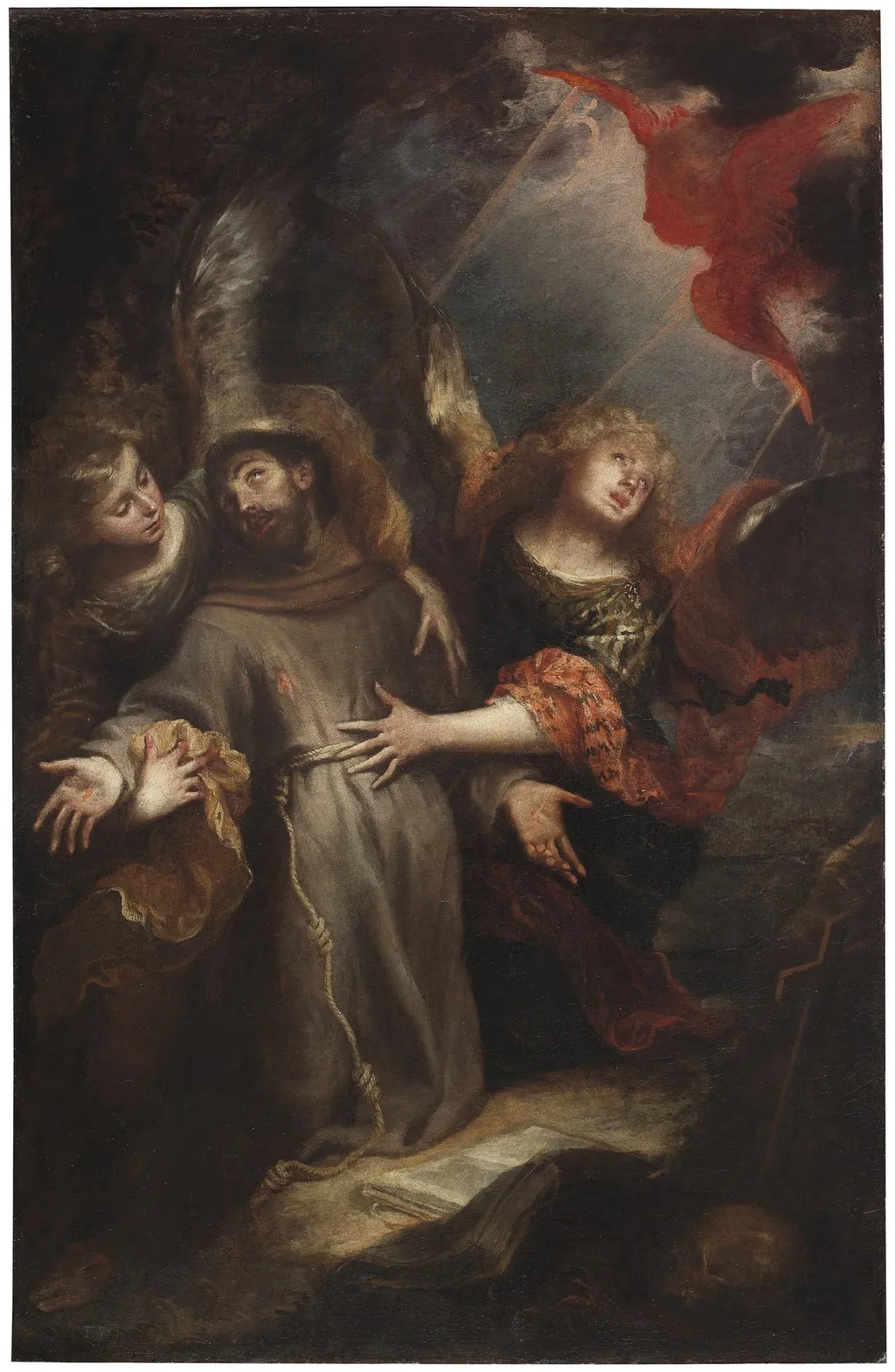
Estigmatización de San Francisco is an oil painting by the Early Baroque Italian artist Mateo Cerezo. It dates from 1660 and is held in the collection of the Museo del Prado.
About this work
Overview
Created in 1660, *Estigmatización de San Francisco* is an oil on canvas by the Spanish Baroque artist Mateo Cerezo. The work is held in the Museo del Prado and illustrates a moment from the life of Saint Francis of Assisi, a theme frequently employed in Counter‑Reformation visual culture.
Subject & Meaning
The composition centers on a solitary figure in a brown habit, representing Saint Francis at the moment of receiving his stigmata. Flanking him are two angels: one extends a cloth, the other bears a red banner, both underscoring the divine nature of the event. The darkened surroundings and a shaft of light emphasize the spiritual revelation.
Technique & Style
Cerezo employs the chiaroscuro characteristic of early Baroque painting, using strong contrasts between illuminated areas and deep shadow to model the figures. Visible brushwork adds texture to the drapery and celestial elements, while the focused beam of light draws attention to the saint’s torso, creating a dramatic spatial depth.
History & Provenance
Mateo Cerezo, active in mid‑17th‑century Spain, was known for his religious commissions. This painting entered the Prado’s collection, where it remains part of the museum’s holdings of Spanish Baroque art, reflecting the period’s emphasis on devotional imagery.
Own this work as a print
Artist & collection
Artist
Mateo Cerezo, sometimes referred to as Mateo Cerezo the younger, (19 April 1637, Burgos – 29 June 1666, Madrid) was a Spanish Baroque painter, known primarily for religious works and still-lifes.

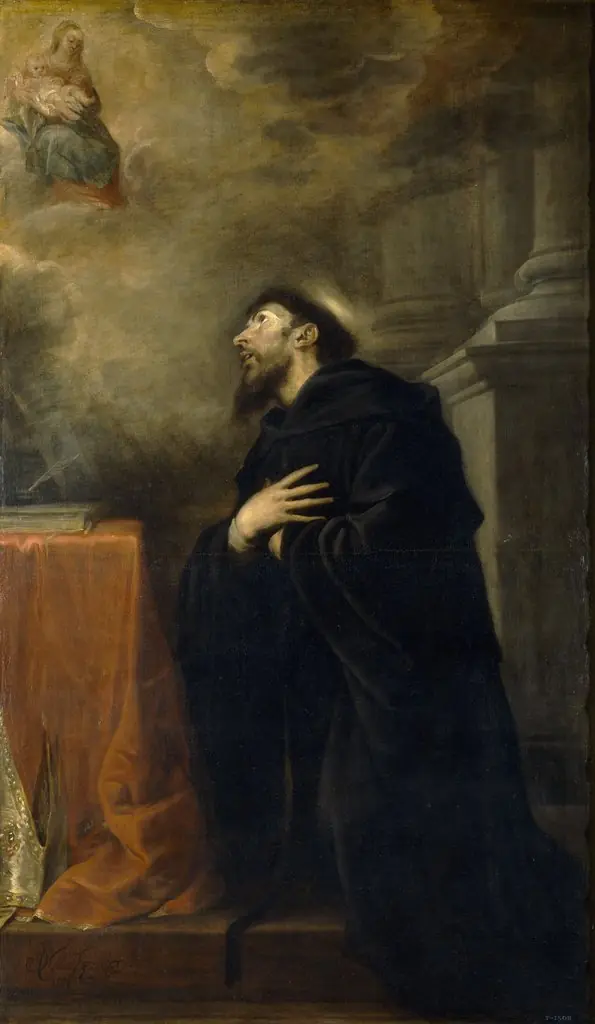
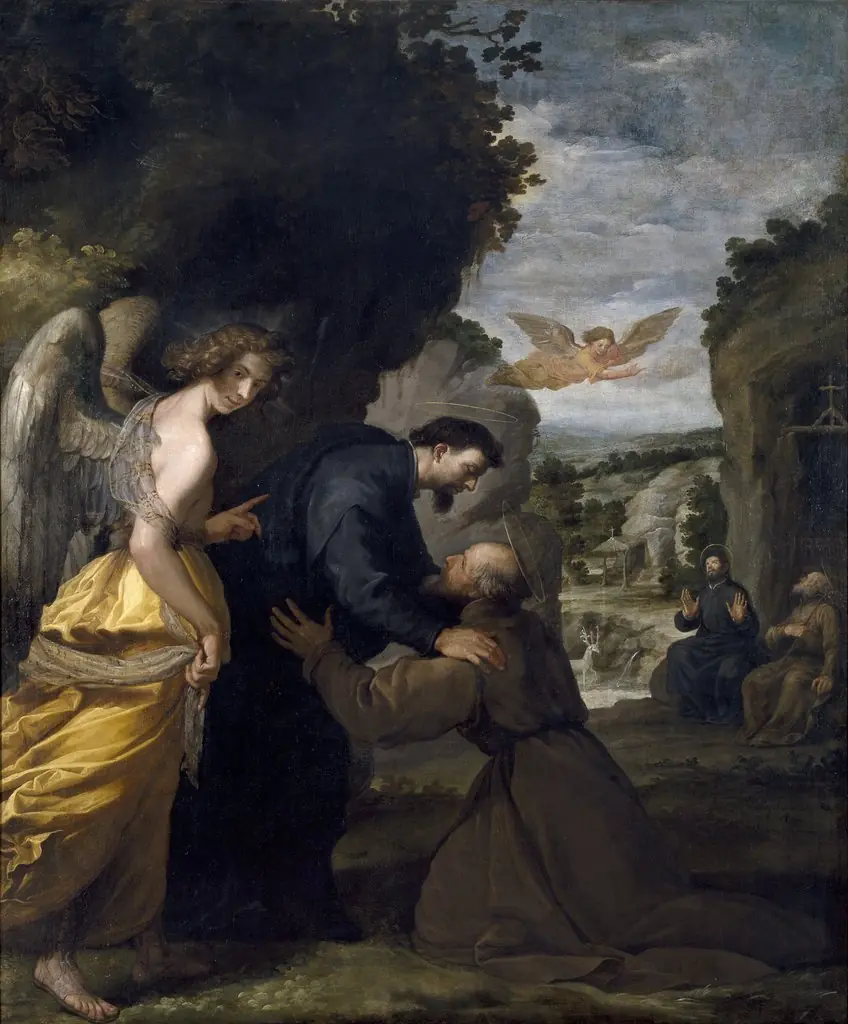 Encuentro de San Juan de Mata y San Félix de Valois
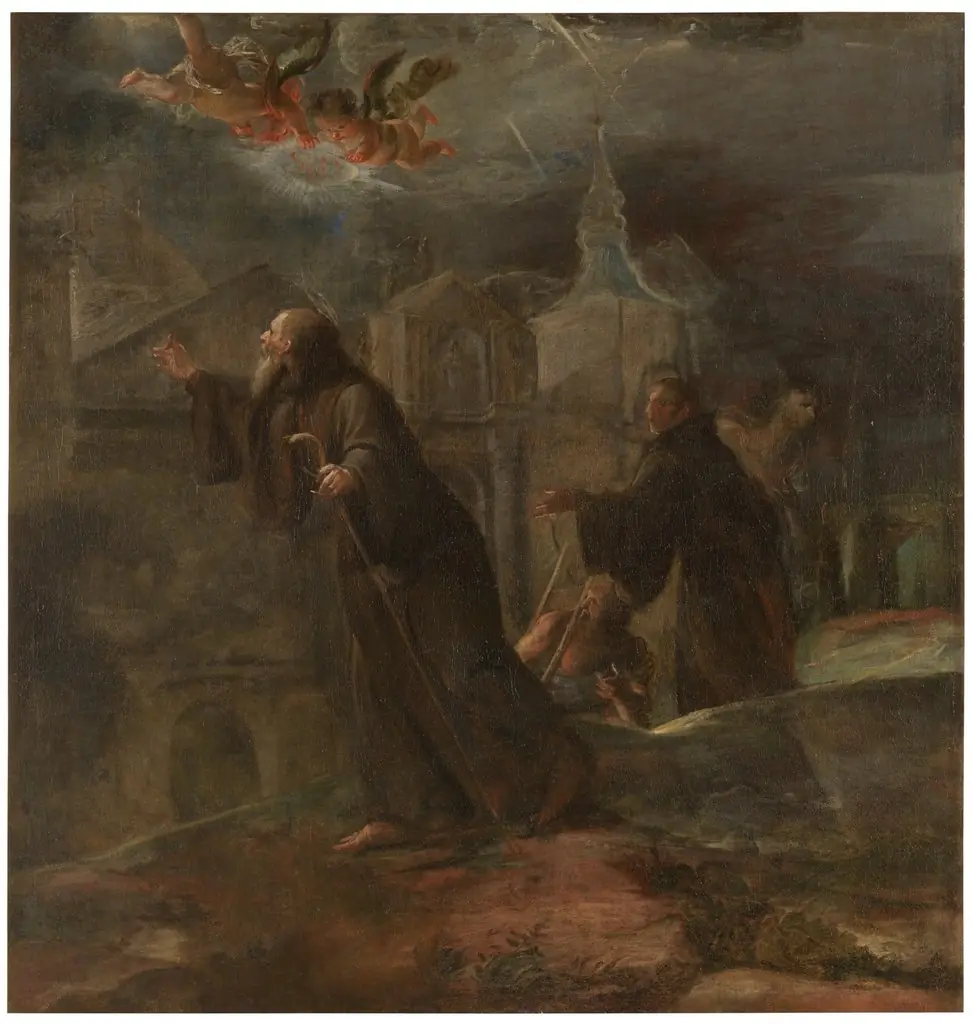 Visión de San Francisco de Paula
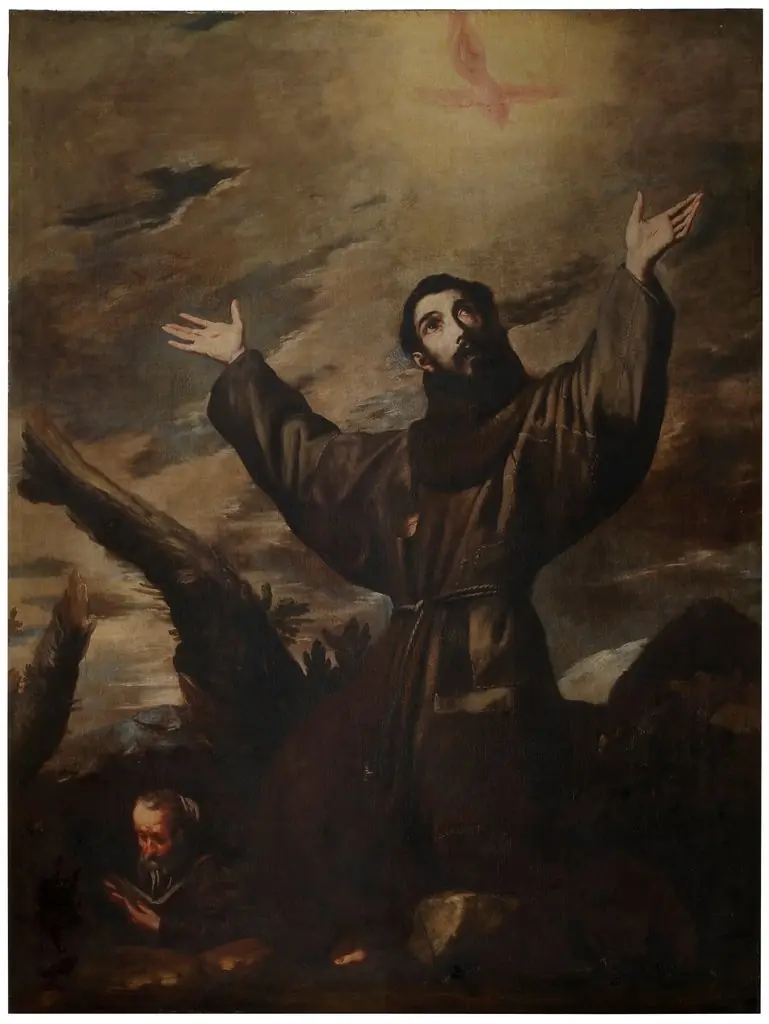 San Francisco recibe los estigmas
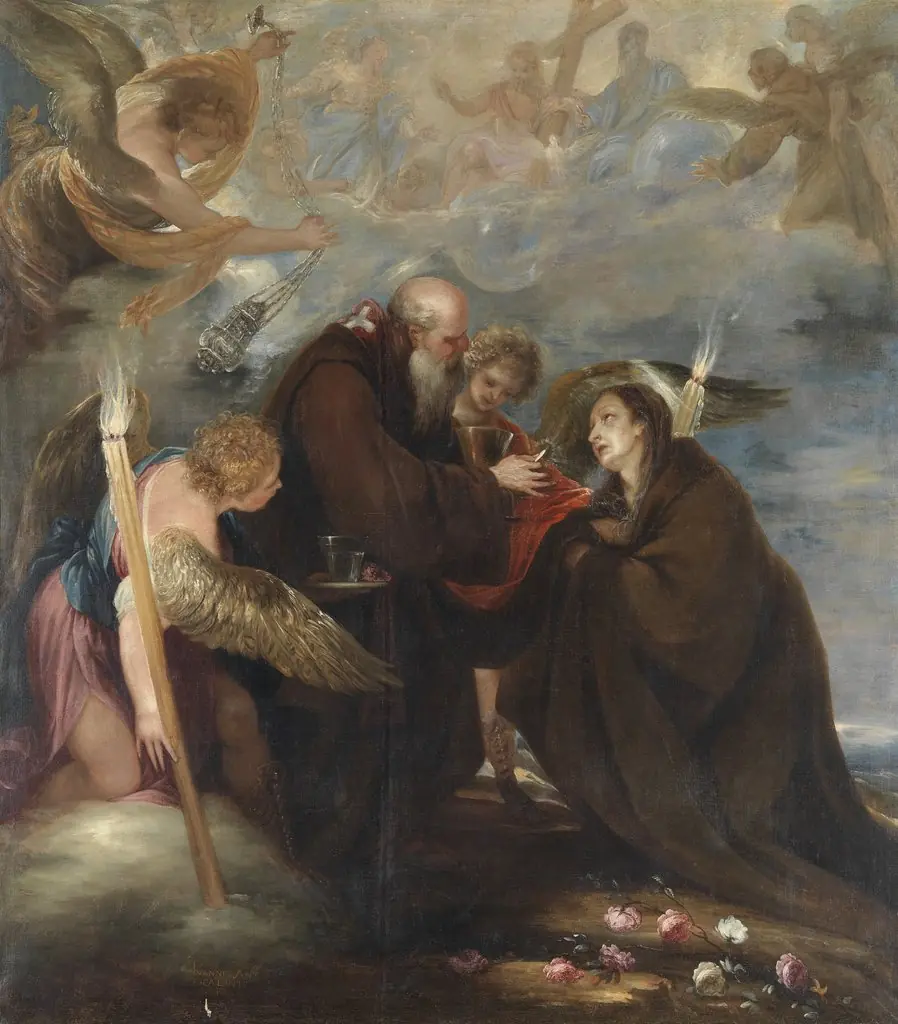 Comunión de Santa Rosa de Viterbo
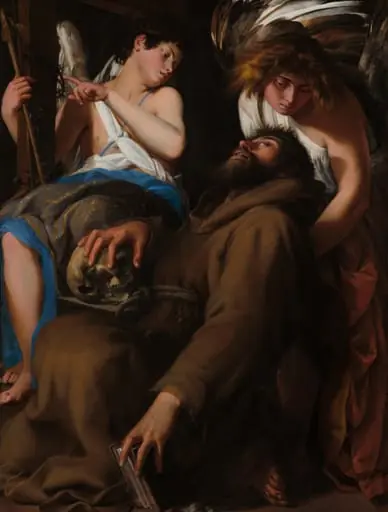 The Ecstasy of Saint Francis
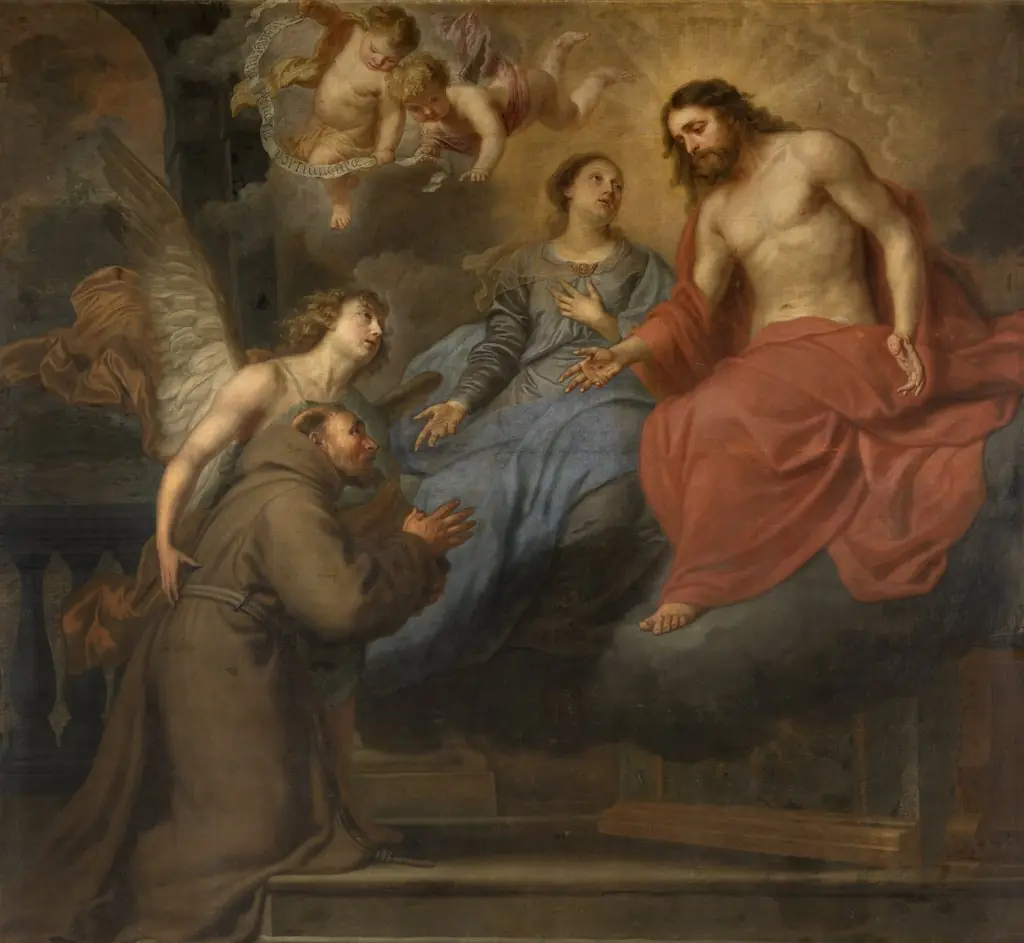 Portiuncula
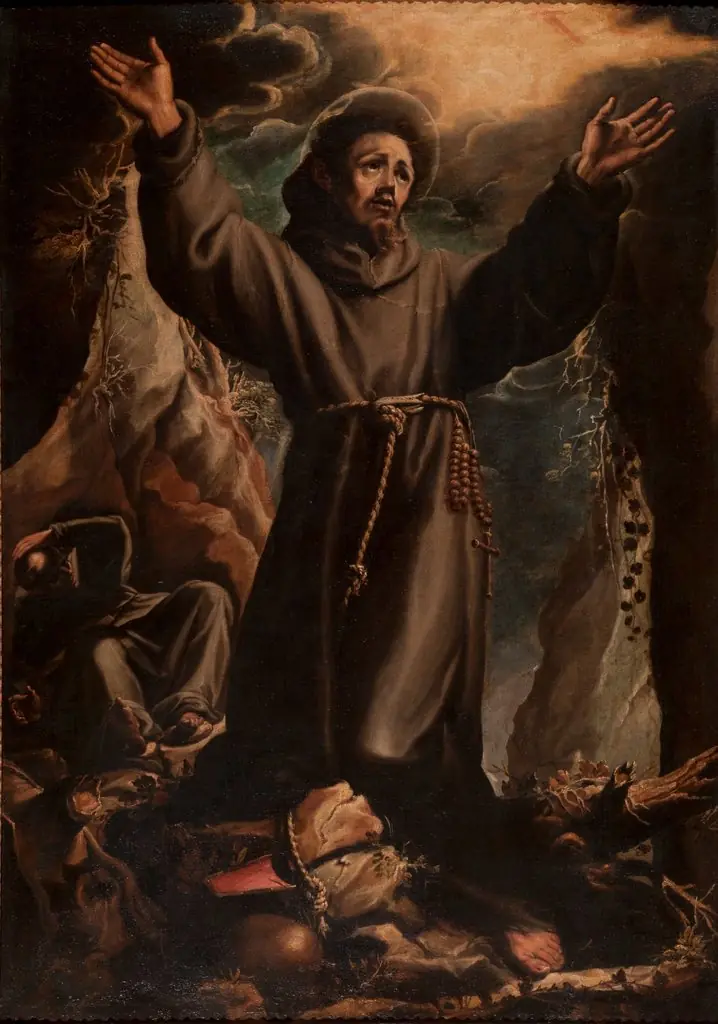 San Francisco recibiendo los estigmas
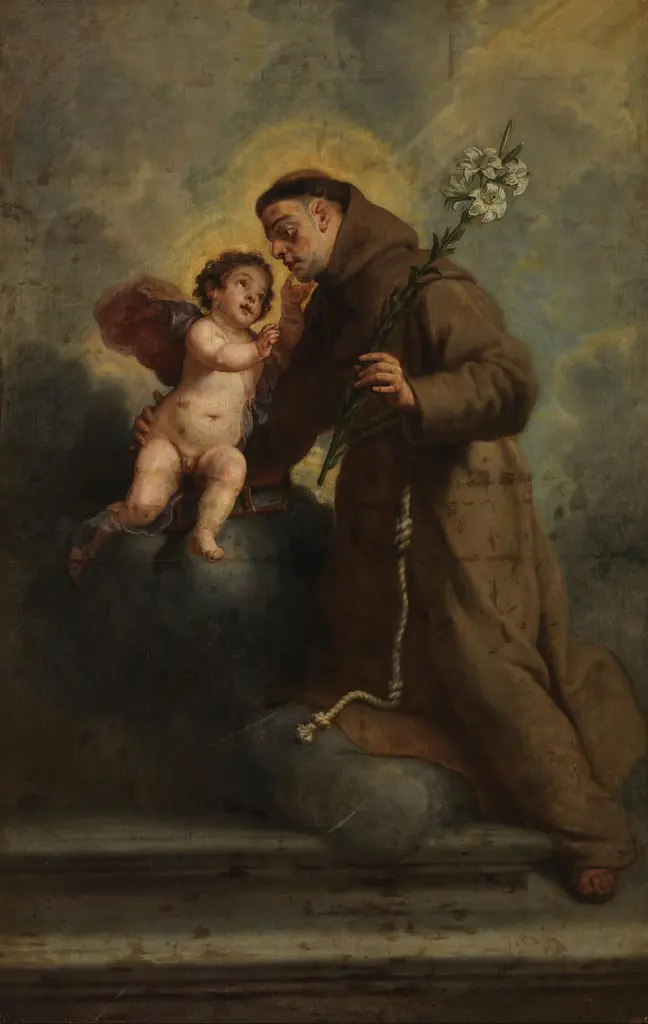 Saint Anthony of Padua with the Infant Christ
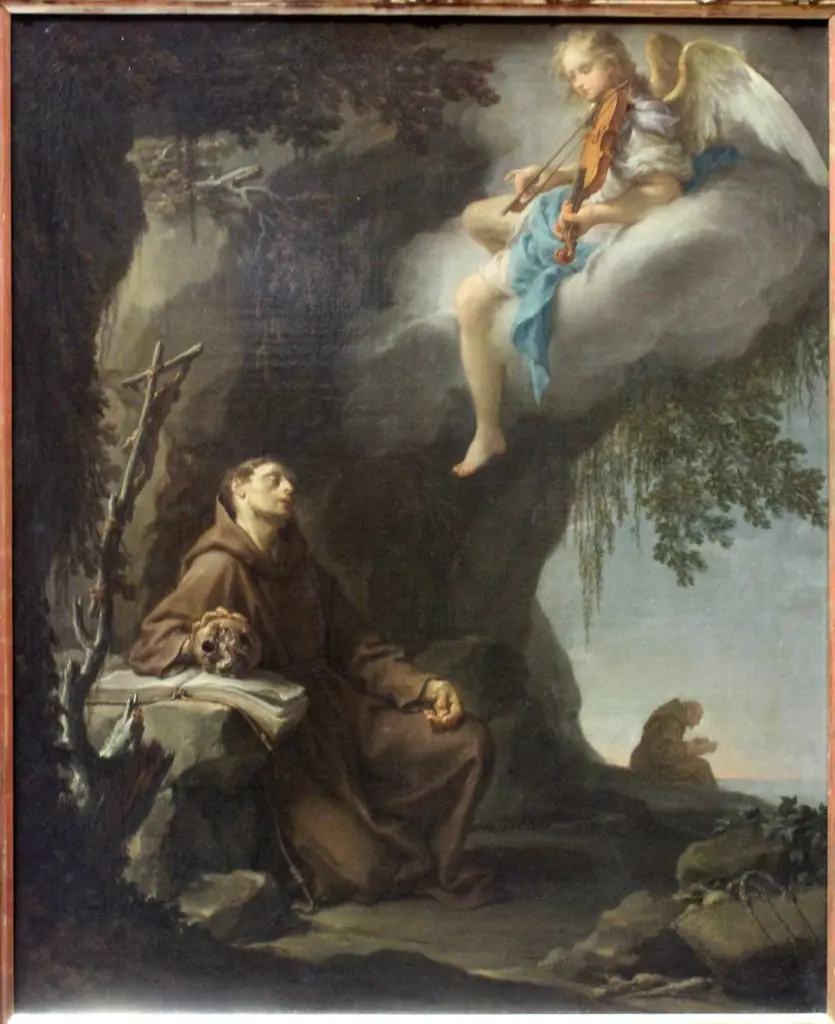 The Ecstasy of Saint Francis
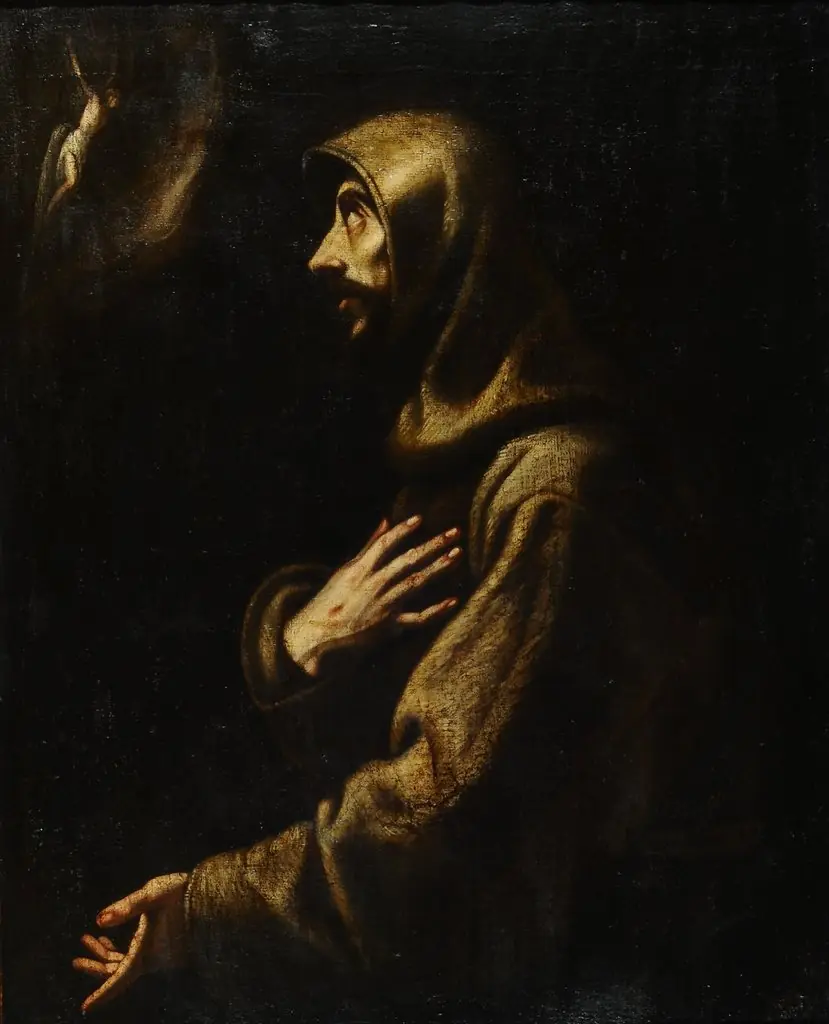 San Francisco in ecstasy
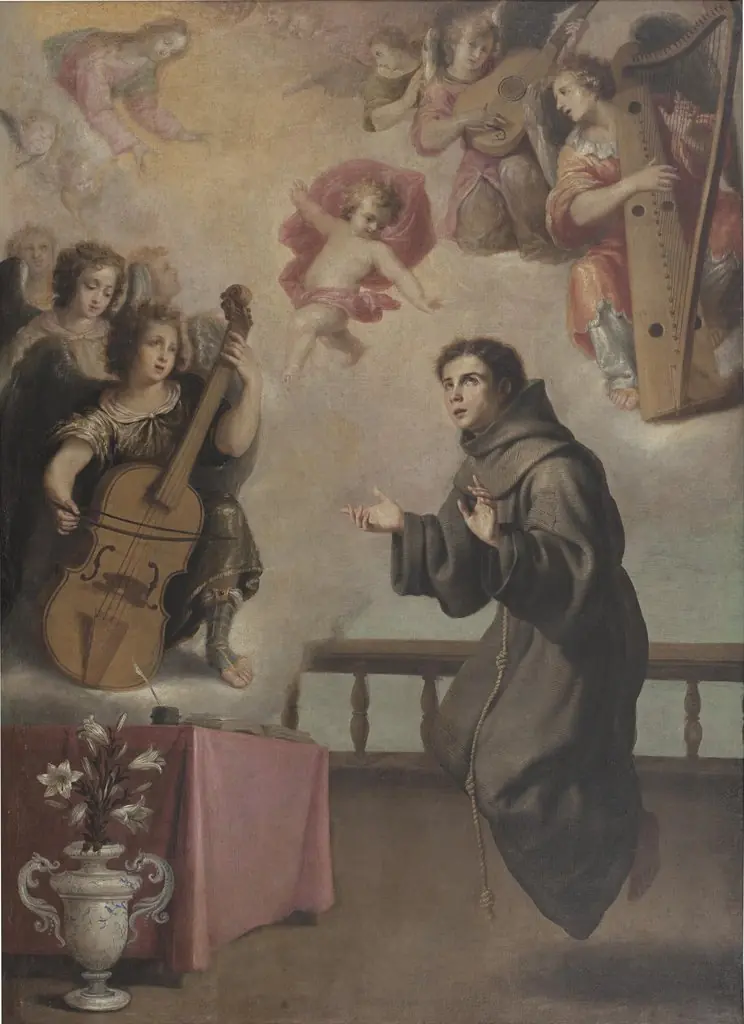 Saint Anthony of Padua
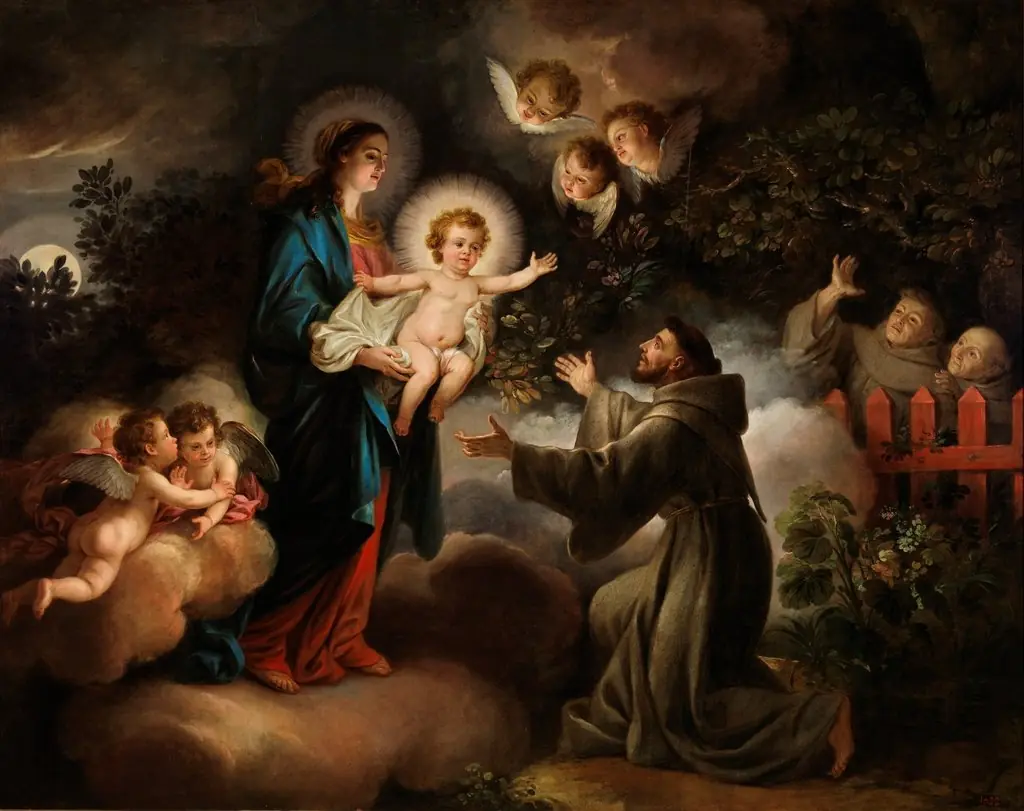 La Aparición de la Virgen a San Francisco