Artwork
Immaculate Conception
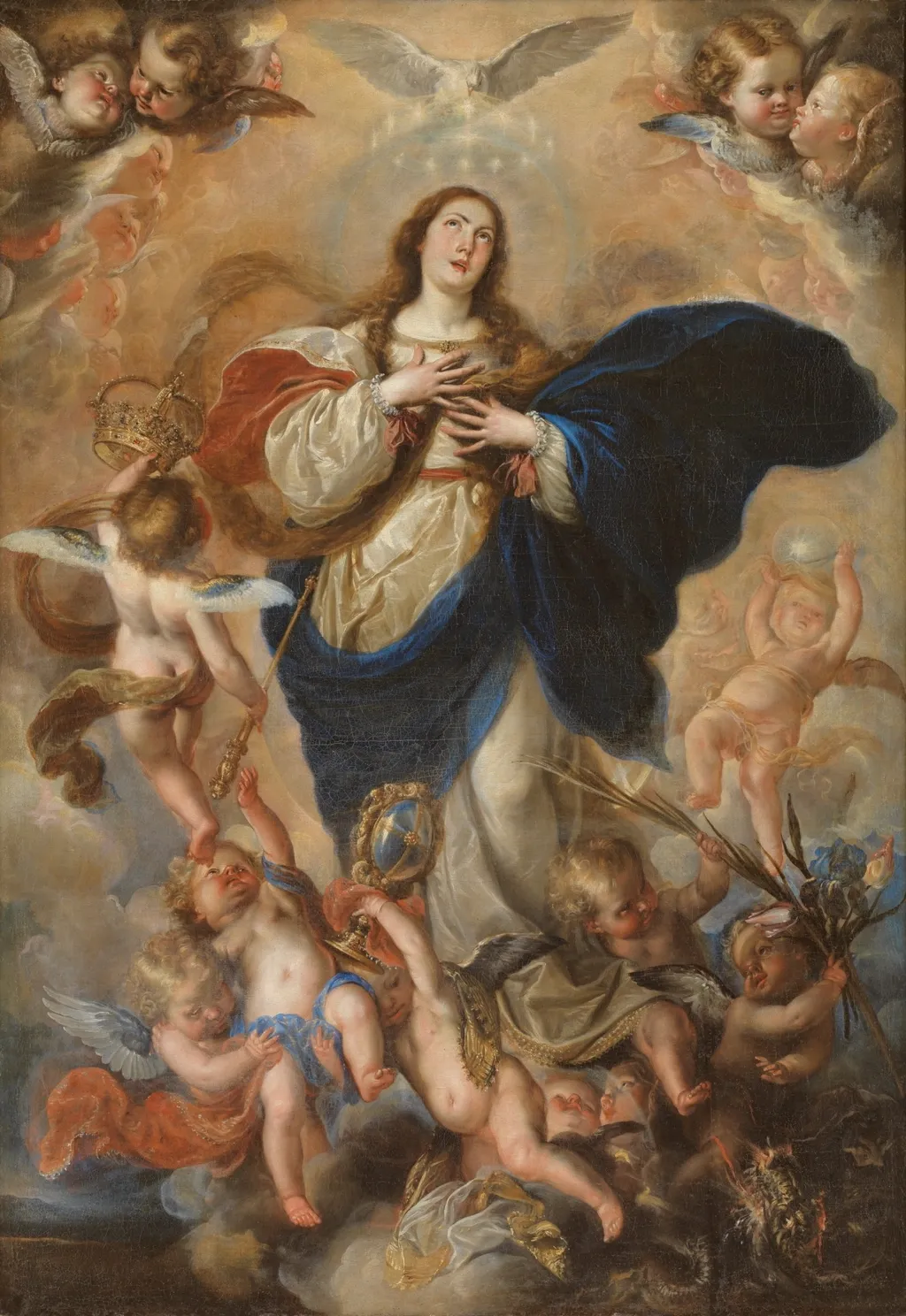
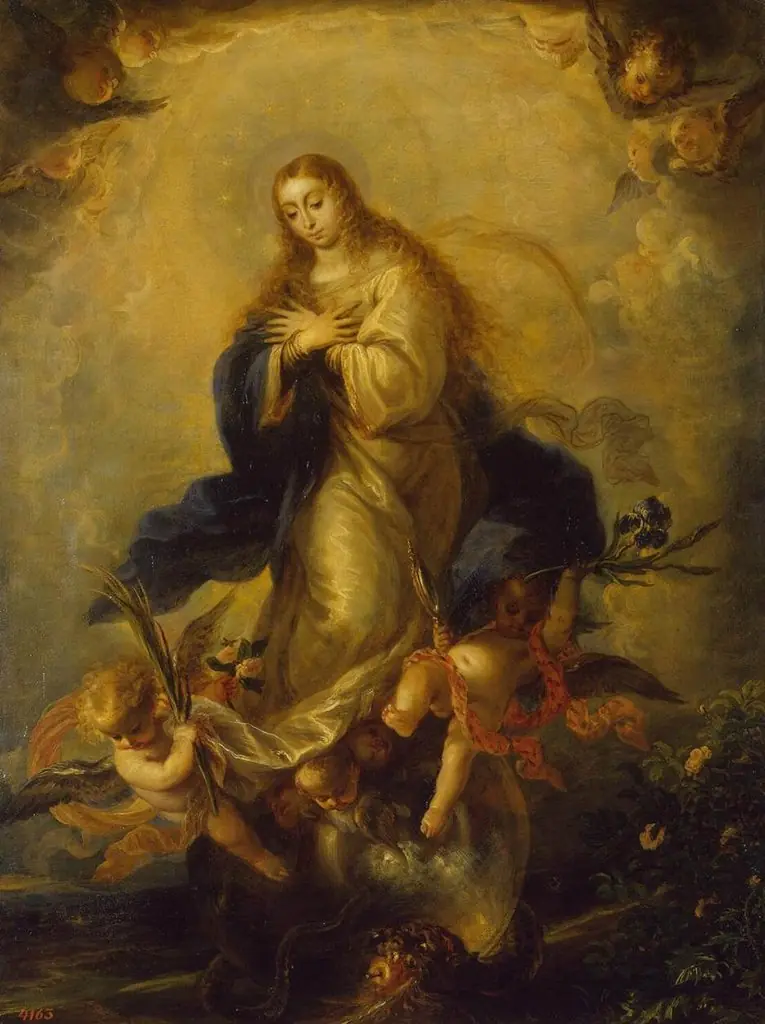
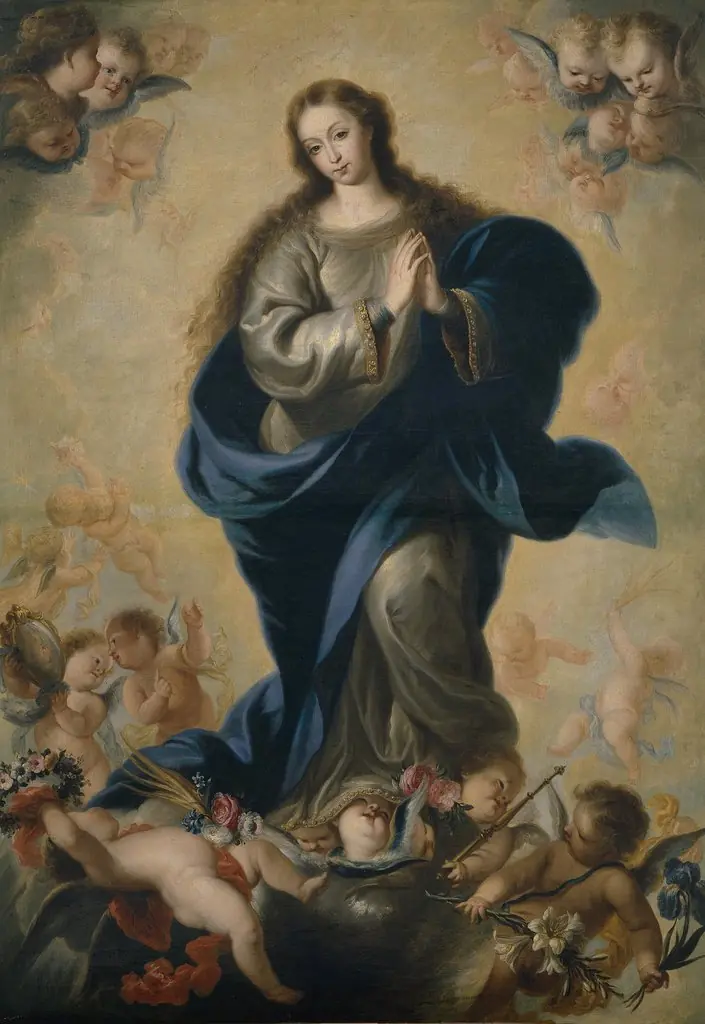
Immaculate Conception is an oil painting by the Early Baroque Italian artist Mateo Cerezo. It dates from 1660 and is held in the collection of the Museo del Prado.
About this work
The painting is an example of the Baroque style, which was popular in the 17th century.
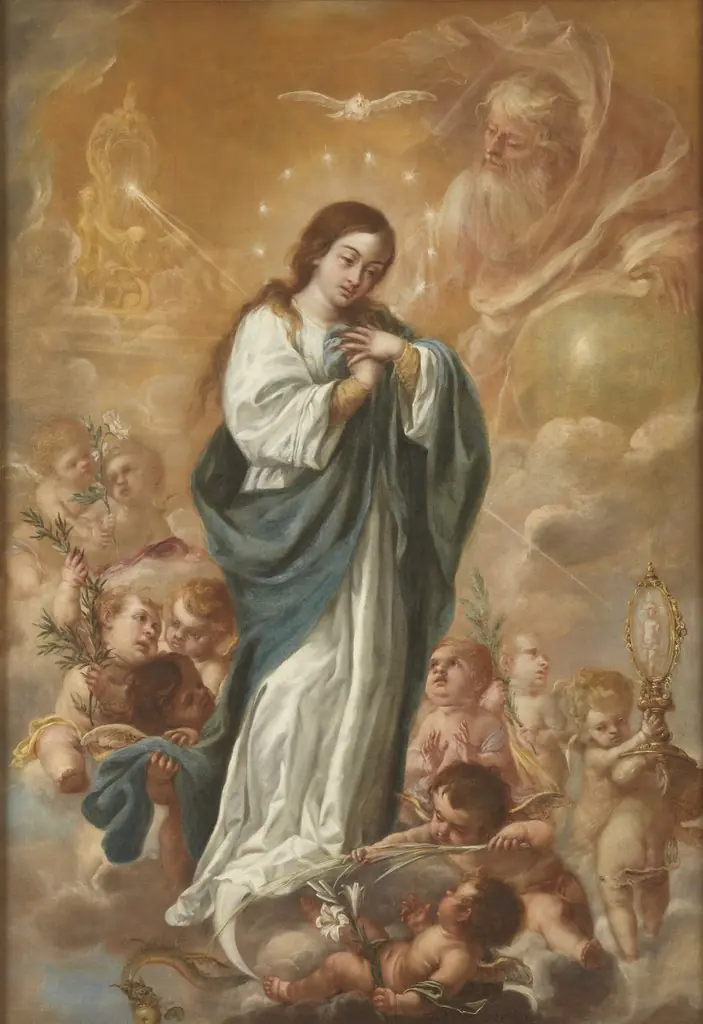
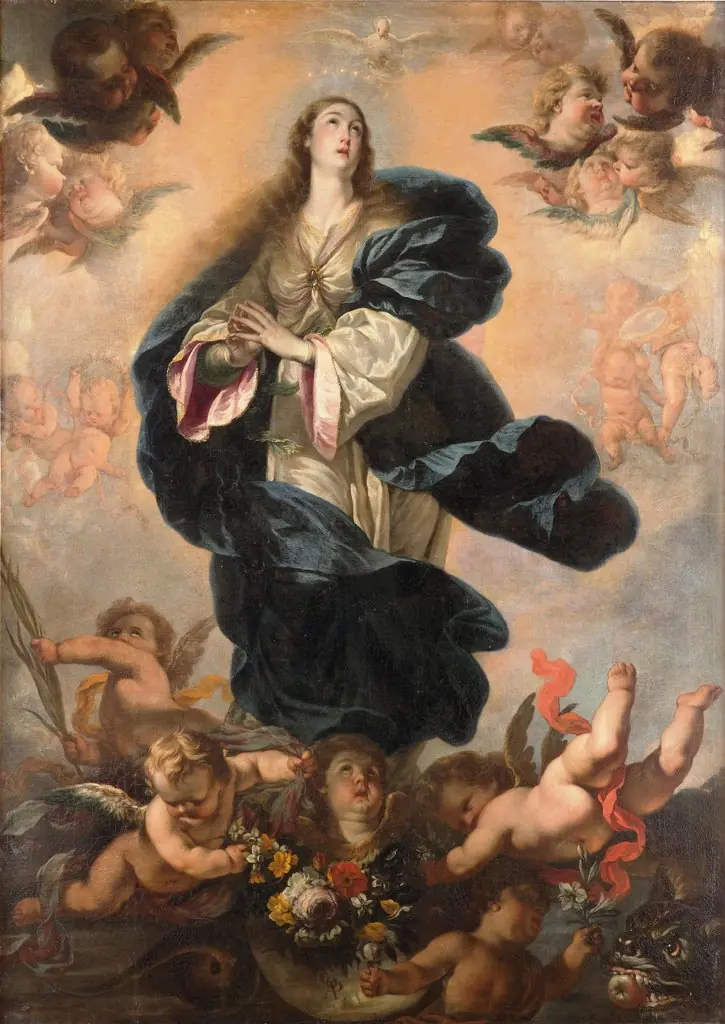
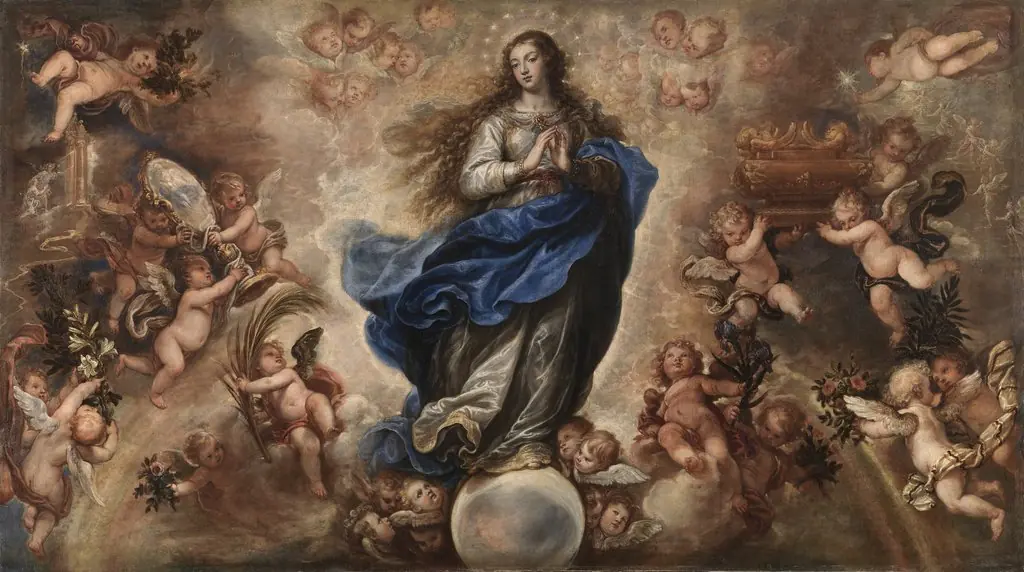
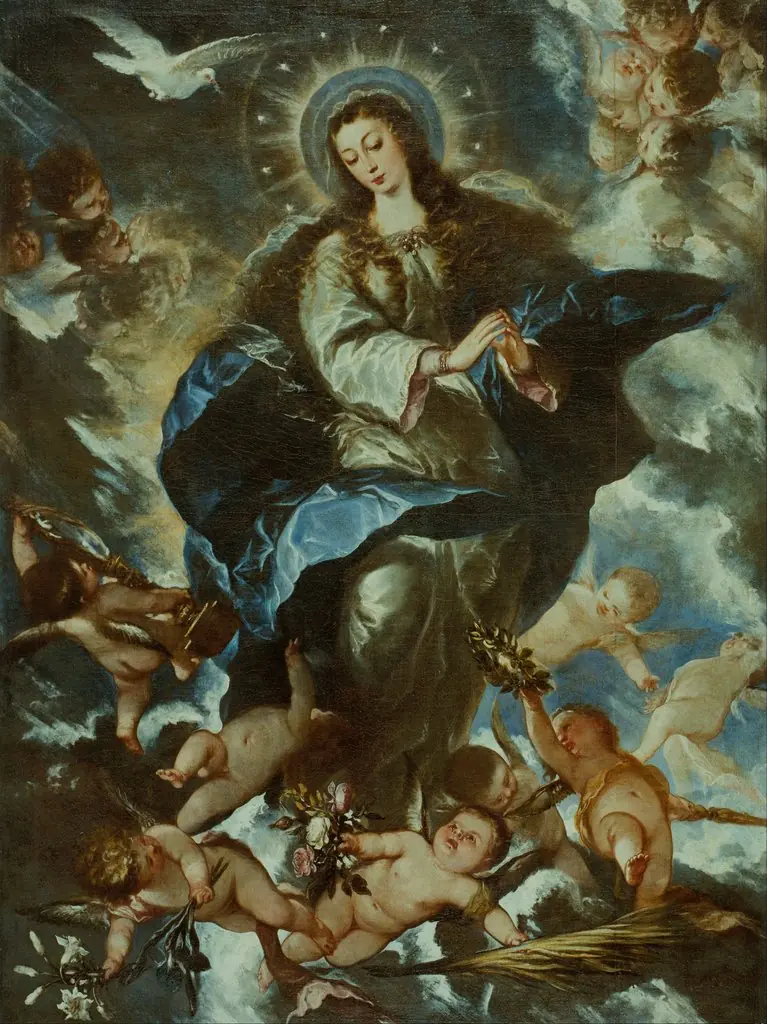
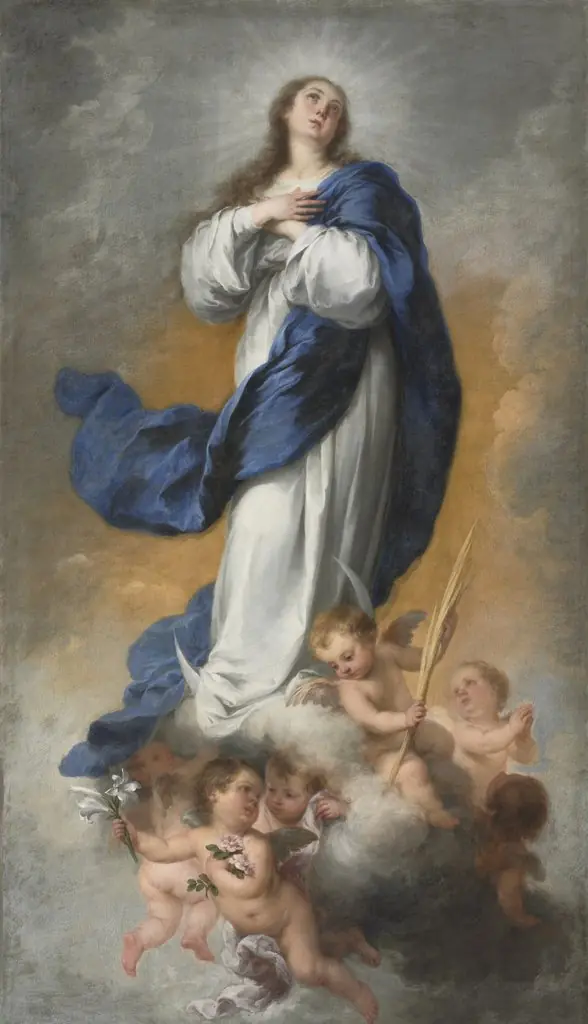
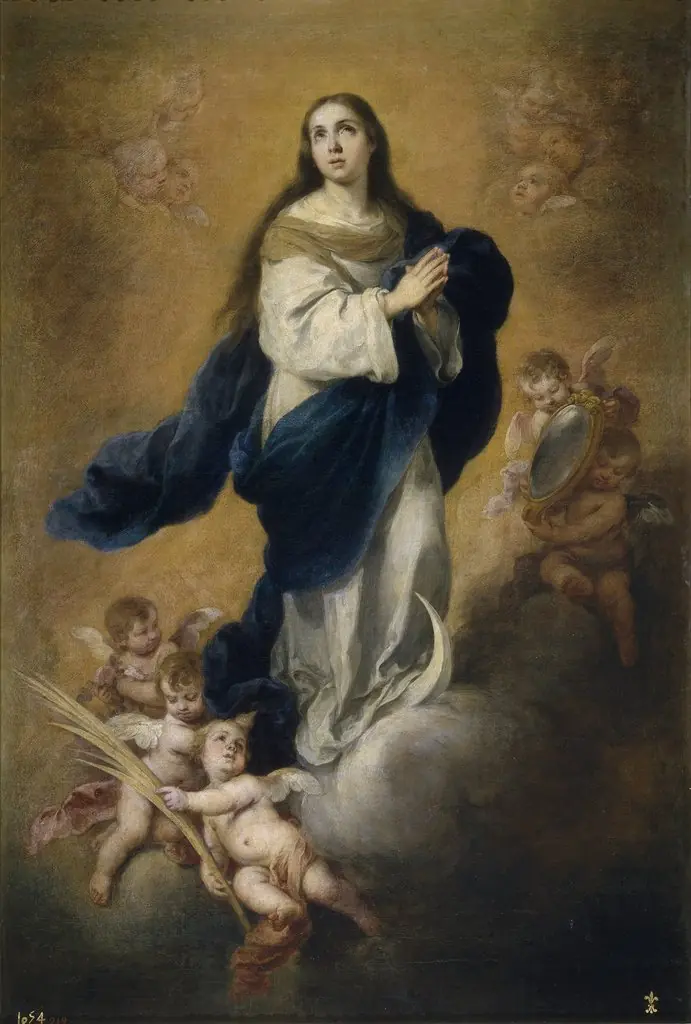
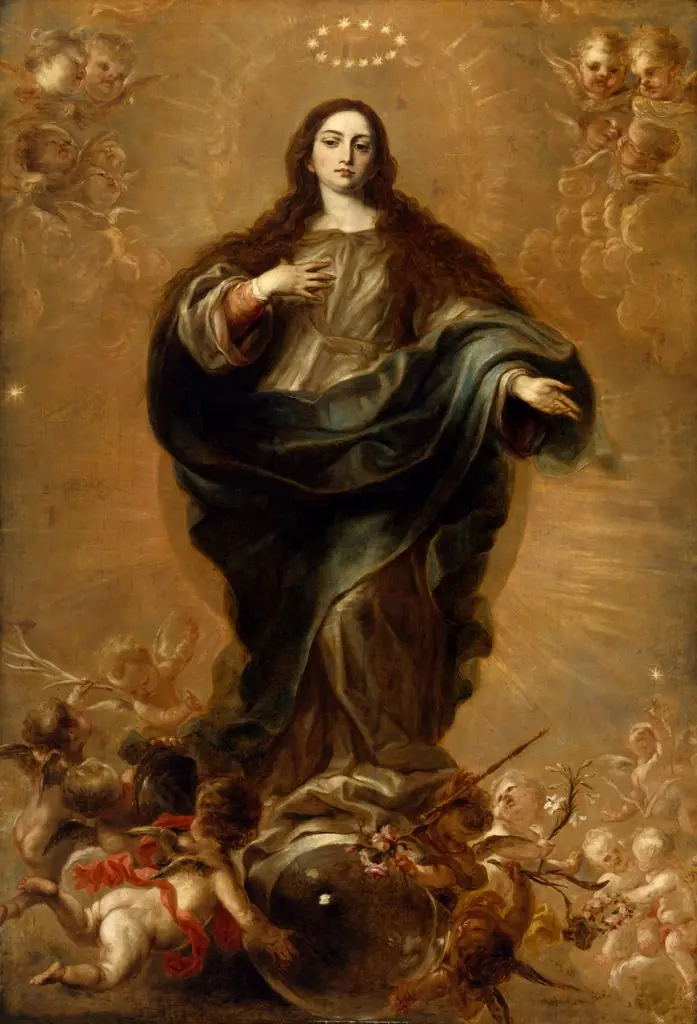
This painting shows the Virgin Mary surrounded by cherubs and angels. She's wearing a white dress with a blue cape and a red sash. Her hands are on her chest, and she's looking up. The background is cloudy, with a bright light shining down.
The Virgin Mary is the main figure in the painting. She's standing on a cloud, with her feet resting on a crescent moon. The cherubs and angels are flying around her, playing instruments and holding flowers. The painting is very detailed, with lots of colors and textures.
The painting is an example of the Baroque style, which was popular in the 17th century. It's characterized by dramatic lighting and intense emotions. If you want to learn more about this style, check out the work of artist Caravaggio.
Overview
Painted in 1660 by Spanish artist Mateo Cerezo, this oil-on-canvas work presents the theological concept of the Immaculate Conception. Cerezo, active during the Spanish Baroque period, created the piece for devotional use. It is now held in the Museo del Prado in Madrid, where it remains a representative example of 17th-century Spanish religious painting, reflecting both local traditions and broader European stylistic influences.
Subject & Meaning
The Virgin Mary is depicted as the Immaculate Conception—conceived without original sin—standing atop a crescent moon, a symbol drawn from the Book of Revelation. Surrounded by hovering angels and cherubs, she gazes upward with serene devotion, hands clasped over her chest. The celestial setting and luminous glow signify her divine purity and elevated spiritual status, aligning with Counter-Reformation ideals that emphasized Marian veneration.
Technique & Style
Cerezo employs rich oil pigments to render delicate textures in fabric, skin, and clouds. The Virgin’s white gown, blue mantle, and red sash create a harmonious chromatic balance, while the dramatic chiaroscuro draws focus to her figure. The swirling clouds and airborne angels contribute to a sense of movement, characteristic of Baroque dynamism. Details in the angels’ instruments and floral offerings are rendered with precision, enhancing the painting’s devotional intensity.
History & Provenance
Commissioned during Cerezo’s mature period, the painting entered the Spanish royal collection before being transferred to the Museo del Prado in the 19th century. Its survival through centuries of political and religious upheaval underscores its perceived importance in Spanish ecclesiastical art. No significant alterations or restorations are documented, preserving its original composition and tonal qualities.
Context
Created in the wake of the Council of Trent, the painting reflects the Catholic Church’s renewed emphasis on Marian imagery to reinforce doctrinal orthodoxy. While Italian Baroque influences are evident in its theatricality, Cerezo’s restrained emotionality and clear composition distinguish it from more exuberant Roman or Neapolitan examples. It aligns with Spanish devotional practices that favored contemplative, reverent depictions of sacred figures.
Legacy
Though less widely known than contemporaries like Velázquez, Cerezo’s *Immaculate Conception* contributed to the canon of Spanish religious art. Its presence in the Prado ensures continued scholarly attention, and its balanced synthesis of Italian Baroque elements with Spanish solemnity offers insight into regional artistic adaptation. The work remains a quiet but significant testament to 17th-century spiritual aesthetics.
Own this work as a print
Artist & collection
Artist
Mateo Cerezo, sometimes referred to as Mateo Cerezo the younger, (19 April 1637, Burgos – 29 June 1666, Madrid) was a Spanish Baroque painter, known primarily for religious works and still-lifes.