Artwork
The Immaculate Conception
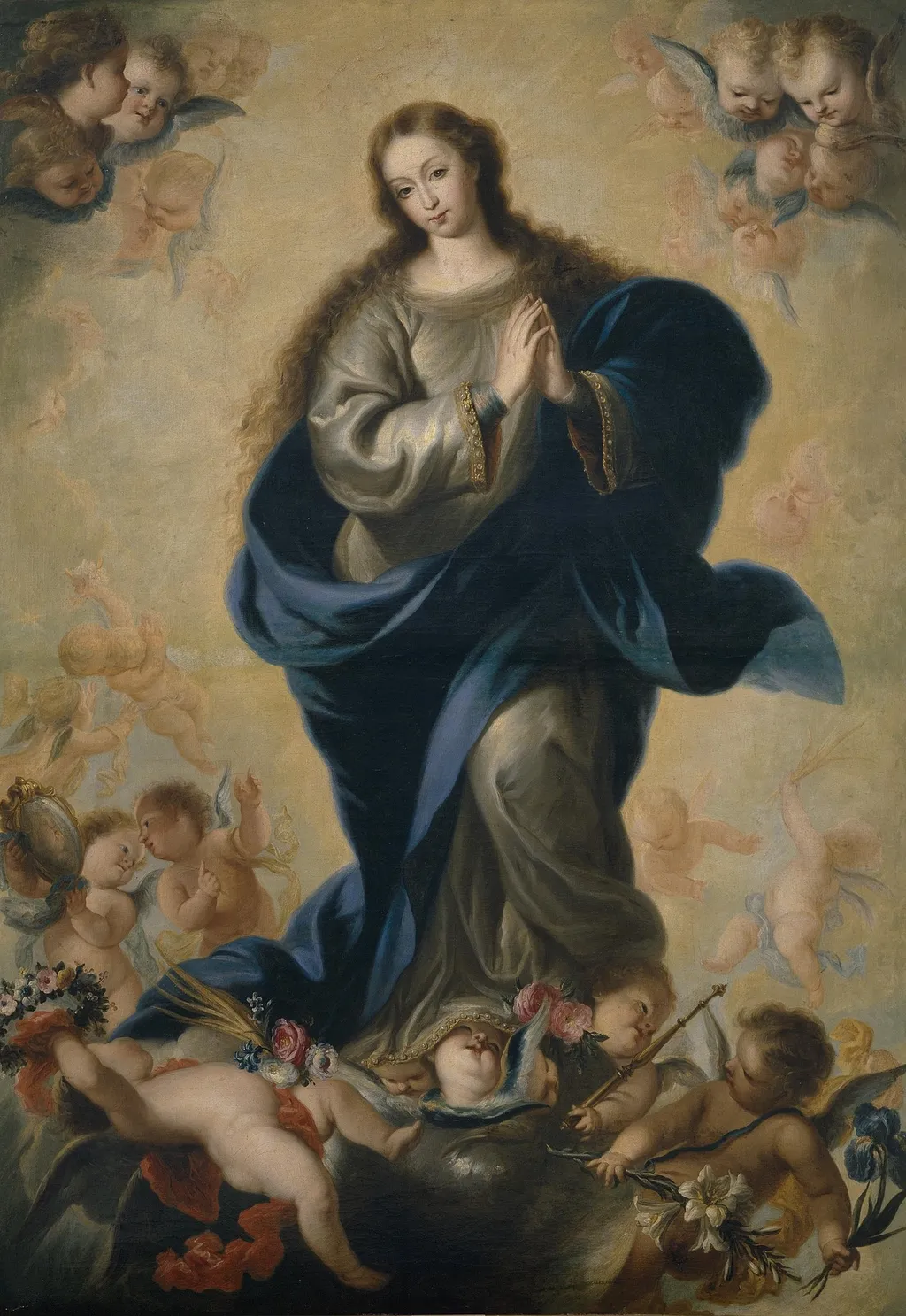
The Immaculate Conception is an oil painting by the Rococo painting artist Miguel Jacinto Meléndez. It dates from 1733 and is held in the collection of the Museo del Prado.
About this work
Overview
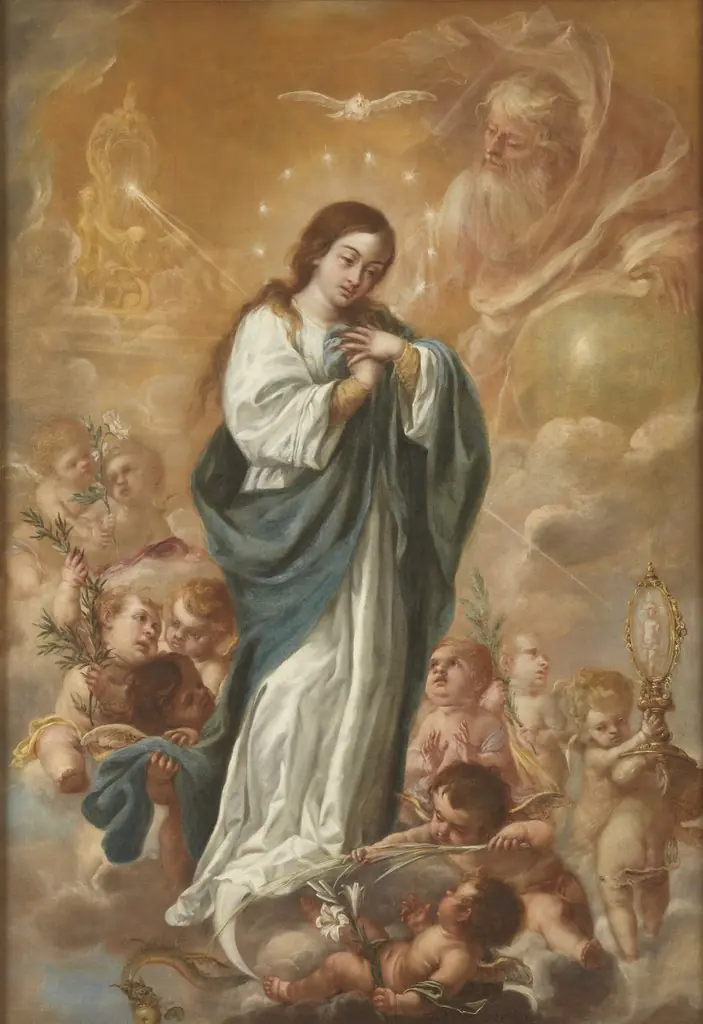
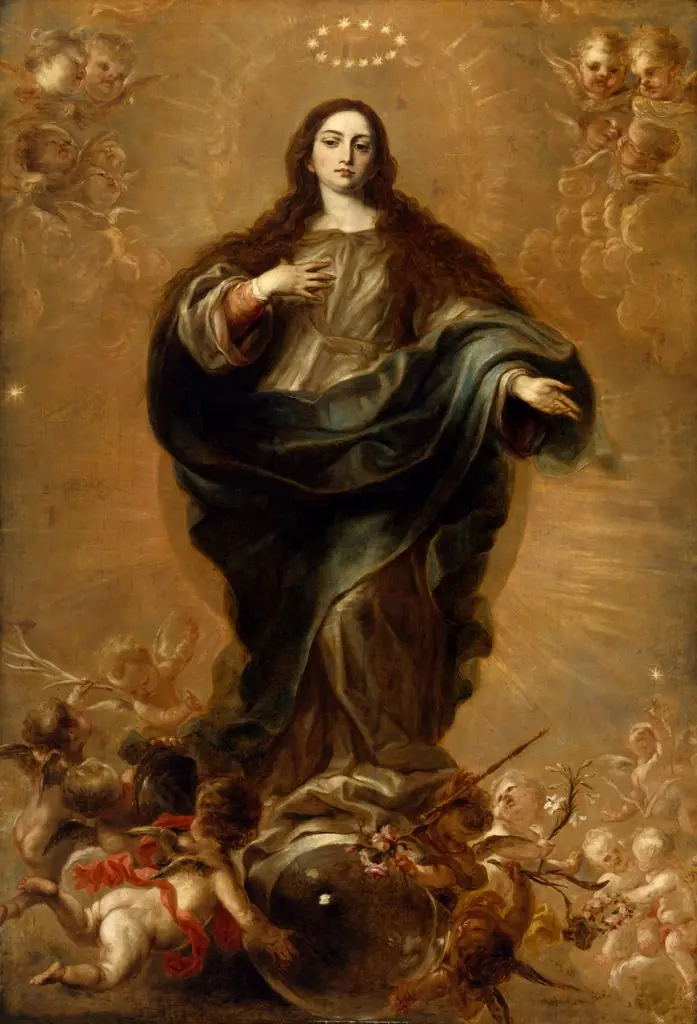
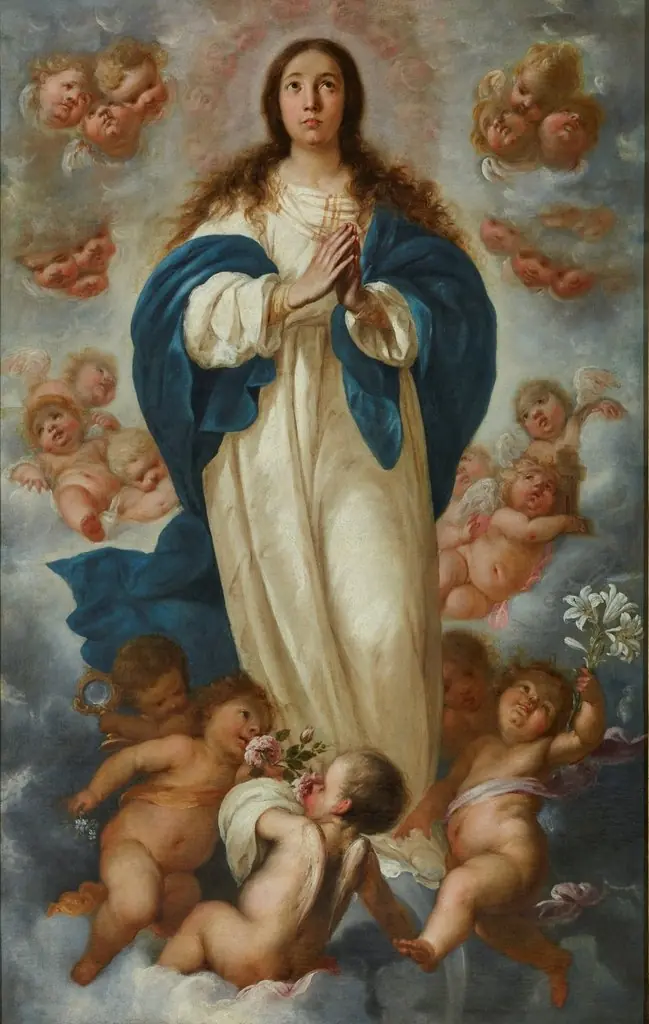
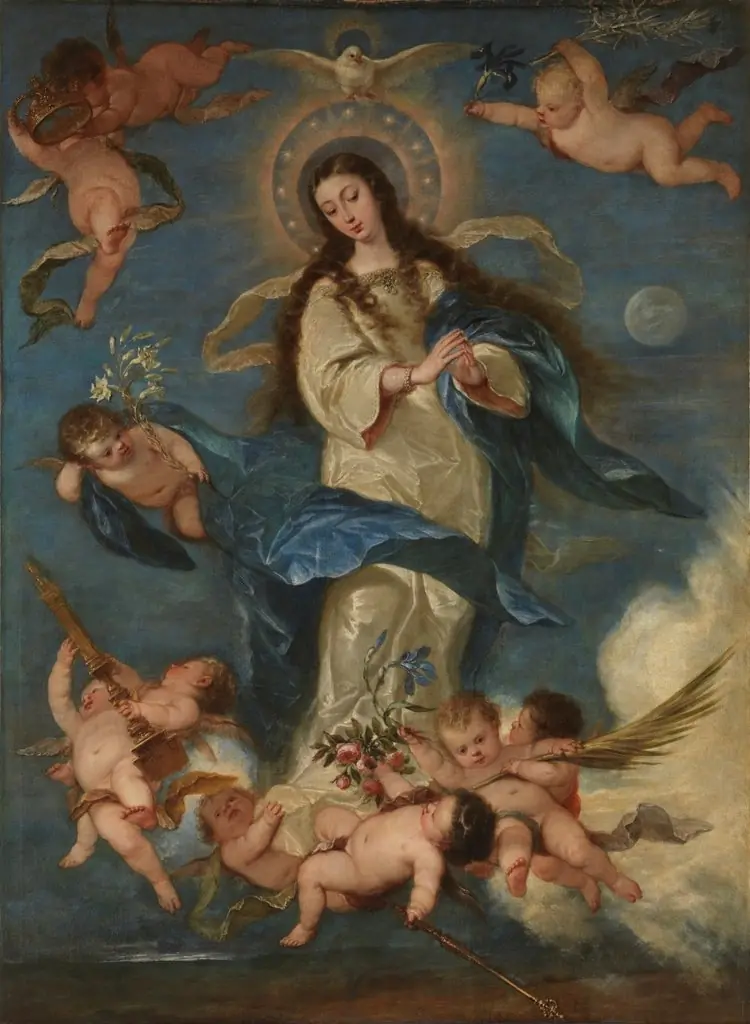
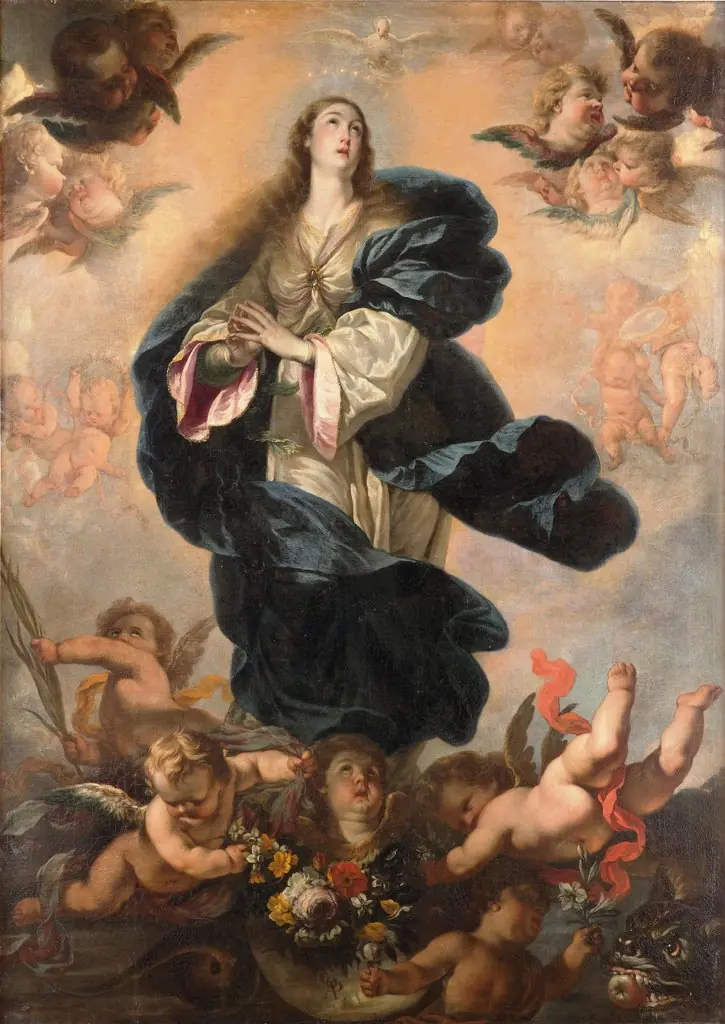
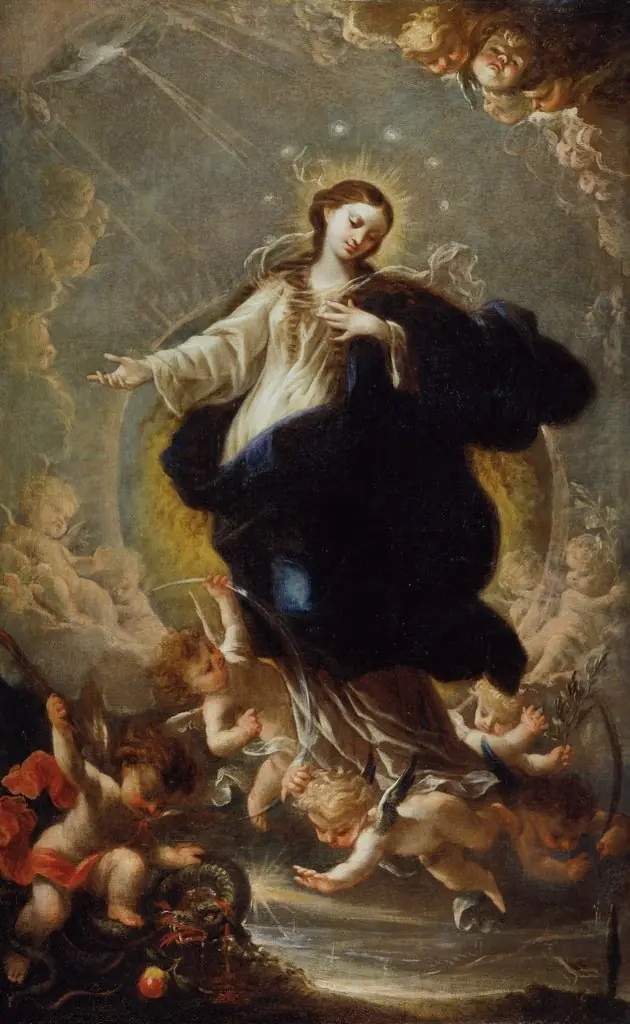
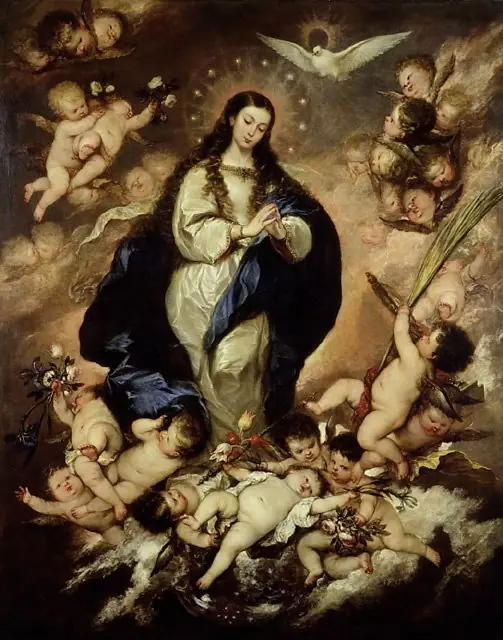
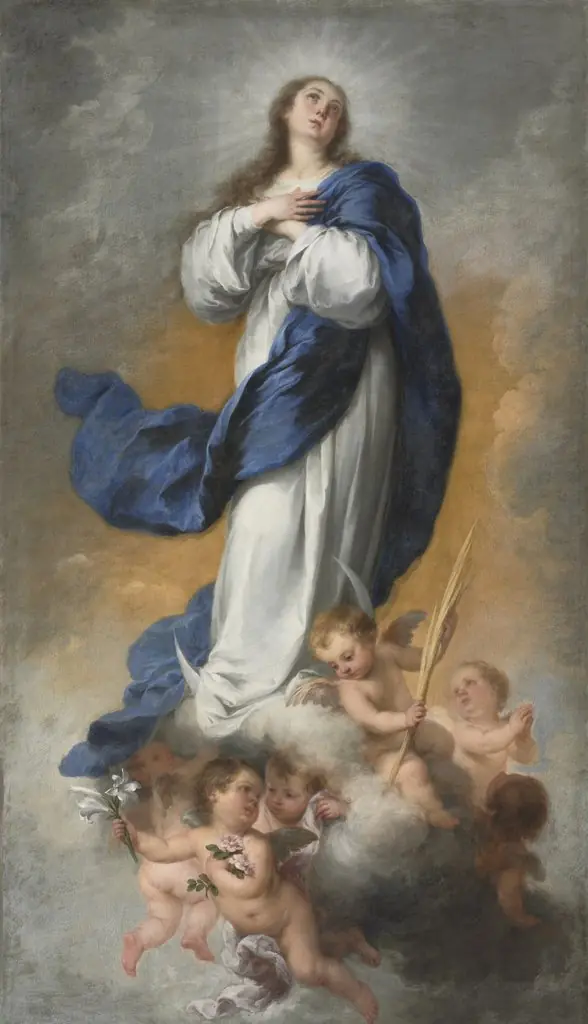
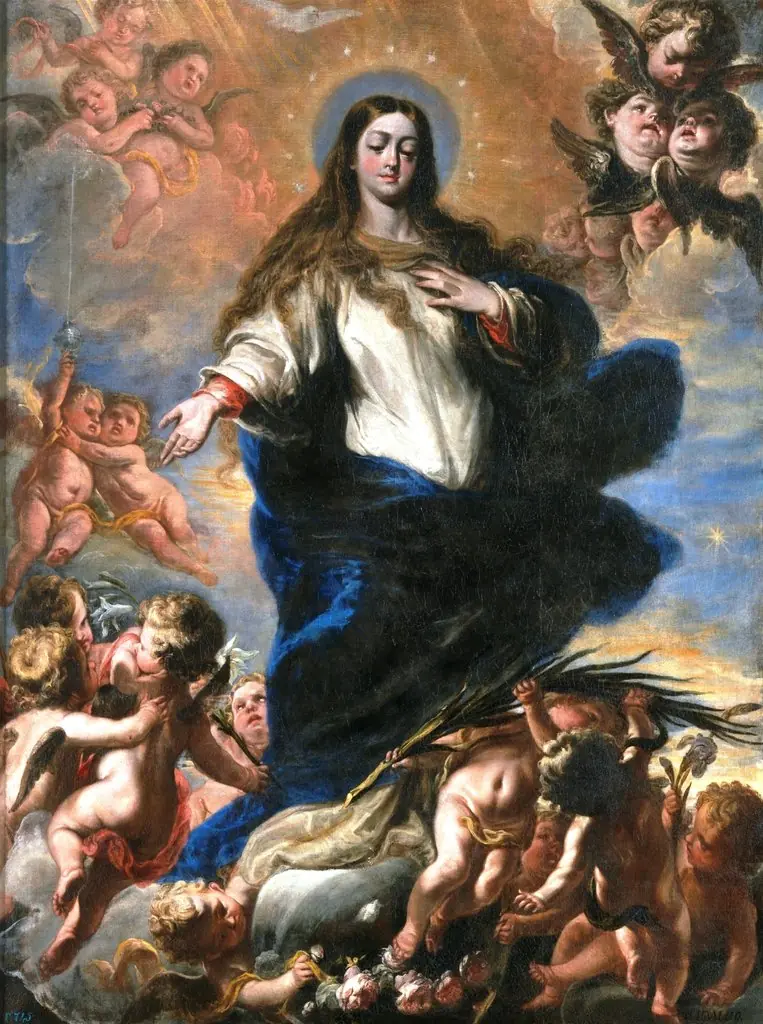
Miguel Jacinto Meléndez’s oil on canvas, dated 1733, presents a visual interpretation of the Immaciate Conception. The composition centers on a serene female figure suspended amid a luminous sky, surrounded by a host of cherubic figures. The work is part of the collection of the Museo del Prado in Madrid.
Subject & Meaning
The central woman, clothed in a flowing blue mantle, embodies the theological concept of the Immaculate Conception, her hands joined in prayer. Beneath her, a troupe of infant angels engages with flowers, musical instruments, and symbolic objects such as wreaths and arrows, reinforcing themes of purity and divine grace.
Technique & Style
Meléndez employs a delicate chiaroscuro, allowing the light to seem to emanate from the figure herself, giving the robe a subtle sheen and the skin a soft inner glow. The miniature angels are rendered with careful attention to flesh and fabric, their plump limbs and detailed attire contributing to the overall realism within the idealised setting.
History & Provenance
Created in the early eighteenth century, the painting entered the holdings of the Museo del Prado, where it remains on display. Its provenance traces back to the Spanish court’s patronage of religious art during the Baroque period, reflecting the era’s devotional commissions.
Context
The work belongs to the Spanish Baroque tradition, which favored dramatic lighting, rich coloration, and emotive religious subjects. Meléndez, a court painter, often produced works that combined theological narrative with the ornamental elegance favored by his patrons.
Legacy
While not as widely reproduced as other Baroque religious canvases, the painting exemplifies the period’s synthesis of spiritual iconography and technical mastery, offering insight into eighteenth‑century Spanish devotional aesthetics.
Own this work as a print
Artist & collection