Artwork
The Annunciation
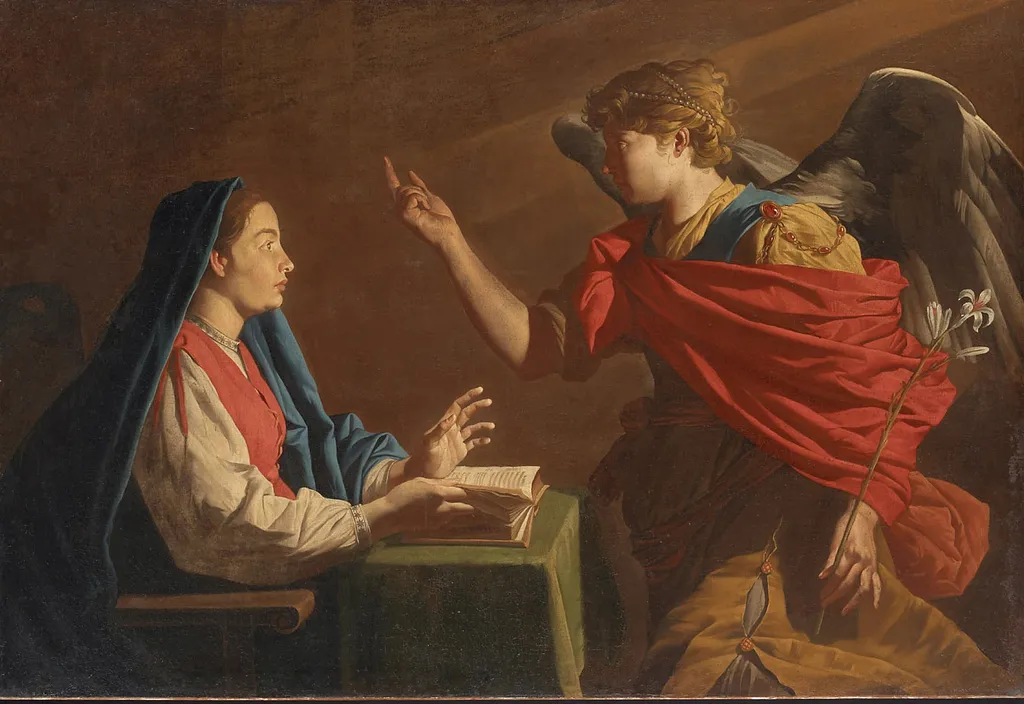
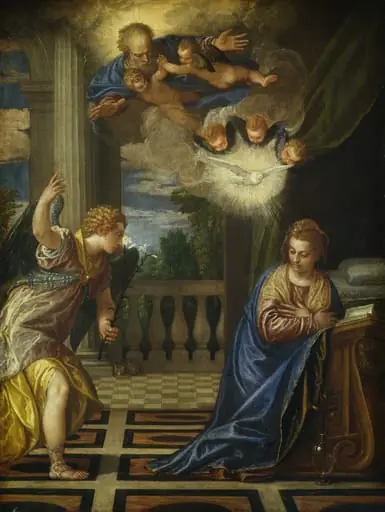
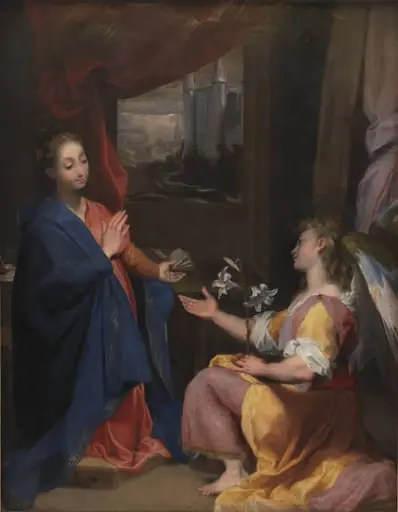
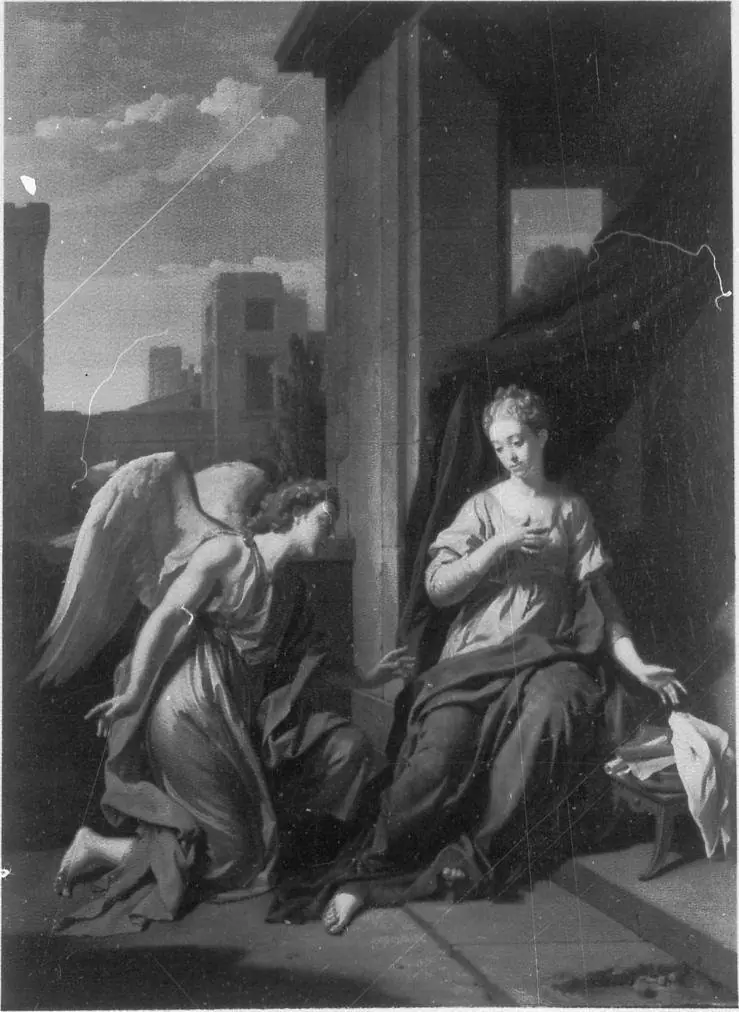
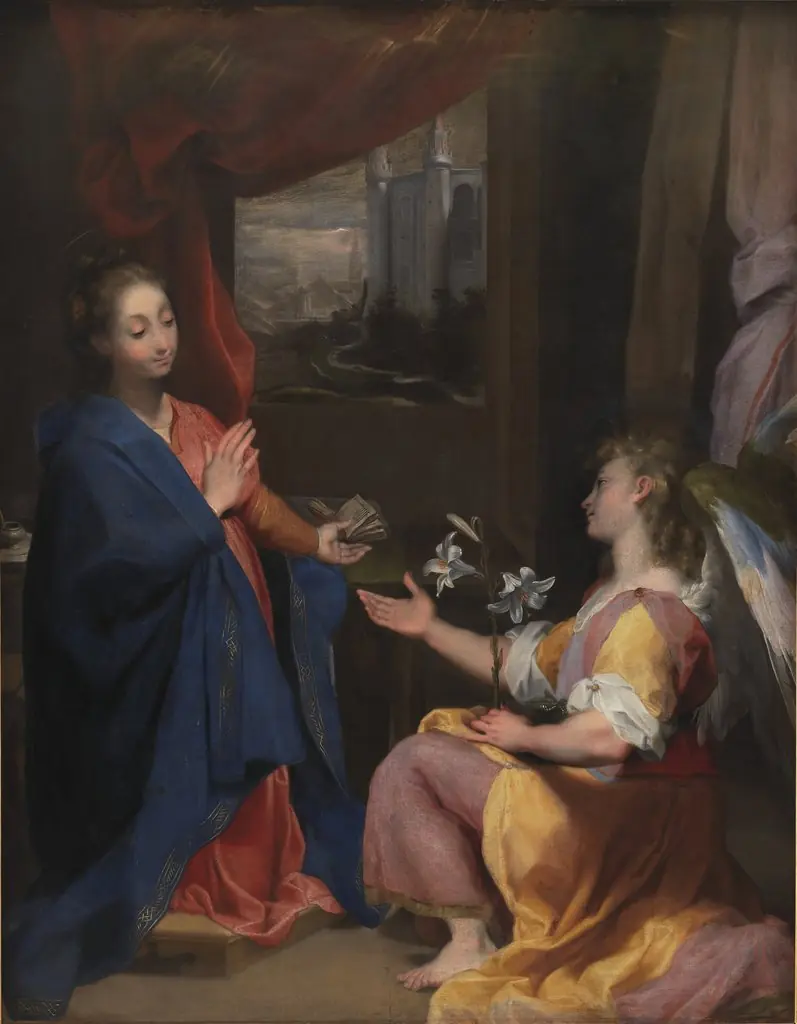
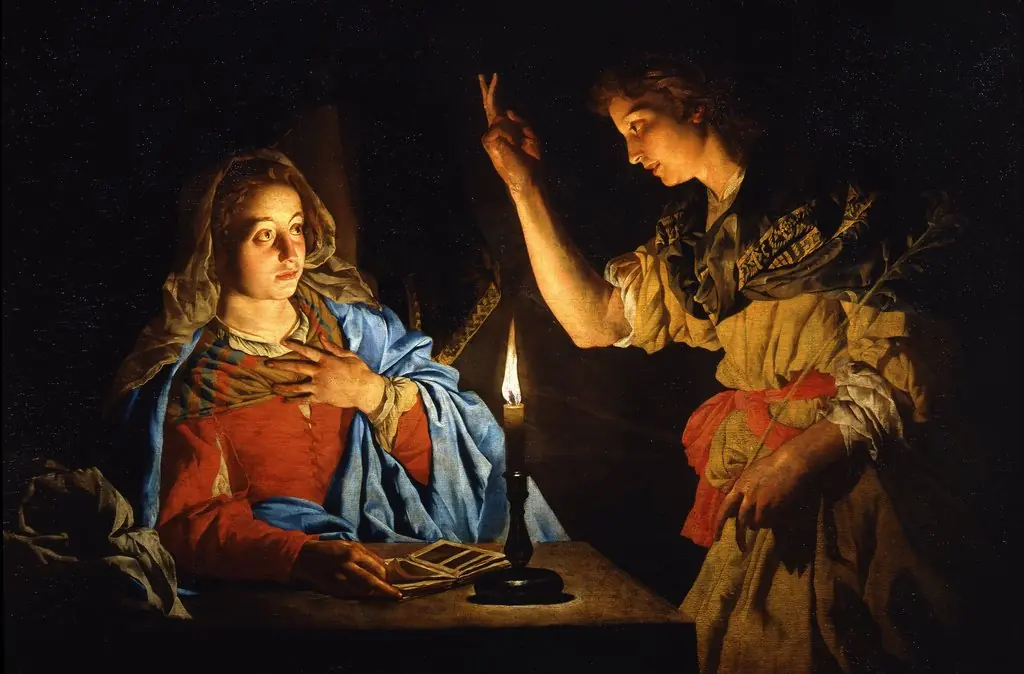
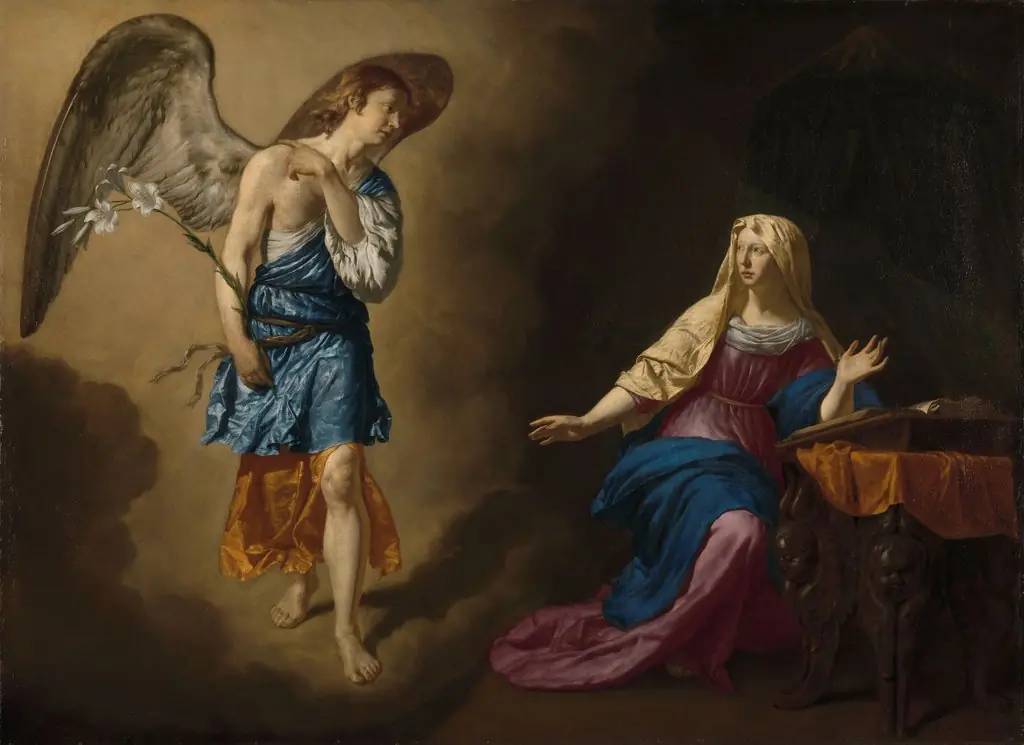
The Annunciation is an oil painting by the Early Baroque Italian artist Matthias Stom. It dates from 1630 and is held in the collection of the Kunsthistorisches Museum.
About this work
Overview
Matthias Stom, a painter of Dutch or Flemish origin, executed *The Annunciation* circa 1630 while working in Italy. The panel exemplifies the early Baroque period, characterized by dramatic intensity and religious subject matter. Stom’s focus on biblical narratives distinguishes his work from contemporaries who favored genre or allegory. The painting resides in the Kunsthistorisches Museum.
Subject & Meaning
The scene portrays the Annunciation, a pivotal moment in Christian theology when the angel Gabriel announces to the Virgin Mary that she will conceive the Son of God. Mary, seated with an open book, responds with attentive receptivity. The angel’s upward gesture and luminous presence underscore divine intervention, while the white flower symbolizes purity.
Technique & Style
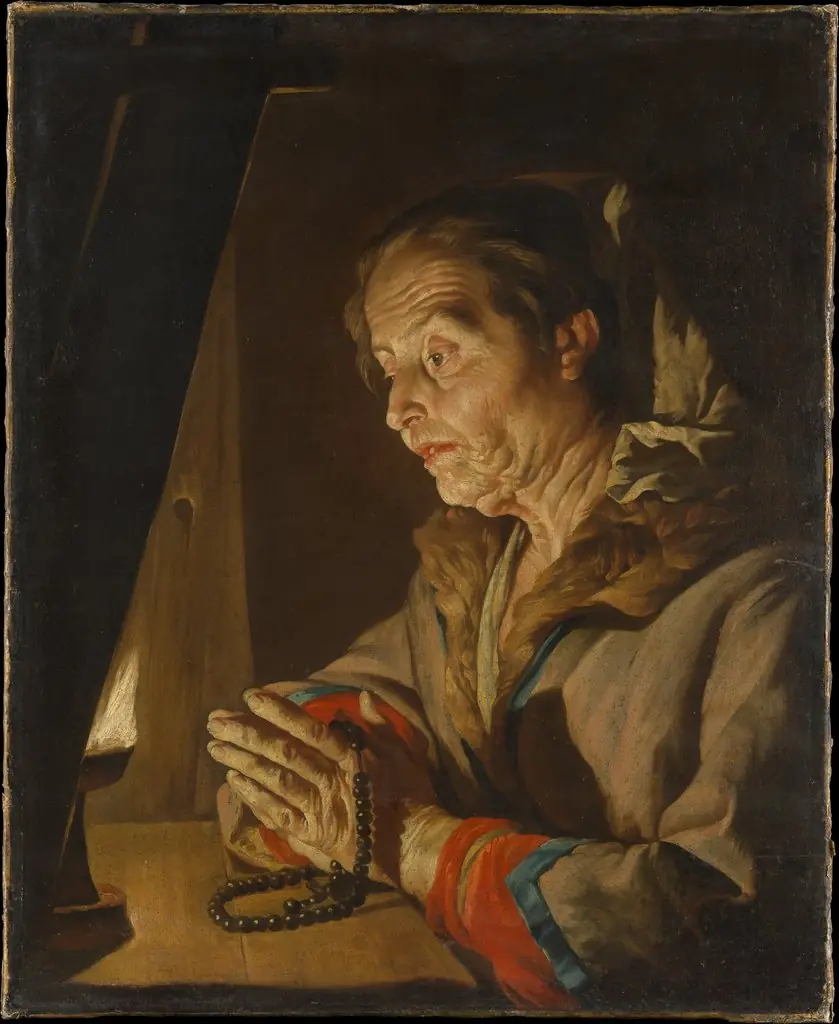
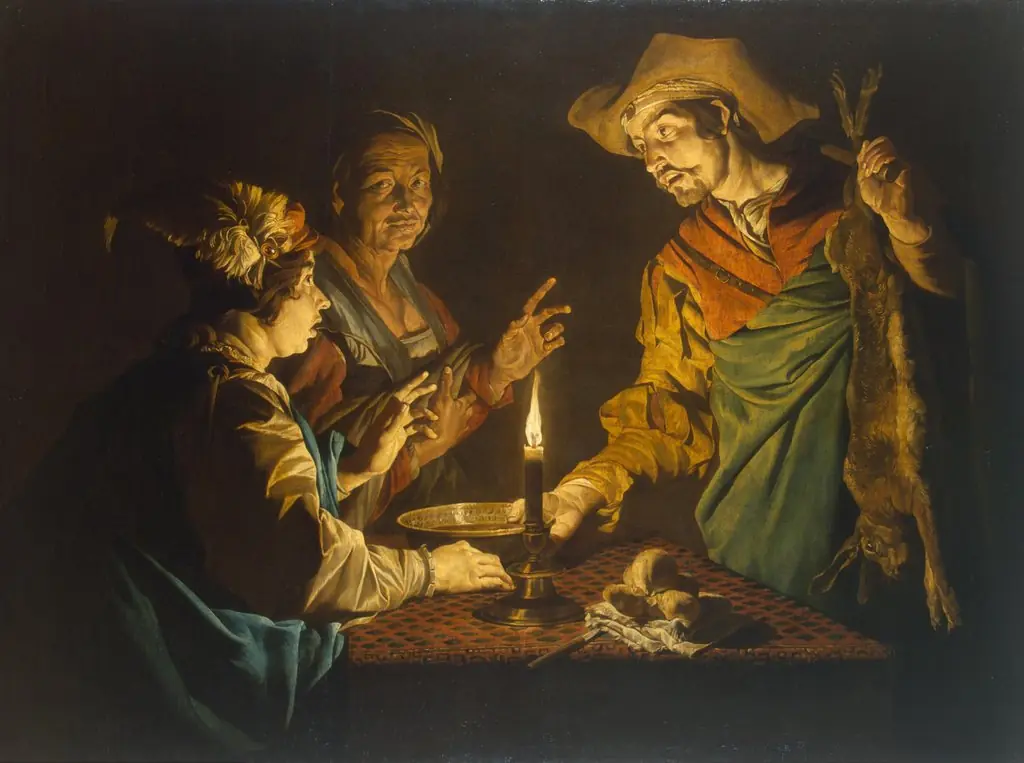
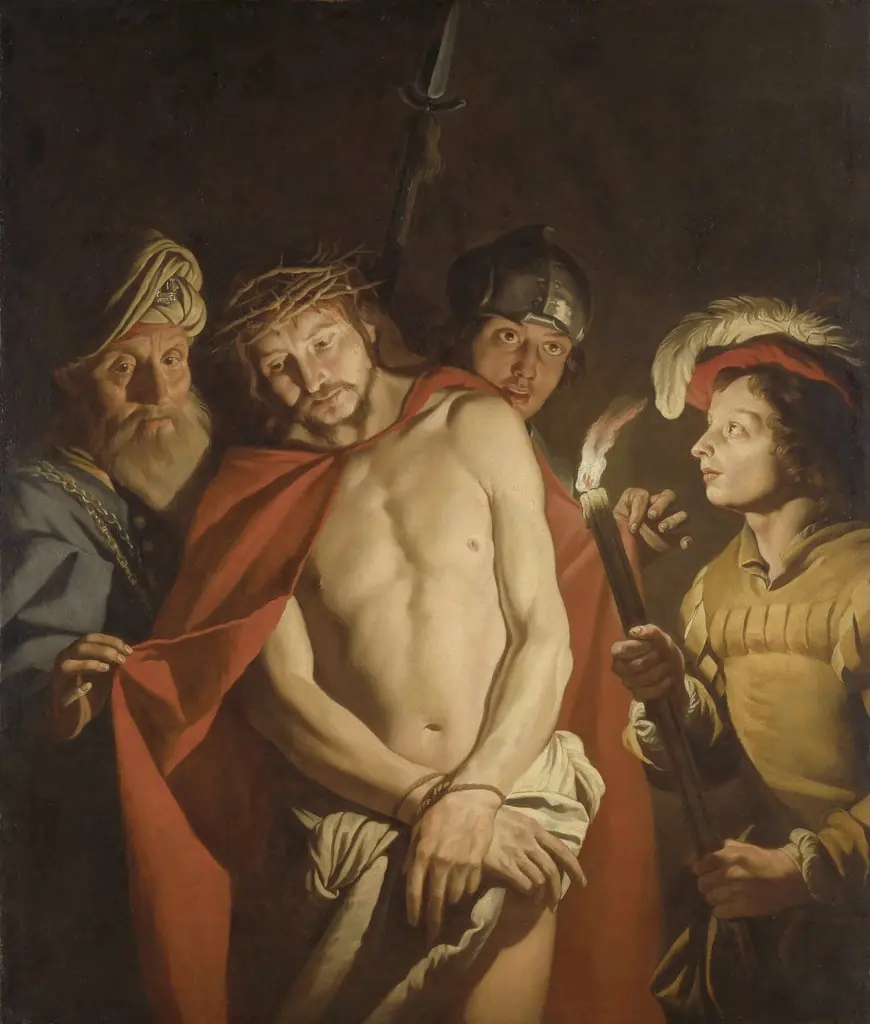
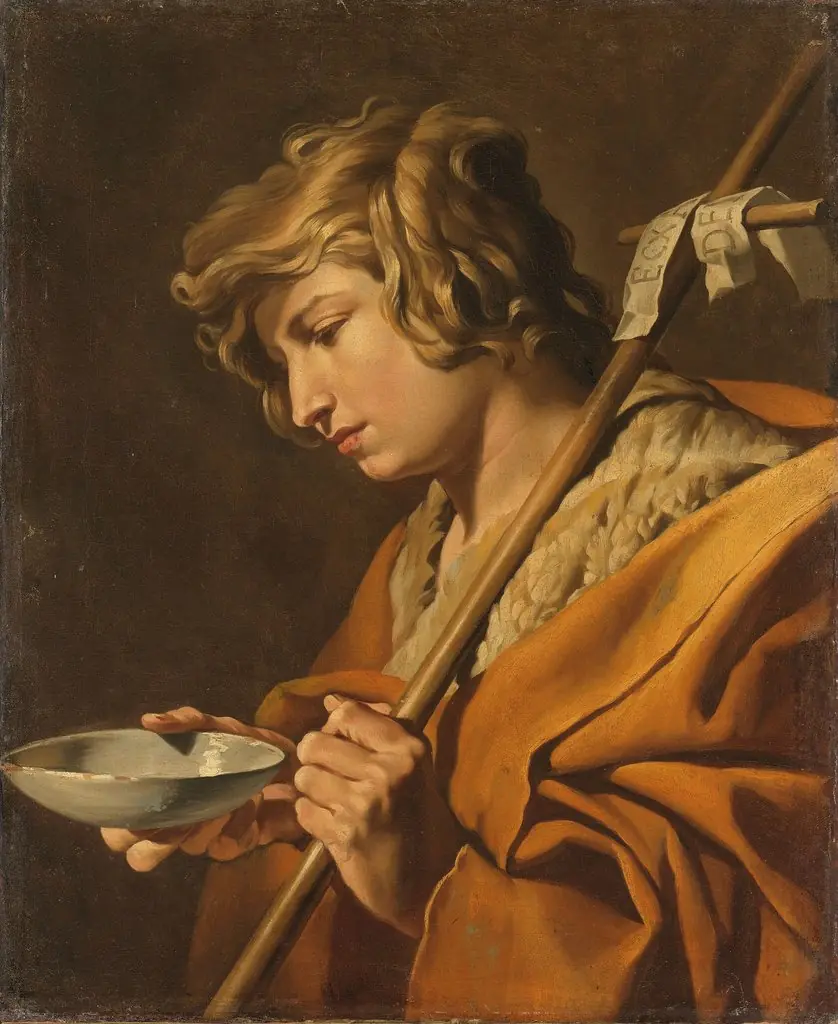
Stom employs chiaroscuro, a hallmark of Caravaggist influence, to heighten contrast between illuminated figures and a darkened background. The angel’s backlighting creates a soft radiance, directing focus to the interaction between the two figures. Rich drapery folds and meticulous detailing reflect the artist’s engagement with both Northern and Southern European traditions.
History & Provenance
Created during Stom’s Italian period, the work reflects his absorption of local artistic developments, particularly the tenebristic style of Caravaggio’s followers. The painting entered the Kunsthistorisches Museum’s collection, though its earlier ownership remains undocumented. Its attribution to Stom aligns with his known output of religious compositions.
Context
Active in Italy during the early 17th century, Stom engaged with a network of artists influenced by Caravaggio, including the Utrecht Caravaggists, Jusepe de Ribera, and Peter Paul Rubens. This milieu fostered a fusion of Northern precision with Italian dramatic lighting. *The Annunciation* exemplifies the era’s emphasis on emotionally charged, narrative-driven religious art.
Legacy
While not among the most widely reproduced Baroque works, *The Annunciation* contributes to the understanding of Caravaggist diffusion beyond Italy. Its composition and lighting techniques reflect broader trends in early Baroque painting, illustrating how artists adapted chiaroscuro to convey spiritual immediacy. The work remains a study piece for scholars of trans-European artistic exchange.
Artist & collection
Artist
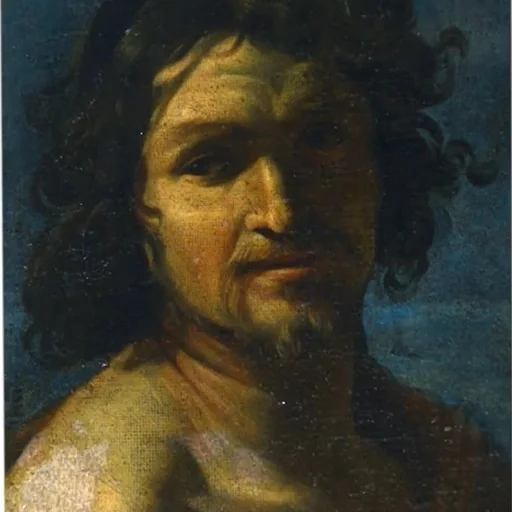
Matthias Stom or Matthias Stomer (c. 1600 – after 1652) was a Dutch, or possibly Flemish, painter who is only known for the works he produced during his residence in Italy. He was influenced by the work of non-Italian…