Artwork
A Dutch lacemaker
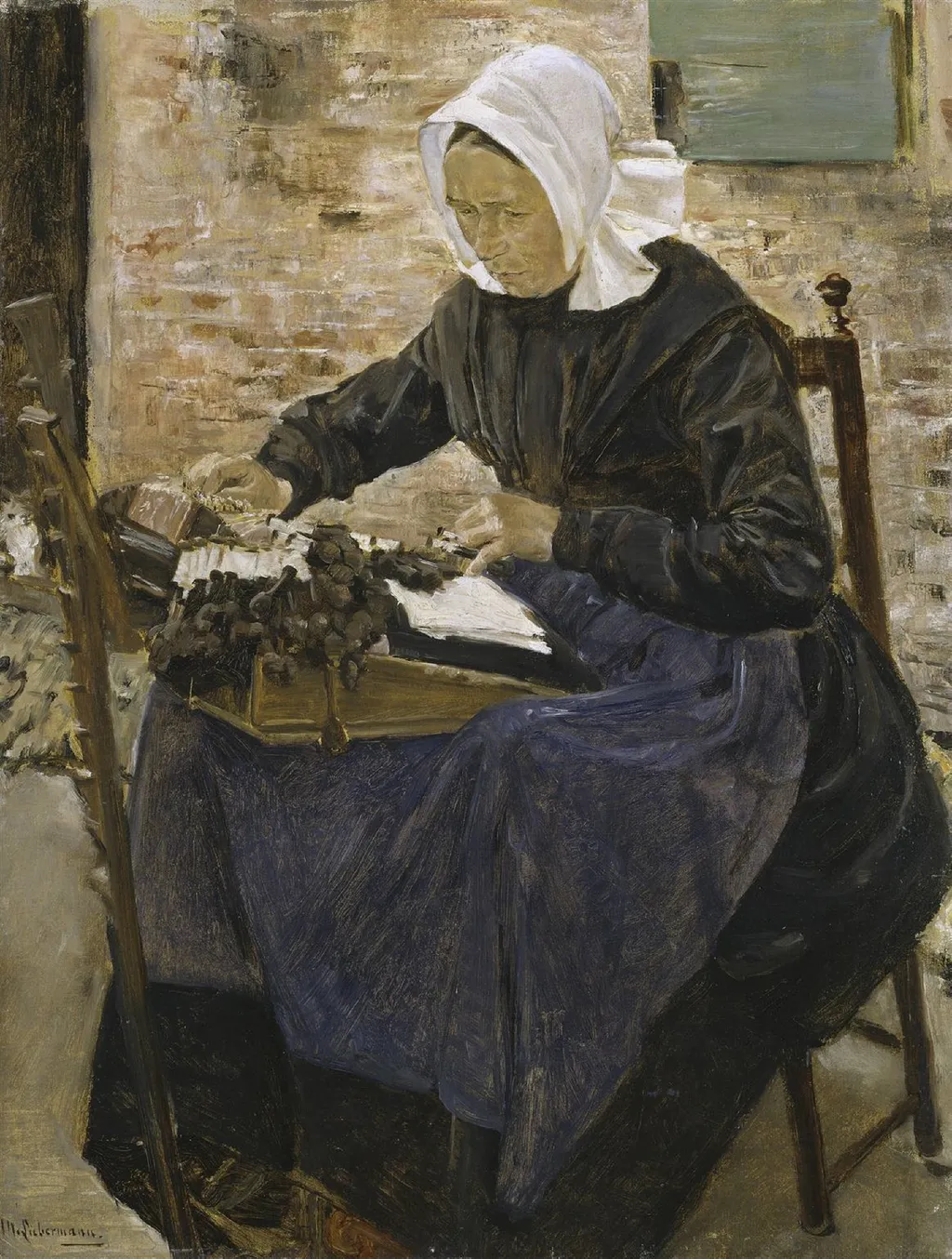
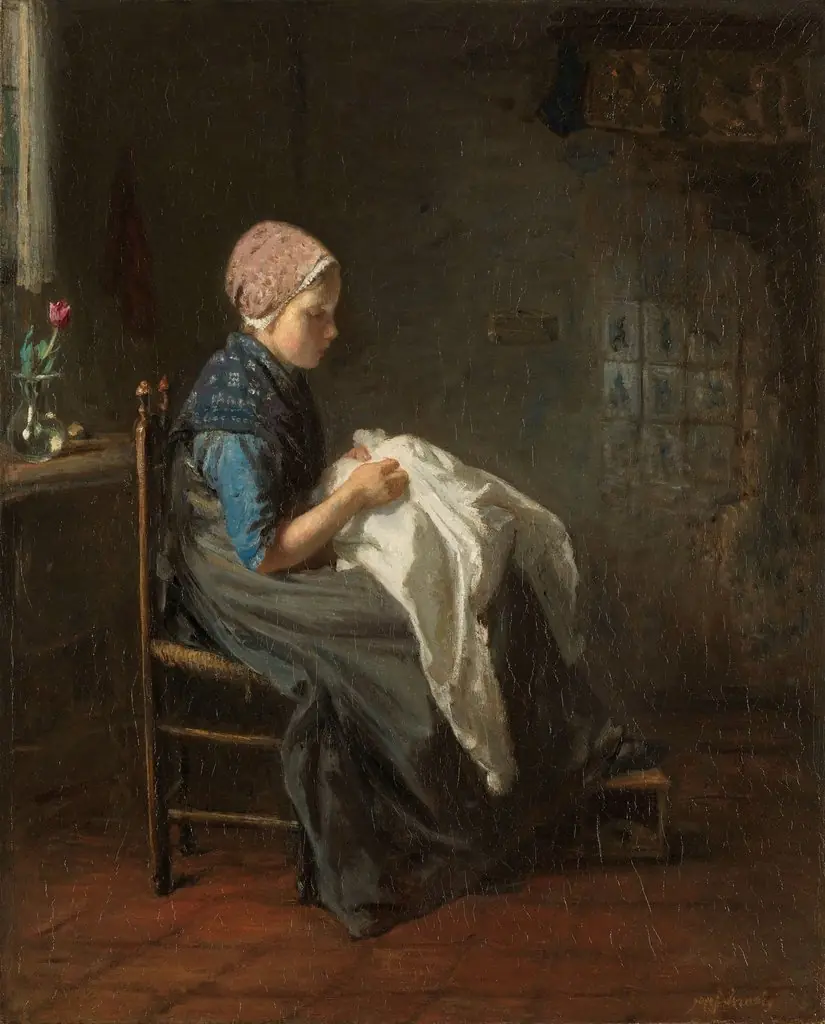
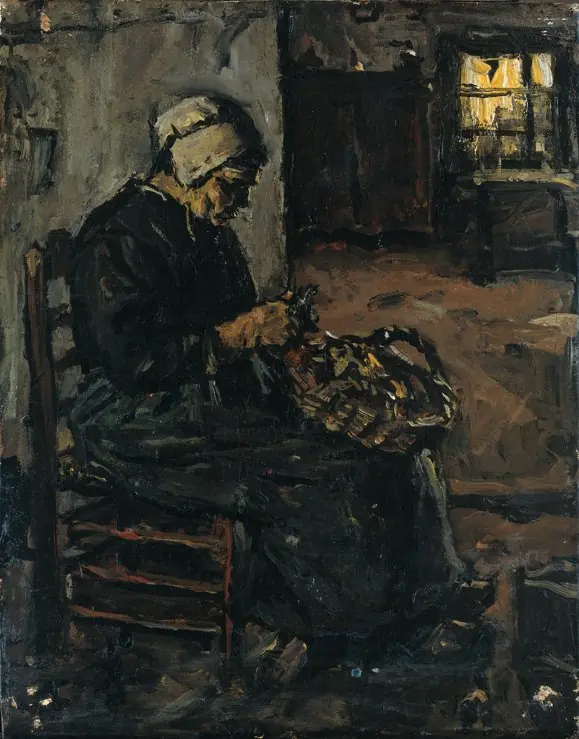
A Dutch lacemaker is an oil painting by the Impressionist artist Max Liebermann. It dates from 1891 and is held in the collection of the Hamburger Kunsthalle.
About this work
Overview
Created in 1891, *A Dutch Lacemaker* is an oil painting by German artist Max Liebermann. The work is held in the collection of the Hamburger Kunsthalle and exemplifies the artist’s engagement with the Impressionist style during the late nineteenth century.
Subject & Meaning
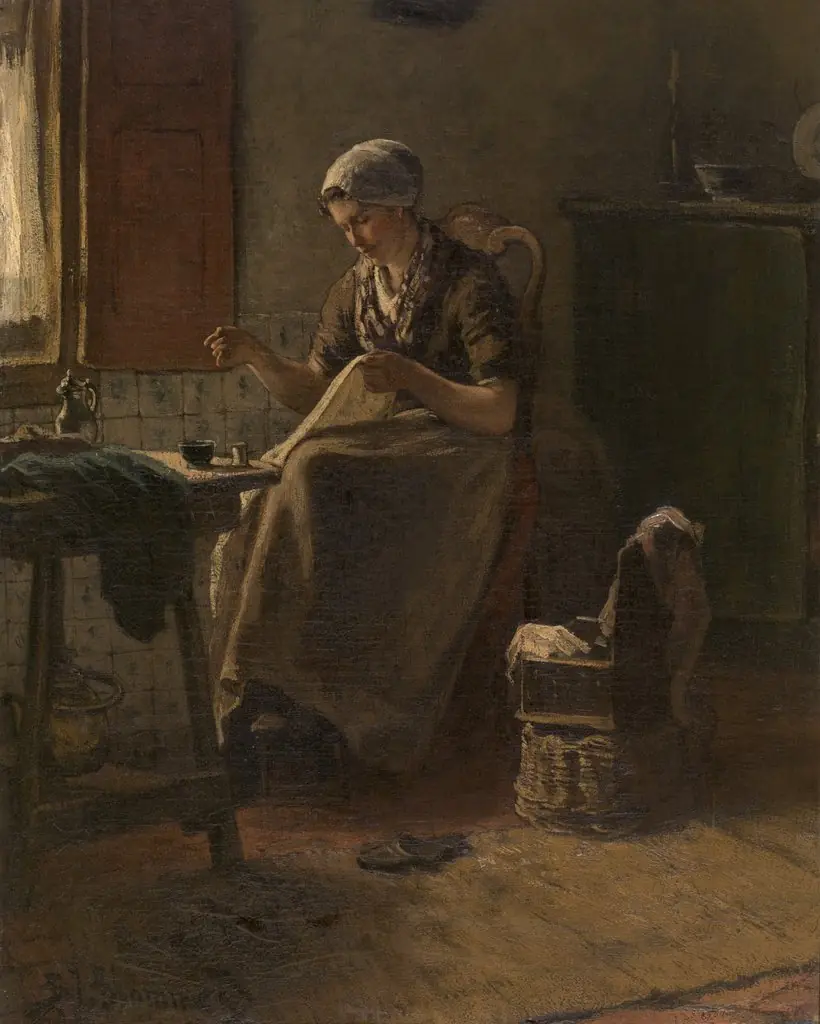
The canvas portrays a solitary woman seated on a wooden chair, absorbed in the delicate task of lace-making. Dressed in a dark, flowing gown and a white headscarf, she concentrates on the fabric in her hands, suggesting a quiet, domestic moment of focused labor.
Technique & Style
Liebermann employs soft, fluid brushstrokes and a warm palette to render the scene, allowing forms to dissolve into a gently blurred background. The handling of light and shadow, reminiscent of chiaroscuro, gives the interior a subtle depth while maintaining the overall impressionistic atmosphere.
History & Provenance
After studying in Weimar, Paris, and the Netherlands, Liebermann settled in Berlin in 1884 and became a leading figure in German Impressionism. *A Dutch Lacemaker* entered the Hamburger Kunsthalle’s holdings, where it remains part of the museum’s permanent collection.
Context
The painting reflects Liebermann’s interest in everyday life and the dignity of work, themes common among Impressionists who sought to capture contemporary scenes with immediacy. By focusing on a traditional craft, the work also alludes to the cultural heritage of the Netherlands, a country Liebermann visited during his formative years.
Own this work as a print
Artist & collection
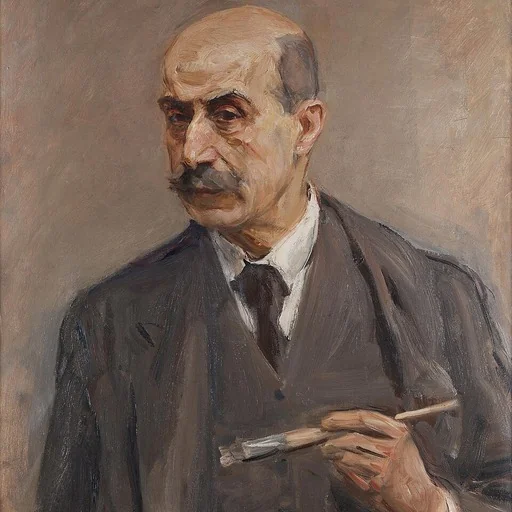
Artist
Max Liebermann (20 July 1847 – 8 February 1935) was a German painter and printmaker, and one of the leading proponents of Impressionism in Germany and continental Europe.