Artwork
Cafe on the Havel
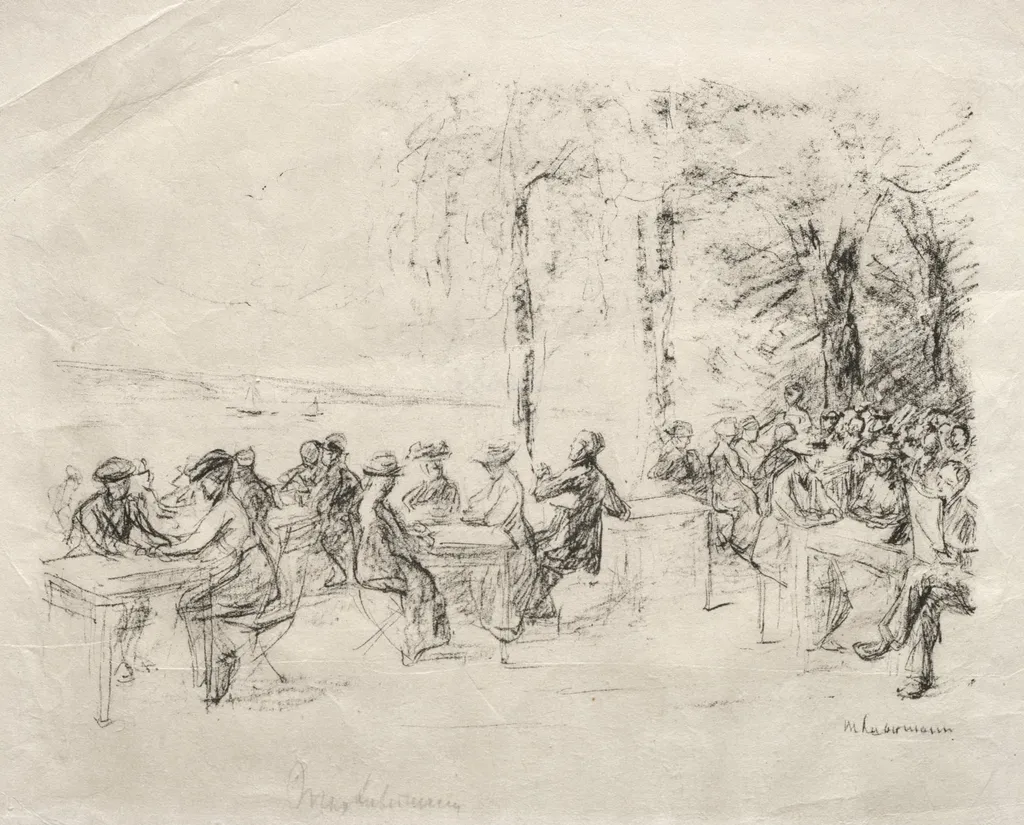
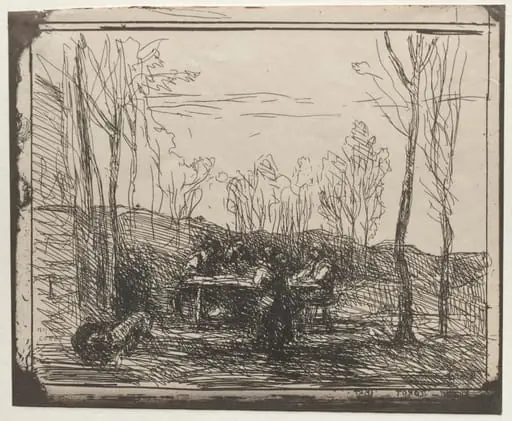
Cafe on the Havel is a print by Max Liebermann. It dates from 1916 and is held in the collection of the Cleveland Museum of Art.
About this work
Overview
Though often associated with oil painting, Liebermann also worked extensively in printmaking, using the medium to explore fleeting, everyday scenes.
Created in 1916, *Café on the Havel* is a lithograph by Max Liebermann that captures a quiet moment of urban leisure along the Havel River. Though often associated with oil painting, Liebermann also worked extensively in printmaking, using the medium to explore fleeting, everyday scenes. This work reflects his sustained interest in the rhythms of middle-class life, rendered with immediacy rather than polish.
Subject & Meaning
The scene portrays patrons seated at outdoor café tables, engaged in conversation, eating, or simply observing their surroundings. A few figures stand in the background, adding subtle motion to the composition. Liebermann avoids narrative drama, instead emphasizing the unremarkable dignity of ordinary social interaction. The setting suggests a relaxed, post-industrial German leisure culture, unidealized and unembellished.
Technique & Style
Executed in loose, fluid lines typical of his graphic work, Liebermann prioritizes movement and atmosphere over detail. The figures are suggested with minimal strokes, their forms emerging from energetic contours rather than defined outlines. The background is reduced to sparse tree silhouettes and indistinct space, directing attention to the human interactions at the center. The print’s spontaneity echoes the immediacy of a sketch, reinforcing its observational character.
History & Provenance
Liebermann produced this print during the final years of World War I, a time when he increasingly turned to intimate, non-political subjects. Though the work was made in Berlin, its subject draws from the Havel River’s popular recreational areas, which he had depicted since the 1890s. The print was likely issued in a small edition for collectors and art societies, consistent with his broader engagement with print circulation.
Context
In early 20th-century Germany, urban cafés served as social hubs for the educated middle class. Liebermann’s focus on such spaces aligned with broader European Impressionist interests in modern life, though his approach remained distinctly German—less concerned with light effects, more with social observation. His work stood apart from overtly political or symbolic art of the era, favoring quiet realism.
Legacy
Though less celebrated than his paintings, Liebermann’s prints, including *Café on the Havel*, influenced later German graphic artists who valued directness and social observation. His ability to convey atmosphere through economical mark-making contributed to the acceptance of sketch-like aesthetics in modern printmaking. The work remains a quiet testament to his lifelong commitment to documenting ordinary life without sentimentality.
Artist & collection
Artist
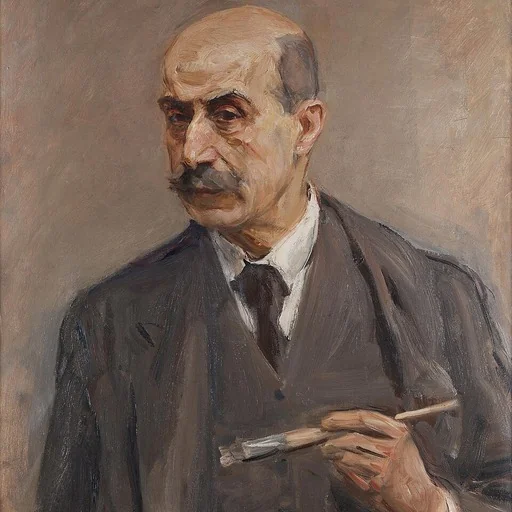
Max Liebermann (20 July 1847 – 8 February 1935) was a German painter and printmaker, and one of the leading proponents of Impressionism in Germany and continental Europe.

![Soupe à Trois Sous (Soup for three sous [pennies]), by James McNeill Whistler](https://artifactworldgallery.com/img/james-mcneill-whistler--soupe-a-trois-sous-soup-for-three-sous-pennies--2346a97cdbb9d5e9-w320.webp)