Artwork
Cafenea la Curtea de Argeș
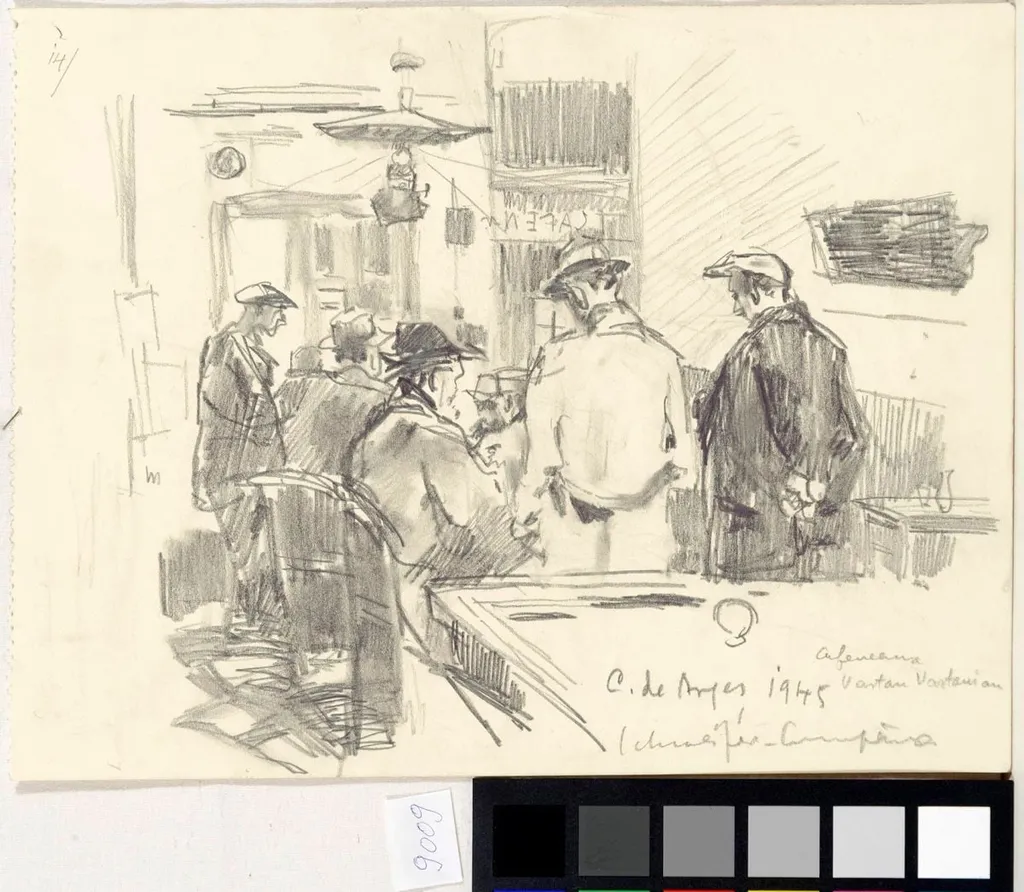
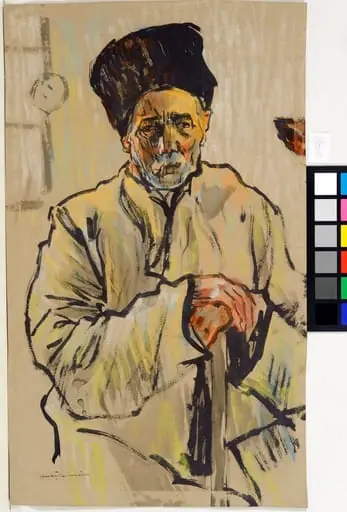
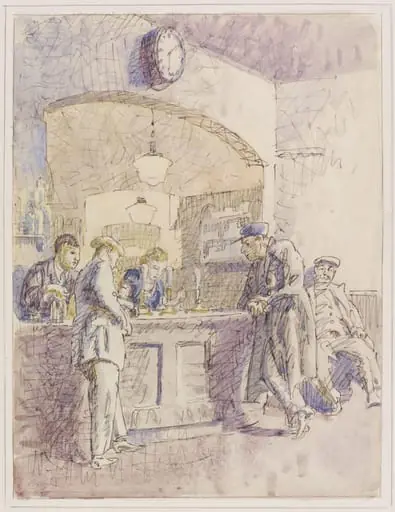
Cafenea la Curtea de Argeș is a drawing by Rudolf Schweitzer-Cumpăna. It dates from 1945 and is held in the collection of the National Museum of Art of Romania.
About this work
Overview
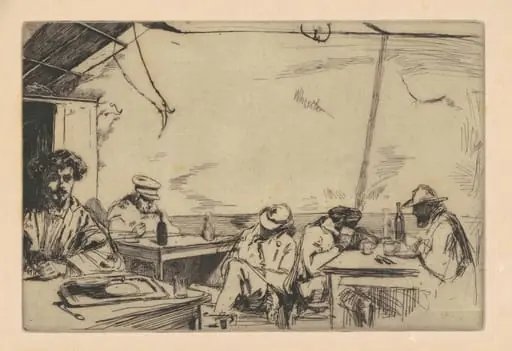
Created in 1945 by Rudolf Schweitzer-Cumpăna, this ink sketch captures a quiet interior scene in a modest café near the Argeș Court.
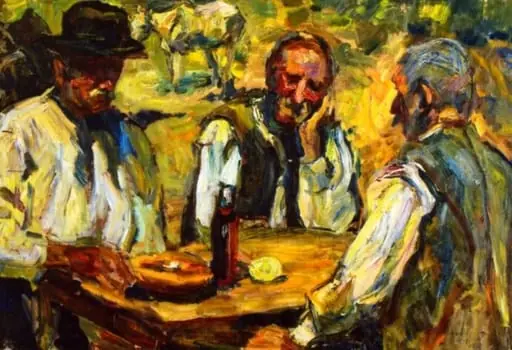
Created in 1945 by Rudolf Schweitzer-Cumpăna, this ink sketch captures a quiet interior scene in a modest café near the Argeș Court. The composition centers on a small group of men seated around tables, their postures suggesting subdued interaction. The setting is spare—furniture, a doorway, and indistinct background elements define the space without detail. The work’s immediacy stems from its unpolished draftsmanship, conveying a moment observed rather than staged.
Subject & Meaning
The figures, dressed in coats and hats, appear absorbed in private thought despite their proximity. Their stillness and lack of overt gesture suggest postwar introspection, possibly reflecting the atmosphere of a society in recovery. The café, a common social space, becomes a vessel for quiet resilience rather than lively exchange. The absence of clear narrative invites interpretation rooted in mood rather than event.
Technique & Style
Schweitzer-Cumpăna employs loose, confident lines and layered cross-hatching to model form and suggest depth. Shading is achieved through stippling and varying line density, giving texture to clothing and surfaces without rendering them literally. The sketch’s spontaneity is preserved, with no attempt to smooth or idealize. Light emerges from implied sources, casting soft shadows that anchor the figures in a dim, enclosed space.
History & Provenance
The work dates from the immediate aftermath of World War II, a period when Schweitzer-Cumpăna was active in Romania’s cultural circles. It likely originated as a study or personal record, not a commissioned piece. Its survival suggests it remained in the artist’s possession or within local artistic networks before entering institutional or private collections, though specific ownership history remains undocumented.
Context
In postwar Romania, public spaces like cafés served as rare venues for informal discourse amid scarcity and political tension. Artists often turned to intimate, everyday scenes as a form of quiet resistance to official narratives. This sketch aligns with a broader trend among Eastern European draftsmen who favored immediacy and emotional restraint over grandeur, using minimal means to convey complex social realities.
Legacy
Though not widely exhibited, the sketch exemplifies Schweitzer-Cumpăna’s commitment to observational drawing as a means of documenting ordinary life. Its understated power has influenced later Romanian artists interested in the expressive potential of ink and the dignity of mundane moments. The work endures as a quiet testament to the resilience of daily ritual in times of upheaval.
Artist & collection
Artist
Rudolf Schweitzer-Cumpăna was a Romanian painter. Born in Pitești into an ethnic German family, he finished high school in his native town before attending the Royal Academy of Arts at Berlin from 1904 to 1909, studying…