Artwork
The Twelve-Year-Old Jesus in the Temple
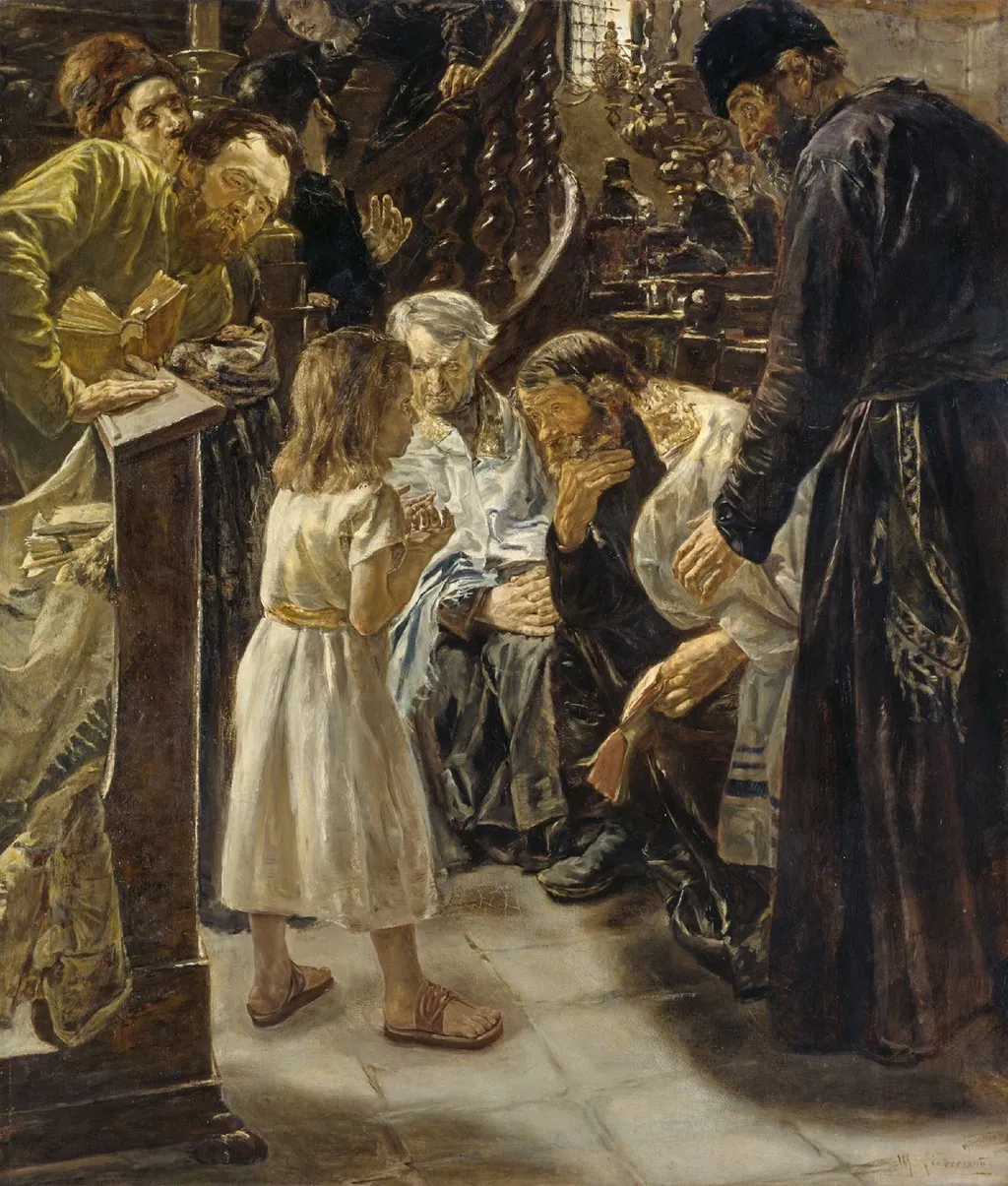
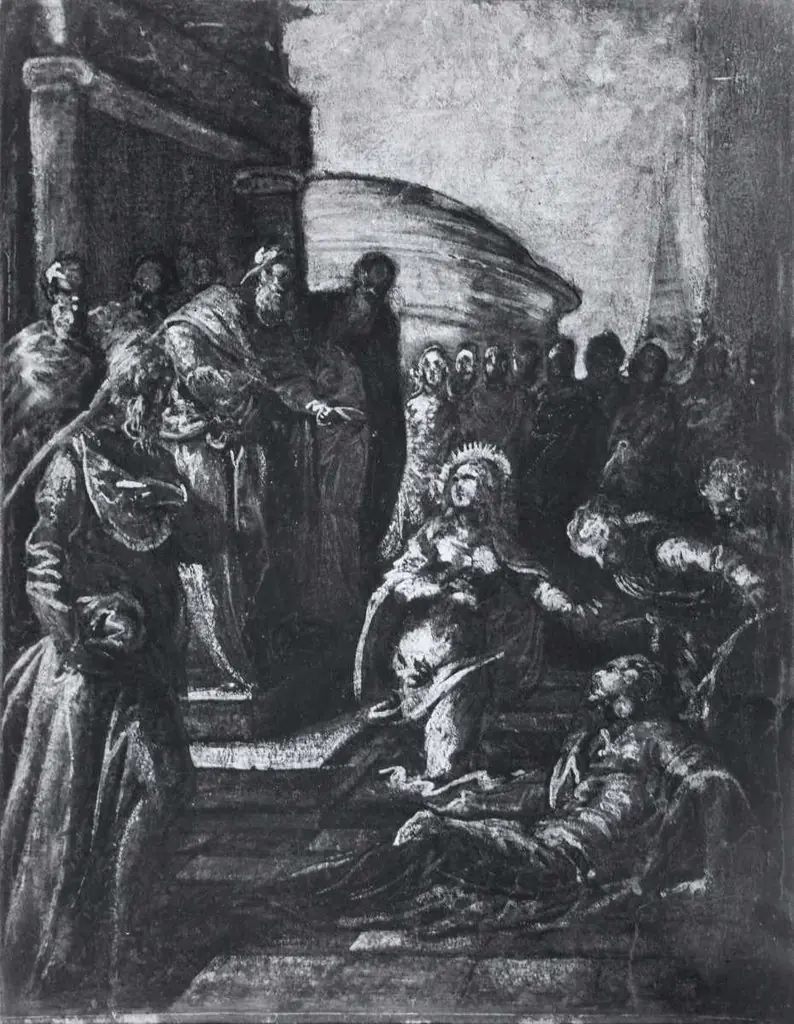
The Twelve-Year-Old Jesus in the Temple is an oil painting by Max Liebermann. It dates from 1890 and is held in the collection of the Hamburger Kunsthalle.
About this work
Overview
The scene captures Jesus at age twelve engaged in discussion with religious scholars in the Temple of Jerusalem.
Painted in 1879 by Max Liebermann, this oil-on-canvas work portrays a biblical episode from the Gospel of Luke. The scene captures Jesus at age twelve engaged in discussion with religious scholars in the Temple of Jerusalem. The painting is part of the collection at the Hamburger Kunsthalle, where it remains one of Liebermann’s early religious subjects, notable for its naturalistic approach and attention to spatial depth.
Subject & Meaning
The painting illustrates the moment when the young Jesus, found by his parents after three days, astonishes temple scholars with his understanding of scripture. Liebermann emphasizes the boy’s quiet authority amid a circle of older men, all dressed in period-appropriate Jewish garments. The child’s white tunic distinguishes him visually, suggesting purity and divine presence without overt symbolism, grounding the sacred in human interaction.
Technique & Style
Liebermann employs chiaroscuro to model forms and define the temple’s architectural volume, with light falling from the left to cast deep shadows across faces and stone. The brushwork is precise yet unpolished, avoiding idealization in favor of observed realism. Crowded figures are arranged in layered planes, enhancing the sense of a confined, resonant space. The palette is muted, dominated by earth tones and the stark white of the boy’s garment.
History & Provenance
Completed in 1879, the painting was acquired by the Hamburger Kunsthalle shortly after its creation. It reflects Liebermann’s engagement with contemporary German realism and his interest in biblical narratives as human dramas rather than devotional icons. The work remained in the museum’s collection without significant public controversy, though its secular treatment of a sacred subject drew some critical attention at the time.
Context
Liebermann painted this during a period when German artists were re-examining religious themes through a secular lens, influenced by Dutch realism and French naturalism. The depiction avoids theological grandeur, instead focusing on the psychological dynamics of a child confronting learned adults. This approach aligned with broader 19th-century trends that prioritized human experience over dogma in art.
Legacy
Though not among Liebermann’s most widely reproduced works, the painting is recognized as an early example of his commitment to truthful representation and his rejection of academic sentimentality. It contributed to his reputation as a painter who brought modern sensibilities to traditional subjects, influencing later generations of German realists who sought to depict spiritual moments with psychological nuance.
Own this work as a print
Artist & collection
Artist
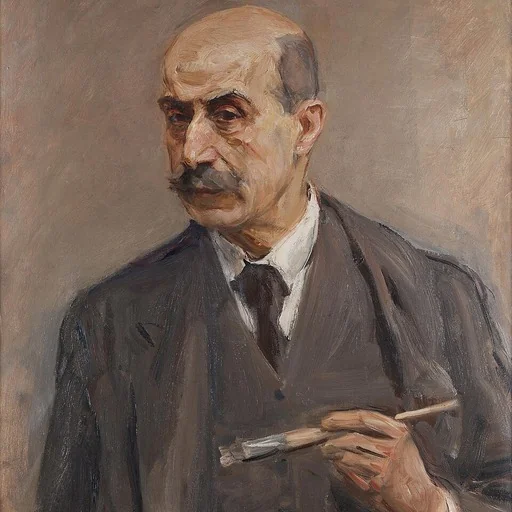
Max Liebermann (20 July 1847 – 8 February 1935) was a German painter and printmaker, and one of the leading proponents of Impressionism in Germany and continental Europe.