Artwork
Russian Ballet
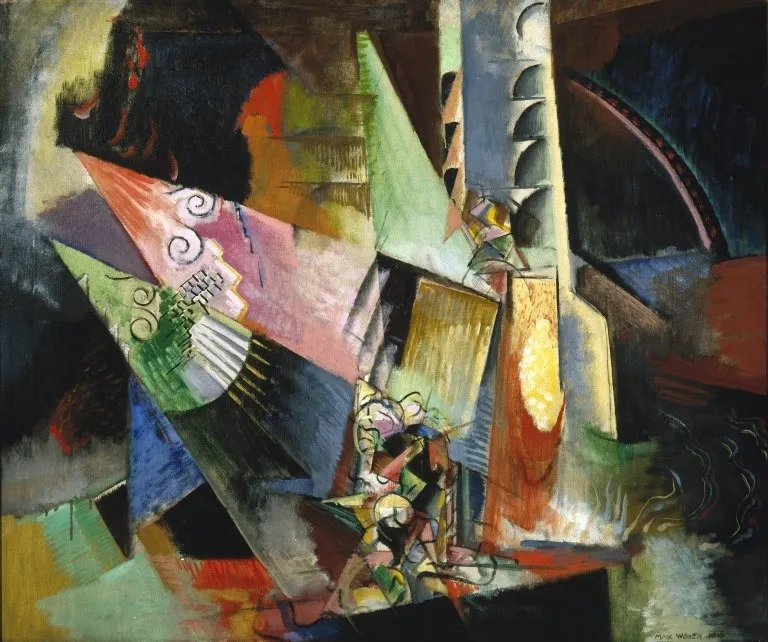
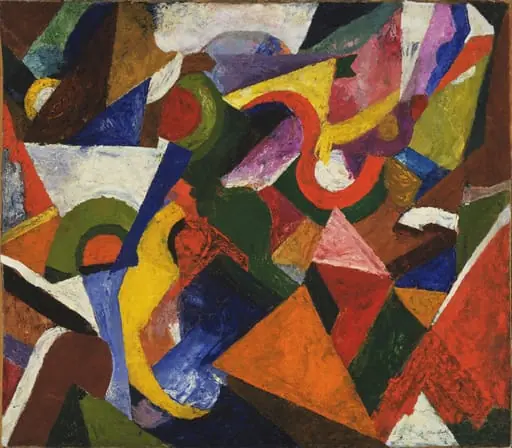
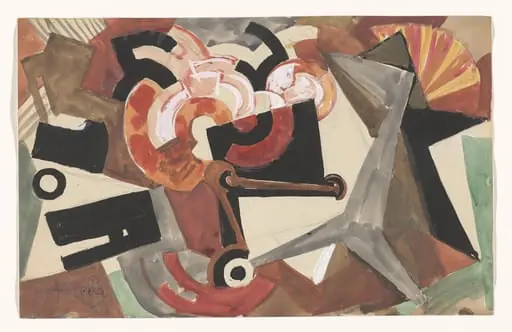
Russian Ballet is an oil painting by Max Weber. It dates from 1916 and is held in the collection of the Brooklyn Museum.
About this work
Overview
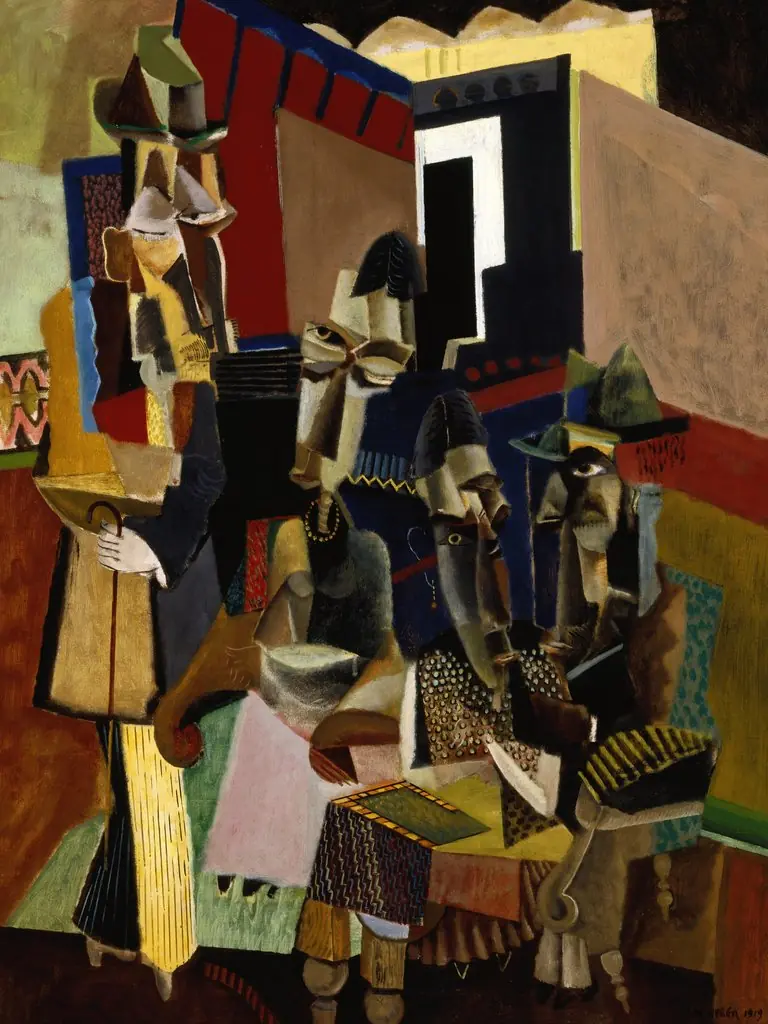
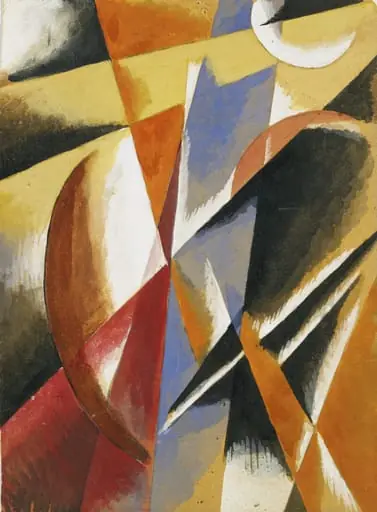
Max Weber’s 1916 oil on canvas entitled Russian Ballet belongs to the Brooklyn Museum’s collection. The work presents an abstracted scene composed of interlocking geometric forms—triangles, rectangles and irregular shapes—rendered in a vivid palette of reds, greens, yellows and blues. The composition is dense and energetic, suggesting movement without depicting recognizable narrative details.
Subject & Meaning
Although the title references a ballet, the painting does not portray dancers in a literal sense. Instead, clustered arrangements of shapes at the center evoke the suggestion of figures in motion, creating a sense of rhythmic dynamism. The abstraction invites viewers to sense the performance’s vitality through color and form rather than through figurative representation.
Technique & Style
Weber employs flat, sharply defined geometric planes that overlap and intersect, producing a layered visual field. The oil medium allows saturated hues to sit side by side, enhancing contrast between warm and cool tones. The overall approach reflects early twentieth‑century modernist tendencies toward abstraction and the exploration of compositional rhythm.
History & Provenance
Created during the later phase of Weber’s career, Russian Ballet entered the Brooklyn Museum’s holdings through acquisition in the mid‑20th century. Its presence in the museum’s modern art department situates the piece among other works that document the artist’s shift from figurative expressionism to a more geometric, abstract language.
Artist & collection