Artwork
Flașnetarul
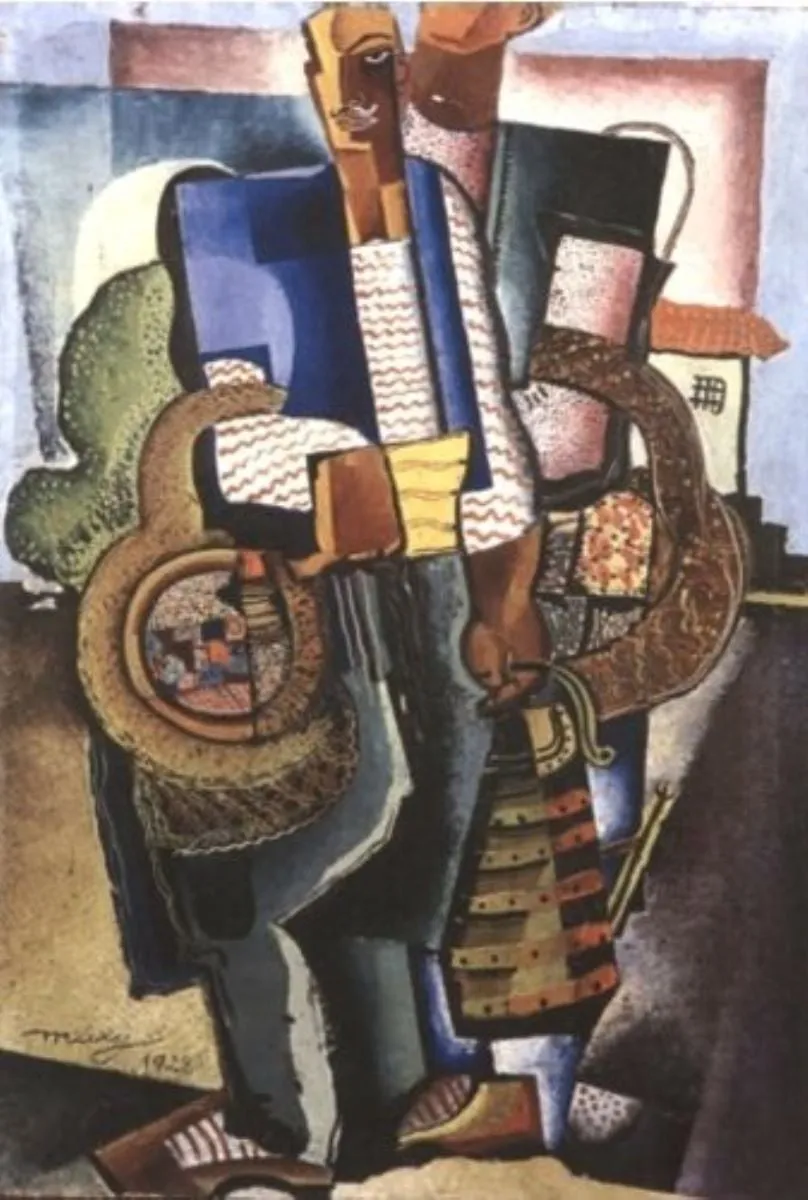
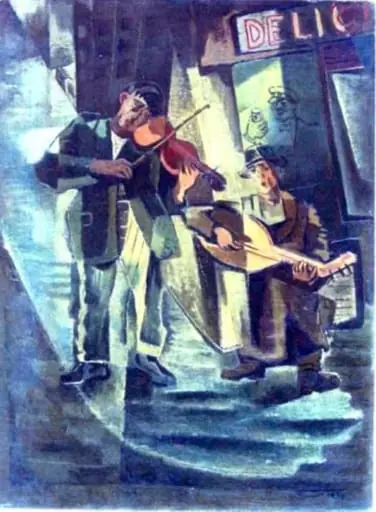
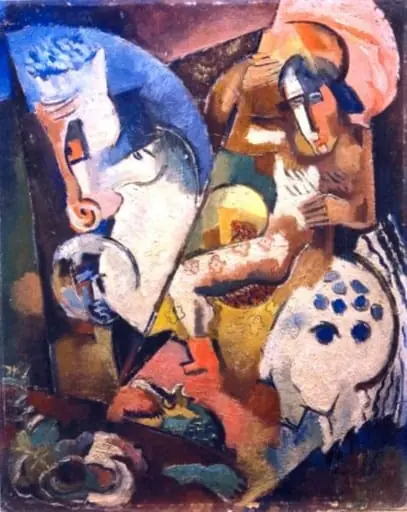
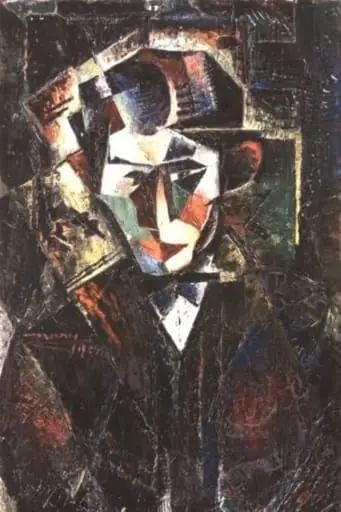
Flașnetarul is an unspecified painting by Max Hermann Maxy. It dates from 1928 and is held in the collection of the National Museum of Art of Romania.
About this work
Overview
The background recedes into indistinct architecture and a muted sky, drawing focus to the figures’ textured garments and angular features.
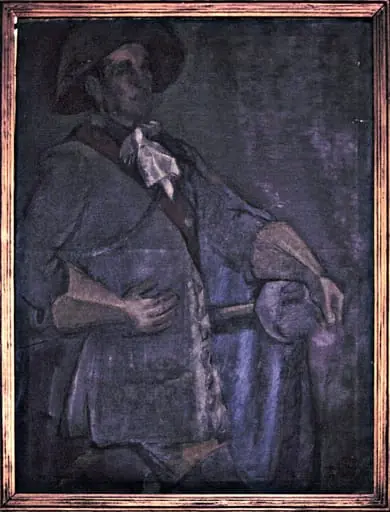
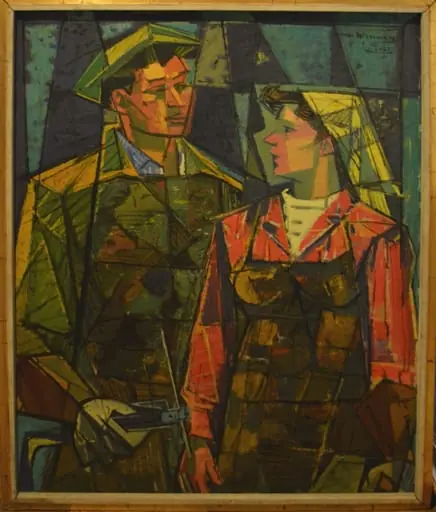
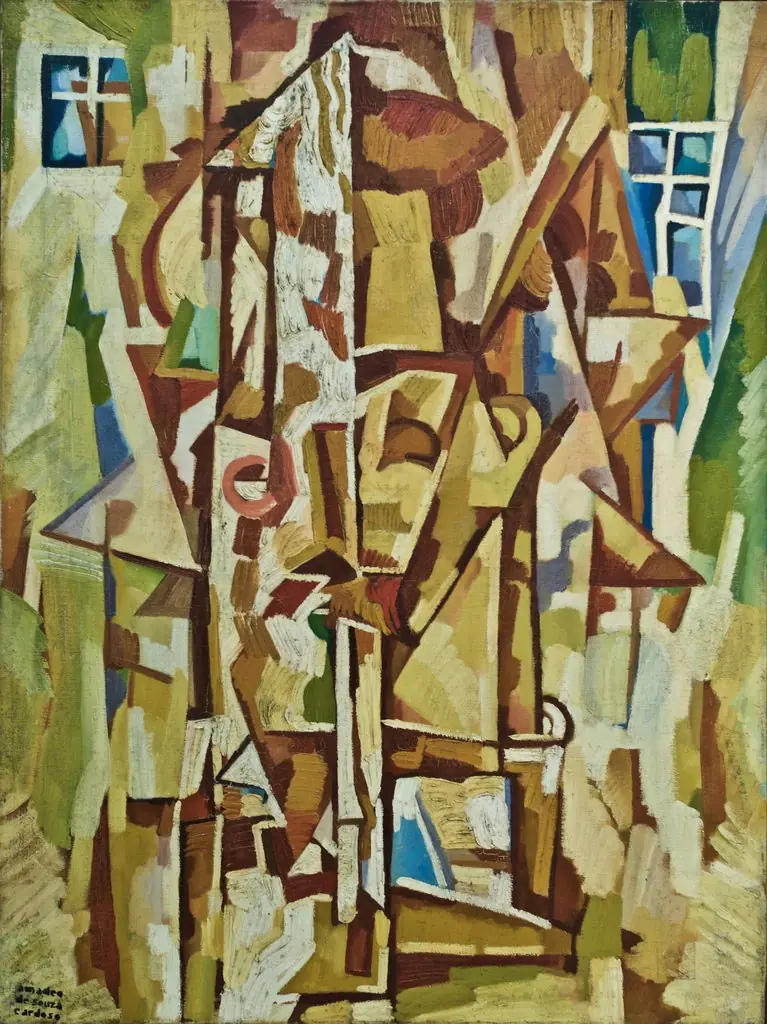
Flașnetarul, painted in 1928 by Max Hermann Maxy, is a portrait of two figures standing in close proximity. The composition emphasizes their physical presence through simplified forms and deliberate roughness. The background recedes into indistinct architecture and a muted sky, drawing focus to the figures’ textured garments and angular features. The work reflects early 20th-century experimentation with form and materiality.
Subject & Meaning
The two figures appear as anonymous laborers or urban dwellers, their identities obscured by stylized faces and layered clothing. Their proximity suggests a shared experience, possibly of work or hardship. The lack of individualizing detail invites interpretation as archetypes rather than specific persons, aligning with broader interwar interests in social realism and collective identity.
Technique & Style
Maxy employed thick, uneven brushwork to build the surfaces of the figures’ clothing, creating a tactile, almost sculptural quality. Colors are applied with visible texture, avoiding smooth blending. The impasto technique gives fabric a sense of weight and wear, while the stark outlines of faces and limbs reduce features to essential shapes, reinforcing a sense of raw, unrefined humanity.
History & Provenance
Created during Maxy’s active period in Romania’s avant-garde circles, Flașnetarul emerged amid broader European movements redefining representation after World War I. It was likely exhibited in regional modernist exhibitions but remains less documented in international archives. Its current location and early ownership are not widely recorded, suggesting a regional rather than global circulation.
Context
The painting reflects the influence of Expressionism and early Constructivism, common in Eastern European modernism of the 1920s. Maxy’s focus on texture and simplified form aligns with contemporaries exploring the materiality of paint and the psychological weight of the working class. Urban decay and social fragmentation in post-war Romania provided a backdrop for such imagery.
Legacy
Flașnetarul stands as an example of how Romanian modernists adapted international styles to local realities. Though not widely reproduced, it contributes to understanding the diversity of interwar European art beyond Western centers. Its emphasis on materiality and social anonymity influenced later generations of Romanian painters seeking to ground abstraction in lived experience.
Artist & collection

Artist
Max Hermann Maxy was a Romanian painter, art professor, scenographer, and professor of German-Jewish descent.