Artwork
Vue générale prise à l'angle sud-ouest, Philoe
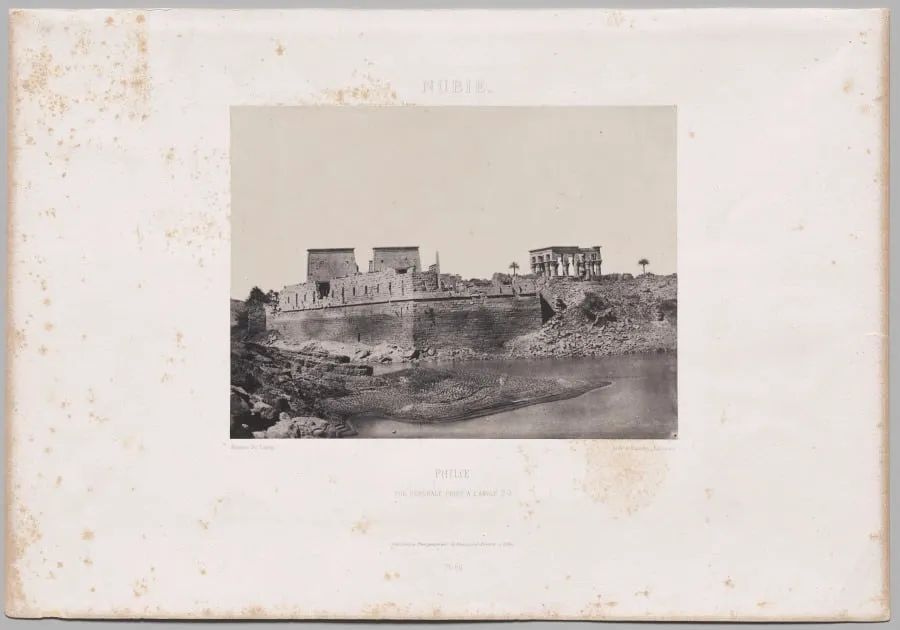
Vue générale prise à l'angle sud-ouest, Philoe is a photography by the Romanticist artist Maxime Du Camp. It dates from 1850 and is held in the collection of the Cleveland Museum of Art.
About this work
You see a quiet temple ruin on a small island in the Nile, its columns half-buried in sand.
This photo was taken before the temple was moved. It’s one of the last records of the site in its original spot. The soft light makes the stones look almost alive.
If you like old ruins, look up subject: france, 19th century for more early photos of forgotten places.
Overview
Taken by Maxime Du Camp in the mid-19th century, this photograph captures the Temple of Isis at Philae as it stood on its original island in the Nile. The image predates the temple’s relocation due to the construction of the Lower Aswan Dam. It serves as a rare visual document of the site before environmental and engineering interventions altered its landscape.
Subject & Meaning
The temple, dedicated to the goddess Isis, was a center of pilgrimage in antiquity. Du Camp’s photograph preserves its quiet decay—columns half-sunken in sand, weathered stonework, and the stillness of the surrounding river. The image conveys not only religious heritage but also the passage of time, as the site remained untouched by modern intervention at the moment of capture.
Technique & Style
Du Camp employed the wet-plate collodion process, yielding sharp detail and tonal subtlety. The soft, diffused light enhances the texture of the stone, lending the ruins a sense of quiet presence. Compositionally, the frame emphasizes isolation: the temple emerges from the river’s edge, framed by water and sand, with no human figures to distract from its solitude.
History & Provenance
Built between 380 and 362 BCE, the temple endured centuries of use, neglect, and partial burial by silt. Du Camp photographed it during a French expedition documenting ancient sites. After the dam’s completion in 1902, the temple was dismantled and reassembled on Agilkia Island. This photograph remains one of the final records of its original location.
Context
In the 19th century, European travelers and scholars increasingly turned to photography to preserve sites threatened by modernization. Du Camp’s work aligned with broader efforts to catalog Egypt’s antiquities before industrial projects transformed the landscape. His images contributed to both scholarly study and public fascination with the ancient Near East.
Legacy
The photograph endures as a historical benchmark, offering insight into the temple’s condition prior to relocation. It informs conservation efforts and serves as a reference for scholars studying architectural change and cultural memory. Its quiet composition continues to resonate as a testament to the impermanence of human structures amid natural forces.
Artist & collection

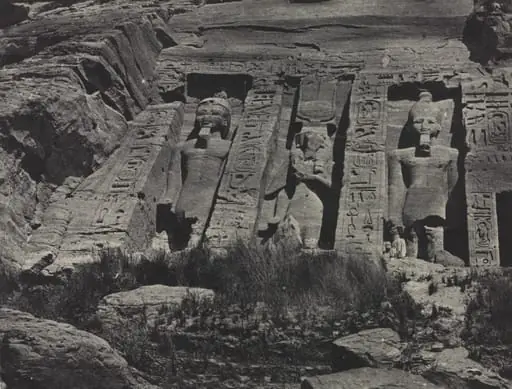
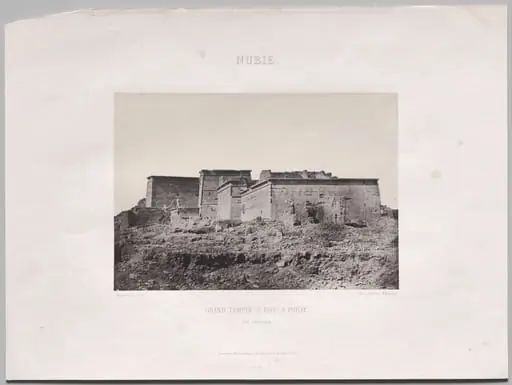
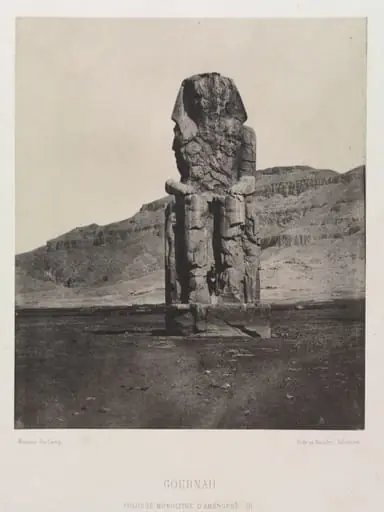
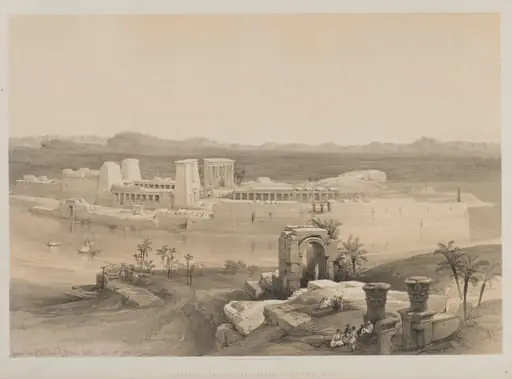 Egypt and Nubia, Volume I: General View of the Island of Philae, Nubia
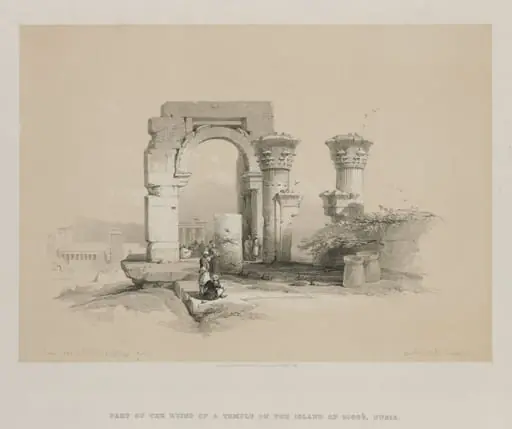 Egypt and Nubia, Volume II: Ruins - Temple on the Island of Biggeh, Nubia
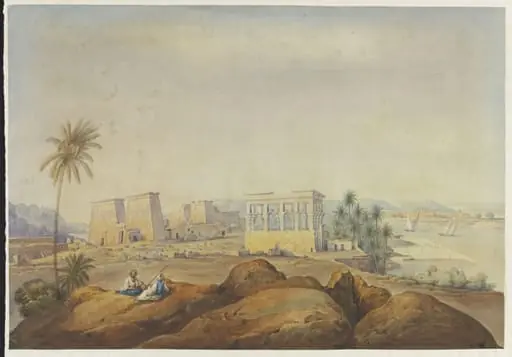 The Temple of Isis and Kiosk of Trajan on the Island of Philae
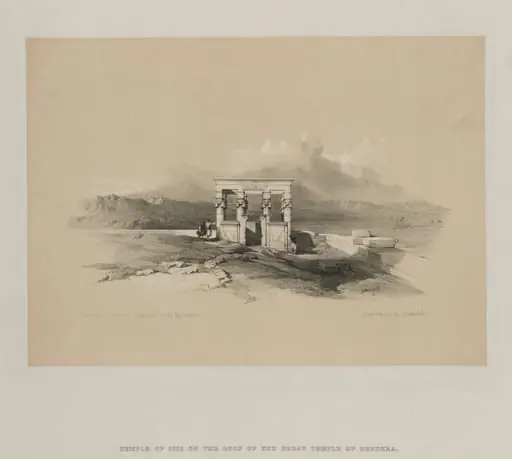 Egypt and Nubia, Volume II: Temple of Isis on the Roof of the Great Temple of Dendera
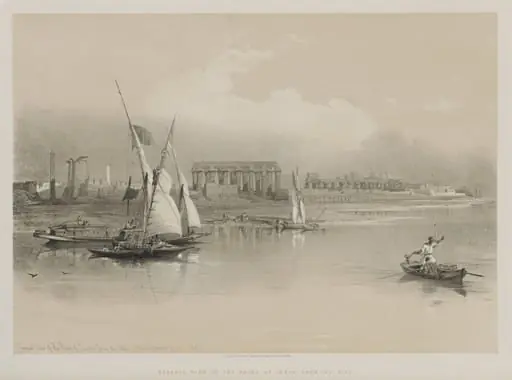 Egypt and Nubia, Volume I: General View of the Ruins of Luxor, From the Nile