Artwork
Grand Temple D’Isis, à Philoe (vue générale prise du nord), Nubie
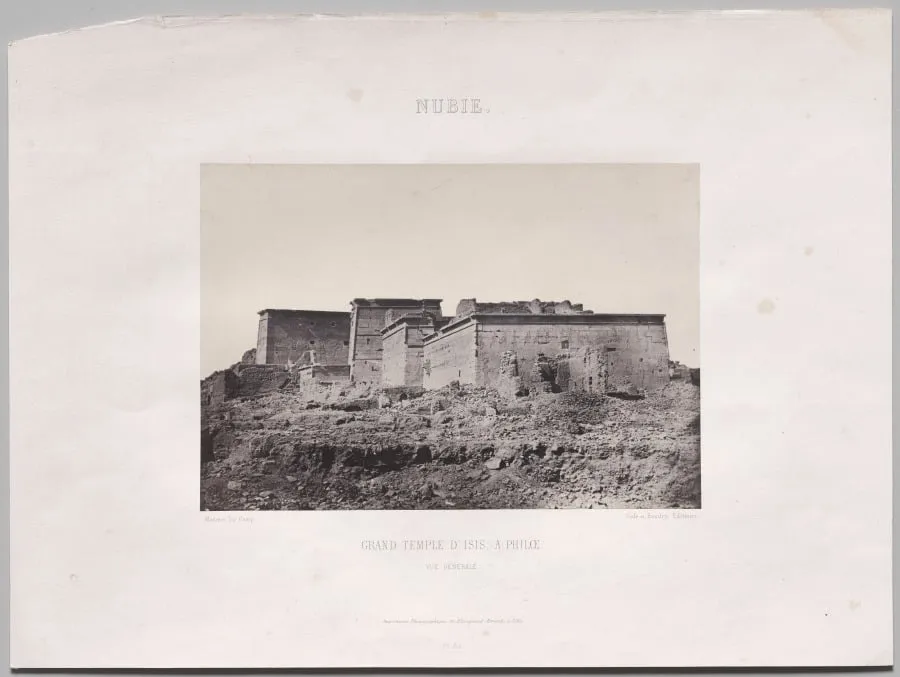
Grand Temple D’Isis, à Philoe (vue générale prise du nord), Nubie is a photography by the Impressionist artist Maxime Du Camp. It dates from 1850 and is held in the collection of the Cleveland Museum of Art.
About this work
You see a quiet stone temple on a small island, half-wrapped in shadows, with the Nile flowing past.
You see a quiet stone temple on a small island, half-wrapped in shadows, with the Nile flowing past.
This photo was taken in 1850, before the temple was moved. The temple stood here for over 2,000 years—then engineers built a dam and flooded the island. Du Camp’s image is one of the last records of the temple in its original place.
To see more early photos of Egypt, look up the subject *france, 19th century*.
Overview
This photograph, taken by Maxime Du Camp in 1850, captures the Temple of Isis at Philae as it appeared on its original island in the Nile. The image predates the construction of the Lower Aswan Dam and serves as a rare visual record of the site before it was relocated. Du Camp’s work documents the temple in its ancient setting, offering a glimpse of its condition prior to 20th-century engineering interventions.
Subject & Meaning
The temple was dedicated to Isis, a major goddess in ancient Egyptian religion, and served as a center of pilgrimage for centuries. Its location on a small island reinforced its sacred isolation, a common feature in Egyptian temple architecture. The photograph preserves the structure’s serene, weathered presence amid the river, reflecting its enduring spiritual and cultural significance long after the decline of its original worship practices.
Technique & Style
Du Camp employed early photographic methods, likely calotype or daguerreotype, to record the temple’s architecture with careful attention to light and form. The composition emphasizes the temple’s quiet grandeur, with soft shadows wrapping the stone surfaces and the Nile’s flow framing the scene. The image avoids dramatic embellishment, favoring a documentary clarity that aligns with 19th-century travel photography’s observational aims.
History & Provenance
Built between 380 and 362 BCE, the temple stood on Philae Island for over two millennia. After the completion of the Lower Aswan Dam in 1902, rising waters submerged the site. Between 1972 and 1980, the temple complex was dismantled and reassembled on Agilkia Island. Du Camp’s 1850 photograph remains one of the earliest and most detailed visual accounts of the temple in its original location.
Context
Du Camp’s photograph emerged during a period of heightened European interest in Egypt’s antiquities, spurred by archaeological expeditions and colonial expansion. His work was part of a broader effort to systematically document ancient sites before modern development altered them. The image reflects both scholarly curiosity and the era’s growing awareness of cultural heritage’s vulnerability to industrial change.
Legacy
The photograph endures as a critical reference for historians and conservators studying the temple’s original form. It also symbolizes the tension between preservation and progress, marking a moment before irreversible environmental change. As one of the last clear images of Philae in situ, it continues to inform reconstructions and public understanding of the site’s pre-flooding appearance.
Artist & collection

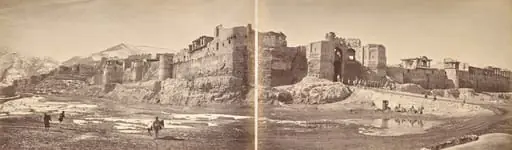 Bala Hissar
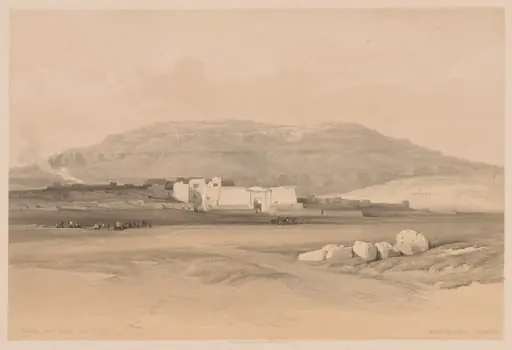 Egypt and Nubia: Volume II - No. 20, Medinet Abou, Thebes
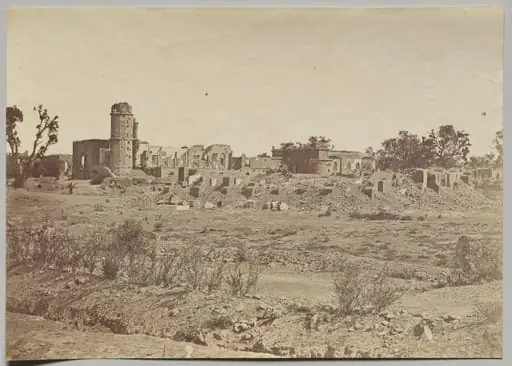 The Churchyard and Residency in the Distance
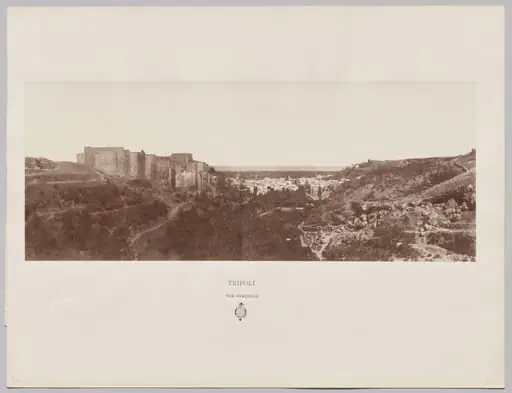 Tripoli, Vue Partielle
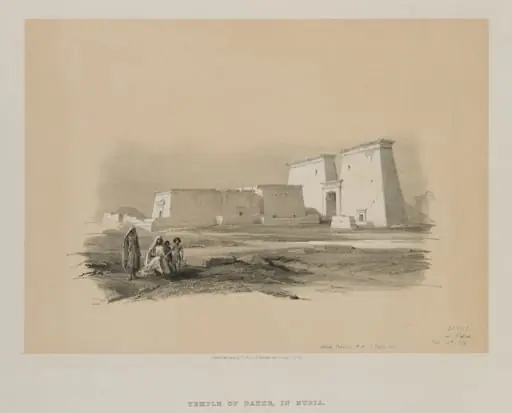 Egypt and Nubia, Volume I: Dakke, in Nubia
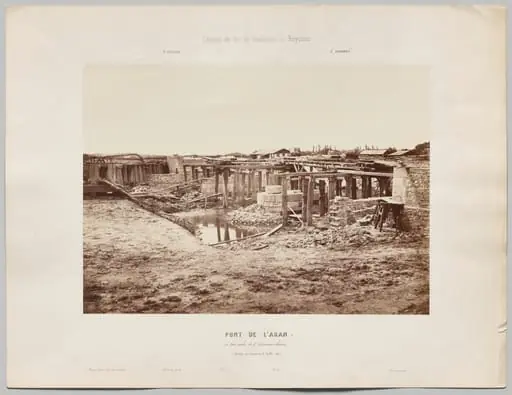 Chemin de fer de Toulouse à Bayonne. Pont de l'Aran (en trois arches de 17m d'ouverture chacune). Situation des travaux au 21 juillet 1861
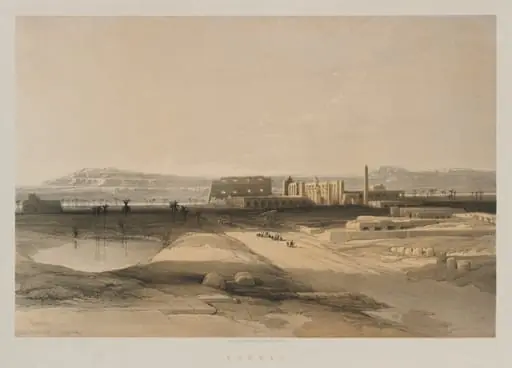 Egypt and Nubia, Volume II: Karnak
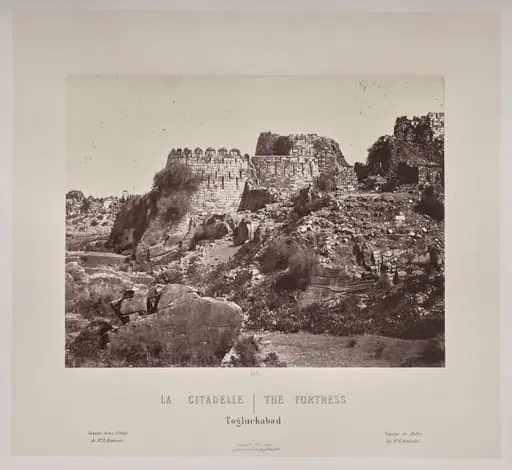 The Fortress, Togluckabad