Artwork
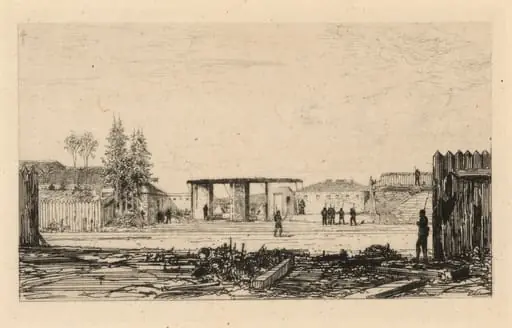
Porte du l'Avenue Uhrich
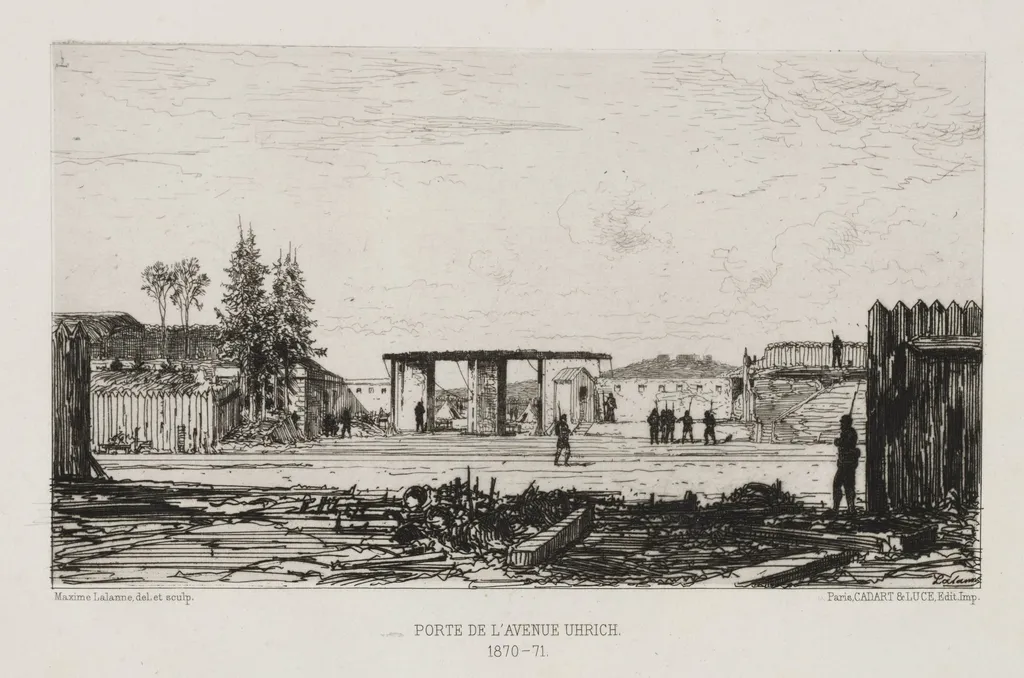
Porte du l'Avenue Uhrich is a print by the Impressionist artist Maxime Lalanne. It dates from 1870 and is held in the collection of the Cleveland Museum of Art.
About this work
Overview
As a skilled printmaker, Lalanne favored the etching medium for its capacity to convey subtle tonal variations and atmospheric detail.
Maxime Lalanne’s 1870 etching *Porte de l’Avenue Uhrich* depicts a modest urban entrance in France, rendered with quiet precision. As a skilled printmaker, Lalanne favored the etching medium for its capacity to convey subtle tonal variations and atmospheric detail. The work is held in the Cleveland Museum of Art’s collection, where it contributes to a broader representation of 19th-century French graphic art focused on ordinary environments.
Subject & Meaning
The scene captures a nondescript gateway along Avenue Uhrich, framed by modest buildings, scattered tents, and a line of trees. Figures move or pause near a fence, their presence unremarkable yet grounding the image in daily life. No grand narrative is intended; instead, the composition emphasizes the quiet rhythm of urban routine, reflecting a shift in artistic interest toward unidealized, lived spaces rather than ceremonial or picturesque subjects.
Technique & Style
Lalanne employed fine etched lines to suggest texture and depth, using varying densities of ink to render mud, foliage, and weathered architecture. The muted tonal range and loose, observational brushwork align with Realist principles, avoiding dramatic contrast in favor of naturalistic light and surface detail. The print’s intimacy arises from its careful attention to mundane elements—puddles, open doorways, and uneven ground—that together evoke a specific moment in time.
History & Provenance
Created in 1870, the print emerged during a period when French artists increasingly turned to contemporary urban and suburban life as subject matter. Lalanne, known for his technical mastery in etching and charcoal, produced numerous works documenting Parisian outskirts and provincial streets. The piece entered the Cleveland Museum of Art’s collection through documented acquisition, contributing to its holdings of European graphic art from the late 19th century.
Context
In the wake of the Franco-Prussian War and the Paris Commune, many artists shifted focus from historical or mythological themes to the immediate surroundings of ordinary citizens. Lalanne’s work fits within this trend, aligning with contemporaries who valued authenticity over idealization. The depiction of a modest gate, rather than a monument, reflects a broader cultural interest in the overlooked structures of daily existence.
Legacy
Lalanne’s etchings, including this one, influenced later generations of printmakers who sought to document the urban landscape with empathy and restraint. While not widely celebrated in his lifetime, his technical precision and commitment to everyday subjects earned him recognition among specialists in 19th-century graphic arts. The work remains a quiet example of how printmaking could elevate the ordinary through careful observation.
Artist & collection
Artist
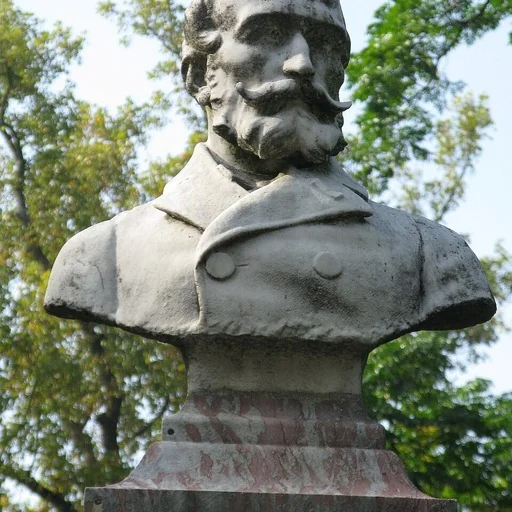
François Antoine Maxime Lalanne (November 27, 1827 – July 29, 1886) was a French artist known for his etchings and charcoal drawings (fusain).

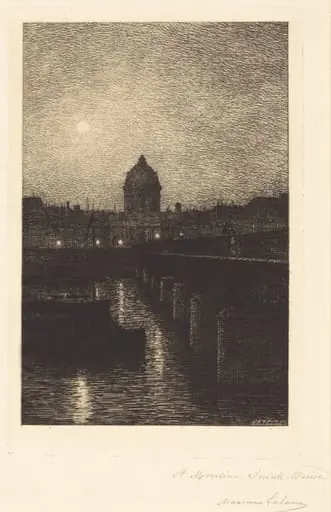
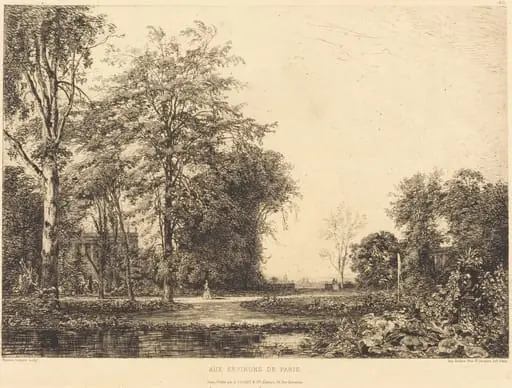
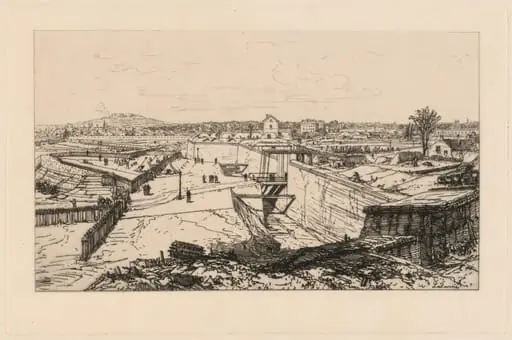 The Porte de Versailles at Pont du Jour
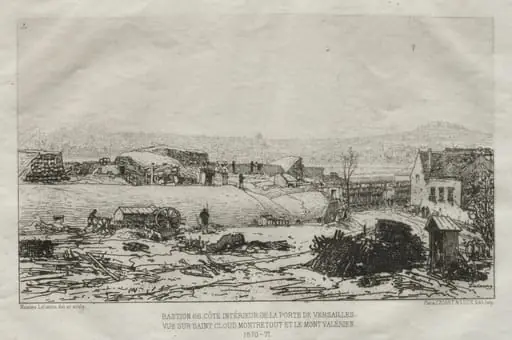 Bastion 66
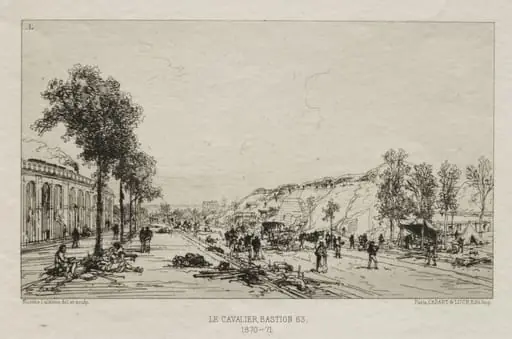
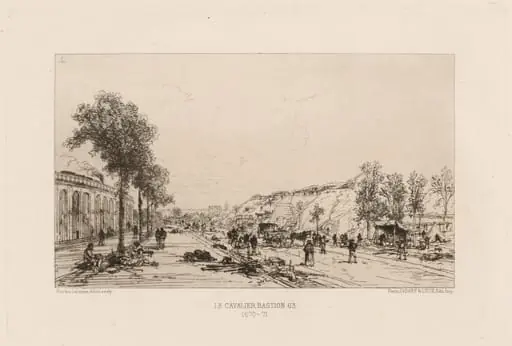 Le Cavalier, Bastion 63 (The Rider, Bastion 63)
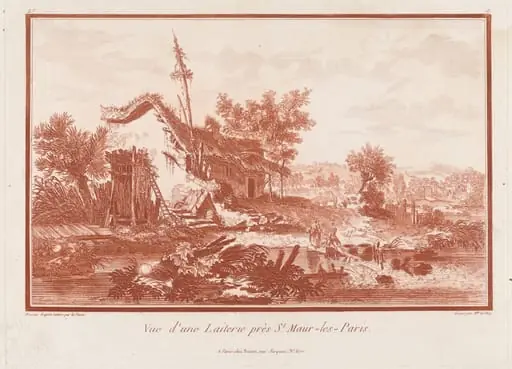 Vue d’une Laiterie près St. Maur-les-Paris (View of the Dairy near St. Maur-les-Paris)
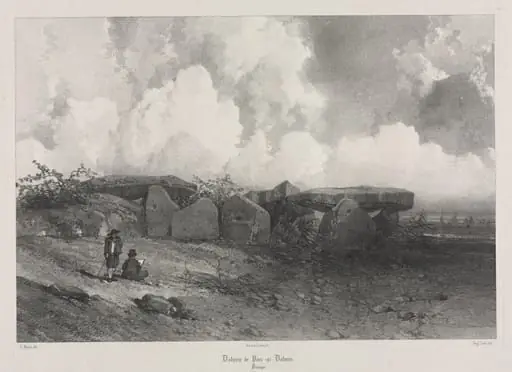 Voyages pittoresques et romantiques dans l'ancienne France: Bretagne: Dolmen de Parc-ar-Colmen
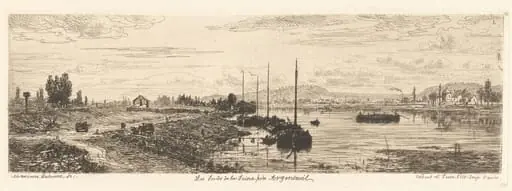 Les Bords de la Seine près Argenteuil (The Banks of the Seine by Argenteuil)
 Mission San Antonio de Padua
 Italian landscape, with an ancient Roman sarcophagus
 Egypt and Nubia, Volume II: Karnak
 Souvenirs artistiques du Siège de Paris: Le Cavalie (Bastion 63)
 Mr. Whiteman's house and Franciscan Fort, Macao
 Porte de l'Avenue Uhrich