Artwork
Bastion 66
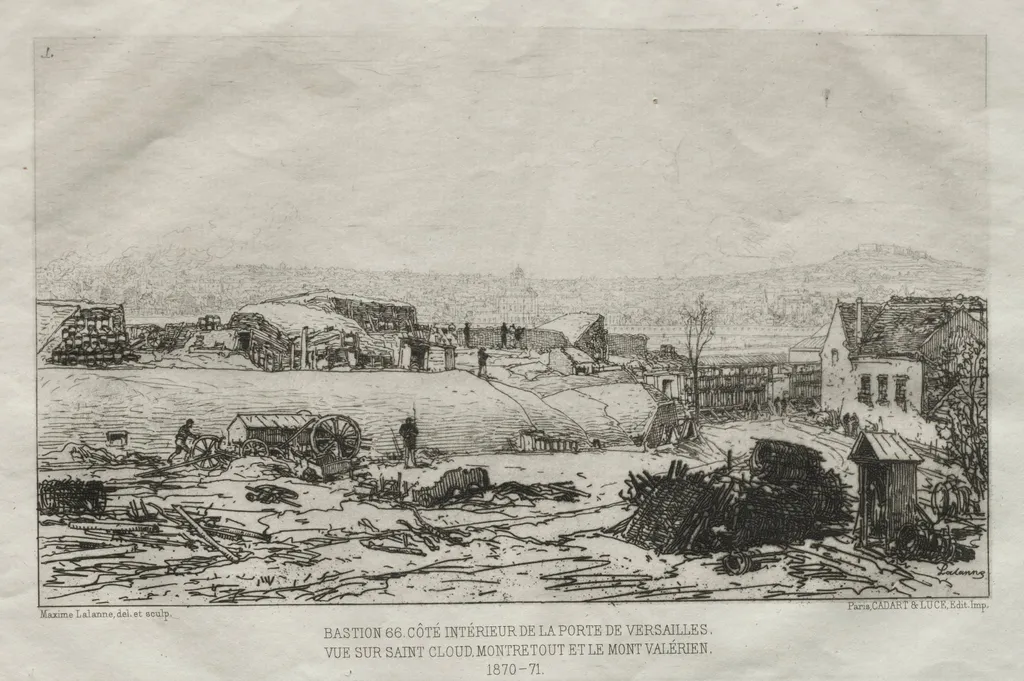
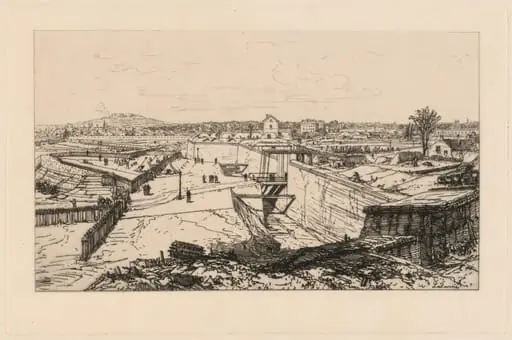
Bastion 66 is a print by the Impressionist artist Maxime Lalanne. It dates from 1870 and is held in the collection of the Cleveland Museum of Art.
About this work
Overview
Created in 1870 by French artist Maxime Lalanne, *Bastion 66* is an etching depicting the aftermath of military conflict near Versailles. The work captures a ruined defensive structure, its walls fractured and scattered with debris. Unlike heroic battle scenes, Lalanne emphasizes the quiet, laborious cleanup that follows violence, focusing on the ordinary figures engaged in removal and repair.
Subject & Meaning
The print portrays Bastion 66, a dismantled fortification, as a site of practical recovery rather than triumph. Soldiers and laborers haul away wreckage in carts, their movements subdued and methodical. The absence of combatants or drama shifts attention to the physical and emotional residue of war—ruin as a daily reality, not a spectacle.
Technique & Style
Lalanne employed fine-line etching to render texture and depth, using delicate hatching to suggest crumbling stone, weathered wood, and shifting shadows. The composition is deliberately uncluttered, with receding hills and distant buildings creating spatial depth. The muted tonal range reinforces the somber, unembellished tone of the scene.
History & Provenance
The print was made during the Franco-Prussian War, a period of upheaval in France that left many fortifications damaged or obsolete. Lalanne, known for his topographical prints, documented such sites with precision. *Bastion 66* entered the collection of The Cleveland Museum of Art, where it remains as part of its holdings in 19th-century European prints.
Context
Emerging from the Realist movement, the work reflects a broader shift toward depicting unidealized, contemporary life. Lalanne’s focus on post-conflict labor aligns with artists like Daumier and Millet, who found significance in ordinary labor and the traces of social change. The scene resists romanticism, instead presenting war’s aftermath as a mundane, ongoing process.
Legacy
Though not widely exhibited, *Bastion 66* exemplifies Lalanne’s contribution to documentary printmaking in post-war France. Its quiet observation influenced later artists interested in the material consequences of conflict. The work endures as a restrained record of how societies physically and psychologically rebuild after violence.
Artist & collection
Artist
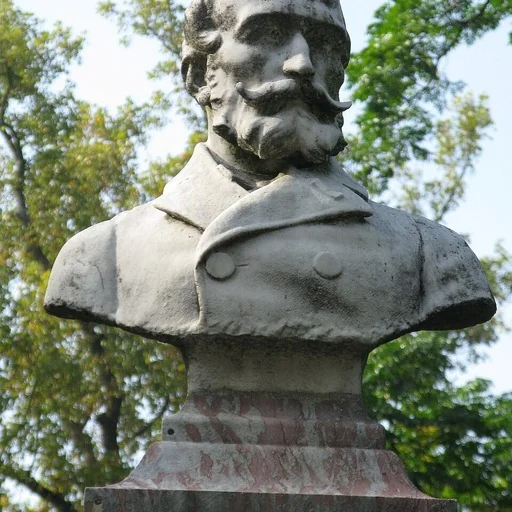
François Antoine Maxime Lalanne (November 27, 1827 – July 29, 1886) was a French artist known for his etchings and charcoal drawings (fusain).

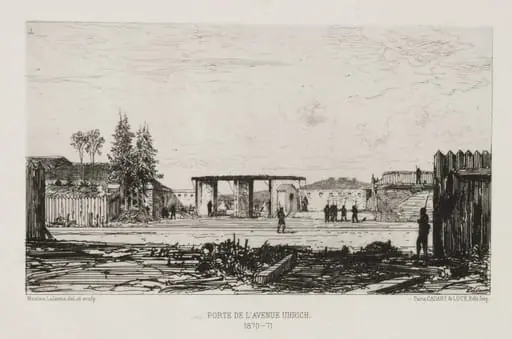 Porte du l'Avenue Uhrich
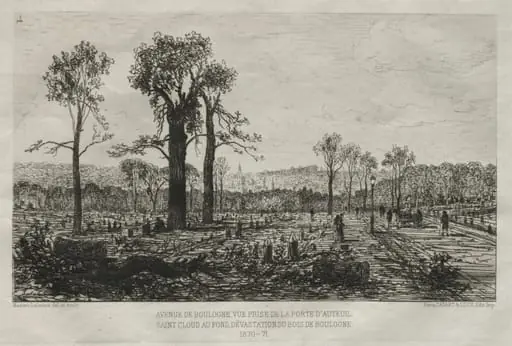 Souvenirs artistiques du Siége du Paris: Avenue de Boulogne, Vue Prise de la porte d'Auteuil, St. Cloud au fond, Dévastation du Bois de Boulogne
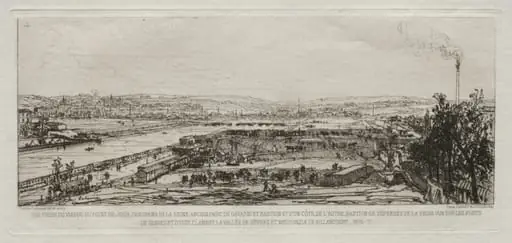 View from the Viaduct at the Pont-du-Jour, Panorama de la Seine
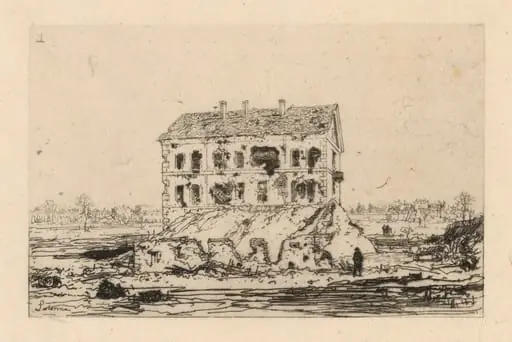 The Effects of Bombardment (Les Effets du bombardement)
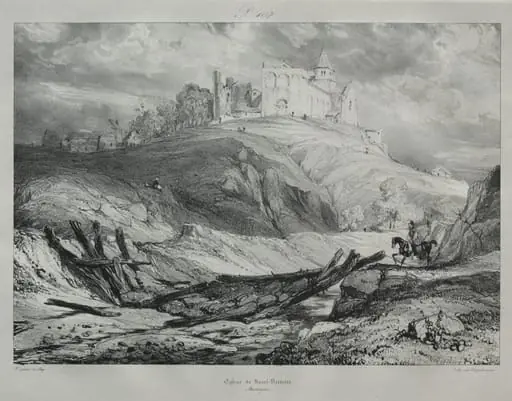 Église de St. Nectaire
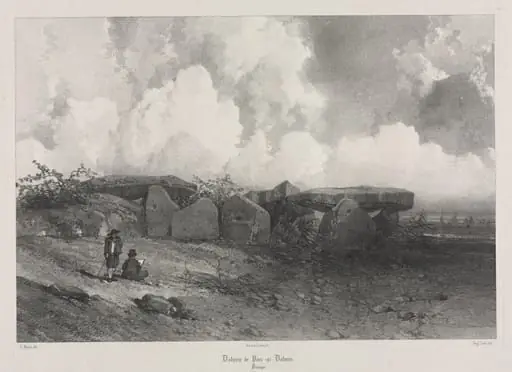 Voyages pittoresques et romantiques dans l'ancienne France: Bretagne: Dolmen de Parc-ar-Colmen
 The Porte de Versailles at Pont du Jour
![Landscape with a Woman at a Well [lower left], by Canaletto](https://artifactworldgallery.com/img/canaletto--landscape-with-a-woman-at-a-well-lower-left--b513e9050350c0fb-w320.webp) Landscape with a Woman at a Well [lower left]
Landscape with a Woman at a Well [lower left] Sight of the citadelle of Antwerp after the bombardement of 1832