Artwork
Wild Boar, Wildcat and Lynx
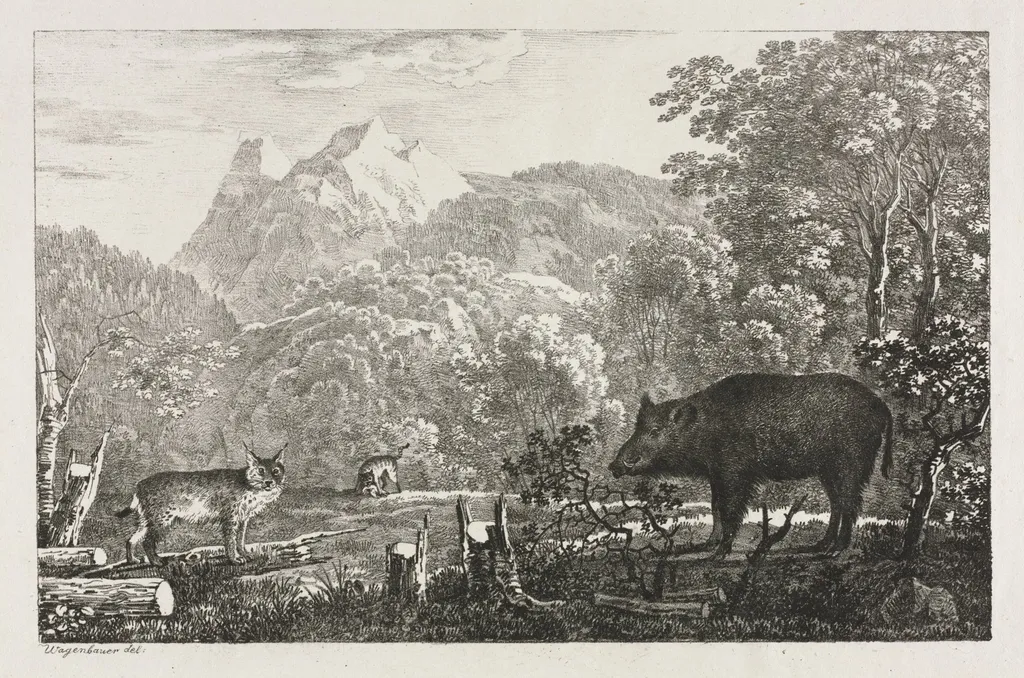
Wild Boar, Wildcat and Lynx is a print by the Romanticist artist Maximilian Josef Wagenbauer. It dates from 1807 and is held in the collection of the Cleveland Museum of Art. Created in 1807 by Maximilian Joseph Wagenbauer, this print depicts three wild animals within a wooded landscape.
About this work
The background has rolling hills, trees, and a distant mountain range.
This print shows three wild animals in a forest. On the left, a small cat-like animal sits near a fence. In the middle, a deer stands still. On the right, a large boar rests under a tree. The background has rolling hills, trees, and a distant mountain range.
The artist included a tiny deer in the shadows, almost hidden. This print was made in 1807 by a German artist.
Look up The Cleveland Museum of Art to see where this print is kept.
Overview
Created in 1807 by Maximilian Joseph Wagenbauer, this print depicts three wild animals within a wooded landscape. Wagenbauer, a Bavarian artist trained in Munich, produced this work after a period of military service that led to a royal commission. The piece is part of the collection at The Cleveland Museum of Art, where it is preserved as an example of early 19th-century German naturalistic printmaking.
Subject & Meaning
The print features a wild boar, a wildcat, and a lynx, each positioned within a quiet forest setting. A deer stands centrally, while a smaller fawn is barely visible in the shadows. The animals are rendered with observational precision, suggesting an interest in wildlife behavior rather than symbolic narrative. The inclusion of subtle details, like the hidden fawn, reflects a quiet attention to ecological presence.
Technique & Style
Wagenbauer employed fine linear detail and tonal gradation to convey texture and depth. The animals are rendered with anatomical accuracy, while the landscape—rolling hills, dense trees, and distant mountains—is suggested through delicate hatching. The composition balances naturalism with a restrained, almost quiet atmosphere, reflecting his transition from Neo-Classical landscapes toward more observational natural history subjects.
History & Provenance
Following his military service between 1797 and 1801, Wagenbauer received a stipend from the Bavarian court that required him to produce artworks. This print, dated 1807, emerged during this period of commissioned work. It entered the collection of The Cleveland Museum of Art at an unspecified date, where it remains as part of their holdings of European prints from the early Romantic era.
Context
In early 19th-century Germany, interest in natural history and wildlife observation was growing, influenced by scientific exploration and Enlightenment ideals. Wagenbauer’s work aligns with this trend, moving away from idealized classical themes toward direct study of the natural world. His prints contributed to a broader cultural shift in how animals were depicted—not as allegories, but as subjects worthy of careful documentation.
Legacy
Though Wagenbauer is not widely known today, his prints like this one represent a transitional moment in German art—between academic tradition and emerging naturalism. The work’s quiet realism and attention to ecological detail offer insight into how artists of the period engaged with nature outside the framework of myth or ornamentation, influencing later wildlife illustration.
Artist & collection
Artist
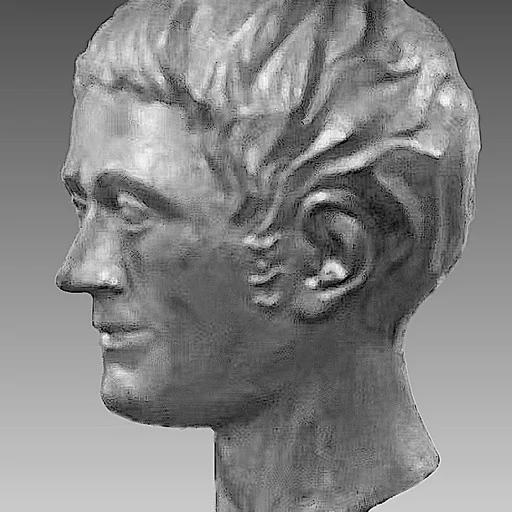
Maximilian Joseph Wagenbauer (1775 in Grafing – 1829 in Munich), was a Bavarian artist.

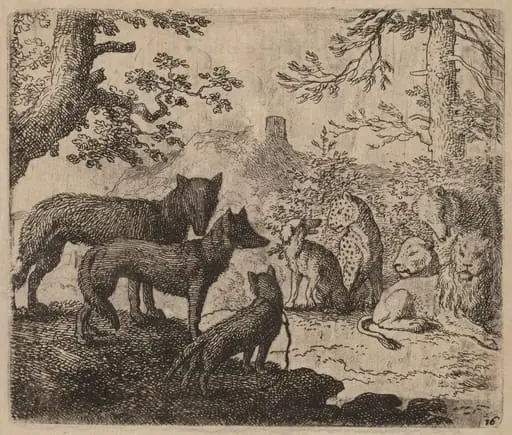 Reynard's Relatives Plead for Him
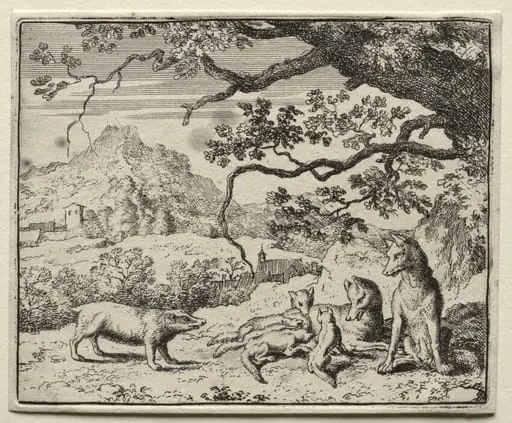 Reynard the Fox: The Badger Calls Reynard to Court
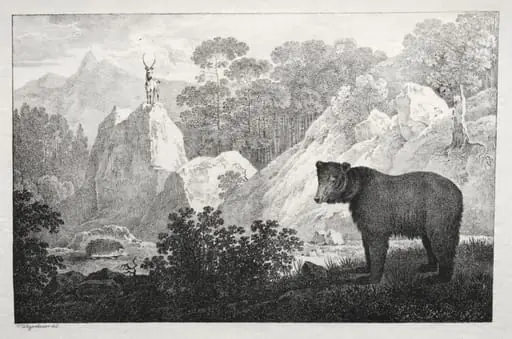 Mountainous Landscape with Bear in the Foreground
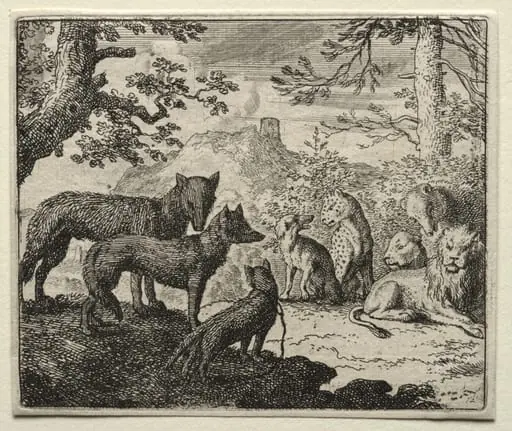 Reynard the Fox: The Relatives of Reynard Leave Court
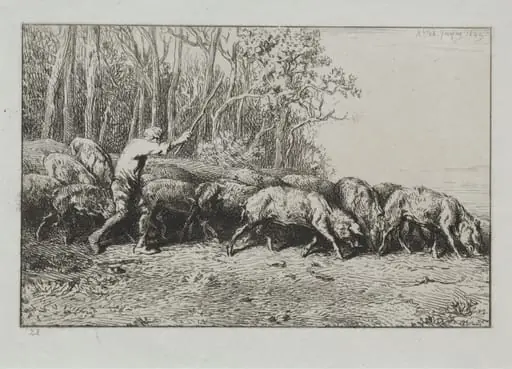 Herd of Pigs Leaving a Forest
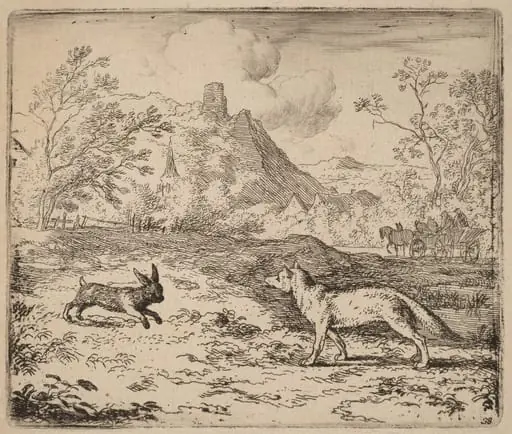 Reynard and the Rabbit
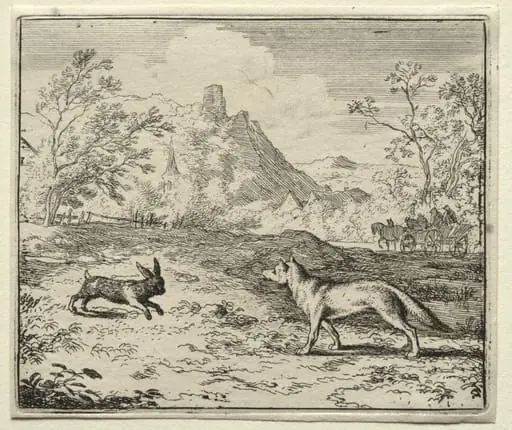 Reynard the Fox: Reynard and the Rabbit
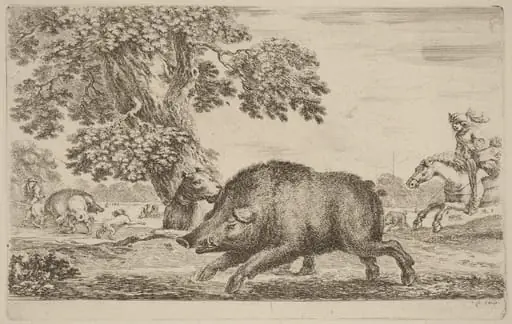 Boar Running to the Left
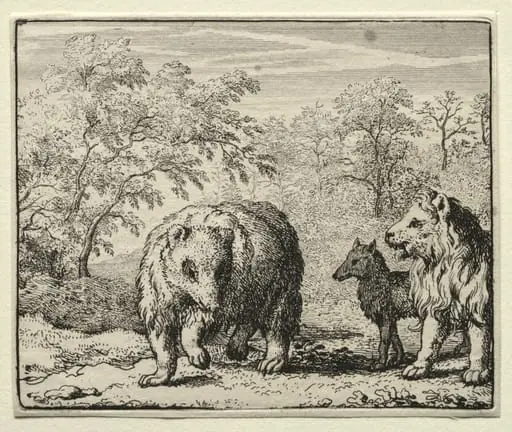 Reynard the Fox: The Freeing of the Wolf and the Bear
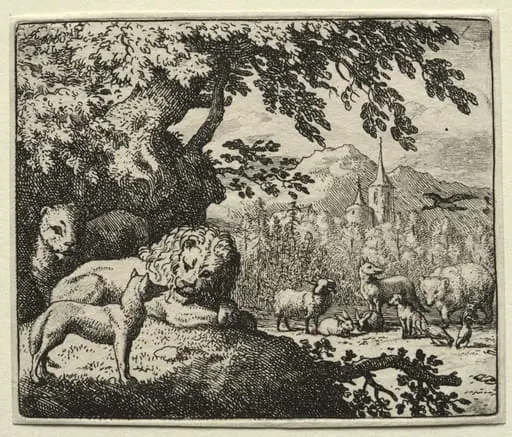 Reynard the Fox: Reynard Continues His Story
 Reynard the Fox: The Badger's Defense of Reynard
 Animals and Landscape after Nature: Wild Boar in a Pond