Artwork
The Sea at Camaret, The Red Rocks
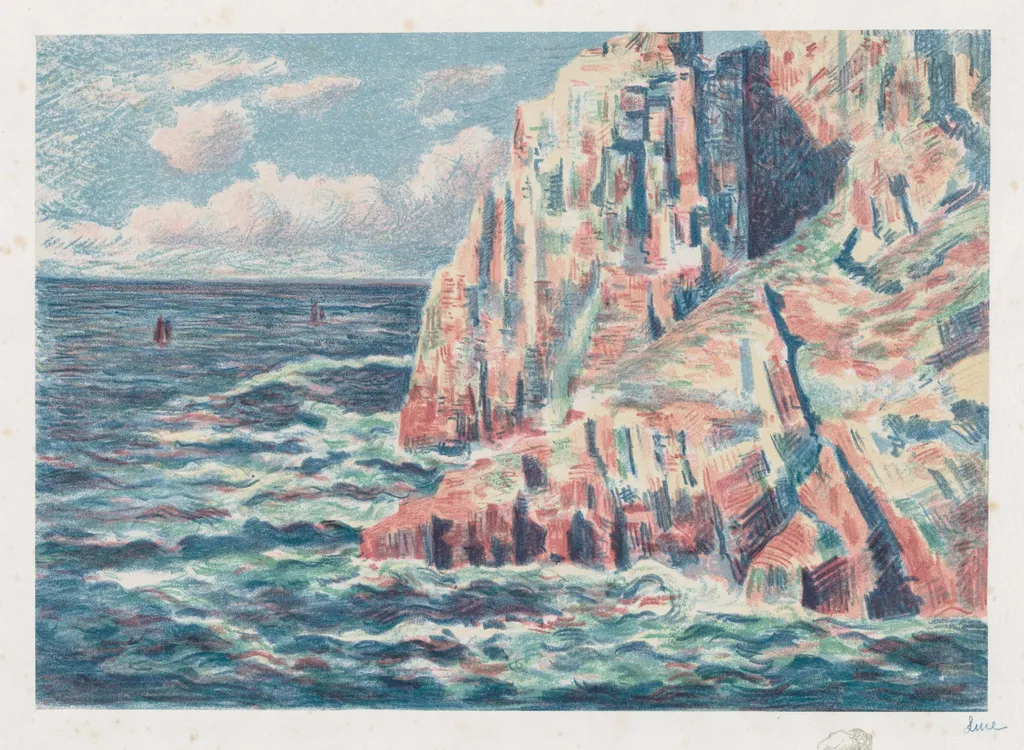
The Sea at Camaret, The Red Rocks is a print by the Impressionist artist Maximilien Luce. It dates from 1895 and is held in the collection of the Cleveland Museum of Art.
About this work
Overview
The composition focuses on a striking red cliff face rising from the sea, with waves breaking against its base.
Created in 1895 by Maximilien Luce, this print depicts the rugged coastline of Camaret-sur-Mer in Brittany. The composition focuses on a striking red cliff face rising from the sea, with waves breaking against its base. The sky, rendered in pale blue and white, contrasts with the earthy tones of the rock and water. Luce’s approach emphasizes natural forces through restrained color and dynamic texture.
Subject & Meaning
The scene captures a moment of elemental interaction between land and sea. The jagged red rocks, worn by centuries of tidal action, convey a sense of enduring geology. The crashing waves suggest transient energy, contrasting with the rock’s permanence. There is no human presence, reinforcing the quiet, untamed character of the coastal environment as a subject worthy of quiet contemplation.
Technique & Style
Luce employed short, deliberate strokes to model the texture of the rocks and the motion of the waves. The palette is subdued, dominated by ochre-reds, muted greens, and soft blues, avoiding bright saturation. The print’s surface suggests a tactile quality, with layered lines and tonal variations mimicking the roughness of the cliff and the froth of breaking surf. This method aligns with Post-Impressionist concerns for structure and material presence.
History & Provenance
The work entered the collection of The Cleveland Museum of Art in the 20th century, though its earlier ownership history is not widely documented. It was produced during a period when Luce was deeply engaged with coastal subjects in Brittany, following his association with Neo-Impressionist circles. The print likely originated from a series of studies made during his travels along the Breton coast in the mid-1890s.
Context
Luce created this work amid broader artistic interest in coastal landscapes and the effects of light on natural forms. While influenced by Impressionist observations, his technique leaned toward greater structural clarity and tonal restraint, reflecting the evolving sensibilities of Post-Impressionism. Artists like Signac and Seurat were contemporaries exploring similar themes of nature’s rhythm through systematic mark-making.
Legacy
The print remains a quiet example of Luce’s commitment to depicting nature with both precision and emotional restraint. It contributes to the understanding of how late 19th-century artists moved beyond fleeting impressions toward more enduring representations of landscape. Though less known than his urban scenes, this work illustrates his consistent engagement with the natural world’s elemental forces.
Own this work as a print
Artist & collection
Artist
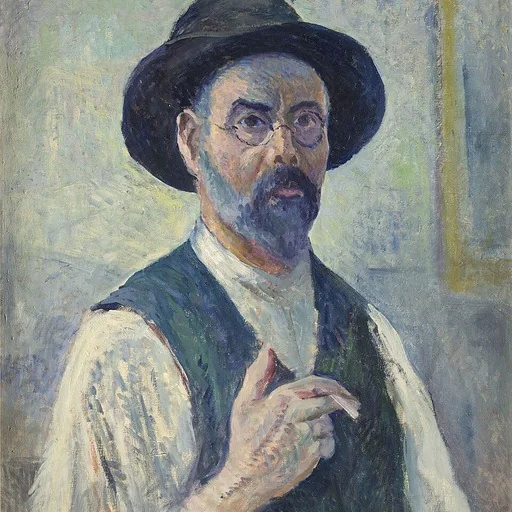
Maximilien Luce was a French Neo-impressionist artist known for his paintings, graphic art, and his anarchist activism.



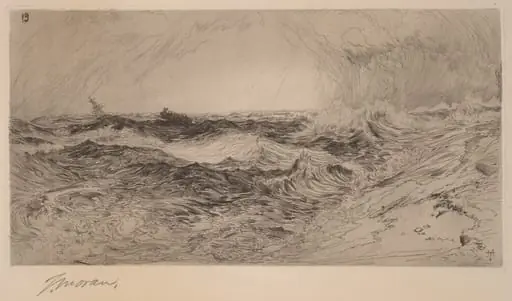 The Resounding Sea
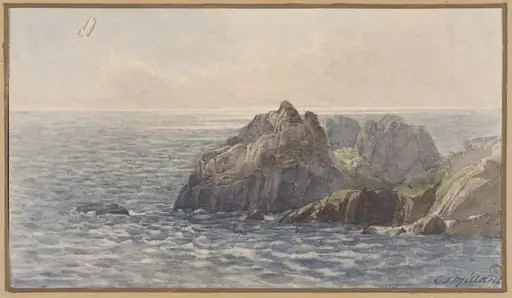 Sea Piece - Twilight
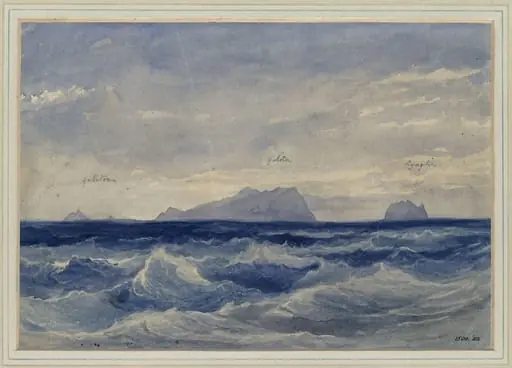 The islands of Galita, Galitona and Aguglia, off the coast of Tunis
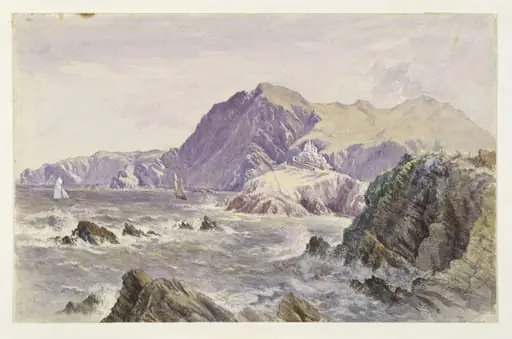 Hillsborough, from the Capstone, Ilfracombe
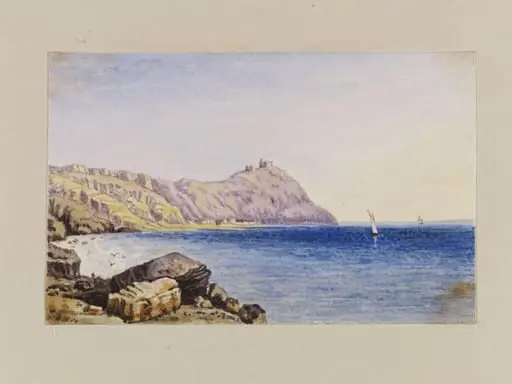 Carmel
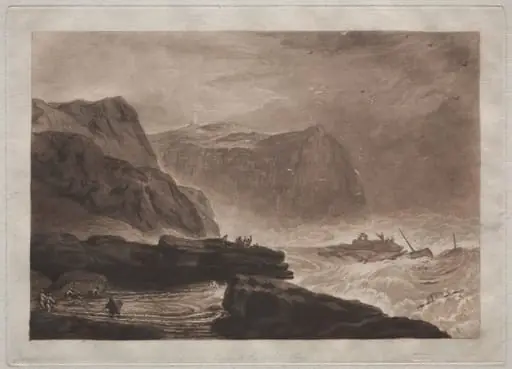 Liber Studiorum: Coast of Yorkshire, near Whitby
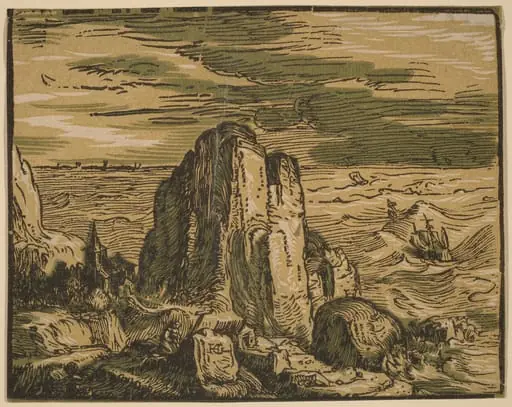 Cliff on a Seashore
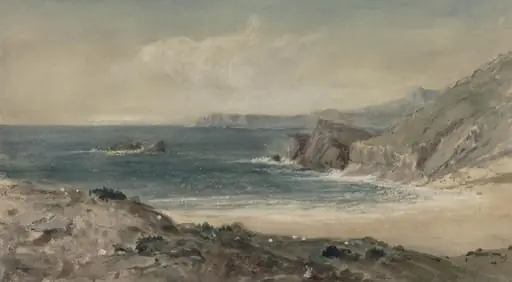 St. David's Head, St. Bride's Bay
 Falls of the Rhine at Schaffhausen (Rheinfall von Schaffhausen)