Artwork
Biliard
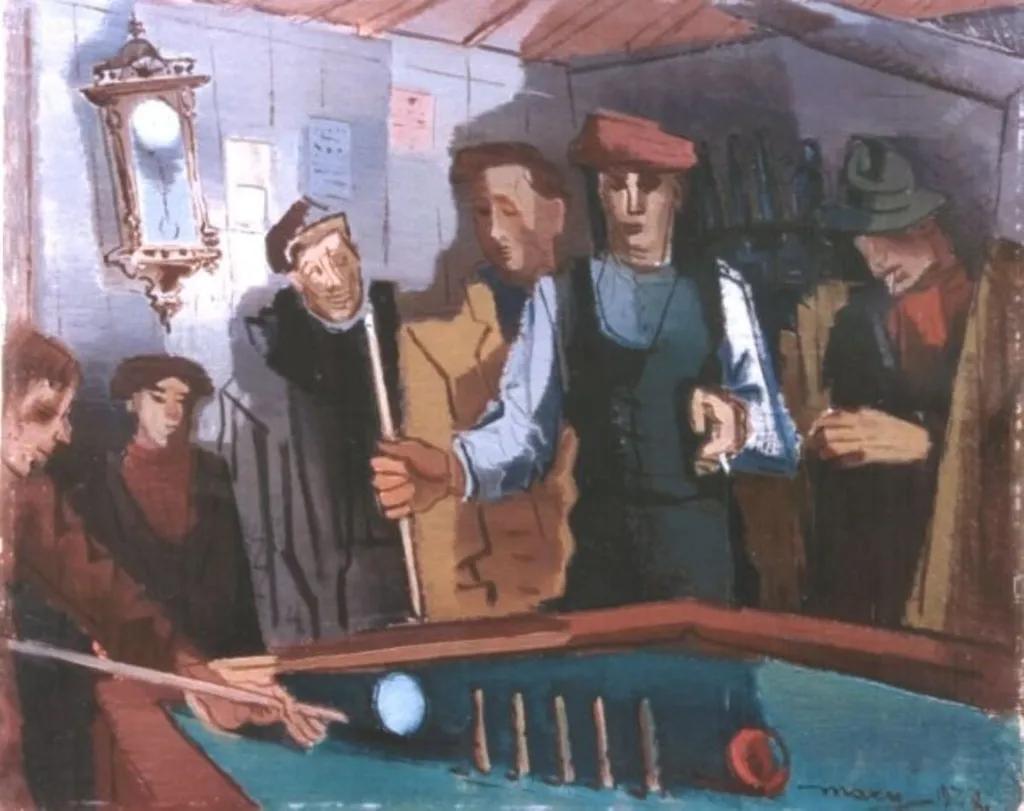
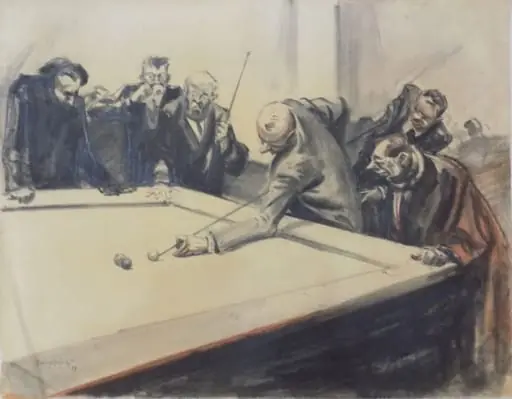
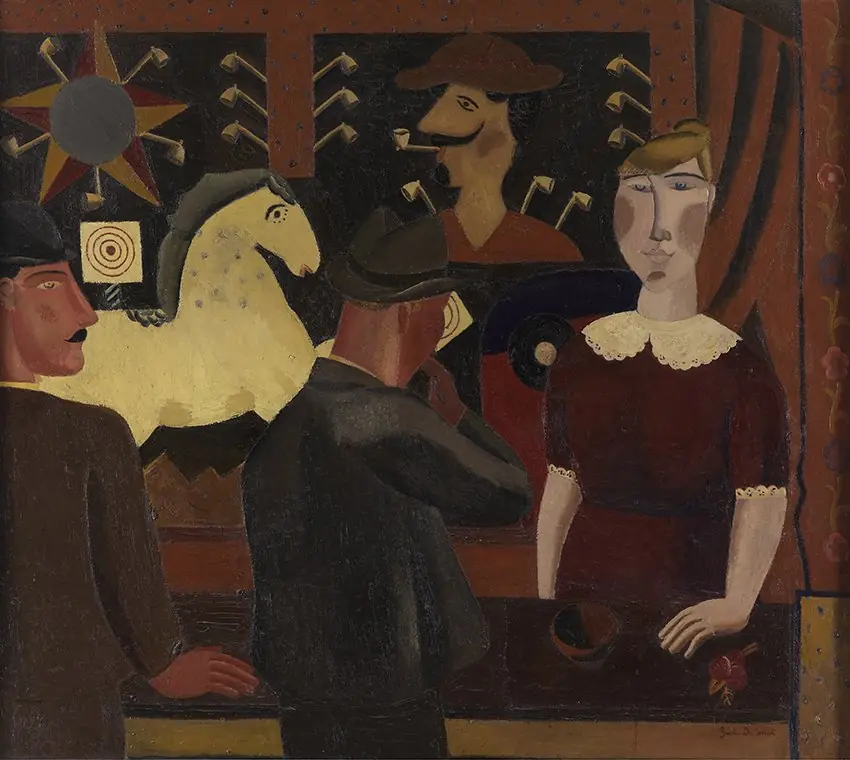
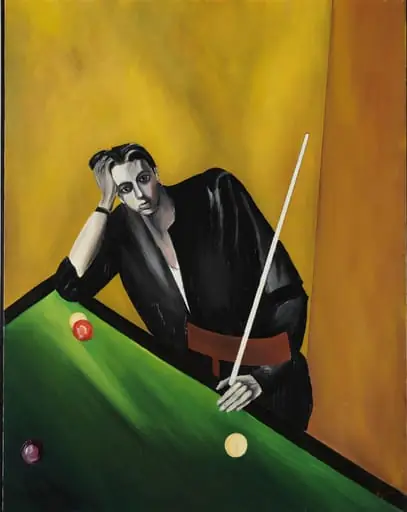
Biliard is a print by Max Hermann Maxy. It dates from 1937 and is held in the collection of the National Museum of Art of Romania.
About this work
Overview
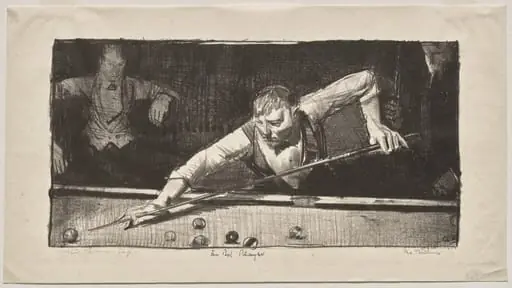
Painted in 1937 by Max Hermann Maxy, this work captures a quiet moment of leisure among men gathered at a billiard table. Rendered in oil on canvas, the composition emphasizes informal social interaction rather than athletic competition. The scene unfolds in a modest interior, where the focus lies not on spectacle but on the subtle rhythms of companionship and routine.
Subject & Meaning
The painting portrays a group of men engaged in a game of billiards, their postures and glances suggesting quiet concentration and mutual awareness. One figure leans forward to take a shot, while others observe or rest their cues. The absence of tension or rivalry implies a familiar, unhurried setting—likely a local tavern or club—where time is measured in turns and smoke rather than scores.
Technique & Style
Maxy employs a restrained palette of earth tones and muted grays, with subtle contrasts to define form and space. Brushwork is deliberate but not overly detailed, favoring atmospheric suggestion over precision. The mirror in the background reflects fragments of the room, deepening spatial ambiguity and softening the boundary between foreground and background without drawing attention to itself.
History & Provenance
Created during Maxy’s time in Romania, the painting reflects his engagement with everyday life in interwar urban settings. It was likely produced in Bucharest, where he was active in artistic circles. The work remained in private hands until its inclusion in public collections in the late 20th century, though its exact early ownership remains undocumented.
Context
In the late 1930s, Maxy was part of a generation of Romanian artists turning away from academic traditions toward scenes of ordinary life. This painting aligns with broader European trends in interwar realism, where artists sought dignity in mundane rituals. The billiard hall, a common social space, becomes a quiet stage for human presence amid rising political tensions.
Legacy
Though not widely exhibited outside Romania, the painting contributes to understanding Maxy’s role in shaping modern Romanian art through intimate, unidealized depictions of working-class leisure. It stands as a quiet counterpoint to the grand narratives of its era, preserving the texture of daily life with restraint and empathy.
Artist & collection

Artist
Max Hermann Maxy was a Romanian painter, art professor, scenographer, and professor of German-Jewish descent.