Artwork
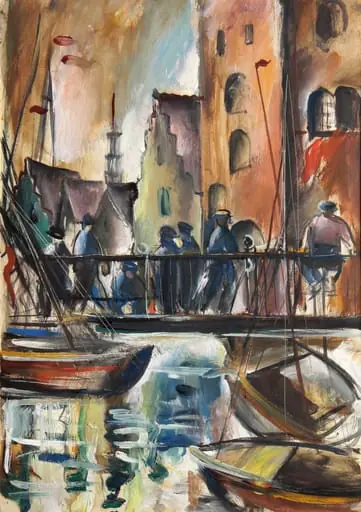
Grup de muncitori bretoni
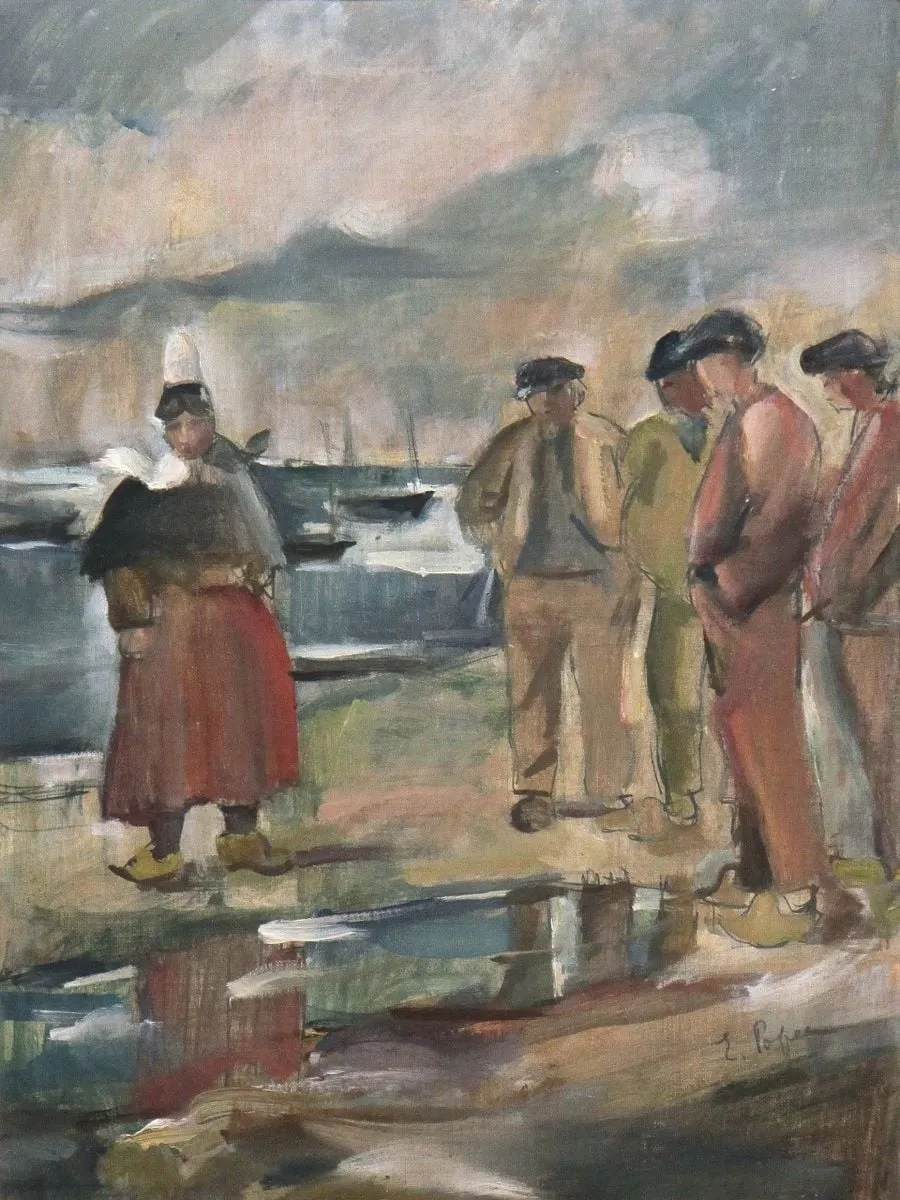
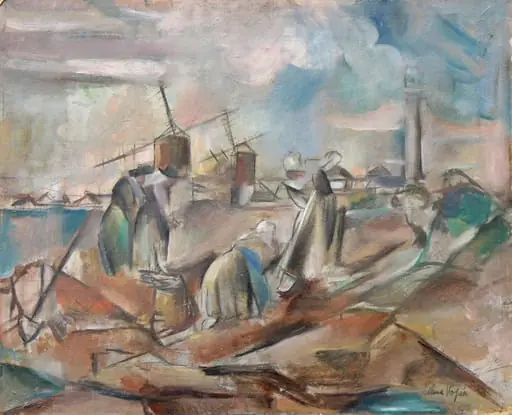
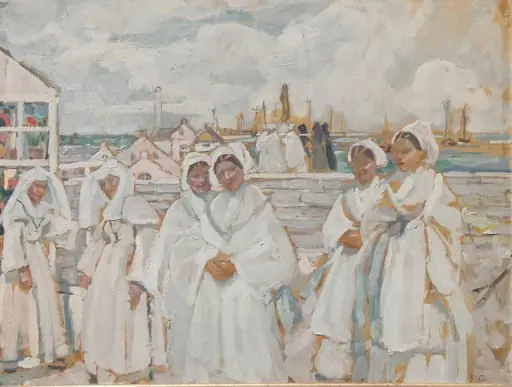
Grup de muncitori bretoni is an unspecified painting by Elena Popea. It dates from 1920 and is held in the collection of the Museum of Art Cluj-Napoca.
About this work
Overview
It resides in the Museum of Ethnography’s collection, reflecting its anthropological resonance as much as its artistic merit.
Elena Popea, an Austro-Hungarian-born Romanian painter, produced *Grup de muncitori bretoni* circa 1920 during a period of intense engagement with modern European styles. The work captures a moment of quiet labor in Brittany, aligning with her broader interest in everyday human life. It resides in the Museum of Ethnography’s collection, reflecting its anthropological resonance as much as its artistic merit.
Subject & Meaning
The painting depicts five figures—four men and one woman—gathered near a harbor in rural Brittany. Their postures suggest a pause in work, not celebration or protest. The woman’s distinct red skirt and head covering contrast with the muted tones of the men’s clothing, hinting at regional dress and gendered roles. The scene avoids drama, instead emphasizing presence and routine in a coastal working community.
Technique & Style
Popea employed loose, rapid brushwork that borders on sketch-like, conveying movement and atmosphere rather than detail. Colors are restrained: earthy browns, faded reds, and soft grays dominate, with the pale sky acting as a neutral backdrop. Thick applications of paint, particularly in the figures’ garments, add tactile texture, echoing Impressionist and Expressionist approaches without full abstraction.
History & Provenance
Created during Popea’s formative years as a modernist, the painting emerged from her travels in Brittany, where she observed local laborers. It entered the Museum of Ethnography’s holdings in the 20th century, likely through acquisition or donation tied to Romania’s cultural preservation efforts. Its provenance reflects an interest in documenting folk life through art, not merely aesthetic experimentation.
Context
In early 20th-century Romania, artists like Popea sought to reconcile European modernism with local identity. Her focus on laborers mirrored broader social concerns across Europe, where industrialization and rural life were in tension. Brittany, with its distinct cultural traditions, offered a compelling subject—foreign yet familiar—as artists looked beyond urban centers for authentic human experience.
Legacy
Though not widely exhibited outside Romania, *Grup de muncitori bretoni* remains a key example of Popea’s synthesis of modernist techniques with ethnographic observation. It contributes to a quieter strand of Eastern European modernism that prioritized quiet dignity over spectacle. The work continues to inform studies of gender, labor, and regional identity in interwar art.
Artist & collection
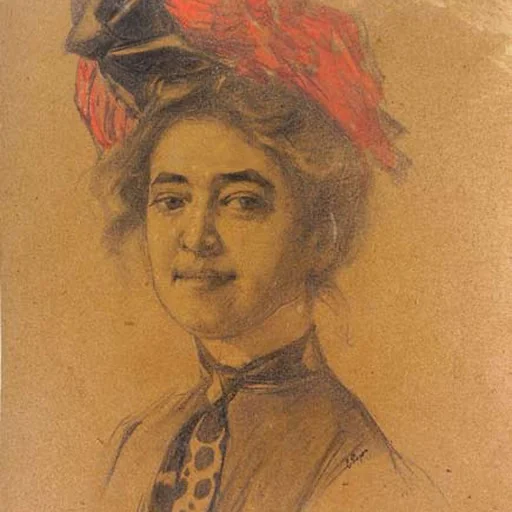
Artist
Elena Popea (15 April 1879, Brașov – 19 June 1941, Bucharest) was an Austro-Hungarian-born Romanian Modernist painter whose influences included Impressionism, Expressionism and Cubism.