Artwork
Flori
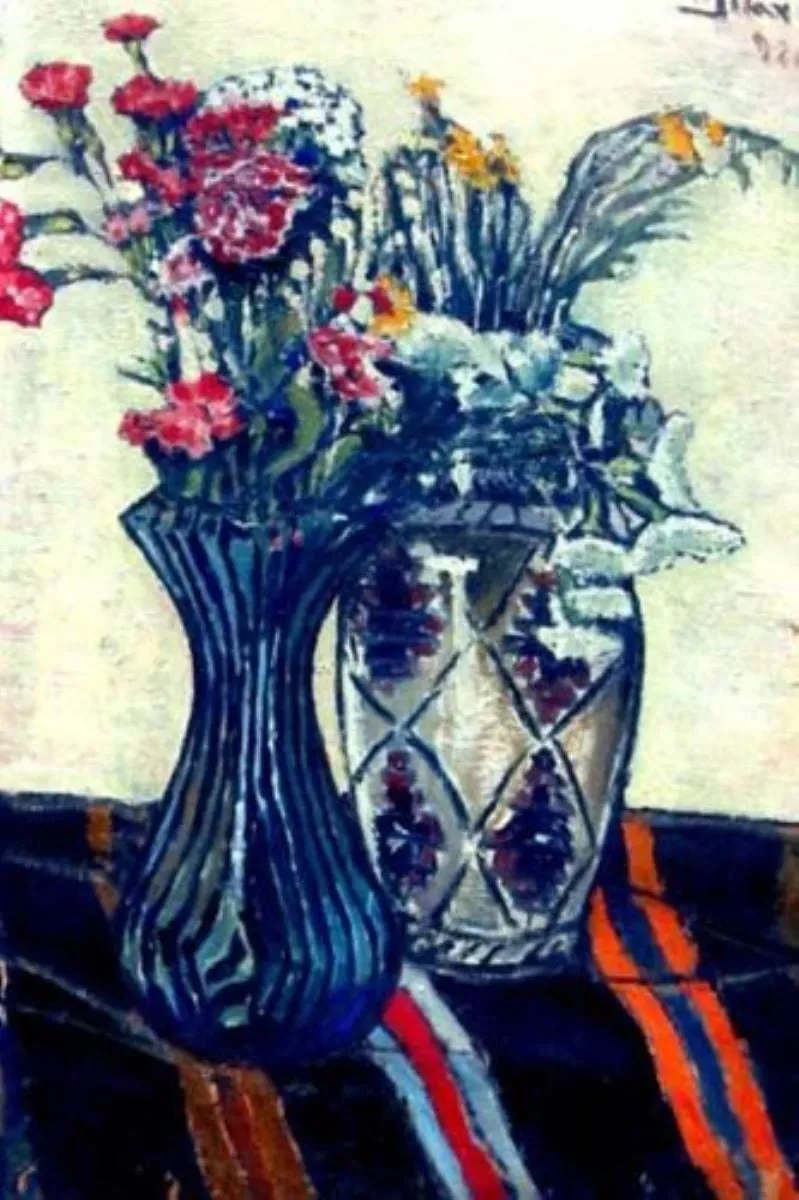
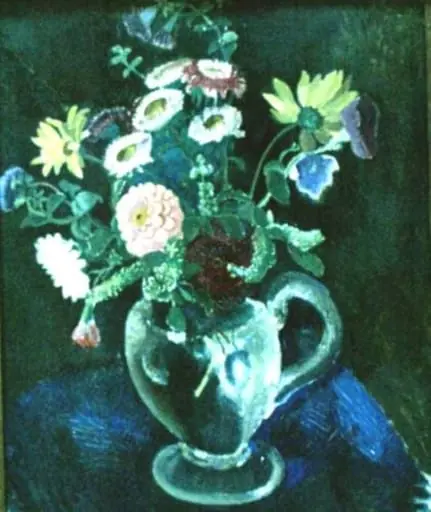
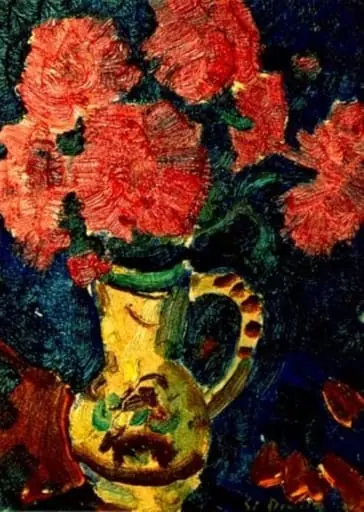
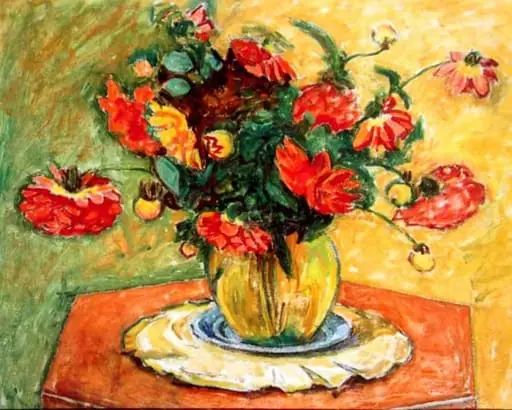
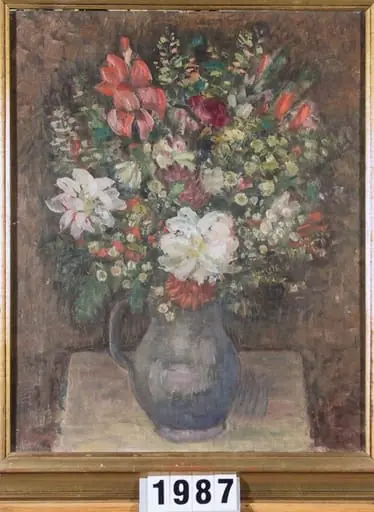
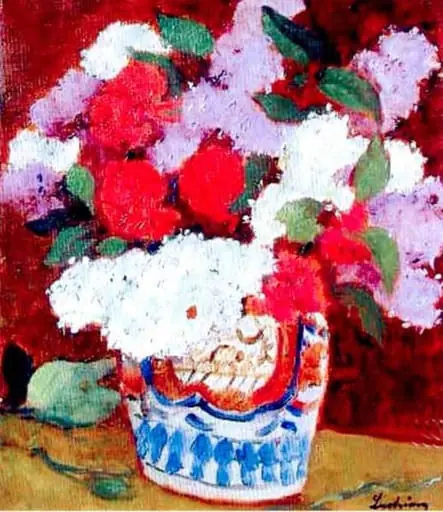
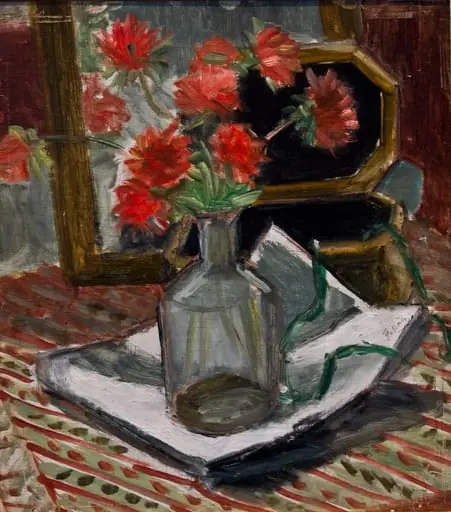
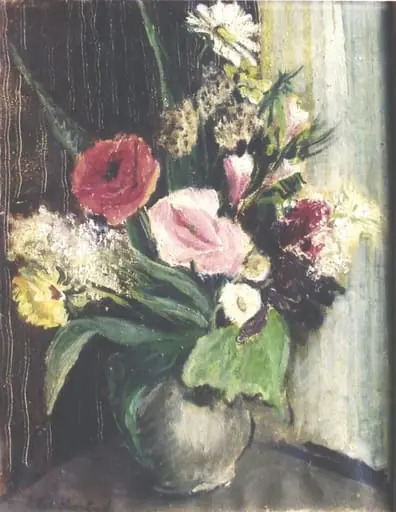
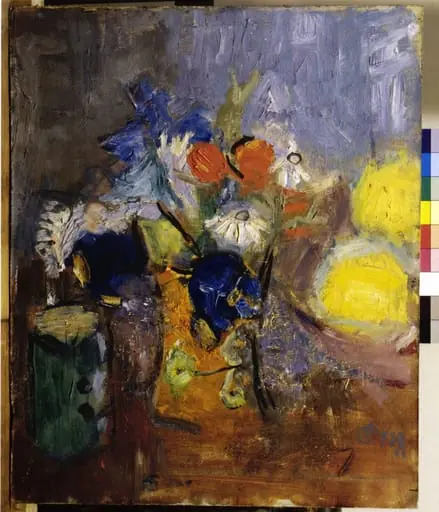
Flori is an unspecified painting by Max Hermann Maxy. It dates from 1943 and is held in the collection of the Carol I Museum of Brăila.
About this work
Overview
Created around 1943, “Flori” is a painted composition by Romanian artist Max Hermann Maxy. The work is part of the collection of the Museum of Ethnography, where it is displayed as an example of the artist’s mid‑century approach to still life.
Subject & Meaning
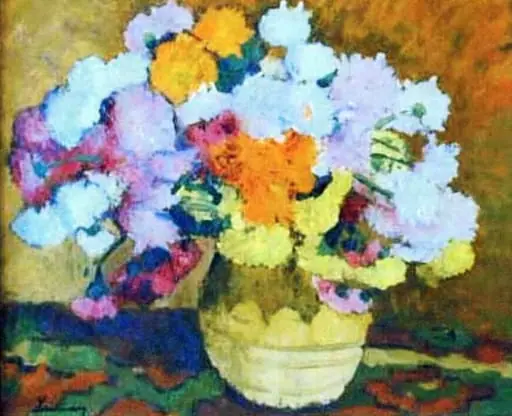
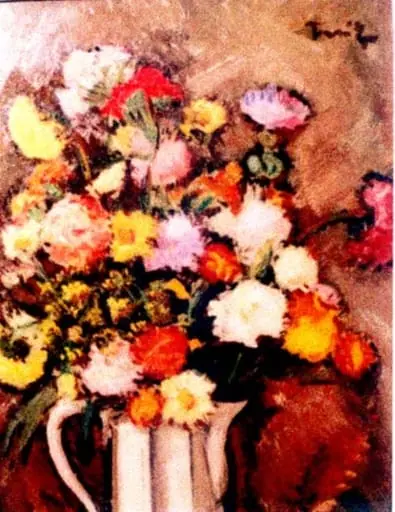
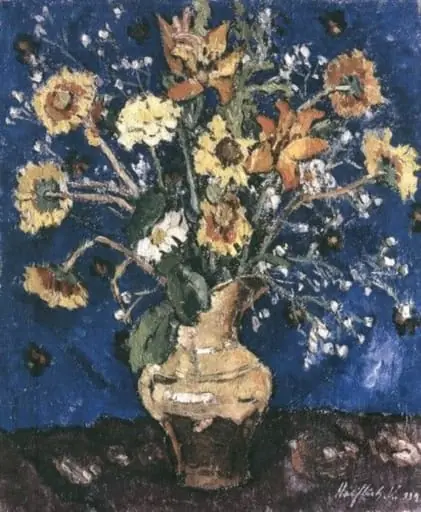
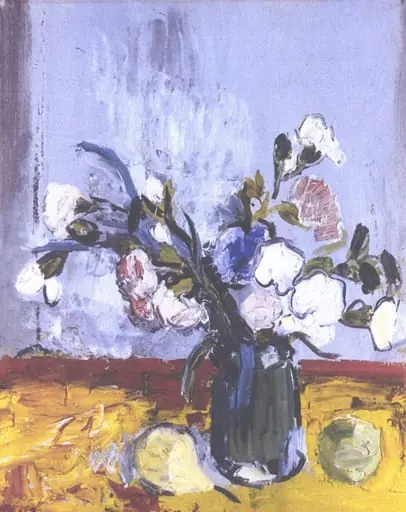
The picture depicts a solitary vase set on a table, its dark‑blue, undulating form holding a bouquet of red, white and yellow blossoms. A striped cloth—alternating red, blue and white—covers the tabletop, while a soft yellow wash forms the background, creating a simple yet vibrant domestic scene.
Technique & Style
Maxy employs a loose, expressive brushwork that leaves the strokes visible, lending the flowers a sense of immediacy. Bold, saturated hues contrast with the muted background, and the handling of paint conveys a lively rhythm, suggesting movement within the static arrangement.
History & Provenance
The painting entered the Museum of Ethnography’s holdings after its creation in the early 1940s, though details of its acquisition are not widely recorded. Its presence in the museum links Maxy’s work to broader collections of cultural artifacts, emphasizing the intersection of fine art and ethnographic context.
Context
During the 1940s Maxy explored modernist tendencies while maintaining a connection to Romanian artistic traditions. “Flori” reflects this period’s interest in bright color palettes and dynamic composition, aligning with contemporary European trends toward expressive still‑life painting.
Artist & collection

Artist
Max Hermann Maxy was a Romanian painter, art professor, scenographer, and professor of German-Jewish descent.