Artwork
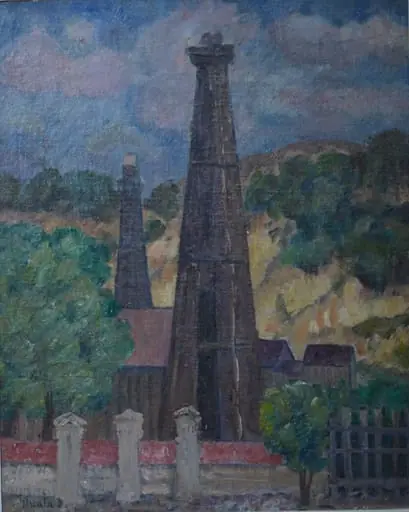
Peisaj industrial (Moreni)
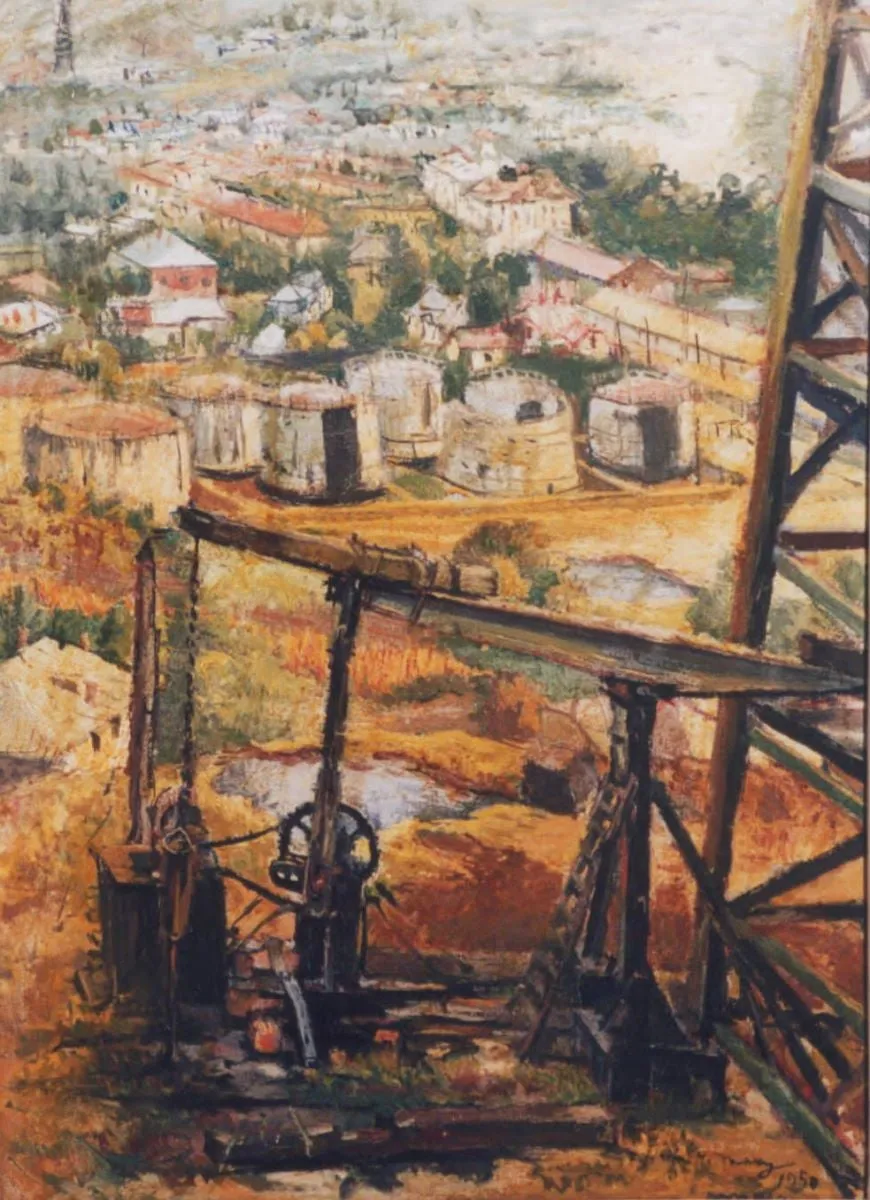
Peisaj industrial (Moreni) is a print by Max Hermann Maxy. It dates from 1950 and is held in the collection of the Bucharest Municipality Museum.
About this work
Overview
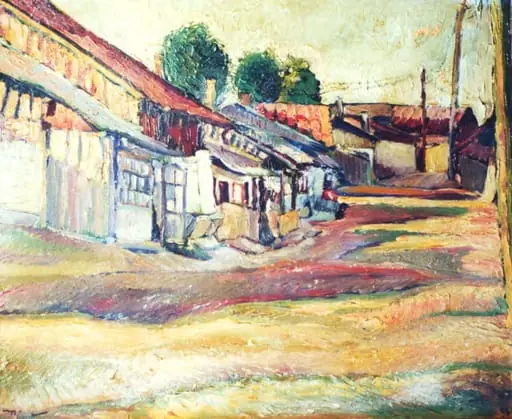
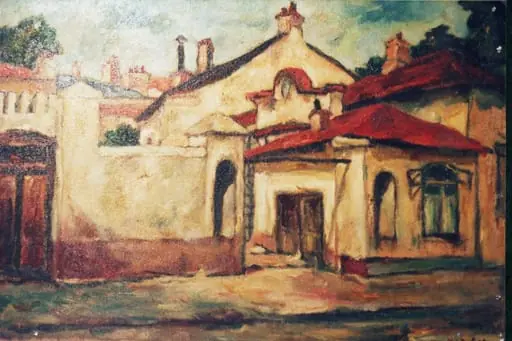
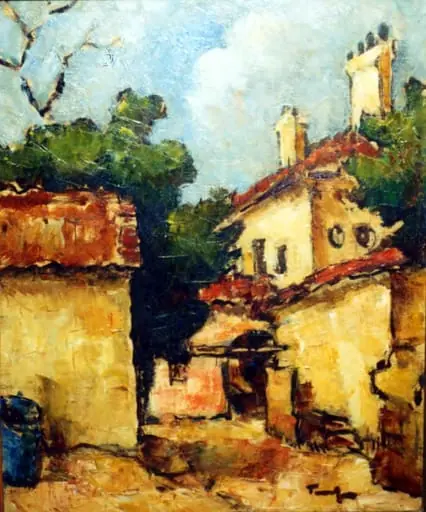
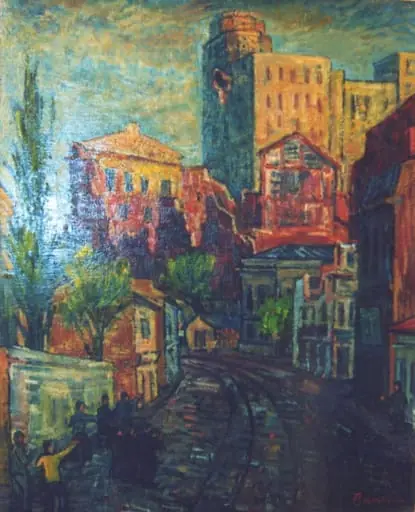
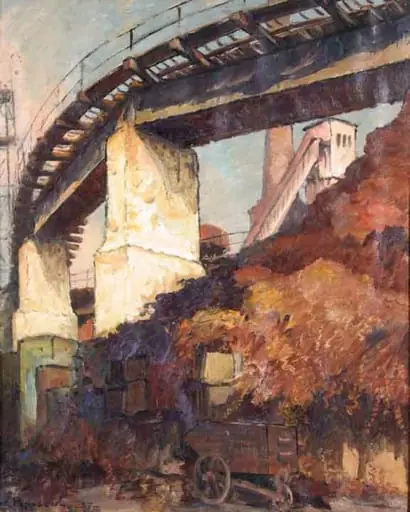
Created in 1950 by Romanian artist Max Hermann Maxy, Peisaj industrial (Moreni) is a painted depiction of an industrial town in Moreni.
Created in 1950 by Romanian artist Max Hermann Maxy, Peisaj industrial (Moreni) is a painted depiction of an industrial town in Moreni. Executed in oil or similar medium, the work captures the quiet hum of early 20th-century Romanian industry. It is part of the collection at the Museum of Ethnography, where it serves as a visual record of regional economic life during a period of state-driven modernization.
Subject & Meaning
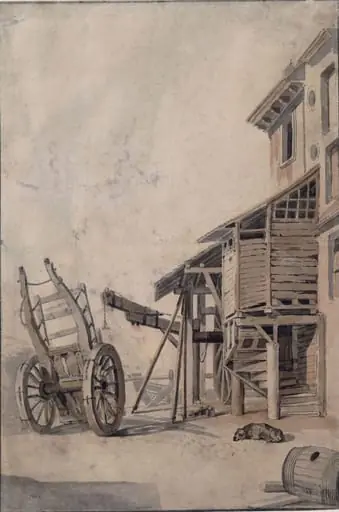
The scene portrays a modest industrial settlement dominated by storage tanks and modest dwellings. A mechanical pulley system with a suspended bucket in the foreground hints at labor-intensive processes, possibly water or mineral transport. The absence of human figures emphasizes the dominance of infrastructure over individual presence, suggesting a commentary on the quiet, persistent rhythm of industrial labor in rural Romania.
Technique & Style
Maxy employs thick, textured brushwork that conveys a tactile sense of the environment. The palette is restrained, anchored in earthy browns, muted yellows, and olive greens, reinforcing the somber tone of the setting. The rough application of pigment, reminiscent of impasto, gives physical weight to structures and landscape, rejecting smooth realism in favor of expressive materiality.
History & Provenance
The painting was completed in 1950, during a period when Romanian artists were navigating state-mandated aesthetic guidelines. Despite political pressures toward socialist realism, Maxy retained a personal, expressive style. The work entered the Museum of Ethnography’s collection shortly after its creation, likely chosen for its documentation of local industrial life rather than its political alignment.
Context
Moreni, a town in Prahova County, was known for its oil and chemical industries in the mid-20th century. Maxy’s depiction reflects the integration of industrial infrastructure into rural communities during Romania’s early postwar industrialization. The painting aligns with broader regional efforts to visually catalog economic transformation, even as artistic freedom remained constrained under emerging socialist norms.
Legacy
Though not widely exhibited outside Romania, Peisaj industrial (Moreni) remains a significant example of how artists subtly resisted homogenized styles by preserving individual expression within industrial themes. Its preservation in an ethnographic museum underscores its value as both artistic and anthropological testimony to a transforming landscape.
Artist & collection

Artist
Max Hermann Maxy was a Romanian painter, art professor, scenographer, and professor of German-Jewish descent.