Artwork
The penitence of Saint Jerome
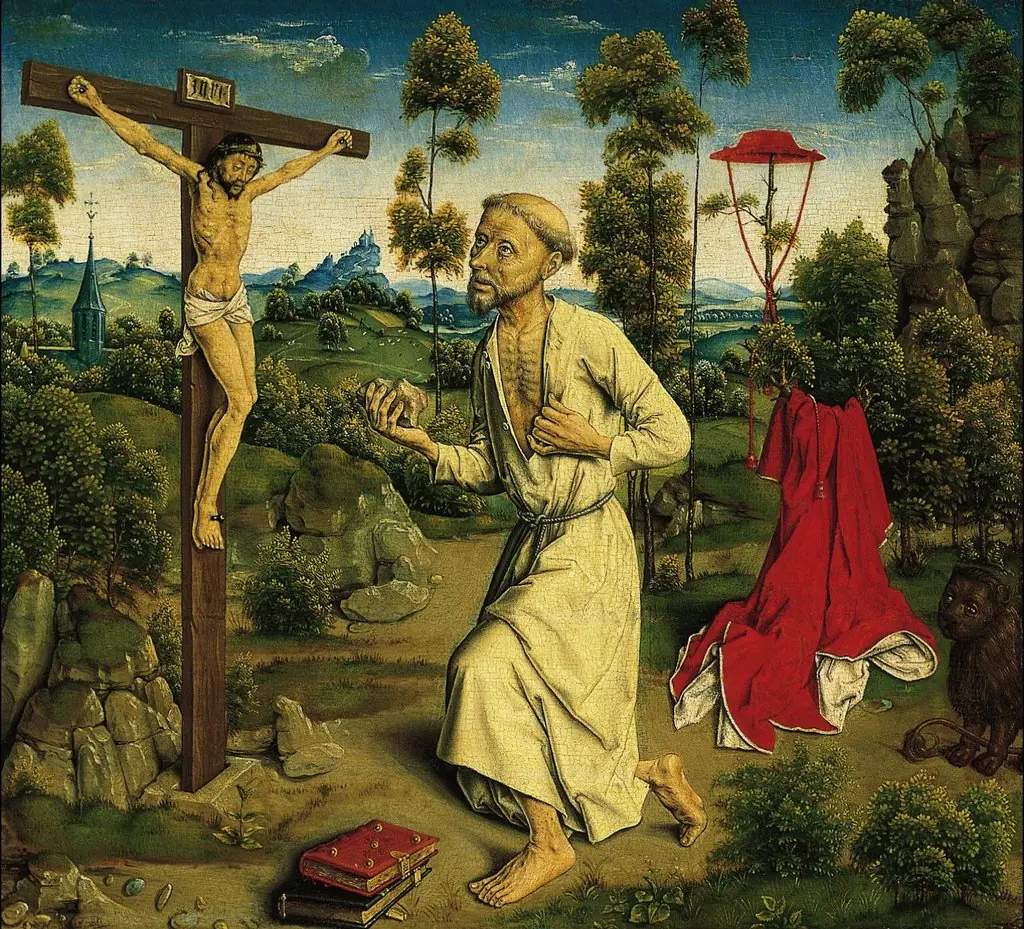
The penitence of Saint Jerome is a paint painting by the Northern Renaissance artist Meester van de Heilige Aegidius. It dates from 1500 and is held in the collection of the Gemäldegalerie Berlin. Painted around 1500, this work is attributed to the anonymous artist known as the Master of Saint Giles.
About this work
Overview
The painting is part of the collection at the Gemäldegalerie in Berlin, where it has been held since the 19th century.
Painted around 1500, this work is attributed to the anonymous artist known as the Master of Saint Giles. Executed in oil on panel, it portrays Saint Jerome in a moment of solitary devotion. The painting is part of the collection at the Gemäldegalerie in Berlin, where it has been held since the 19th century. Its quiet intensity and restrained palette reflect the devotional priorities of late medieval Northern European art.
Subject & Meaning
The figure is Saint Jerome, the scholar-saint known for translating the Bible into Latin. Depicted in penitence, he kneels barefoot on a rocky ledge, one hand pressed to his chest in prayer, eyes lifted toward a distant crucifix. The discarded red robe beside him symbolizes his renunciation of worldly status. The scene evokes spiritual introspection, aligning with the medieval ideal of ascetic devotion as a path to divine grace.
Technique & Style
The artist employs subtle chiaroscuro to model the figure’s form against a muted landscape, enhancing the sense of volume and spatial depth. The red robe, though vibrant, is rendered with restrained pigments, contrasting with the earthy tones of rock and sky. Brushwork is precise but unobtrusive, favoring quiet realism over dramatic flair. The composition directs focus to the saint’s posture and gaze, reinforcing the contemplative mood.
History & Provenance
The painting entered the Gemäldegalerie Berlin’s collection in the 1800s, likely acquired from a German ecclesiastical or noble collection. Its attribution to the Master of Saint Giles, a name derived from a related altarpiece, reflects scholarly consensus based on stylistic parallels. No earlier documentation of its commission or original location has been identified, suggesting it may have been a private devotional piece.
Context
Created during the late Gothic period, the work reflects the enduring popularity of Saint Jerome as a model of scholarly piety in Northern Europe. Devotional images of saints in solitude were common in private chapels and monastic settings. The emphasis on inner reflection, rather than narrative action, aligns with broader trends in devotional art preceding the Reformation.
Legacy
Though not widely reproduced or celebrated in popular culture, the painting remains a significant example of early 16th-century Northern devotional art. Its restrained aesthetic and psychological depth offer insight into the spiritual values of its time. Scholars continue to study its technique and attribution as part of broader efforts to understand the anonymous workshops of the period.
Artist & collection
Artist
Meester van de Heilige Aegidius
This anonymous painter from the late 1400s made quiet, detailed scenes of saints at prayer.

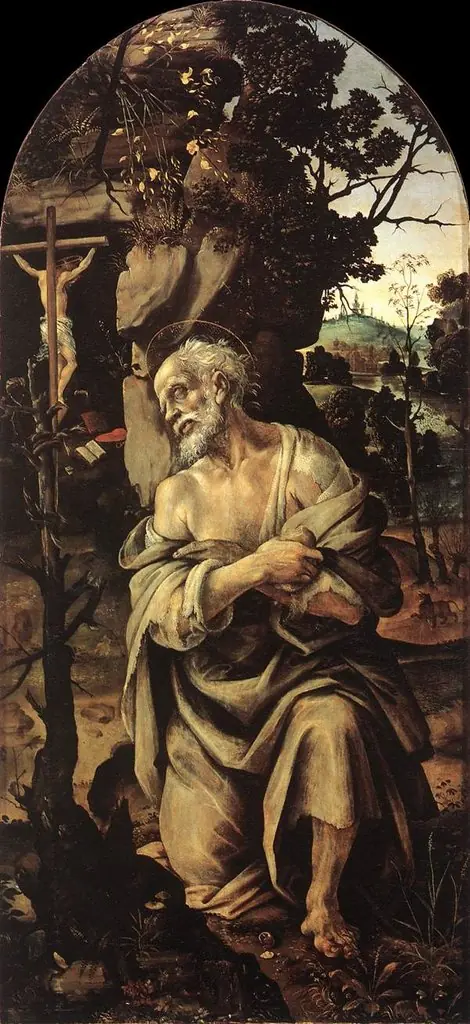 Saint Jerome
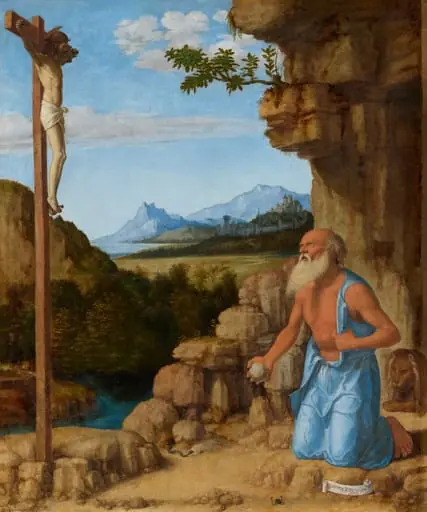 Saint Jerome in the Wilderness
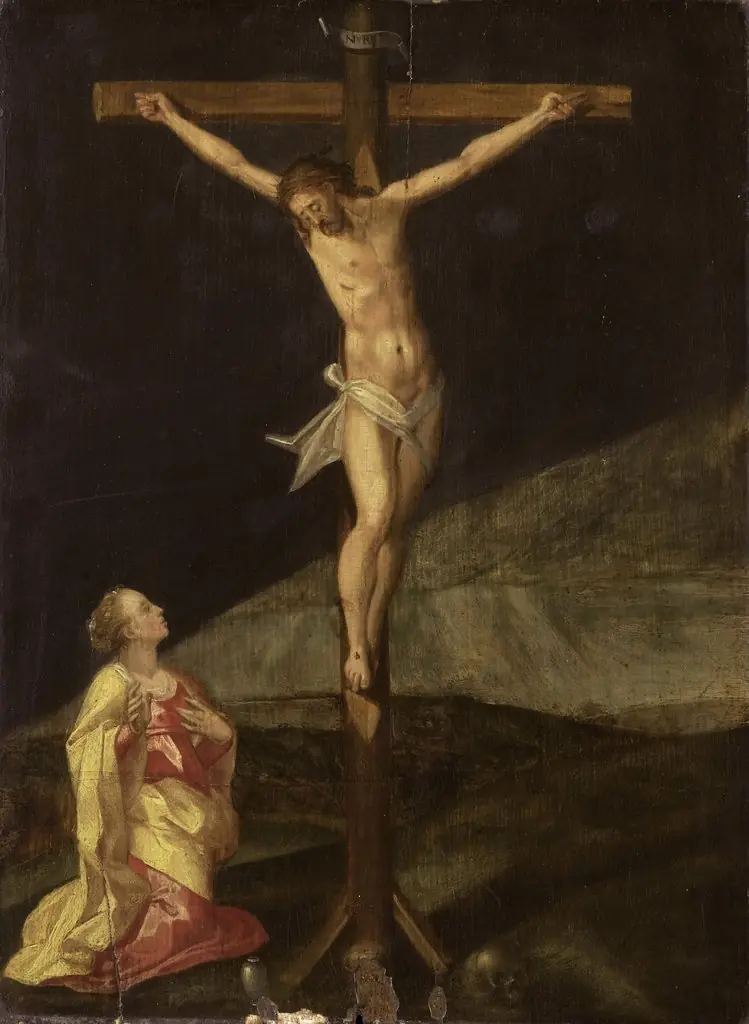 Mary Magdalene at the foot of the cross
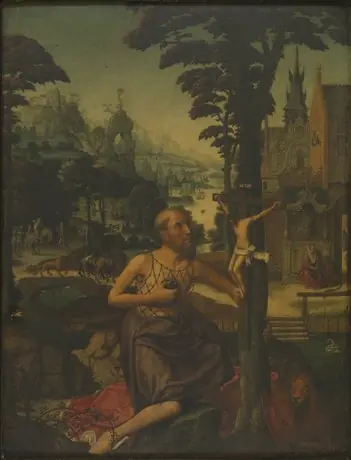 De H. Hieronymus in de wildernis
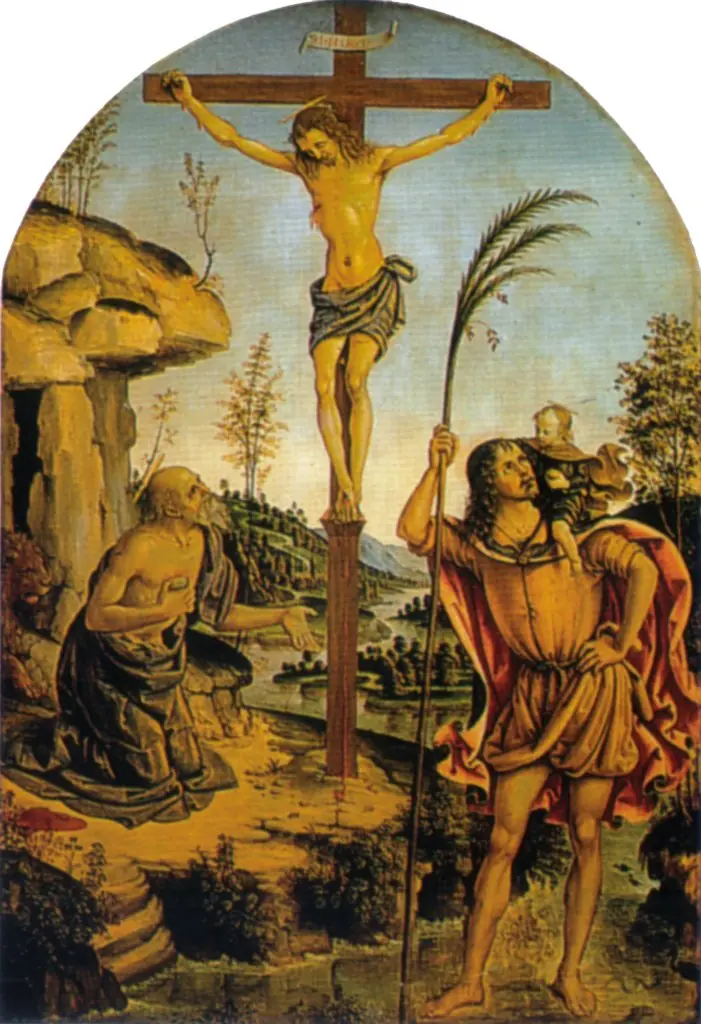 Crucifixion Between Saints Jerome and Christopher
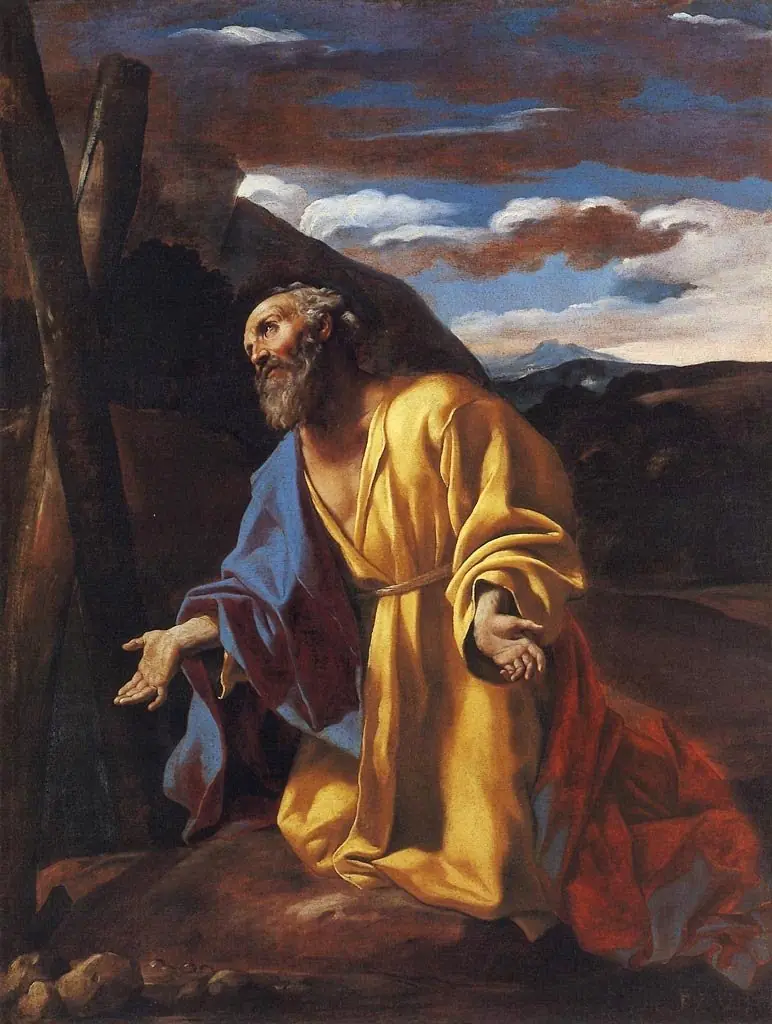 Der Heilige Andreas, vor dem Kreuz kniend
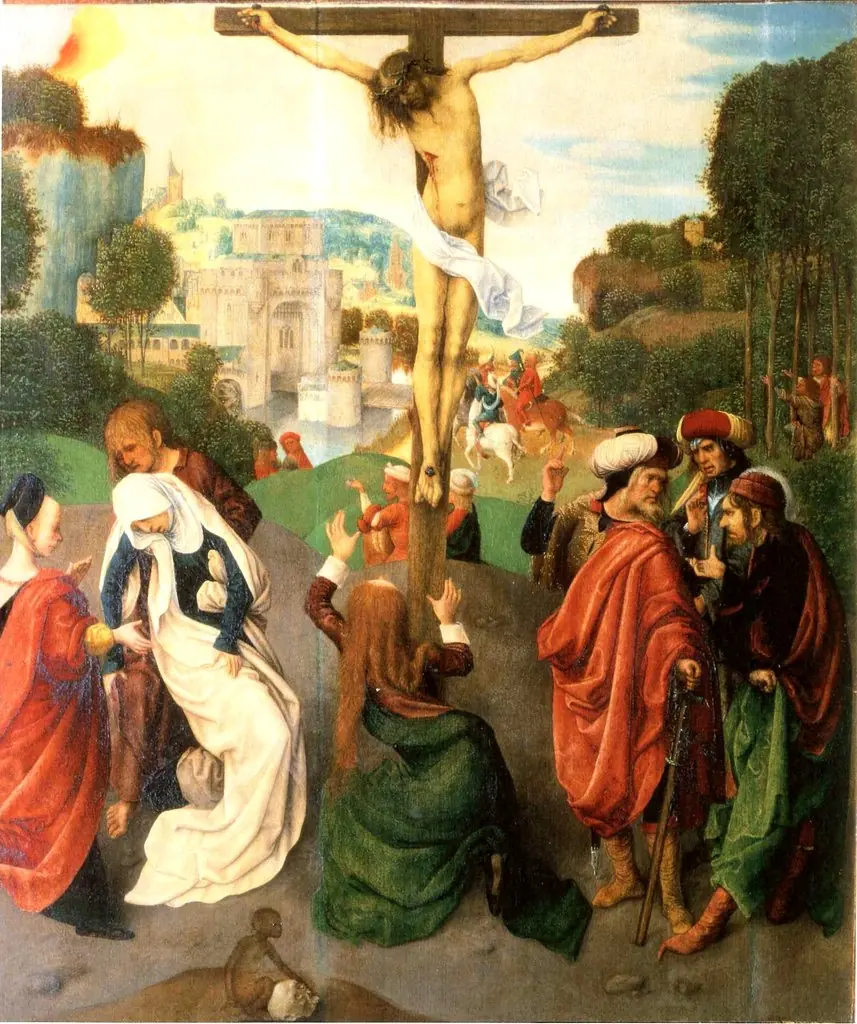 Crucifixion
![The Crucifixion with the Virgin, Saint John, Saint Jerome, and Saint Mary Magdalene [middle panel], by Pietro Perugino](https://artifactworldgallery.com/img/pietro-perugino--the-crucifixion-with-the-virgin-saint-john-saint-jerome-and--a9b4c312771e3f71-w320.webp) The Crucifixion with the Virgin, Saint John, Saint Jerome, and Saint Mary Magdalene [middle panel]
The Crucifixion with the Virgin, Saint John, Saint Jerome, and Saint Mary Magdalene [middle panel]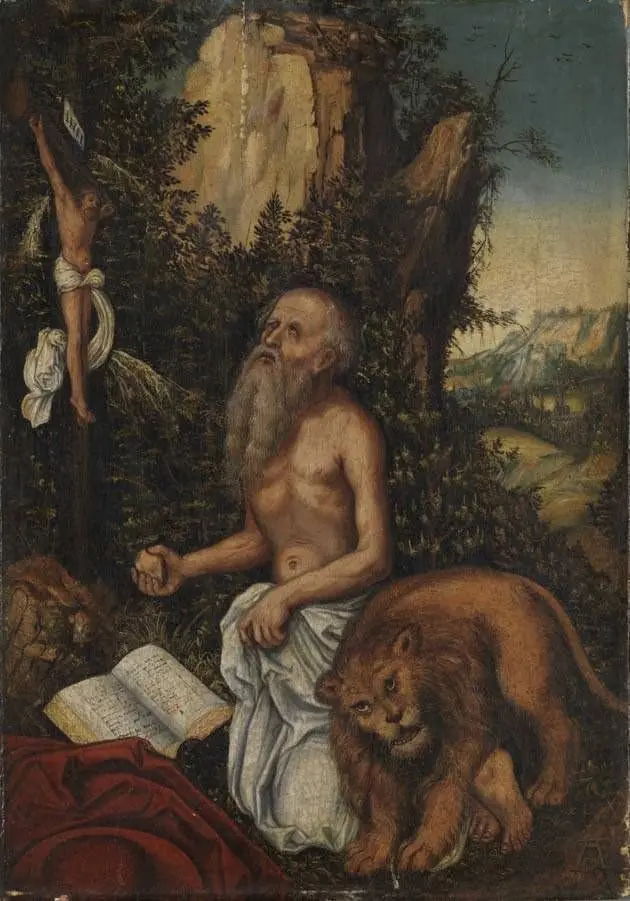 Saint Jerome