Artwork
Mulier Religiosa Antuerpiensis
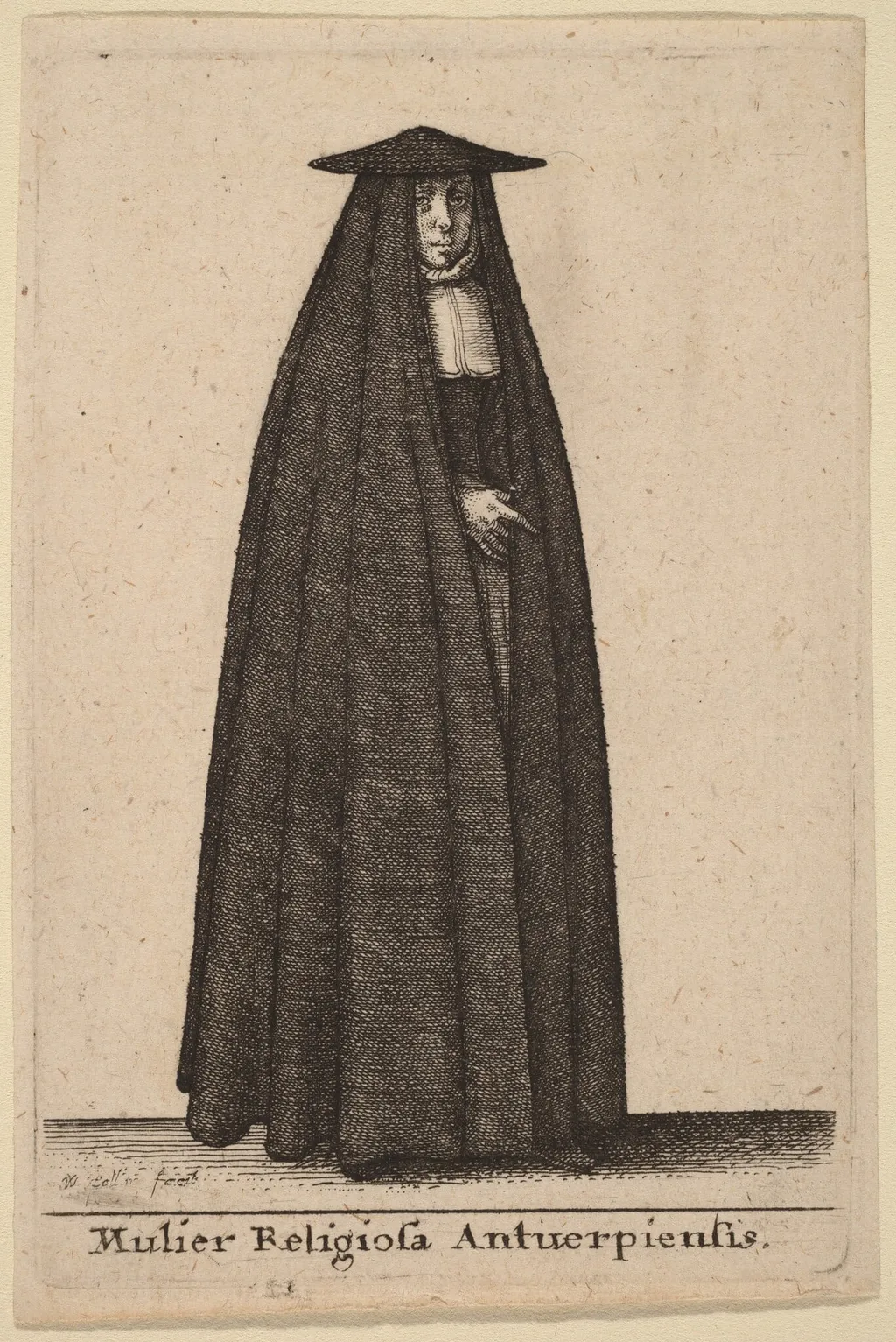
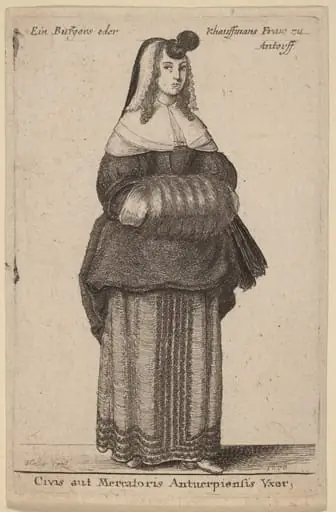
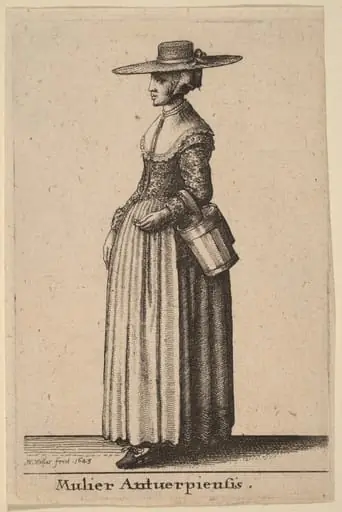
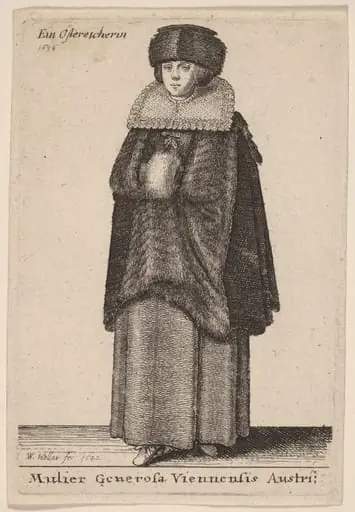
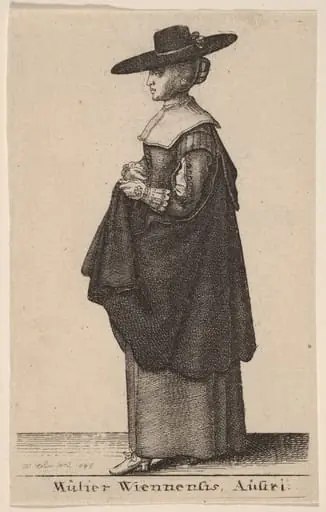
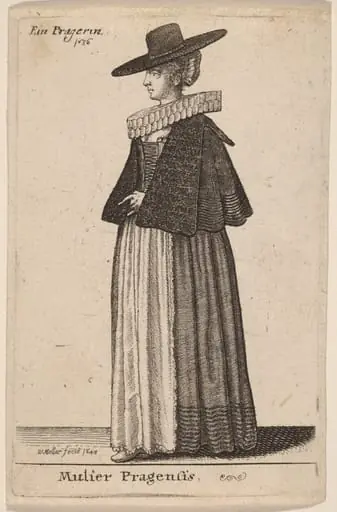
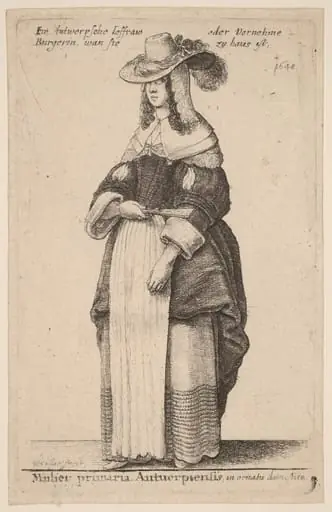
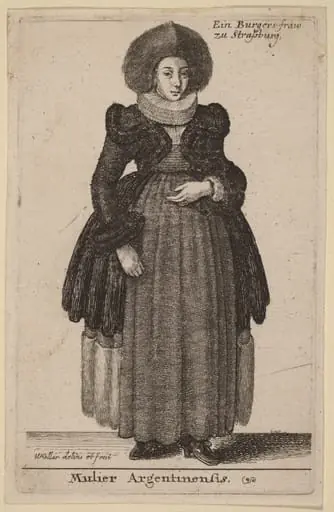
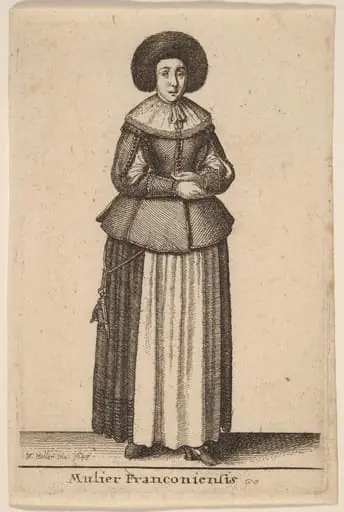
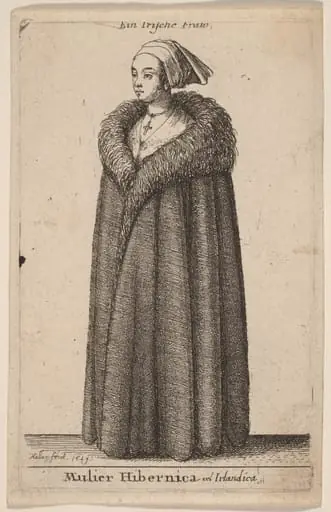
Mulier Religiosa Antuerpiensis is an ink print by the Baroque artist Wenceslaus Hollar. It dates from 1643 and is held in the collection of the National Gallery of Art. Created in 1643, this black‑and‑white etching portrays a cloistered figure from Antwerp.
About this work
Overview
Created in 1643, this black‑and‑white etching portrays a cloistered figure from Antwerp. The subject is shown in a voluminous, hooded habit, her face concealed beneath a deep cowl, hands clasped in prayer. The composition is rendered in fine, linear detail, emphasizing the texture of the heavy robe and the modest collar visible at the neckline.
Subject & Meaning
The inscription identifies the figure as a religious woman from Antwerp, suggesting a nun or devotee in a contemplative pose. By focusing on the anonymity of the face and the simplicity of the attire, the work reflects an interest in the universal aspects of piety and the visual culture of monastic dress in the early modern Low Countries.
Technique & Style
Executed with etching, the image was incised onto a copper plate, allowing Hollar to achieve precise, delicate lines. The method produces a crisp, high‑contrast surface where the interplay of light and shadow defines the folds of the habit and the subtle gestures of the hands, characteristic of Hollar’s meticulous approach to texture and detail.
History & Provenance
The print was produced by Wenceslaus Hollar, a Czech-born engraver who settled in England and built a reputation for topographical and genre scenes. He continued to work there until his death in London in 1677, after which he was interred at St Margaret’s, Westminster. The work remains a testament to his cross‑cultural observations.
Artist & collection
Artist
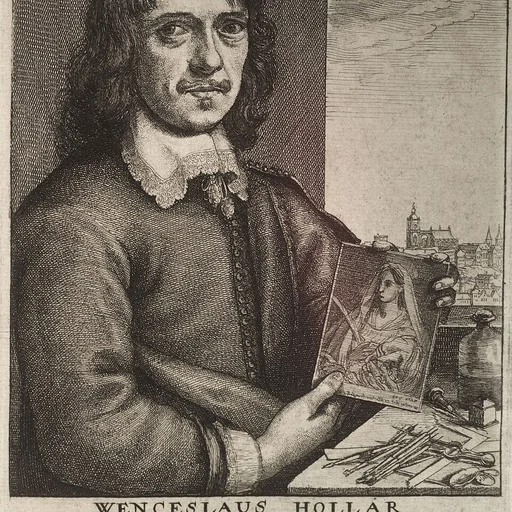
Wenceslaus Hollar (Czech: Václav Hollar (Czech pronunciation: ), German: Wenzel Hollar; 23 July 1607 – 25 March 1677) was a Czech engraver, etcher and painter.