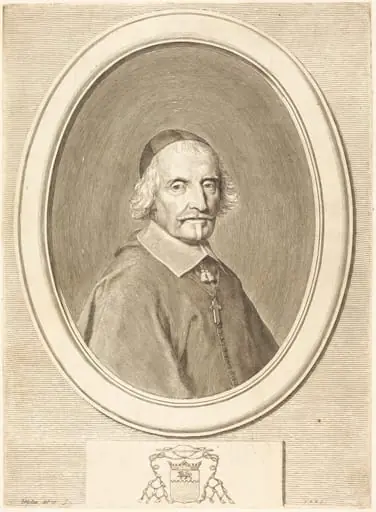
Artwork
Guido Bentivoglio
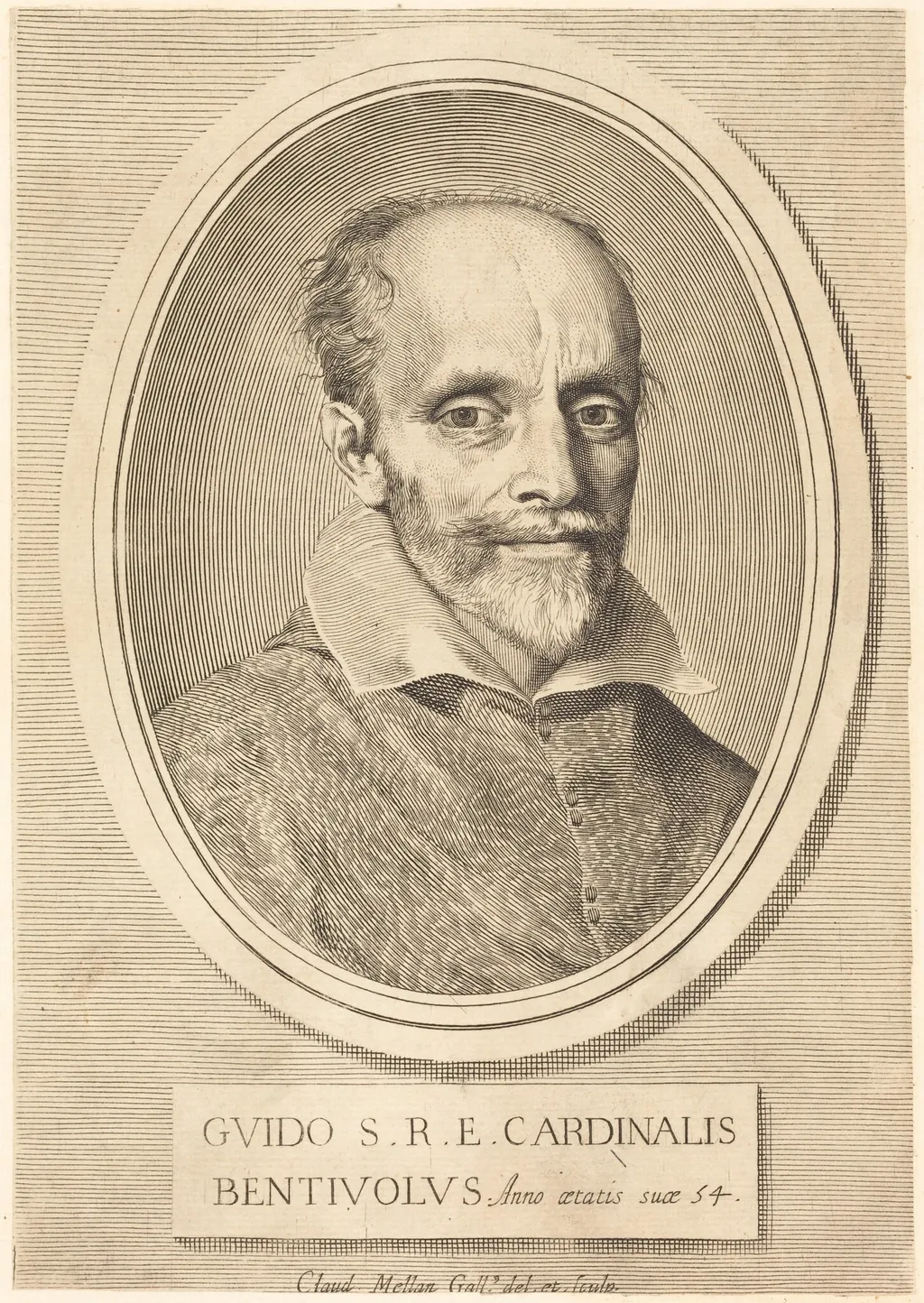
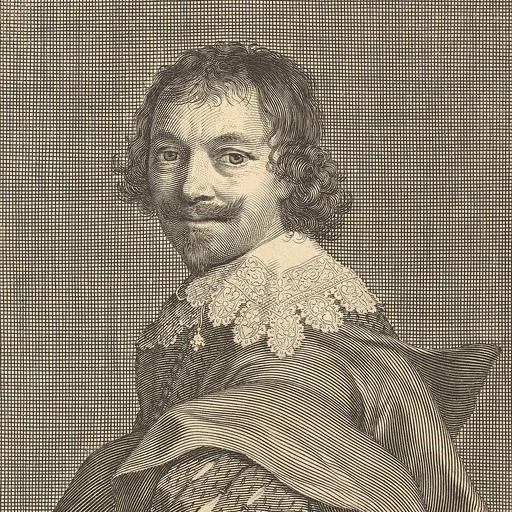
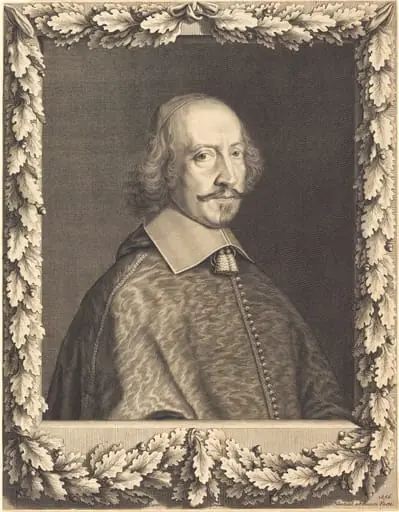
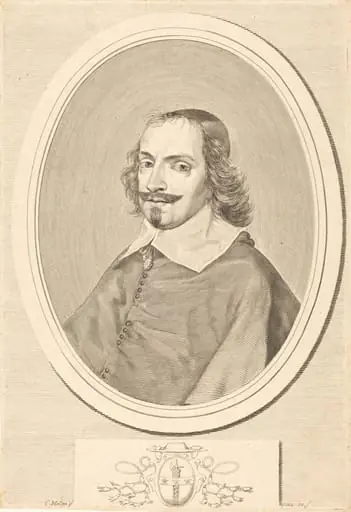
Guido Bentivoglio is an ink print by the Renaissance artist Claude Mellan. It dates from 1643 and is held in the collection of the National Gallery of Art.
About this work
Overview
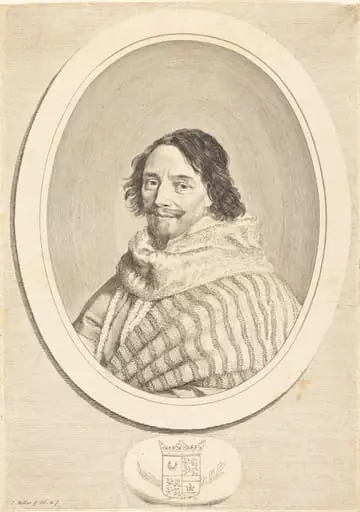
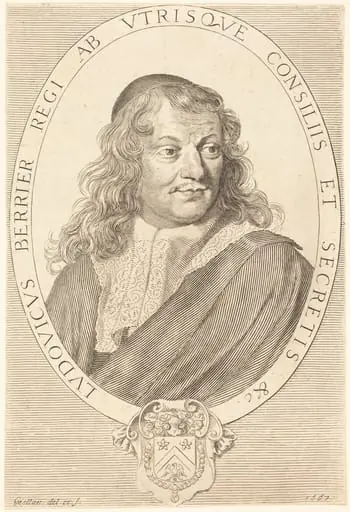
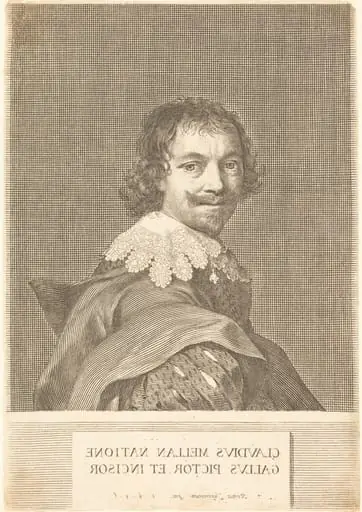
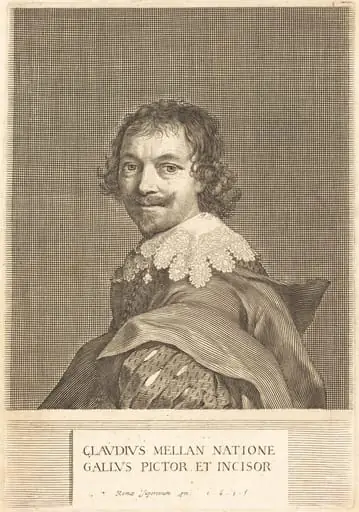
This 1643 engraving by Claude Mellan depicts Guido Bentivoglio, a cardinal of the Roman Catholic Church. Rendered in black ink on laid paper, the portrait is contained within a delicate oval border. The composition is restrained, focusing entirely on the sitter’s face and upper torso, with no decorative elements beyond faint contour lines framing the image.
Subject & Meaning
Guido Bentivoglio was a prominent church diplomat and cardinal, known for his political acumen and scholarly interests. The portrait captures him with a solemn expression, emphasizing his authority and introspective nature. The absence of ecclesiastical regalia shifts focus to his personal presence, suggesting a human dimension beneath his high office.
Technique & Style
Mellan employed the engraving technique, incising fine lines into a copper plate to create tonal gradations. He used closely spaced, varied strokes to model the contours of the face, particularly around the eyes and mouth, where deep shadows convey texture and age. The background remains minimal, allowing the subtle interplay of light and line to define form without distraction.
History & Provenance
Created in 1643, the engraving likely served as a portrait for circulation among ecclesiastical circles or as a record of Bentivoglio’s status. It was produced during his time in France, where he served as an ambassador. The print’s survival in multiple collections indicates its use as a tool of recognition and influence within 17th-century religious networks.
Context
In mid-17th-century Europe, engraved portraits of clergy were common tools for disseminating the image of powerful church figures. Mellan, known for his technical precision, was among the few artists who could render complex facial expressions through line alone. This work reflects the intersection of religious authority and emerging print culture in Counter-Reformation Europe.
Legacy
Mellan’s engraving of Bentivoglio is noted for its psychological depth and technical mastery within the tradition of portrait engraving. While not widely reproduced today, it remains a significant example of how line and tone could convey individuality and dignity without color or elaborate setting, influencing later generations of printmakers.
Artist & collection