Artwork
Pierre Dupuy
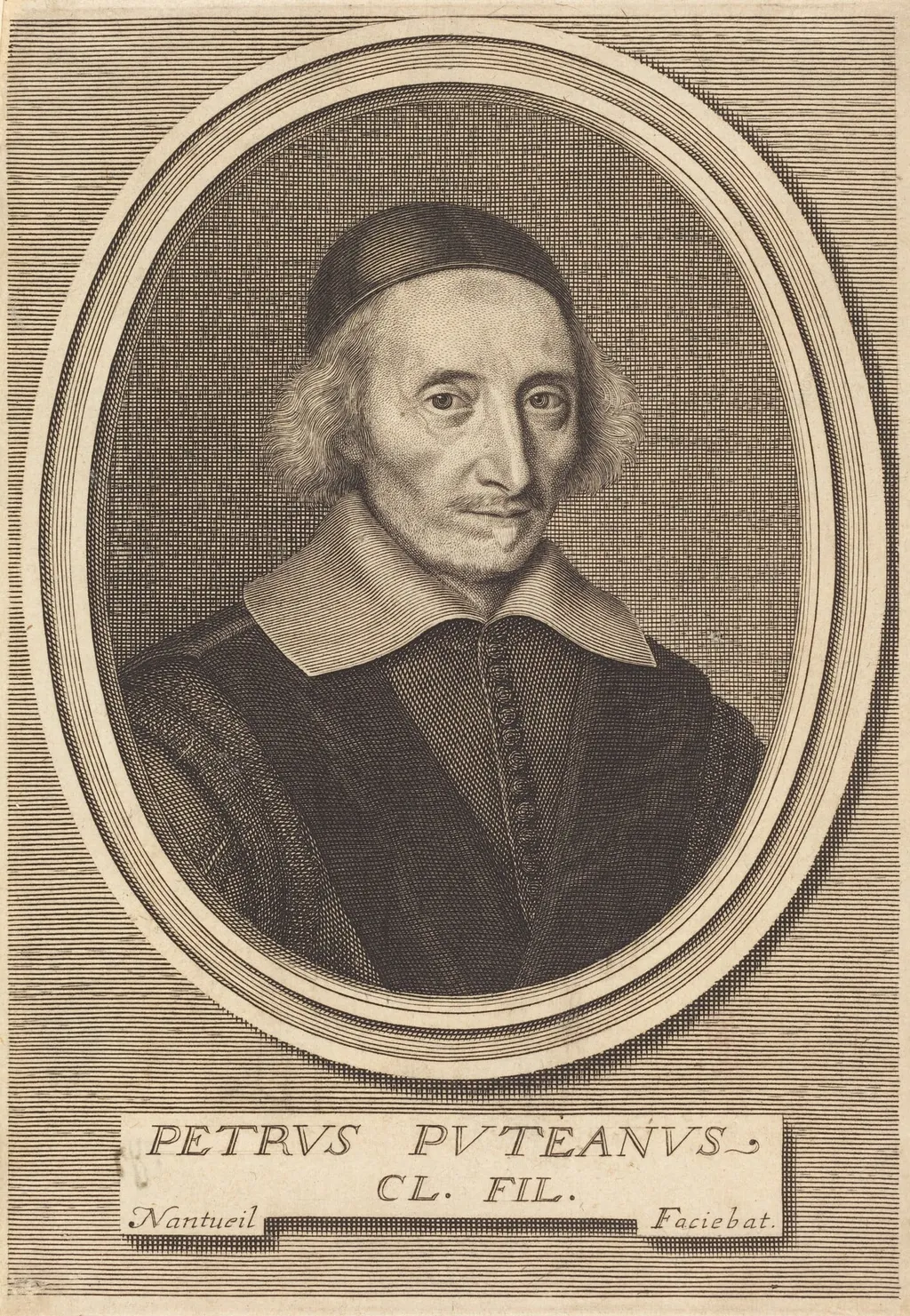
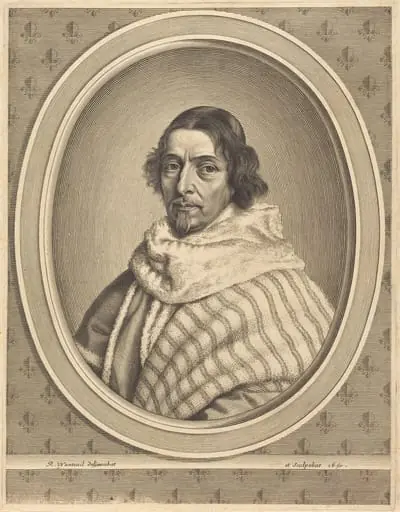
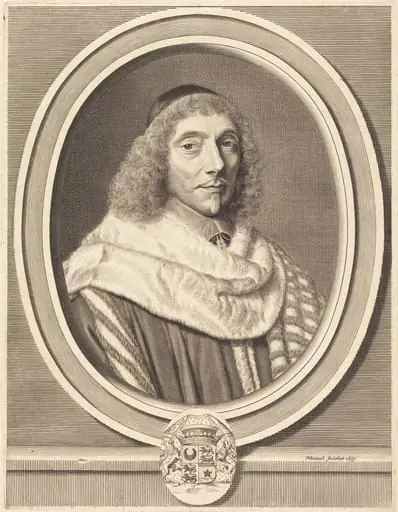
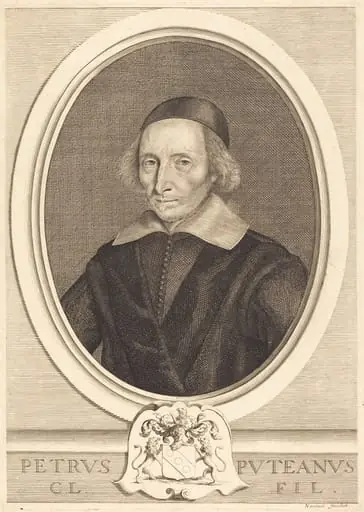
Pierre Dupuy is an ink print by the Baroque artist Robert Nanteuil. It dates from 1651 and is held in the collection of the National Gallery of Art.
About this work
Overview
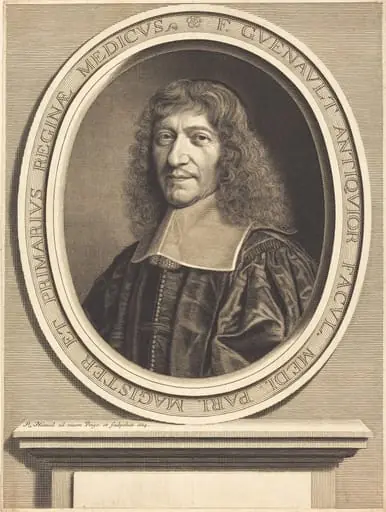
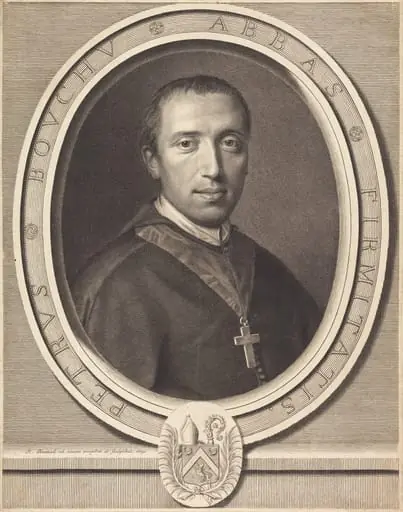
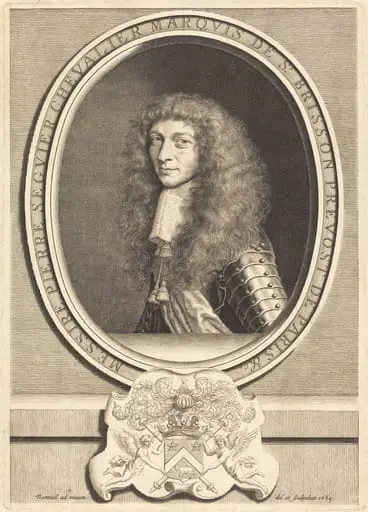
The 1651 engraving by Robert Nanteuil portrays Pierre Dupuy, a noted French scholar and royal librarian. Executed in the mid‑seventeenth century, the print exemplifies Nanteuil’s role as official engraver for Louis XIV’s court, delivering a dignified likeness in black‑and‑white.
Subject & Meaning
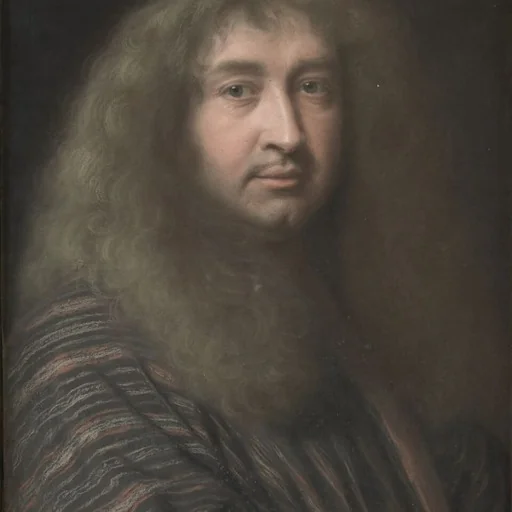
Dupuy is presented with curled hair, a high collar, and a composed expression, reflecting his intellectual stature. The inscription beneath the image renders his name in Latin—*Petrus Puteanus*—a convention often applied to scholarly portraits to emphasize learned identity.
Technique & Style
Nanteuil employs delicate, intersecting lines and stippling to model facial features and the texture of Dupuy’s attire. A circular frame of fine lines and dots encloses the head, while subtle shading creates a sense of volume against an otherwise plain background.
History & Provenance
Created during Nanteuil’s tenure as the royal court’s engraver, the print was likely circulated among the intellectual circles of Louis XIV’s France. Its survival in museum collections attests to its continued relevance as a documentary portrait of a key figure in French scholarship.
Artist & collection
Artist
Robert Nanteuil (French pronunciation: ; 1623 – 9 December 1678) was a French portrait artist: engraver, draughtsman and pastellist to the court of Louis XIV.