Artwork
Raffaello Menicucci
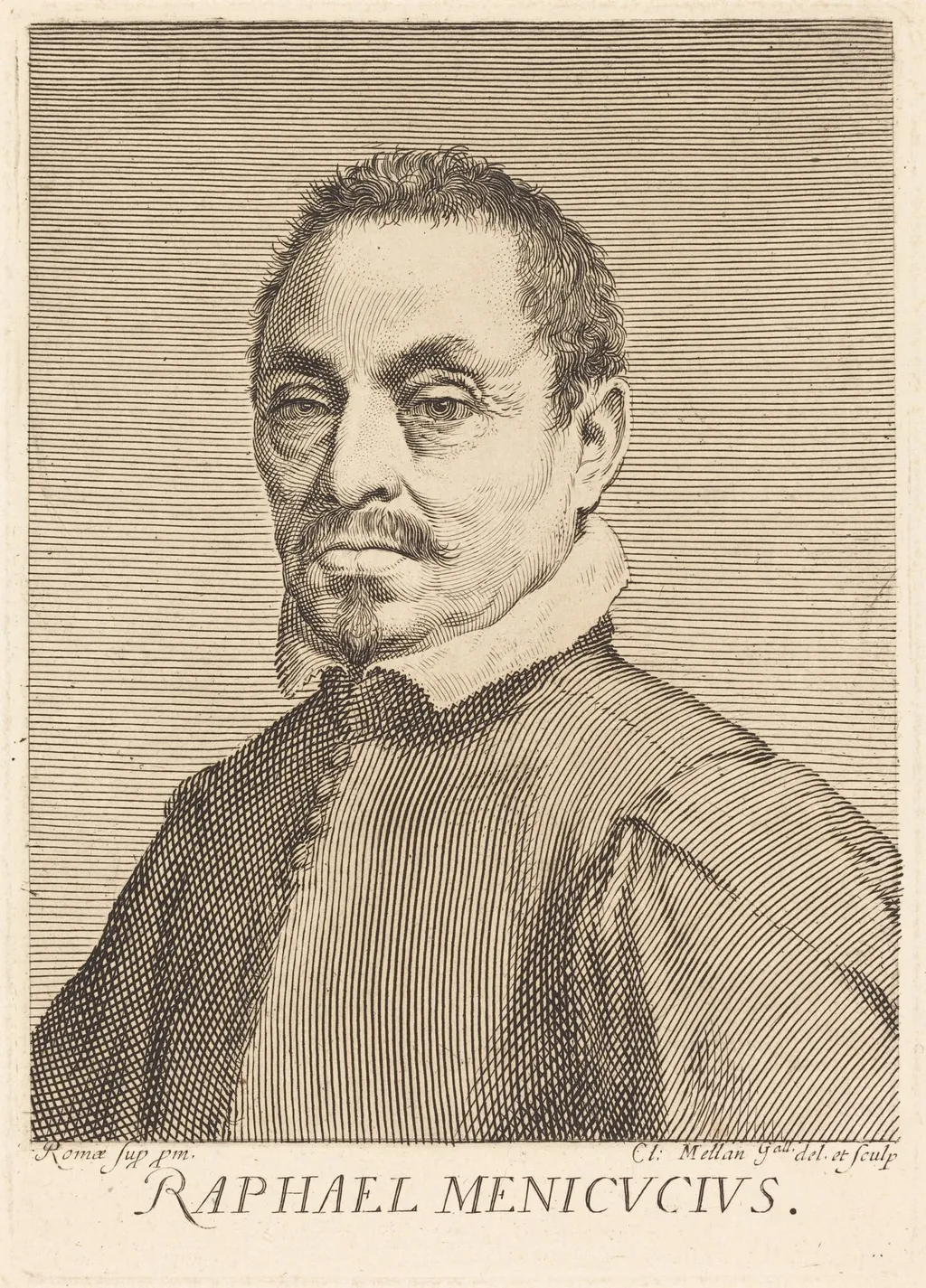
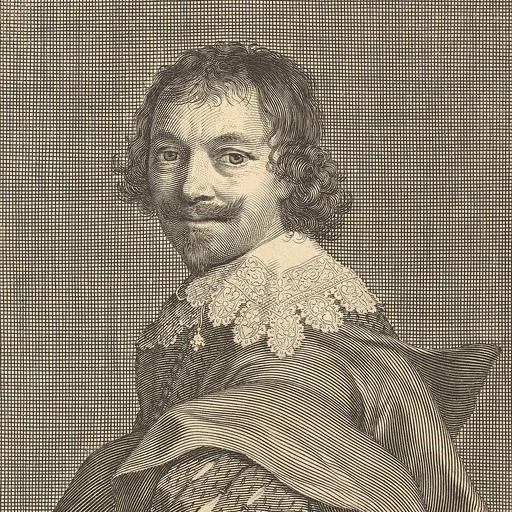
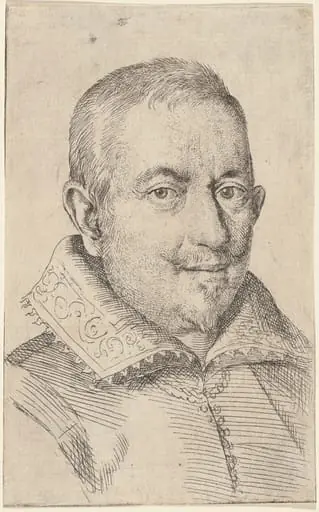
Raffaello Menicucci is an ink print by the Renaissance artist Claude Mellan. It dates from 1643 and is held in the collection of the National Gallery of Art.
About this work
Overview
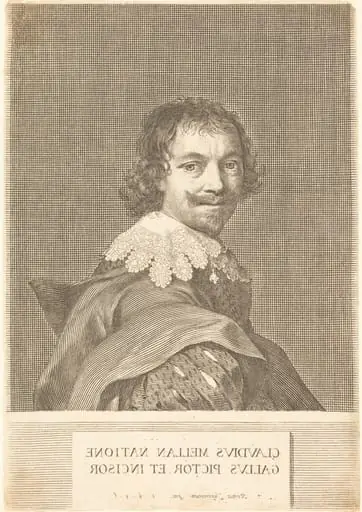
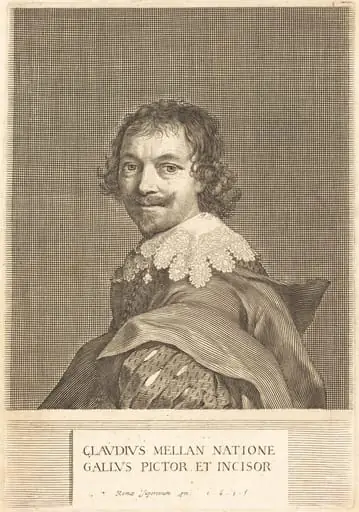
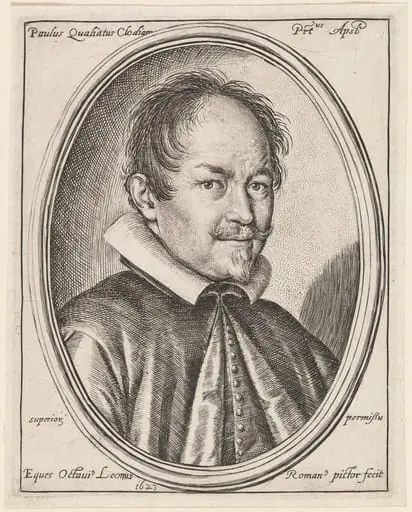
Created in 1643, this engraving by Claude Mellan depicts Raffaello Menicucci, an Italian artist and engraver. Rendered in black ink on laid paper, the portrait is a study in precision, using only linear marks to define form. The composition centers the subject’s face and upper torso against a neutral background, eliminating distraction and emphasizing the technical mastery of the medium.
Subject & Meaning
Raffaello Menicucci is portrayed with a composed, introspective expression, his mustache and closely cropped hair suggesting a man of professional stature.
Raffaello Menicucci is portrayed with a composed, introspective expression, his mustache and closely cropped hair suggesting a man of professional stature. The high collar and diagonally patterned garment imply status and attention to detail, common in portraits of artists and scholars of the period. The image conveys dignity without ornament, reflecting the engraver’s respect for his subject’s craft.
Technique & Style
Mellan employed fine, parallel lines and cross-hatching to model volume and texture. By varying the density and direction of these lines, he rendered the subtle transitions of light on skin and the complex weave of fabric. The absence of tone or wash forces the viewer to perceive depth through line alone, showcasing the engraver’s control and understanding of optical illusion.
History & Provenance
The print was made in Paris during Mellan’s active years as a court engraver. It likely served as a record of Menicucci, possibly for artistic circles or personal correspondence. No early ownership records are widely documented, but the work survives in major print collections, attesting to its enduring value as a study in graphic technique.
Context
In mid-17th century France, portraiture in print was valued for its ability to disseminate likenesses beyond painting. Mellan’s approach aligned with a broader trend among engravers who prioritized linear precision over color or embellishment. This work reflects the intellectual climate where technical skill in reproduction was as respected as artistic invention.
Legacy
Mellan’s engraving of Menicucci remains a reference for the expressive potential of line in printmaking. It influenced later artists exploring monochrome portraiture and demonstrated how subtle variations in hatching could convey both physical presence and psychological depth. The work endures as a quiet testament to the power of restraint in graphic art.
Artist & collection