Artwork
Vincenzo Giustiniani
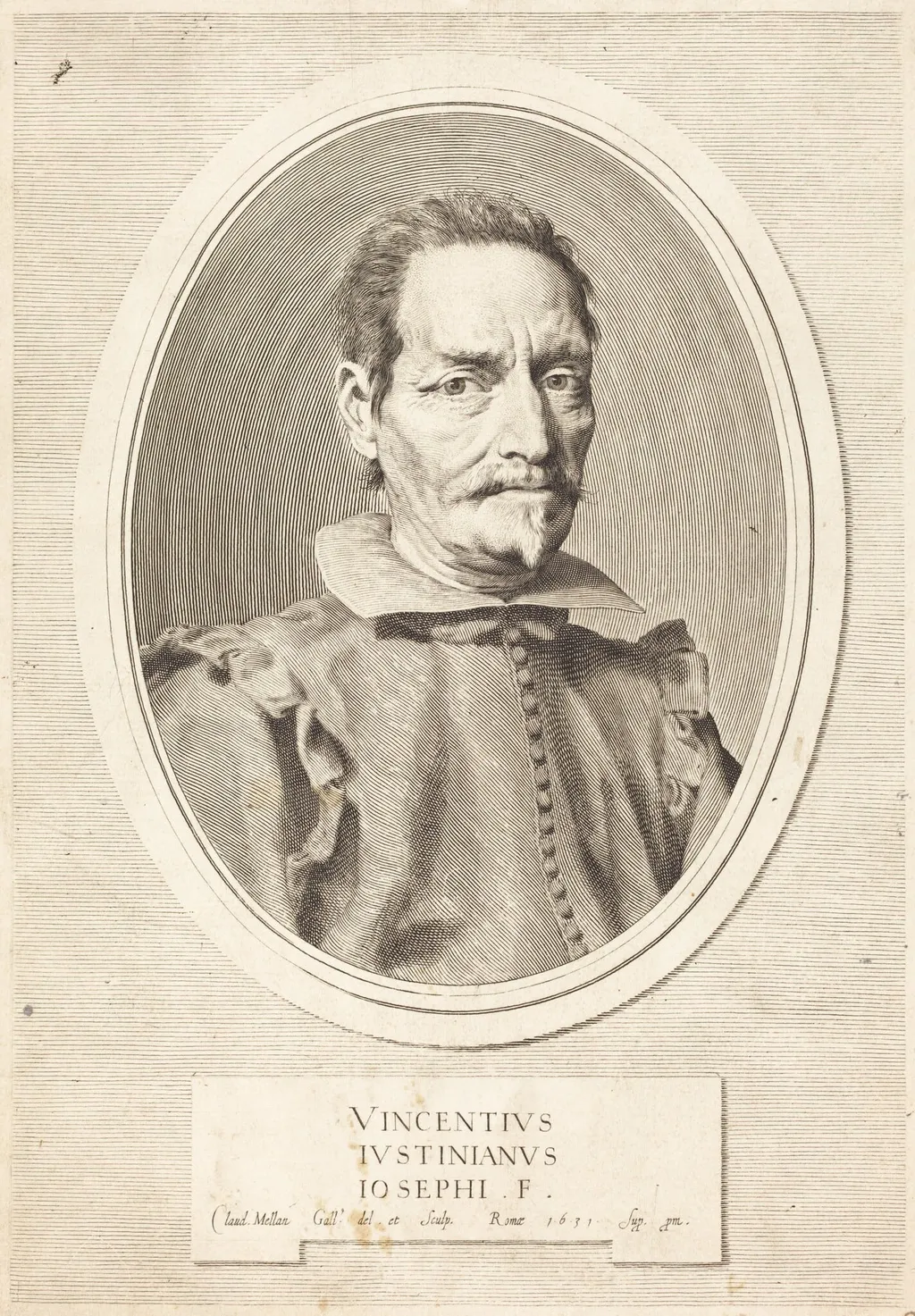
Vincenzo Giustiniani is an ink print by the Baroque artist Claude Mellan. It dates from 1631 and is held in the collection of the National Gallery of Art.
About this work
Next, look up engraving to see how artists like this made detailed portraits with just lines.
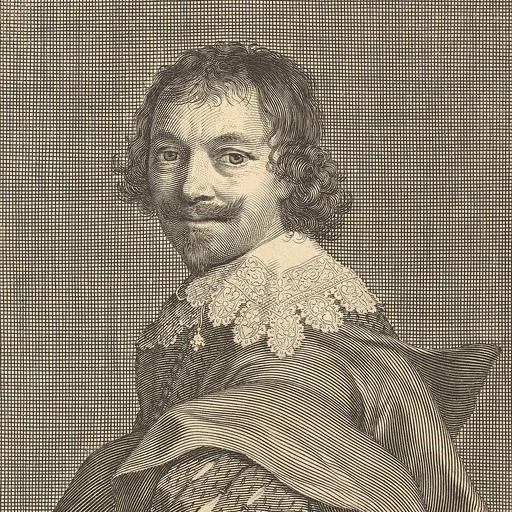
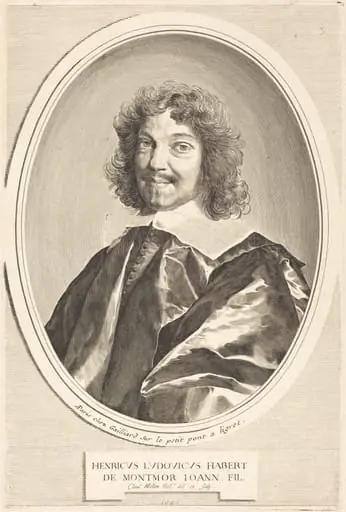
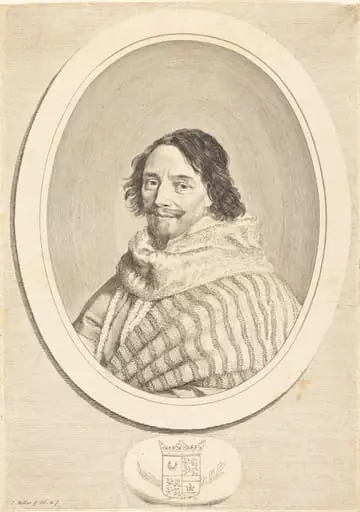
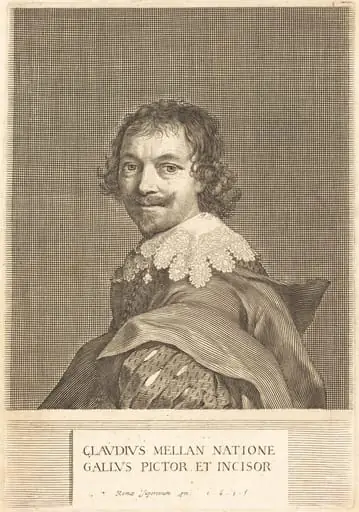
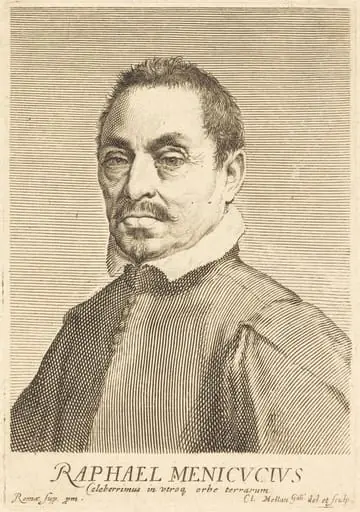
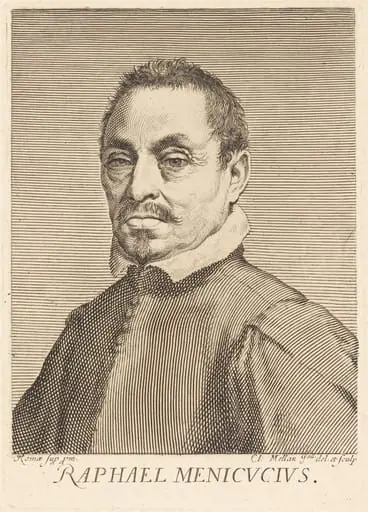
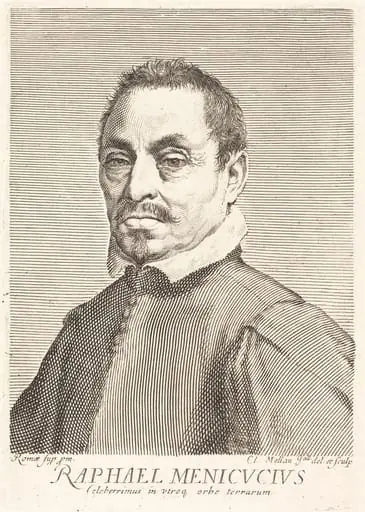
This is a black-and-white portrait of a serious-looking man with a mustache and short hair. He’s wearing a high collar and a ruffled shirt, looking straight ahead. The oval frame around him is simple, with a smooth border.
The name under the portrait reads *Vincentius Iustinianus Iosephi F.*, and the artist’s mark shows it was made in Rome in 1631. The paper has a textured look, typical of older prints.
Next, look up engraving to see how artists like this made detailed portraits with just lines.
Overview
Claude Mellan’s 1631 engraving presents a solemn portrait of Vincenzo Giustiniani. Executed on laid paper, the image is rendered in black ink, emphasizing line and contrast. The composition is framed by a simple oval border, focusing attention on the sitter’s direct gaze.
Subject & Meaning
The sitter, identified by the inscription *Vincentius Iustinianus Iosephi F.*, appears with a neatly trimmed mustache, short hair, and a high‑collared, ruffled shirt. The dignified pose and straightforward expression suggest a formal representation of status and personal identity typical of early‑17th‑century portraiture.
Technique & Style
Mellan employs his characteristic linear approach, building form through delicate, varying strokes rather than hatching. The smooth texture of the laid paper enhances the subtle gradations of tone, while the clean oval frame underscores the work’s restrained compositional balance.
History & Provenance
The print bears Mellan’s maker’s mark and a date indicating production in Rome in 1631. As a work by a noted French engraver active in Italy, it reflects the cross‑cultural artistic exchanges of the period and the patronage networks surrounding the Giustiniani family.
Context
During the early Baroque, portrait engravings served both as commemorative objects and as means of disseminating the likenesses of prominent individuals. Mellan’s portrait aligns with this practice, offering a portable, reproducible image of a notable Roman nobleman.
Artist & collection