Artwork
Raffaello Menicucci
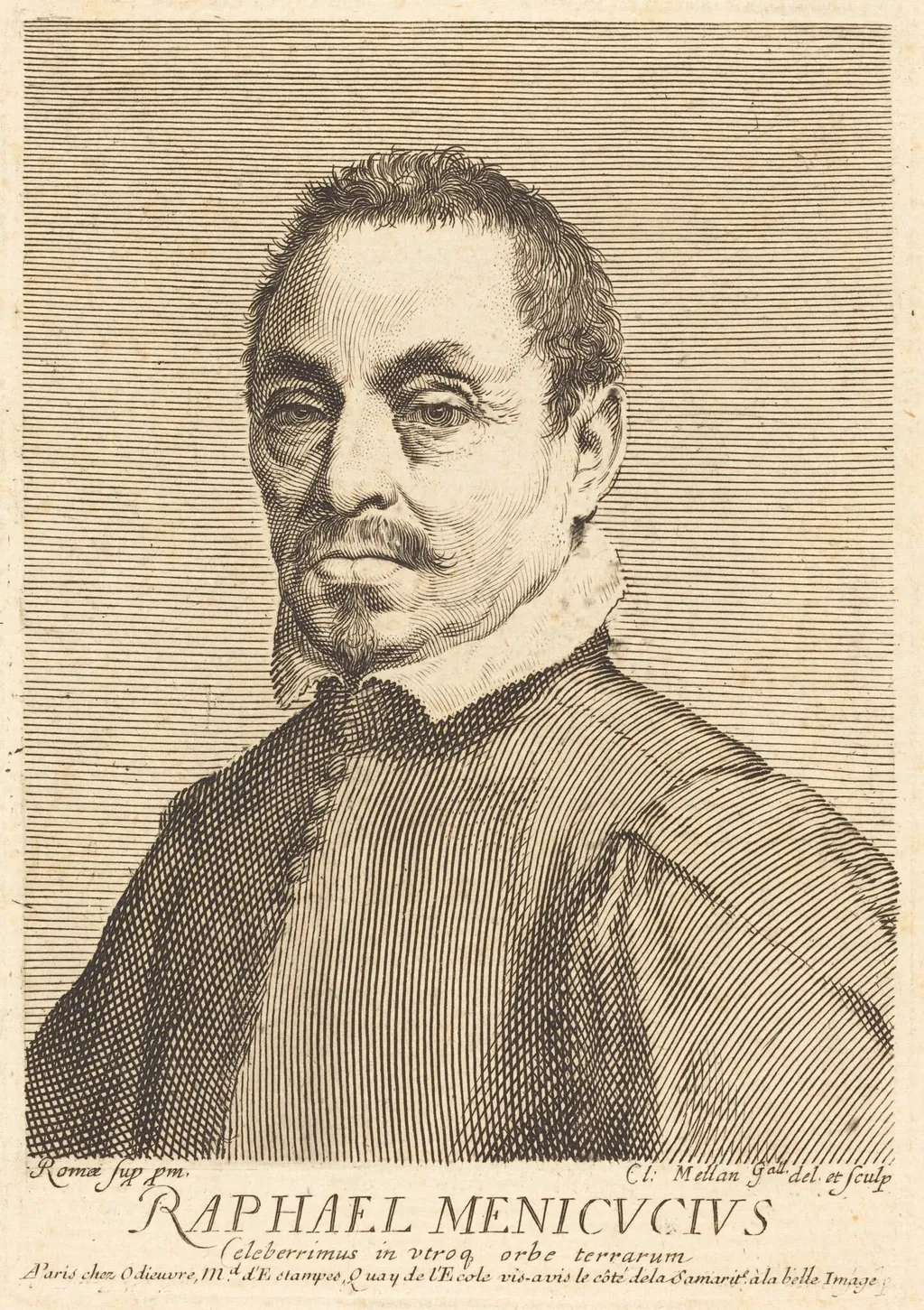
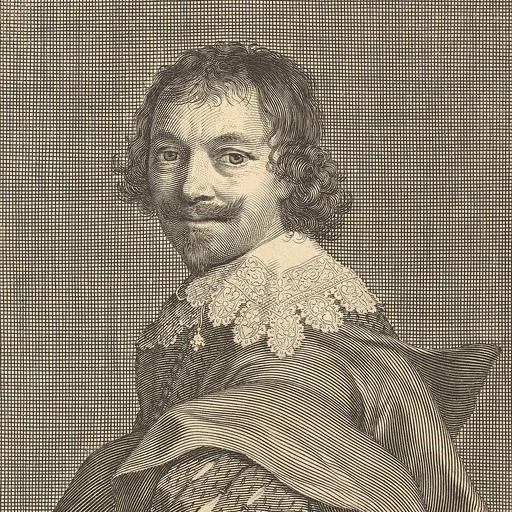
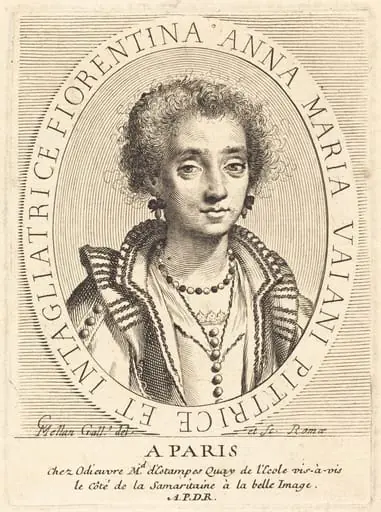
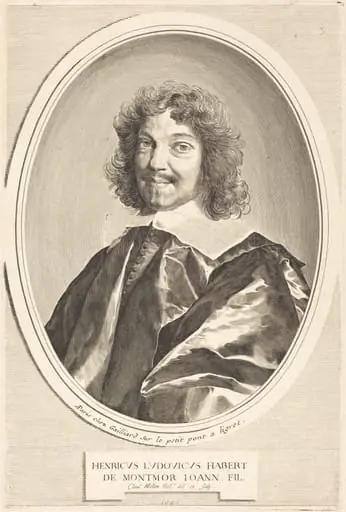
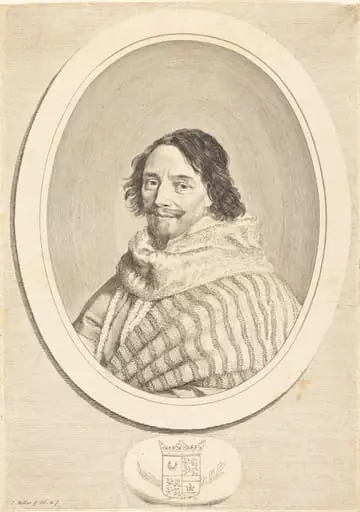
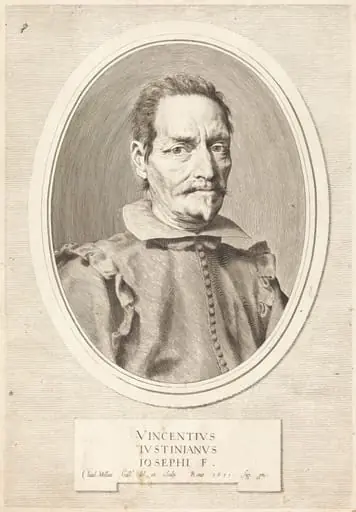
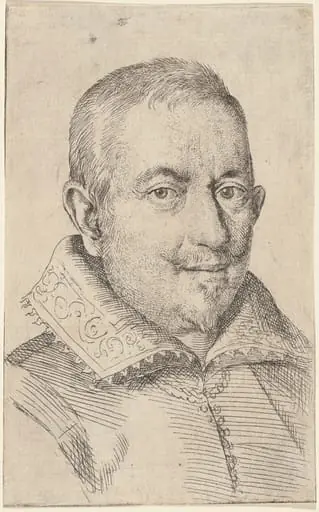
Raffaello Menicucci is an ink print by the Renaissance artist Claude Mellan. It dates from 1643 and is held in the collection of the National Gallery of Art.
About this work
Overview
This engraving, produced by Claude Mellan in 1643, depicts Raffaello Menicucci, an Italian scholar and antiquarian. Executed on laid paper, the work is a fine example of 17th-century printmaking, showcasing Mellan’s mastery of line and texture. Unlike painted portraits, this image achieves depth and realism through meticulous hatching and cross-hatching, a hallmark of Mellan’s technique.
Subject & Meaning
Raffaello Menicucci is portrayed with a contemplative gaze and restrained posture, reflecting his identity as a learned man of the Renaissance tradition.
Raffaello Menicucci is portrayed with a contemplative gaze and restrained posture, reflecting his identity as a learned man of the Renaissance tradition. His attire—high collar, doublet, and cap—aligns with scholarly dress of the previous century, suggesting a deliberate reference to intellectual heritage. The portrait conveys dignity and quiet authority rather than flamboyance, emphasizing character over status.
Technique & Style
Mellan employed a single continuous spiral line to model the entire face, a signature method he developed to render volume without interruption. The clothing and background are built from fine, controlled strokes that suggest fabric folds and shadow with remarkable precision. The absence of tone or wash relies entirely on line density to create contrast, demonstrating the engraver’s control over light and form.
History & Provenance
Created in Paris in 1643, the engraving was likely commissioned to commemorate Menicucci’s scholarly contributions. It circulated among collectors and intellectuals, appearing in early print catalogues of the period. The work remained in European private collections until the 19th century, after which it entered institutional holdings, where it is now preserved as a key example of Mellan’s graphic output.
Context
In mid-17th-century France, portraiture in print was increasingly valued for its ability to disseminate likenesses of notable figures beyond the elite. Mellan’s work aligned with this trend, blending Italian humanist ideals with French technical refinement. His engravings of scholars and artists contributed to a broader cultural project of preserving intellectual legacy through the printed image.
Legacy
Mellan’s engraving of Menicucci remains a reference point in the study of linear engraving techniques. Its influence extended to later printmakers who admired its economy of line and psychological depth. Though not widely reproduced today, it is cited in academic texts on Baroque graphic arts and continues to be studied for its technical innovation and restrained aesthetic.
Artist & collection