Artwork
Saint Augustine
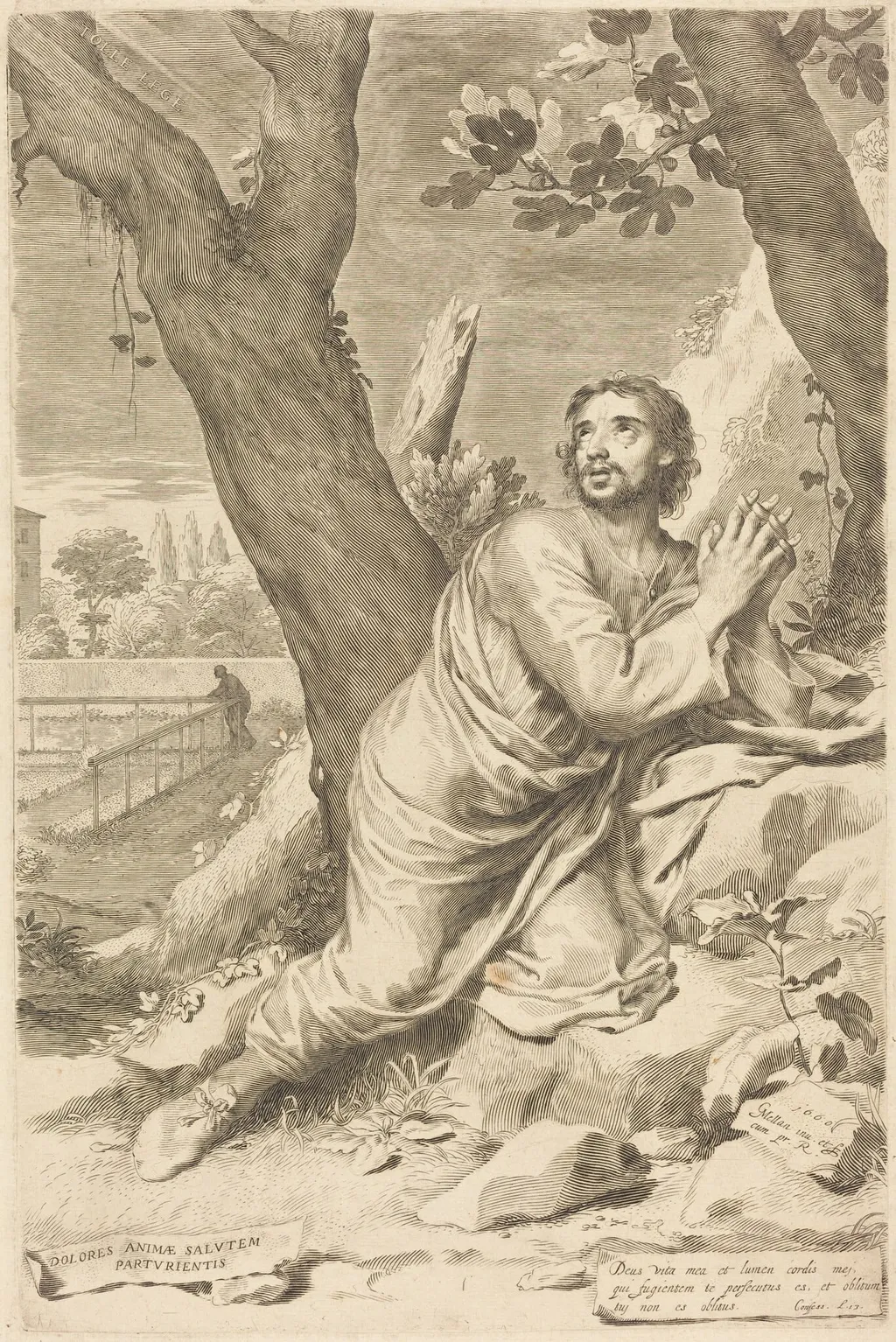
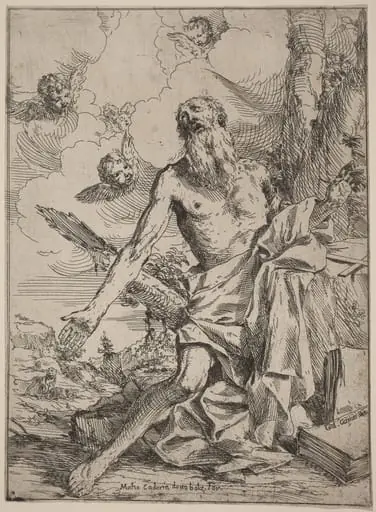
Saint Augustine is an ink print by the Baroque artist Claude Mellan. It dates from 1660 and is held in the collection of the National Gallery of Art.
About this work
Overview
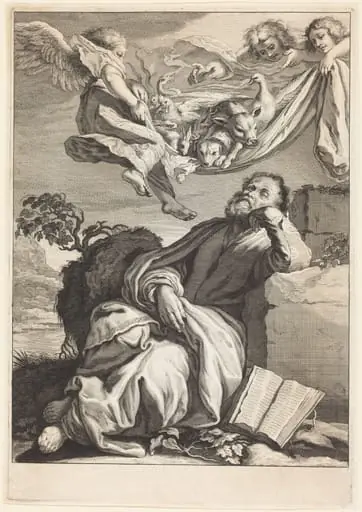
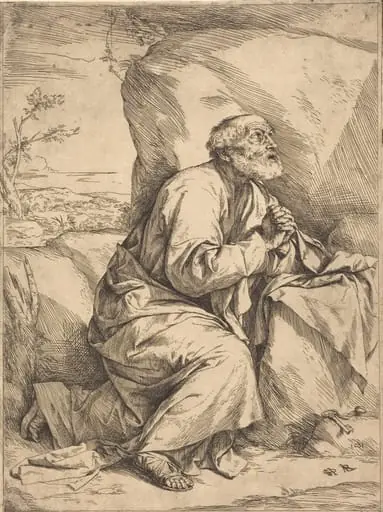
Claude Mellan’s 1660 engraving presents Saint Augustine in a contemplative pose, rendered entirely in black ink on paper. The figure is draped in a dark, flowing robe and holds a sizeable tome, suggesting his scholarly authority. The composition is stark, with a clear, unmodulated background that focuses attention on the saint’s solemn expression.
Subject & Meaning
The saint is depicted with a weary yet enlightened countenance, embodying the intellectual and spiritual labor associated with Augustine’s theological legacy. The open book he carries alludes to his extensive writings, while his posture conveys a sense of introspection, inviting viewers to consider the weight of his doctrinal contributions.
Technique & Style
Mellan employed his signature pure‑line engraving method, using a single needle to incise each line without resorting to cross‑hatching. This approach yields a continuous, fluid contour that defines form and texture, evident in the meticulous rendering of individual hairs on the saint’s head and the crisp folds of his robe. The result is a precise, almost calligraphic quality.
History & Provenance
Created in 1660, the print reflects Mellan’s mature period, during which he refined his needle‑engraving technique. While specific ownership records are scarce, the work has been catalogued among Mellan’s religious series and is frequently cited in studies of 17th‑century French printmaking.
Artist & collection