Artwork
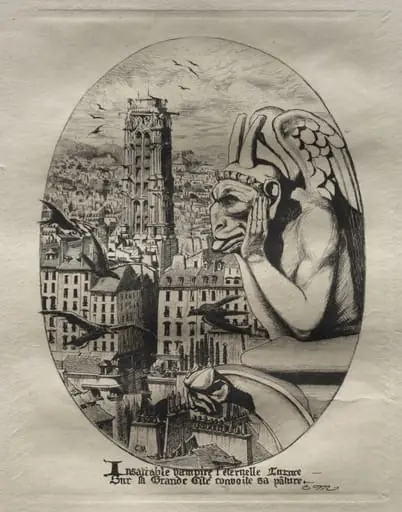
Le stryge (The Vampire)
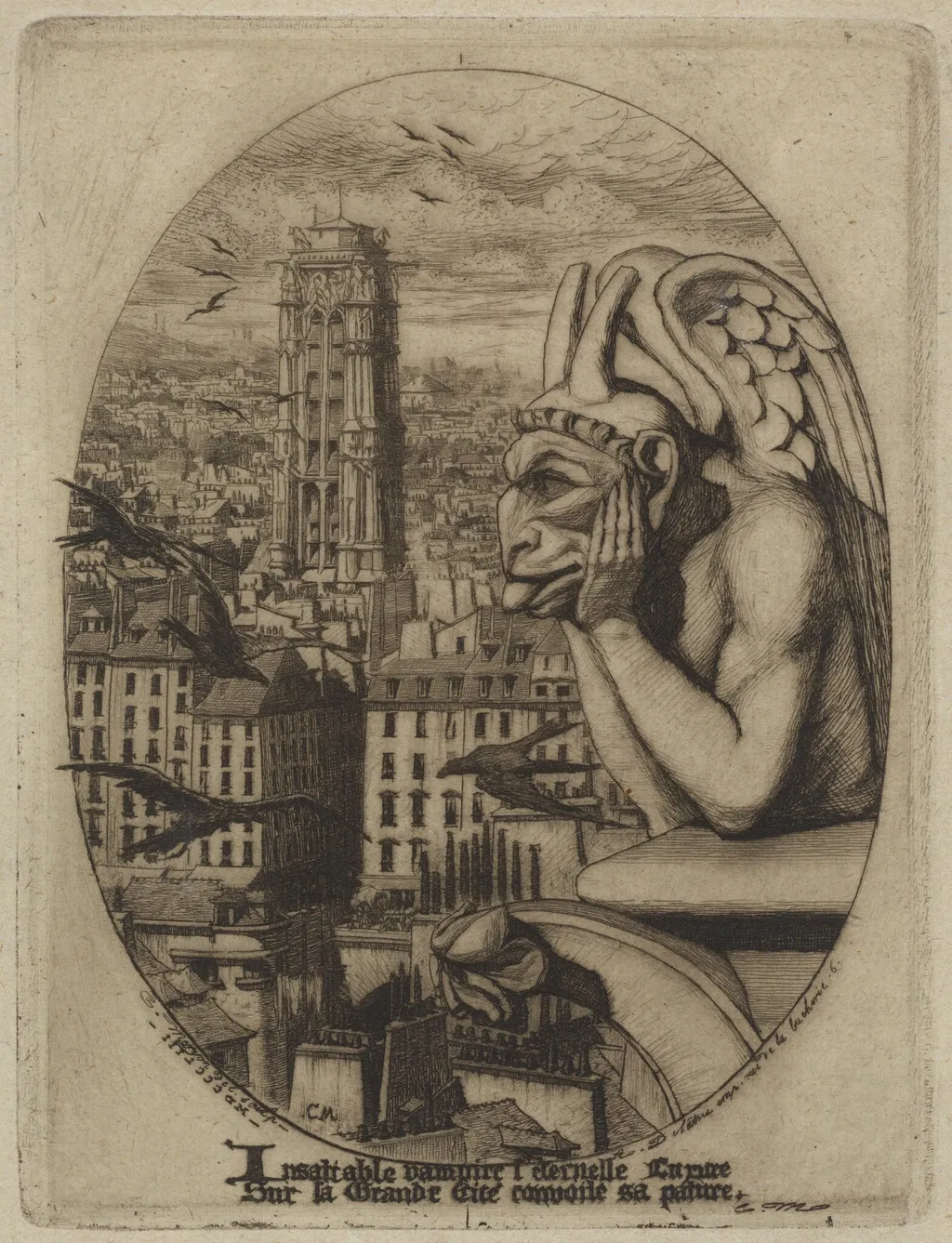
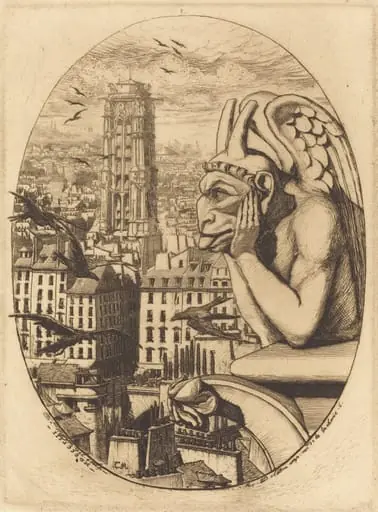
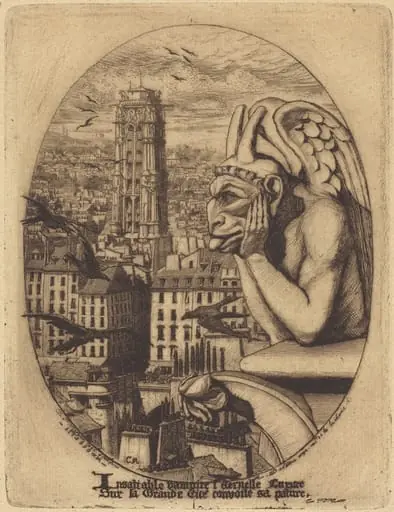
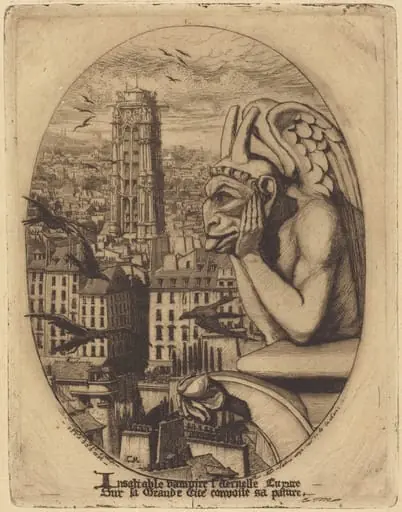
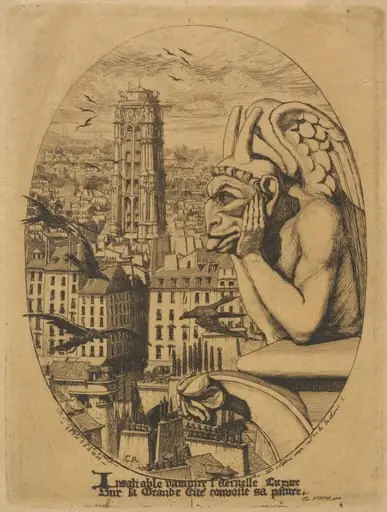
Le stryge (The Vampire) is an ink print by the Impressionist artist Charles Meryon. It dates from 1853 and is held in the collection of the National Gallery of Art.
About this work
Overview
Though celebrated in France, his reputation remained limited in English-speaking circles during his lifetime.
Created in 1853 by French artist Charles Meryon, *Le stryge (The Vampire)* is an etching on green laid paper from a series portraying Paris through a haunting, imaginative lens. Meryon, who worked almost exclusively in etching due to his color blindness, developed a singular visual language marked by intricate line work and atmospheric depth. Though celebrated in France, his reputation remained limited in English-speaking circles during his lifetime.
Subject & Meaning
The image depicts a dense, elevated cityscape dominated by a towering clock tower, surrounded by tightly clustered architecture. Hovering above it is a massive, bat-like figure with outstretched wings and a human-like face, its clawed hand resting on a rooftop. The creature, neither fully animal nor human, evokes a mythic presence—possibly a symbol of urban decay, psychological dread, or the supernatural intrusion into modern life.
Technique & Style
Meryon employed fine, controlled etching lines to build texture and shadow, creating a sense of depth without color. The buildings are rendered with precise architectural detail, while the bat-like figure is modeled with heavier, more sculptural strokes, giving it a three-dimensional weight against the flat, bird’s-eye city. The green paper adds a muted, somber tone, enhancing the eerie, dreamlike mood of the composition.
History & Provenance
The print was produced during Meryon’s most productive period, when he was deeply immersed in documenting Paris’s architecture and atmosphere. It was part of a larger body of work that reflected his personal isolation and deteriorating mental health. He was institutionalized in 1858 and remained in asylums until his death in 1868, after which his work gradually gained recognition among print collectors and artists.
Context
Meryon’s etchings emerged amid rapid urban transformation in mid-19th-century Paris. While others celebrated modernization, he focused on the city’s forgotten corners, decaying structures, and nocturnal moods. His imagery resonated with Romantic and Gothic sensibilities, anticipating Symbolist themes of alienation and the uncanny, even as he worked outside the mainstream art institutions of his time.
Legacy
Though overlooked in his lifetime outside France, Meryon’s influence grew in the late 19th and early 20th centuries, particularly among printmakers and writers drawn to his psychological intensity. *Le stryge* remains a defining example of how etching could convey emotional and symbolic weight through line alone, inspiring later artists to explore the intersection of architecture, myth, and inner turmoil.
Artist & collection
Artist
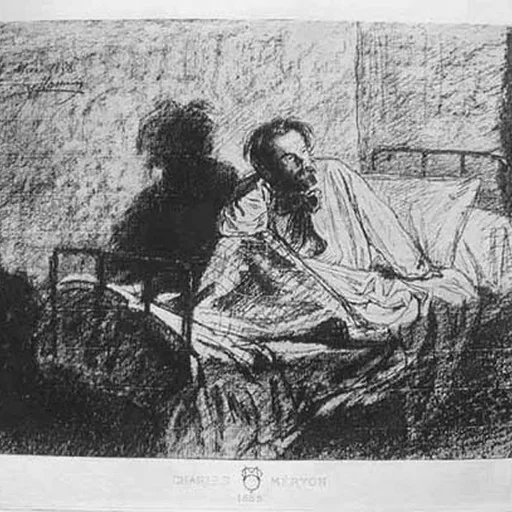
Charles Meryon (sometimes Méryon, 23 November 1821 – 14 February 1868) was a French artist who worked almost entirely in etching, as he had colour blindness.