Artwork
Le stryge (The Vampire)
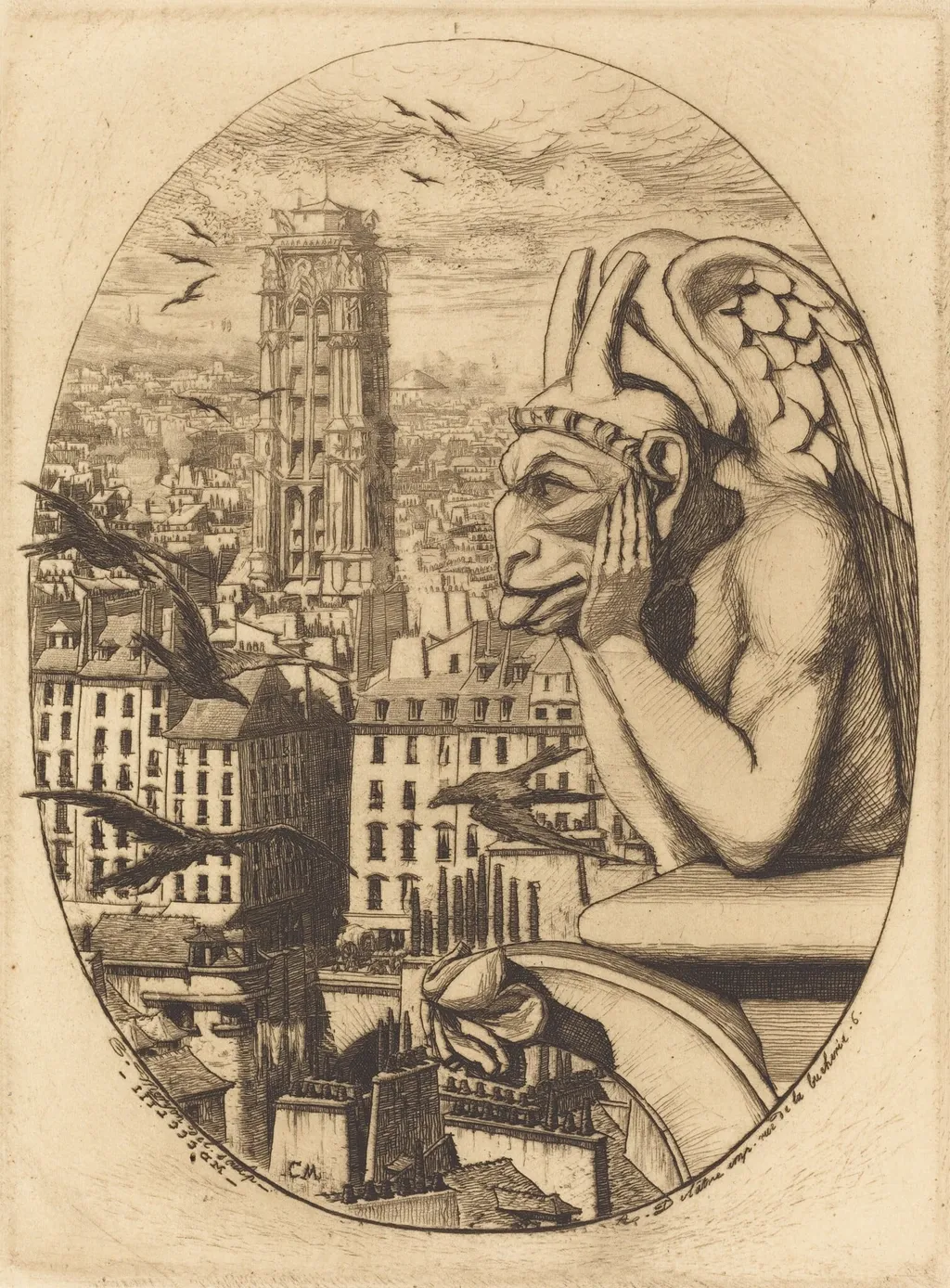
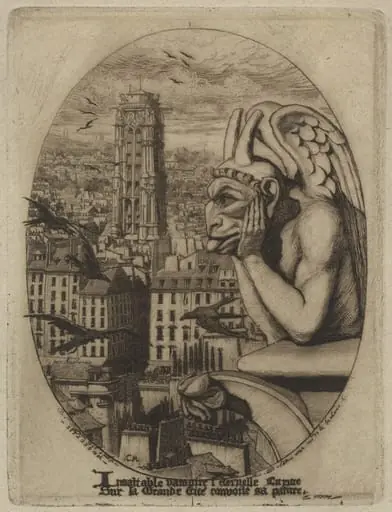
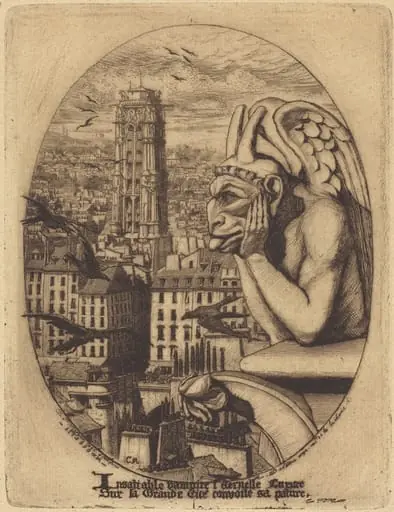
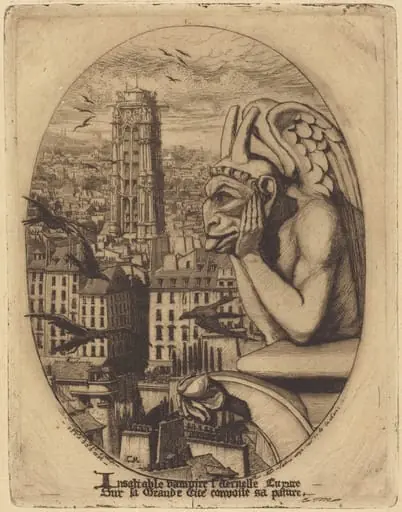
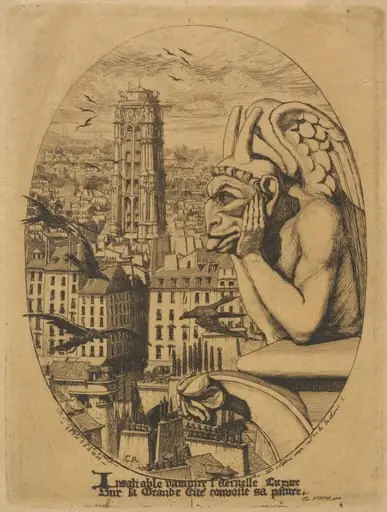
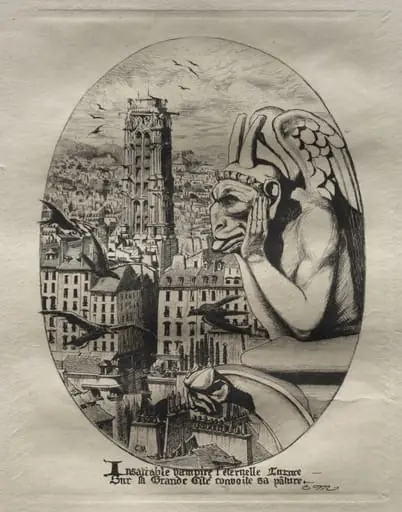
Le stryge (The Vampire) is an ink print by the Impressionist artist Charles Meryon. It dates from 1853 and is held in the collection of the National Gallery of Art.
About this work
Overview
Charles Meryon, a French artist with a profound fascination for urban decay, produced *Le stryge (The Vampire)* in 1853 as an etching on wove paper.
Charles Meryon, a French artist with a profound fascination for urban decay, produced *Le stryge (The Vampire)* in 1853 as an etching on wove paper. His color blindness led him to focus exclusively on monochromatic printmaking, where he developed a highly personal style. This work stands as one of his most evocative nocturnal visions, blending architectural realism with supernatural imagery to convey an atmosphere of psychological unease.
Subject & Meaning
The print depicts a brooding, densely packed Parisian skyline under a storm-lit sky, dominated by a colossal, bat-winged visage hovering above the buildings. This spectral figure, neither fully human nor beast, evokes folklore and dread rather than literal representation. Meryon’s vampire is less a creature of blood than a symbol of urban alienation — a looming presence that mirrors the oppressive weight of the city’s stone and shadow.
Technique & Style
Meryon employed fine, incised lines to build texture and depth, using etching’s capacity for sharp contrast to amplify the scene’s gloom. The buildings are rendered with precise, angular detail, while the sky and wings are suggested through dense cross-hatching and atmospheric washes. The absence of color heightens the emotional tension, focusing the viewer’s attention on form, light, and the unsettling interplay between structure and the monstrous.
History & Provenance
Created during Meryon’s most productive period, *Le stryge* was part of a series of etchings documenting Paris’s transformation under Haussmann’s renovations. Though admired by contemporaries like Baudelaire and later by Symbolist artists, Meryon’s work remained largely overlooked in English-speaking circles until the 20th century. The print survives in several museum collections, including the British Museum and the Metropolitan Museum of Art.
Context
In the mid-19th century, Paris was undergoing rapid modernization, yet Meryon turned away from progress to explore its forgotten corners and eerie after-hours moods. His work resonated with Romantic and Gothic literary currents, reflecting anxieties about industrialization and the loss of medieval identity. *Le stryge* emerges from this tension — a vision of the city as both monument and mausoleum.
Legacy
Meryon’s influence extended to Symbolist and Expressionist printmakers who valued emotional intensity over realism. Though never widely popular in his lifetime, his ability to infuse urban scenes with psychological depth paved the way for later artists exploring the uncanny in architecture. *Le stryge* endures as a quiet but potent testament to the power of print to convey inner landscapes through external forms.
Artist & collection
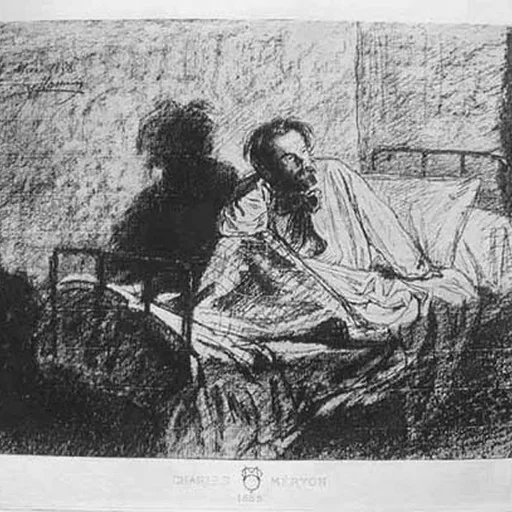
Artist
Charles Meryon (sometimes Méryon, 23 November 1821 – 14 February 1868) was a French artist who worked almost entirely in etching, as he had colour blindness.