Artwork
The Marriage of Alexander and Roxana
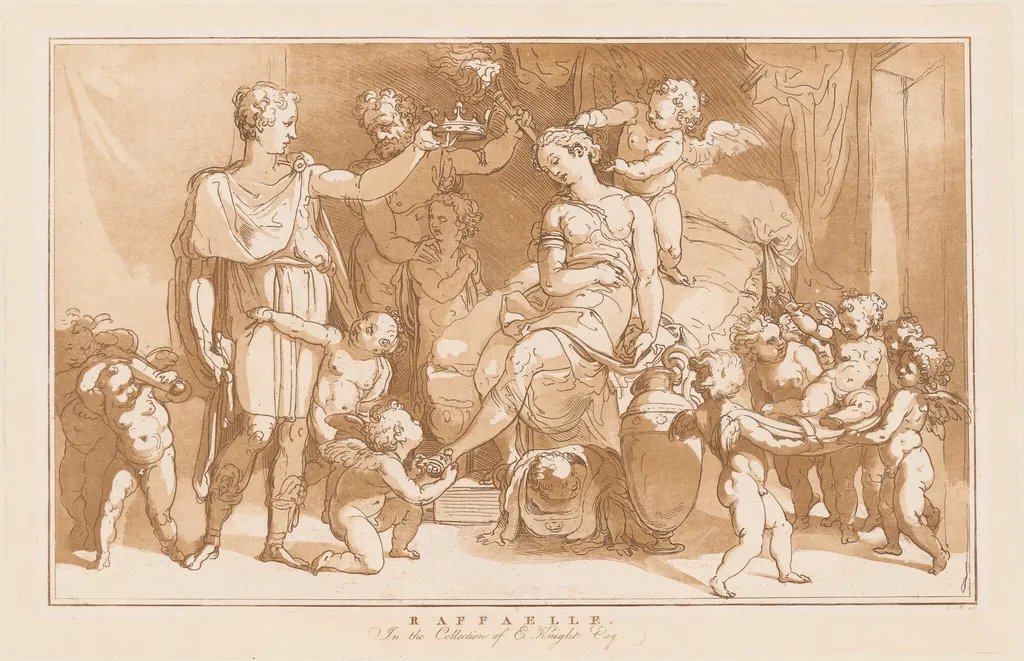
The Marriage of Alexander and Roxana is an ink print by the Romanticist artist Conrad Martin Metz. It dates from 1798 and is held in the collection of the National Gallery of Art.
About this work
Overview
The Marriage of Alexander and Roxana is an etching with aquatint on laid paper, created by Conrad Martin Metz in 1798. The print is part of the collection at the National Gallery of Art in Washington.
Subject & Meaning
The scene depicts a serene gathering around a seated woman (Roxana) holding a baby, and a standing man (Alexander) with a staff. Surrounding them, children play while adults form a loose circle, some holding symbolic objects such as a crown and musical instruments, conveying a sense of joyful celebration and harmony.
Technique & Style
Executed in warm, soft brown tones, the print showcases Metz's use of fine lines to capture movement and emotion, particularly in facial expressions and gestures. The combination of etching (for detailed lines) and aquatint (for smooth shading) achieves a rich, textured visual effect.
History & Provenance
Created in 1798 by Conrad Martin Metz, the print's history prior to its acquisition by the National Gallery of Art in Washington is not detailed here, highlighting the need for further research into its provenance.
Context
While specific contextual details about the commission or reception of The Marriage of Alexander and Roxana are not provided, the artwork reflects 18th-century European interest in classical subjects, with a unique focus on a moment of domestic and familial joy within Alexander's legend.
Legacy
The Legacy of The Marriage of Alexander and Roxana is not explicitly outlined in the provided information, suggesting a need for deeper analysis to understand its impact on subsequent art or its significance within Metz's oeuvre and the broader artistic movements of its time.
Artist & collection


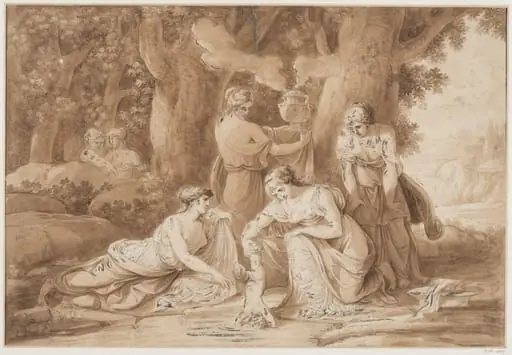 Thetis dipping Achilles
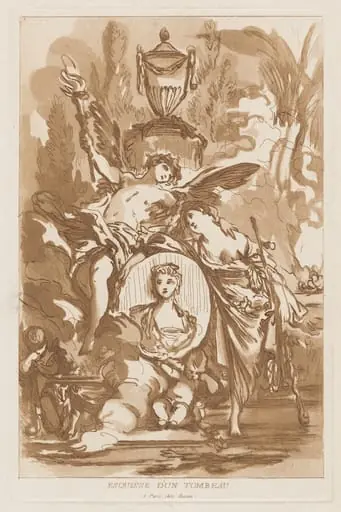 Esquisse d’un tombeau (Sketch for a Tomb)
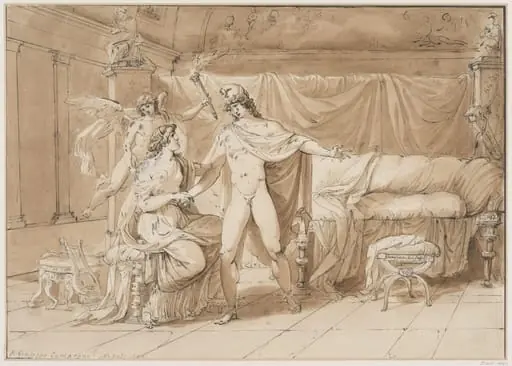 Paris and Helen, with Hymen
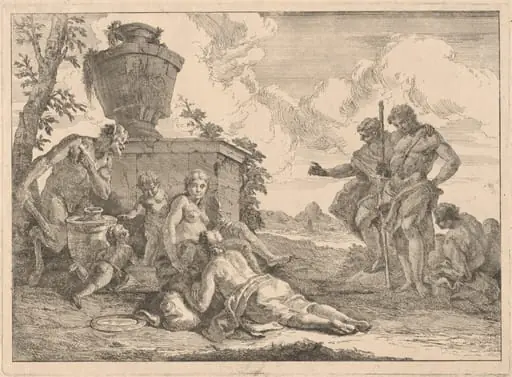 A Satyr with a Staff and Seven Other Figures
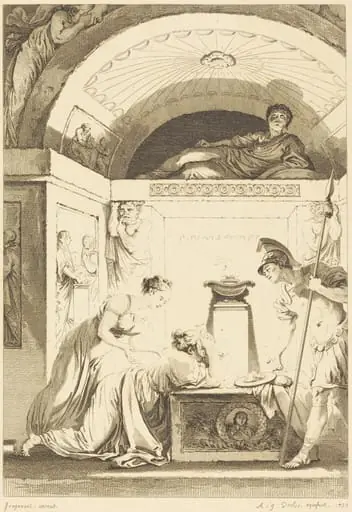 La matrone d'Ephese
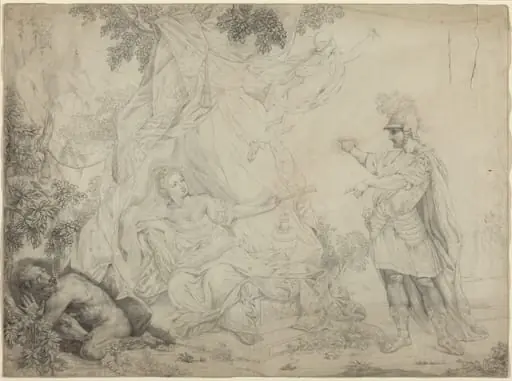 Circe and Ulysses
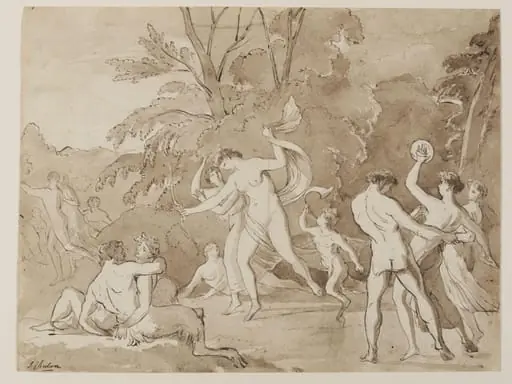 Cheerfulness
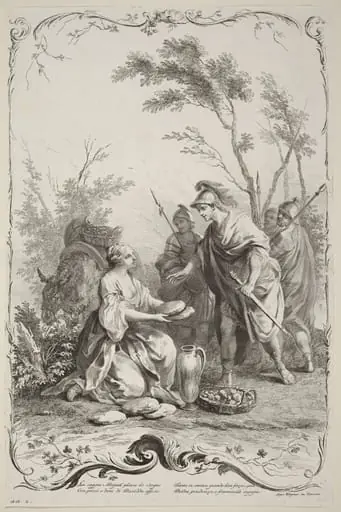 David and Abigail
 La matrone d'Ephese
 Telemachus Requests Permission from Pluto to Seek His Father in the Underworld
 The Sacrifice of Polyxena