Artwork
Telemachus Requests Permission from Pluto to Seek His Father in the Underworld
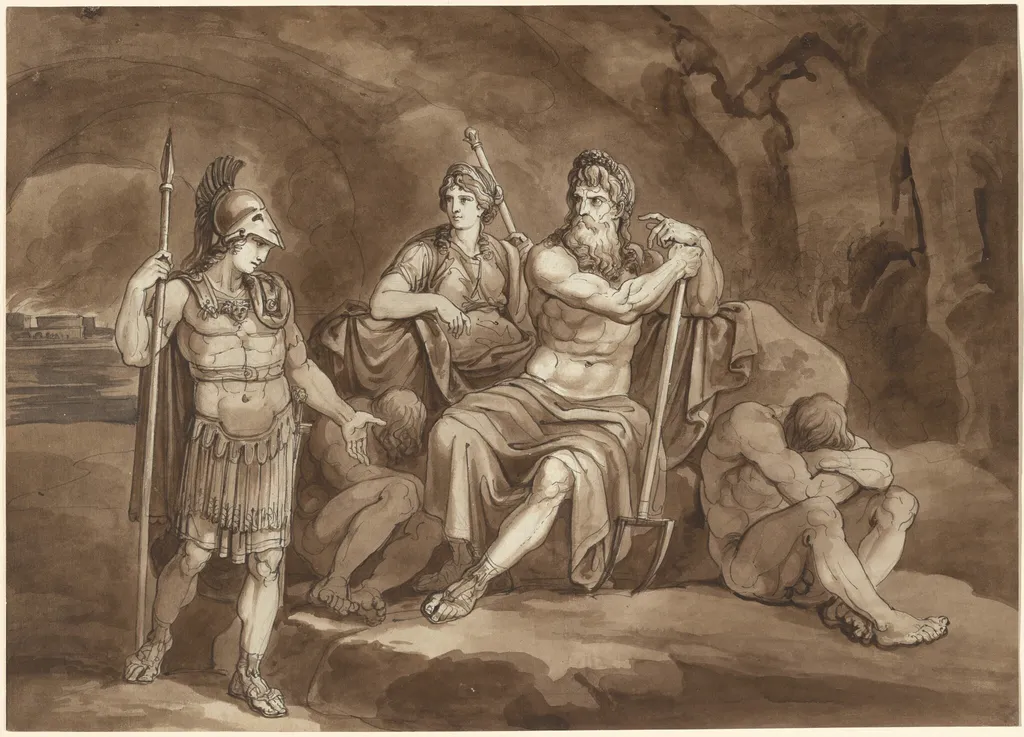
Telemachus Requests Permission from Pluto to Seek His Father in the Underworld is an ink drawing by the Romanticist artist Bartolomeo Pinelli. It dates from 1809 and is held in the collection of the National Gallery of Art.
About this work
Overview
Telemachus Requests Permission from Pluto to Seek His Father in the Underworld is a drawing by Bartolomeo Pinelli, executed in 1809, utilizing pen and brown ink, brown and gray wash, and graphite on heavy laid paper.
Subject & Meaning
The drawing depicts a pivotal mythological scene where Telemachus, in a submissive kneeling pose, petitions Pluto, the underworld's god, for permission to search for his father. The composition conveys a sense of tense drama, juxtaposing Telemachus's supplication with Pluto's calm yet authoritative demeanor.
Technique & Style
Pinelli's technique is characterized by crisp, controlled lines, indicative of meticulous planning, often a precursor to larger works. The use of cross-hatching is notable for its role in sculpting the figures' forms, while the brown and gray wash adds depth to the monochrome piece without introducing color.
History & Provenance
Created in 1809, the drawing reflects Pinelli's affinity for mythological themes, a common subject matter in his oeuvre. Specific provenance details are not provided.
Context
This work sits within the broader context of early 19th-century artistic engagements with classical mythology. Pinelli's approach, with its emphasis on linearity and dramatic composition, aligns with contemporary artistic interpretations of ancient themes.
Legacy
While specific legacy details of this piece are not outlined, it contributes to the understanding of Pinelli's artistic process, particularly in how drawings like this might have served as precursors or studies for more substantial, possibly painted, works exploring mythological narratives.
Artist & collection


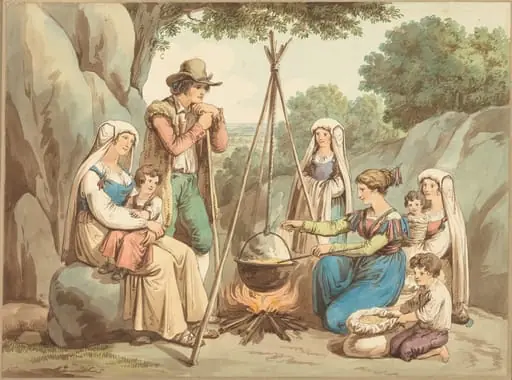 A Peasant Family Cooking over a Campfire
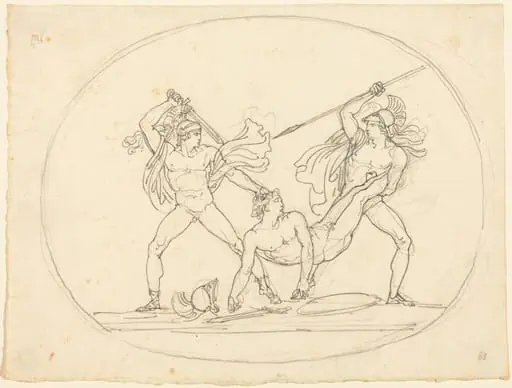 Two Ancient Warriors Fighting over a Dead Comrade
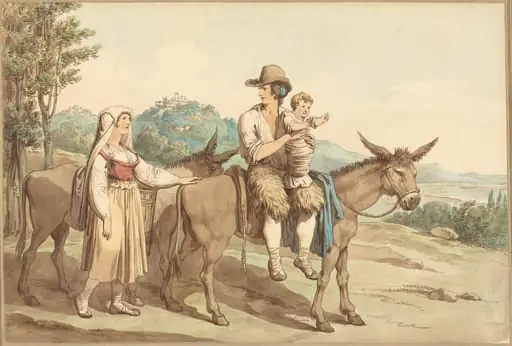 A Peasant Family and Two Donkeys
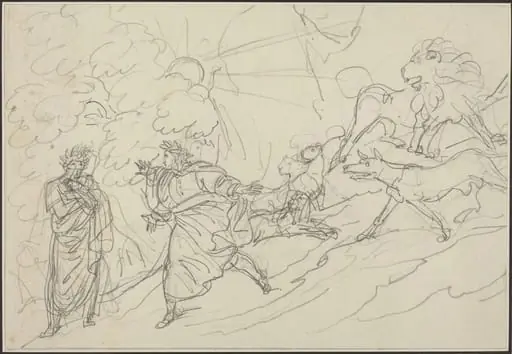 Dante Flees the Wild Beasts and Meets Virgil
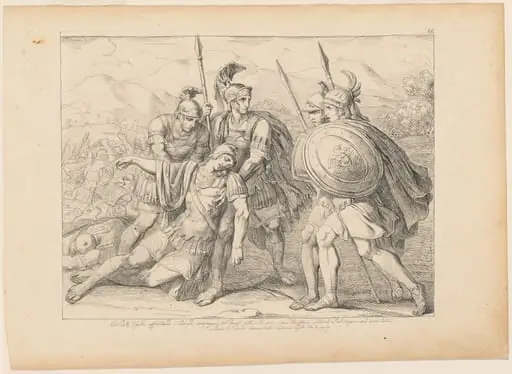 The Death of Lausus
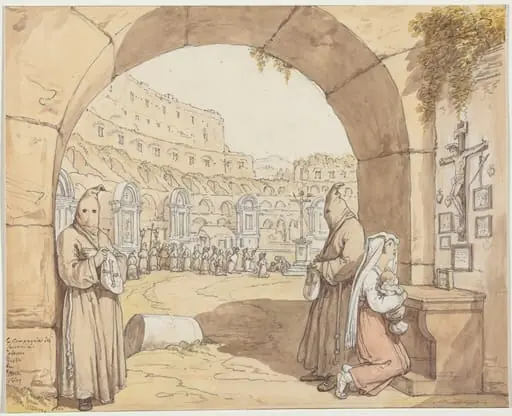 La Compagnia dei sacconi al Colosseo (Penitents Praying at Altars in the Colosseum)
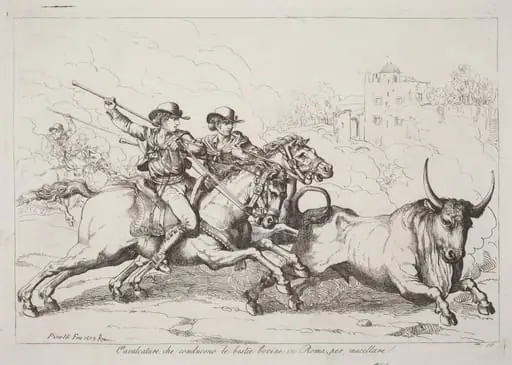 Cavalcature che conducono le bestie bovine in Roma, per macellare (Cattle Driven to the Slaughter in Rome) (Plate 16)
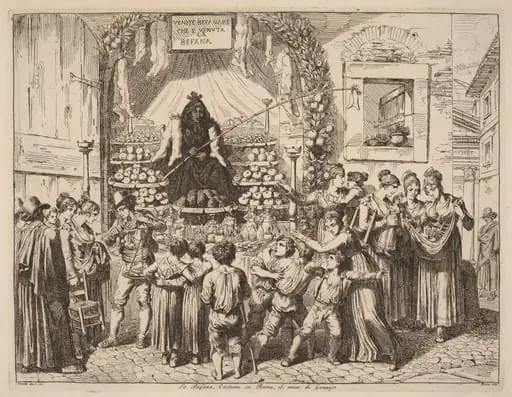 La Befana
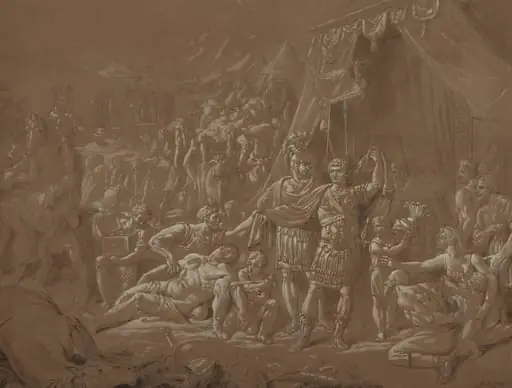 A Scene from the Life of Trajan
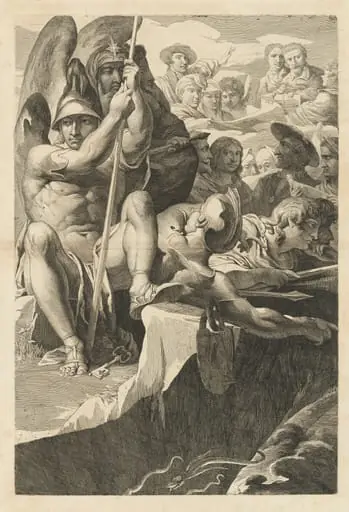 The Angelic Guards
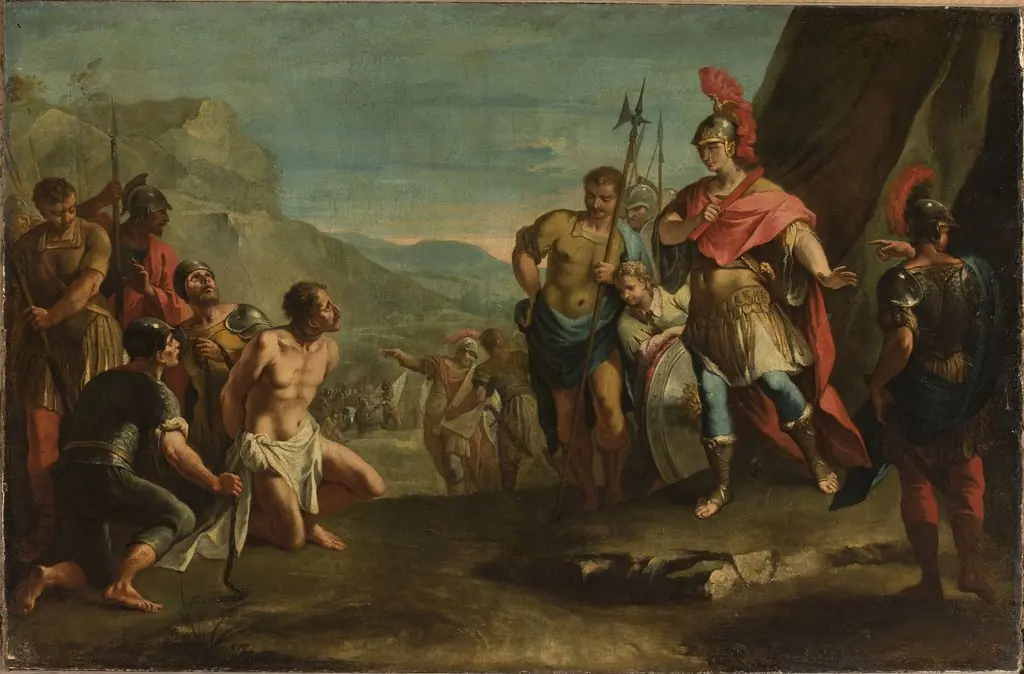 Killer of Darius before Alexander (King Porus and Alexander the Great)
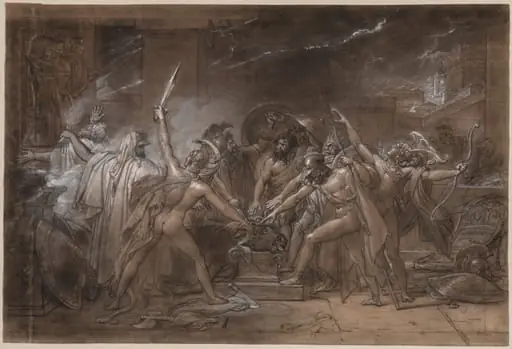 The Oath of the Seven Chiefs against Thebes
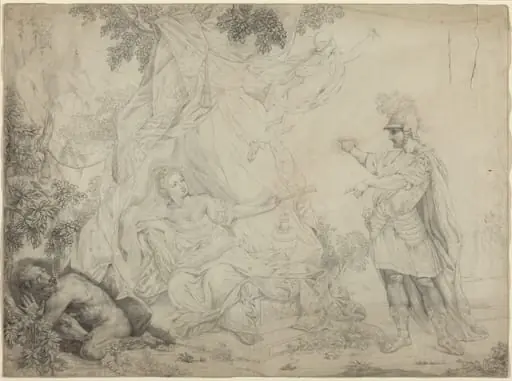 Circe and Ulysses
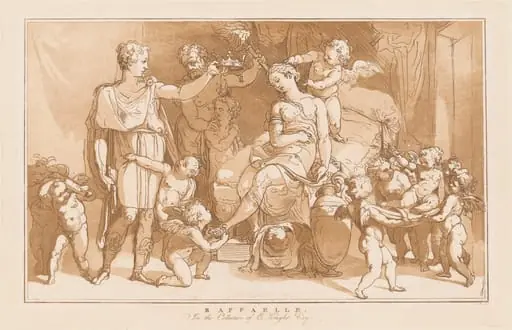 The Marriage of Alexander and Roxana
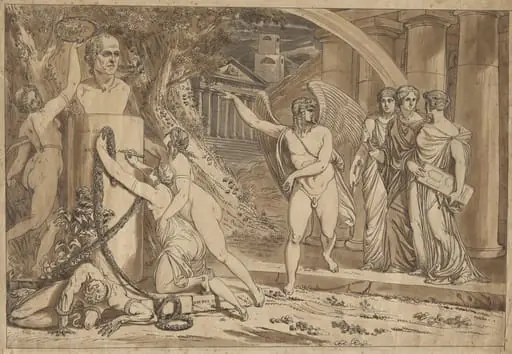 Virtues Crowning the Bust of Canova
 Pan and Syrinx
 Hannibal Swearing Eternal Enmity toward Rome
 Alexander Condemning False Praise
 Diogenes in His Tub with Alexander and His Generals