Artwork
Saint Ambrose from Milan
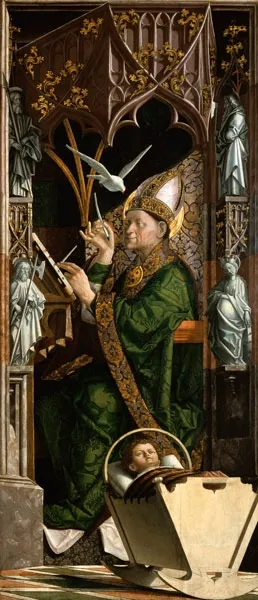
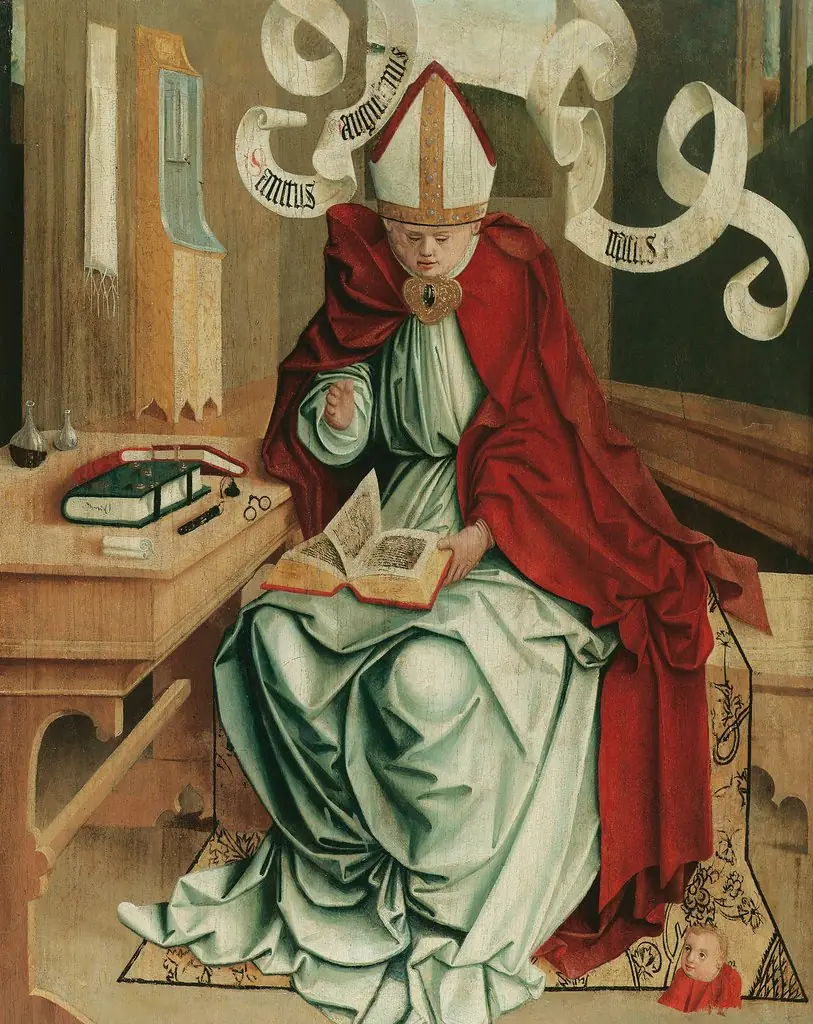
Saint Ambrose from Milan is an oil painting by the Northern Renaissance artist Michael Pacher. It dates from 1490 and is held in the collection of the Bavarian State Painting Collections.
About this work
Overview
Executed in the Northern Renaissance style, the work now belongs to the collection of the Alte Pinakothek.
Created around 1490, this wooden panel by Michael Pacher portrays Saint Ambrose of Milan. Executed in the Northern Renaissance style, the work now belongs to the collection of the Alte Pinakothek. The figure is presented in vivid green vestments topped by a tall white mitre, holding a book and crozier, set against an ornate gold‑leaf frame that encloses a scene of a corpse on a cloth‑covered table.
Subject & Meaning
The central figure is Saint Ambrose, the fourth bishop of Milan, traditionally shown with the symbols of his episcopal authority—a book representing his theological writings and a staff denoting his pastoral role. The presence of a lifeless body on the altar table alludes to the saint’s role as a judge of souls, reinforcing themes of mortality and divine intercession common in late medieval devotional imagery.
Technique & Style
Pacher employed a combination of painting on wood and gilded framing, integrating chiaroscuro to model the saint’s face and drapery. Darkened areas recede while the gold leaf and bright green pigments catch the light, creating a contrast typical of Northern Renaissance works that blend detailed realism with decorative opulence. The gold‑patterned robes and intricate carving of angels further emphasize the piece’s hybrid painter‑sculptor approach.
History & Provenance
Michael Pacher, a Tyrolean artist known for both painting and sculpture, produced this panel as part of a larger altarpiece commission in the late fifteenth century. After its original ecclesiastical setting, the work entered the collection of the Alte Pinakothek in Munich, where it has been displayed as an example of the artist’s synthesis of Germanic and Italian Renaissance influences.
Context
The panel reflects the Northern Renaissance’s interest in importing Italian compositional techniques while retaining local iconographic traditions. Pacher’s use of wood as a support aligns with the Germanic practice of creating portable devotional panels, and his attention to realistic detail combined with elaborate gilded framing illustrates the transitional aesthetic of late medieval Bavaria and Tyrol.
Artist & collection
Artist
Michael Pacher (c. 1435 – August 1498) was a painter and sculptor from Tyrol active during the second half of the fifteenth century. He was one of the earliest artists to introduce the principles of Renaissance painting…

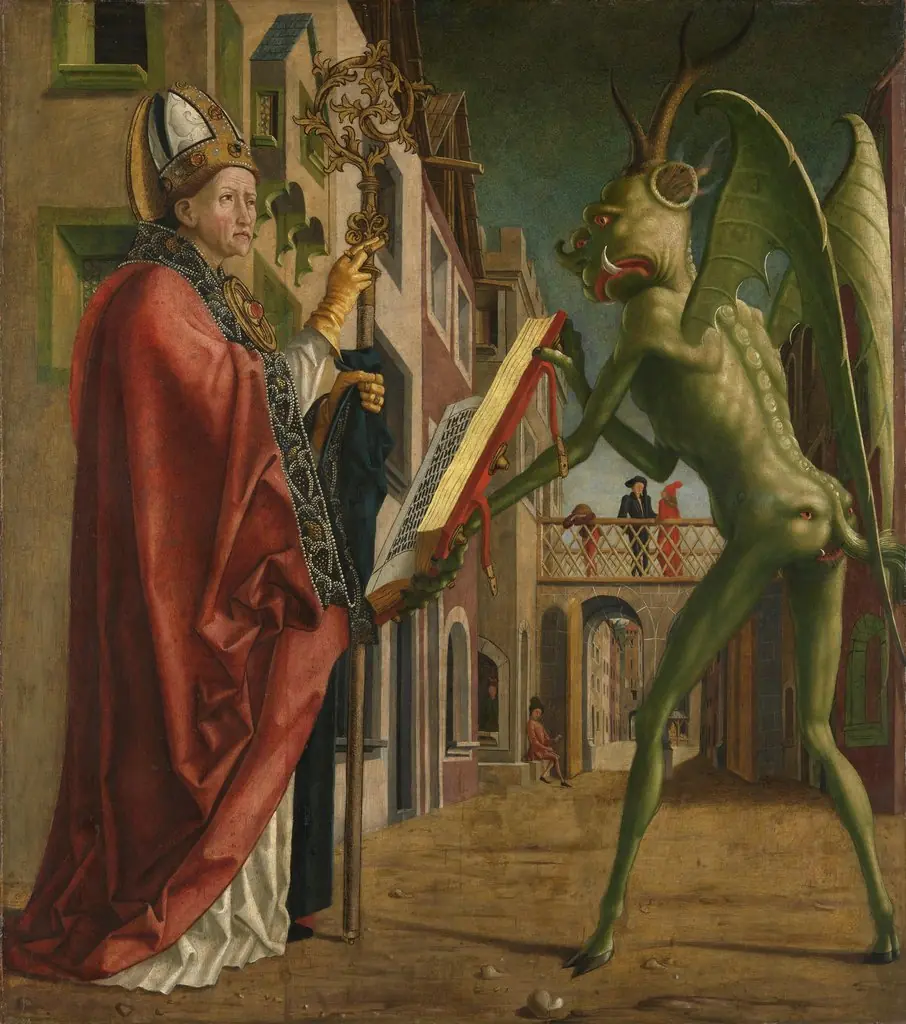 Kirchenväteraltar, Flügelaußenseite: Der Teufel weist dem hl. Augustinus das Buch der Laster vor
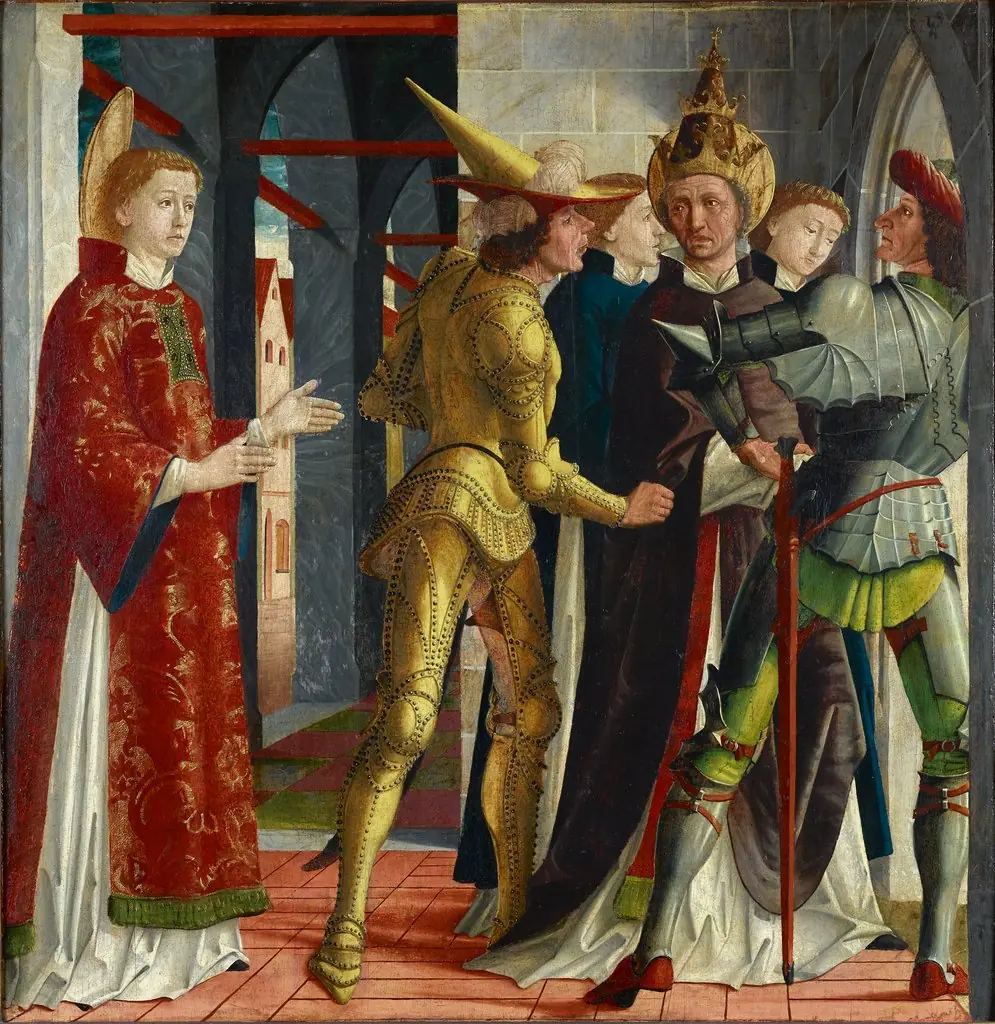 Pope Sixtus II. bids farewell to St. Lawrence
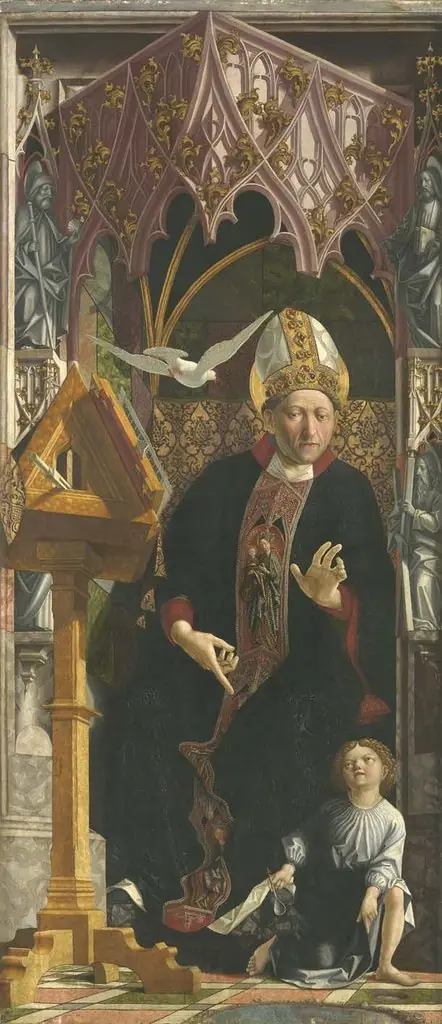 Kirchenväteraltar: Hl. Augustinus
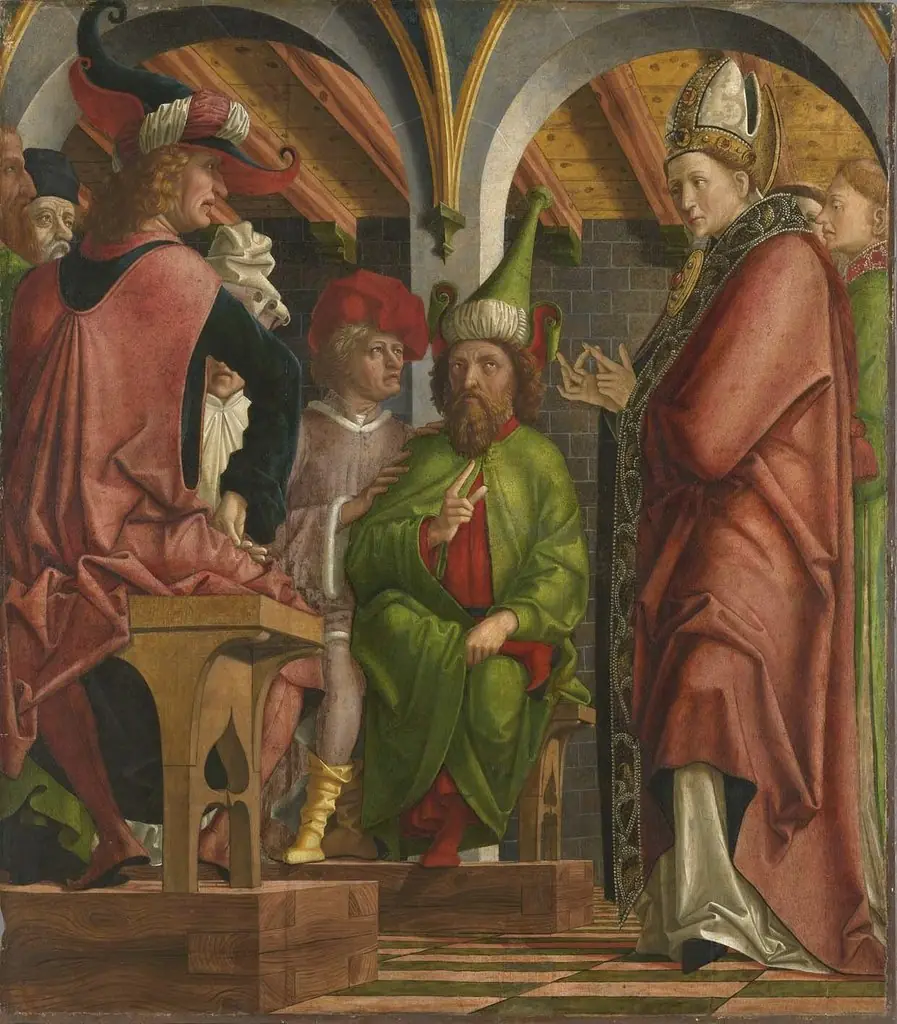 Kirchenväteraltar, Flügelaußenseite: Disputation des hl. Augustinus mit den Häretikern
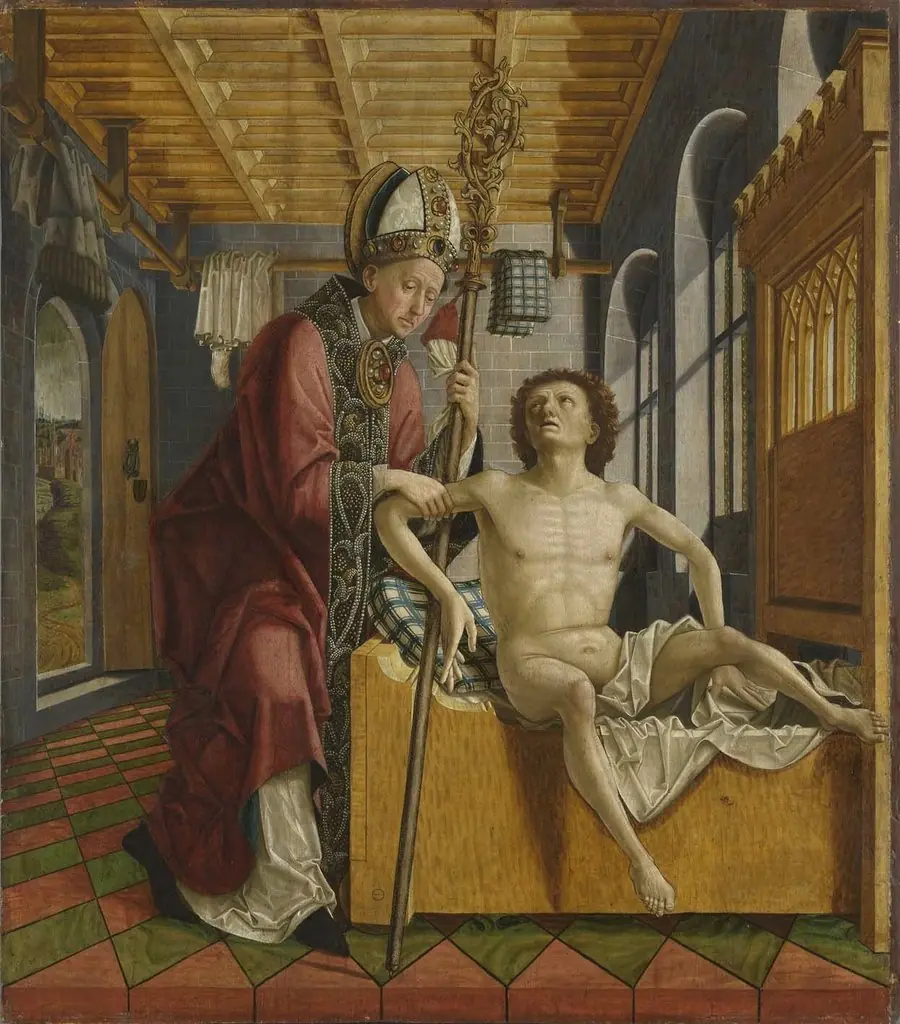 Kirchenväteraltar, Flügelaußenseite: Der hl. Augustinus heilt den Stiftsprobst
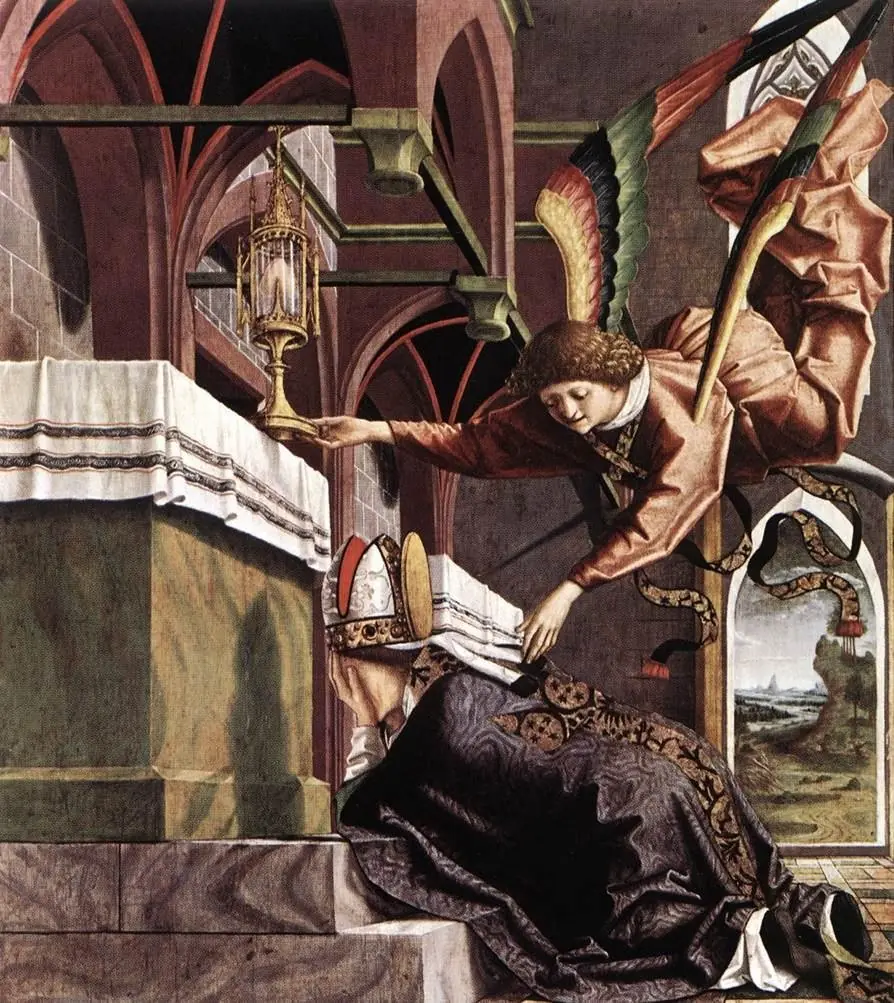 Altarpiece of the Church Fathers: Vision of St Sigisbert
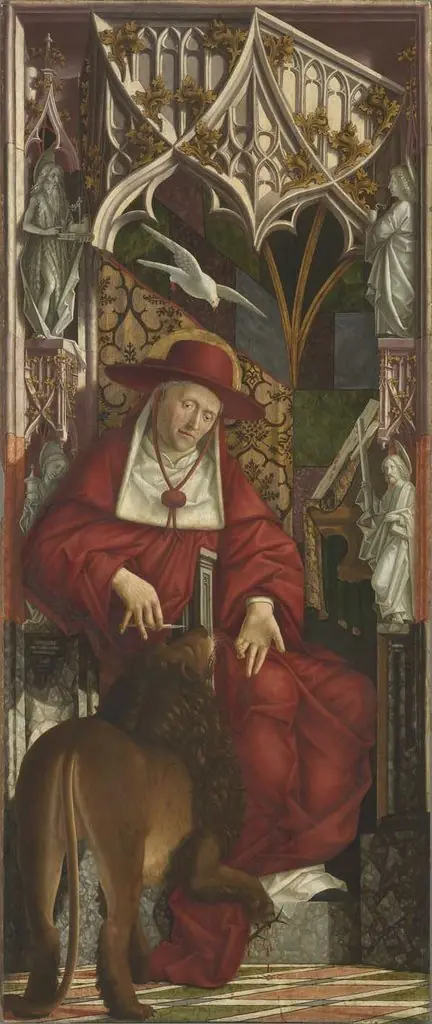 Kirchenväteraltar: Hl. Hieronymus
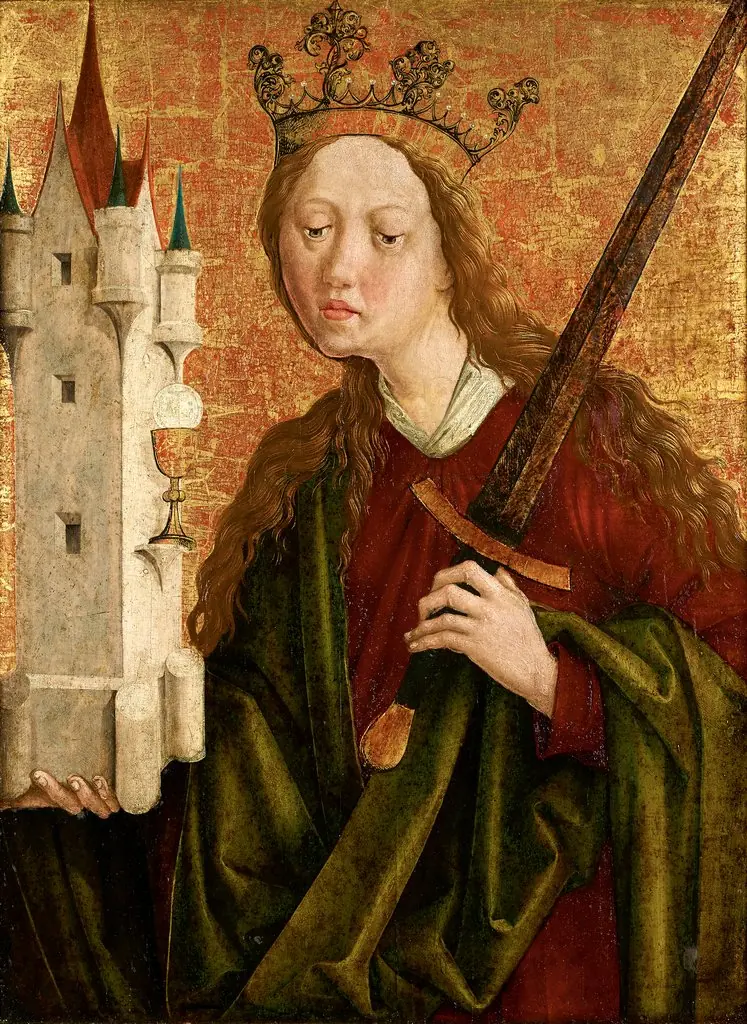 St. Barbara
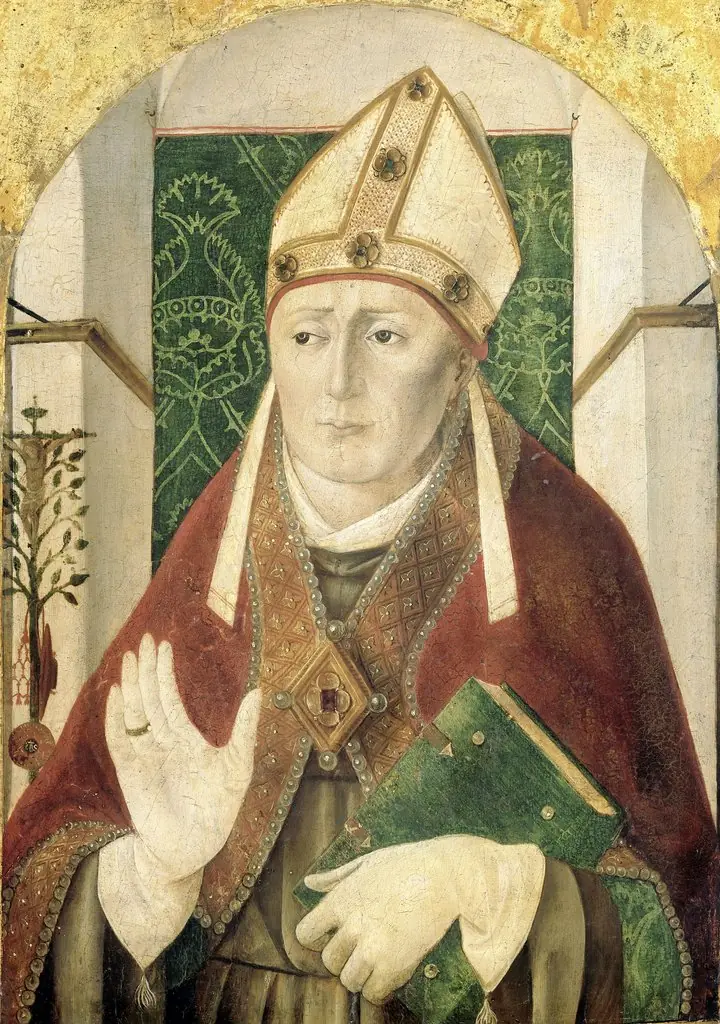 St Bonaventure
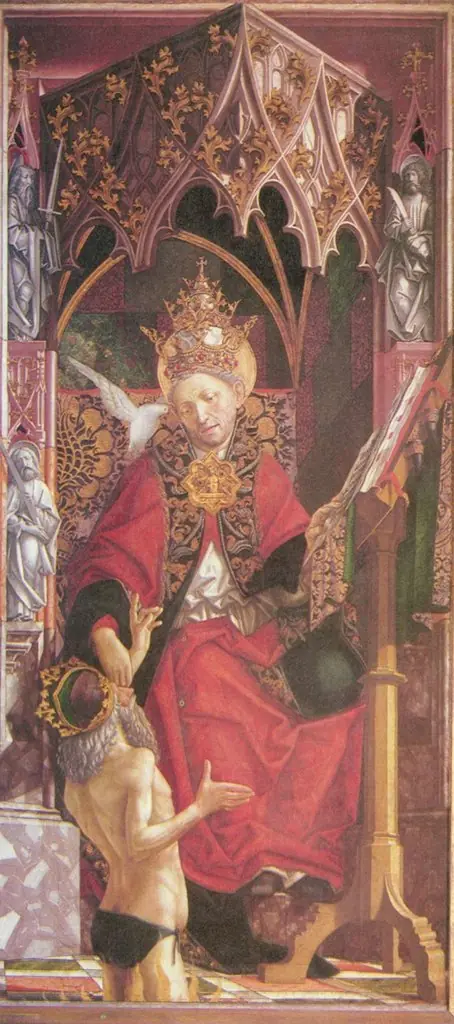 Kirchenväteraltar: Papst Gregor der Große
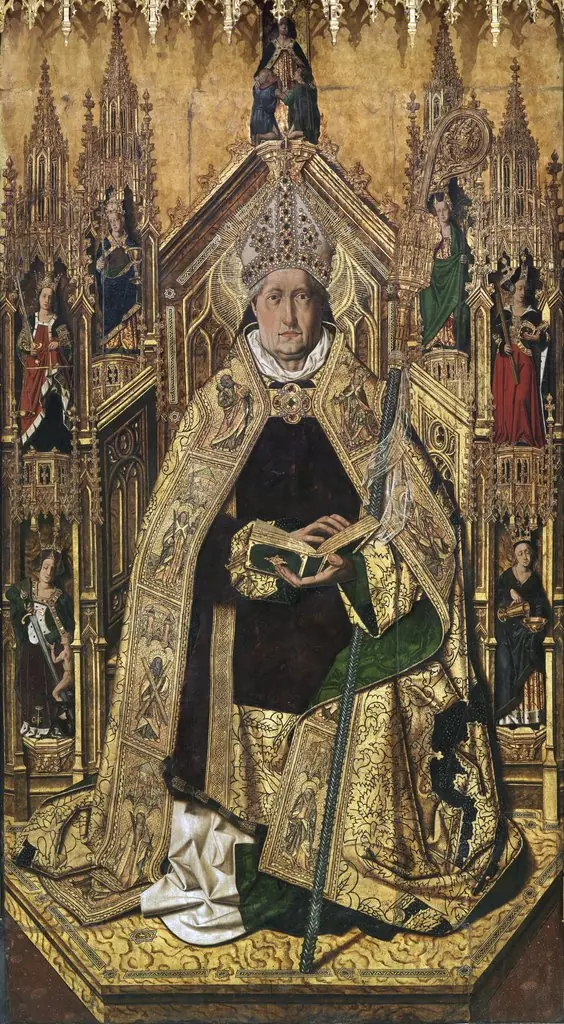 Santo Domingo de Silos entronizado como obispo, de Bartolomé Bermejo (Museo del Prado)
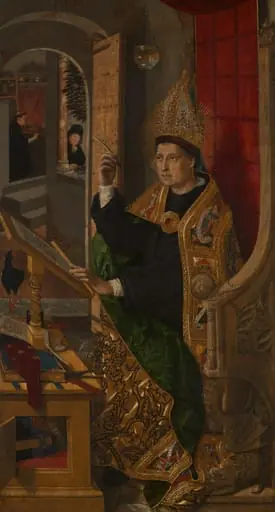 A Bishop Saint
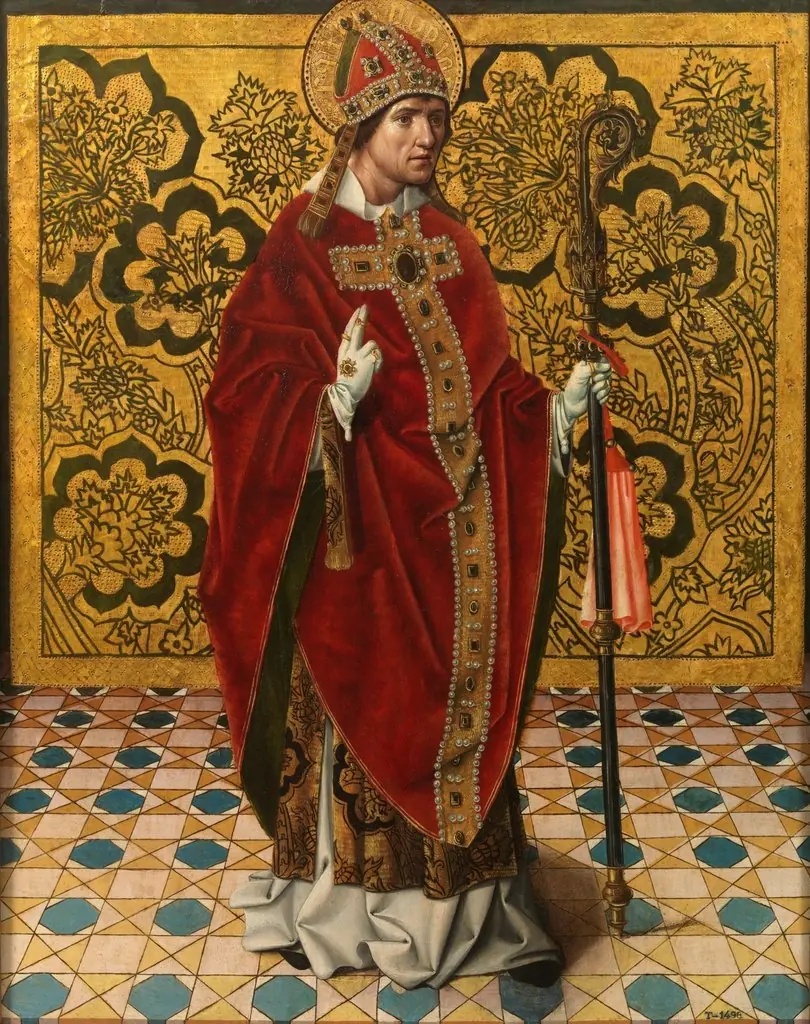 Saint Gregory
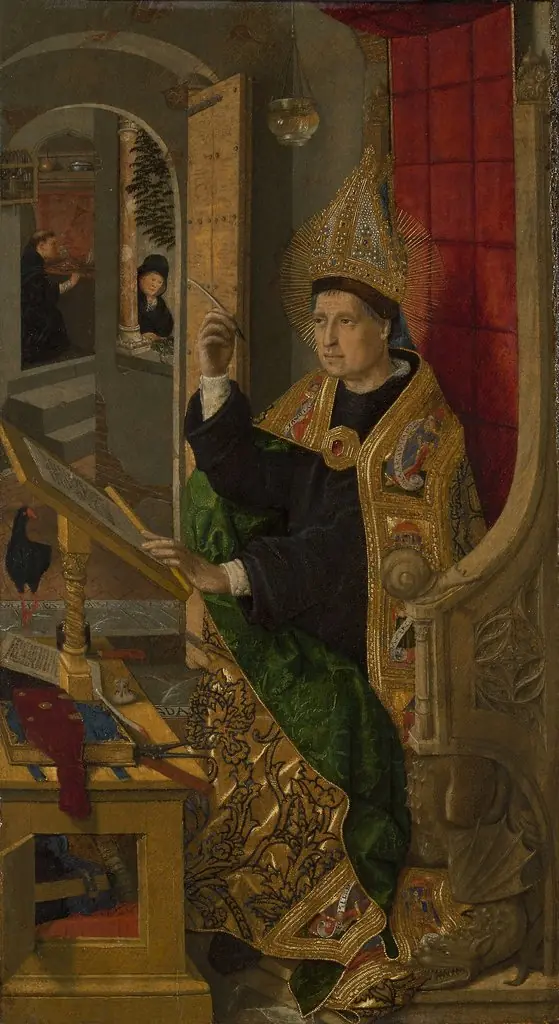 Saint Augustine
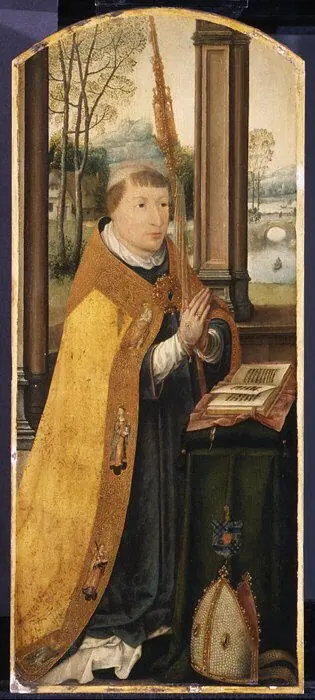 Charles Coguin, Abbot of Anchin
 Hl. Augustinus
 Pilate Washing his Hands and Saint Martin of Tours with a Beggar and the Donor
 Portrait of St Nicholas
 Saint Ambrose and Saint Augustine