Artwork
Kirchenväteraltar: Papst Gregor der Große
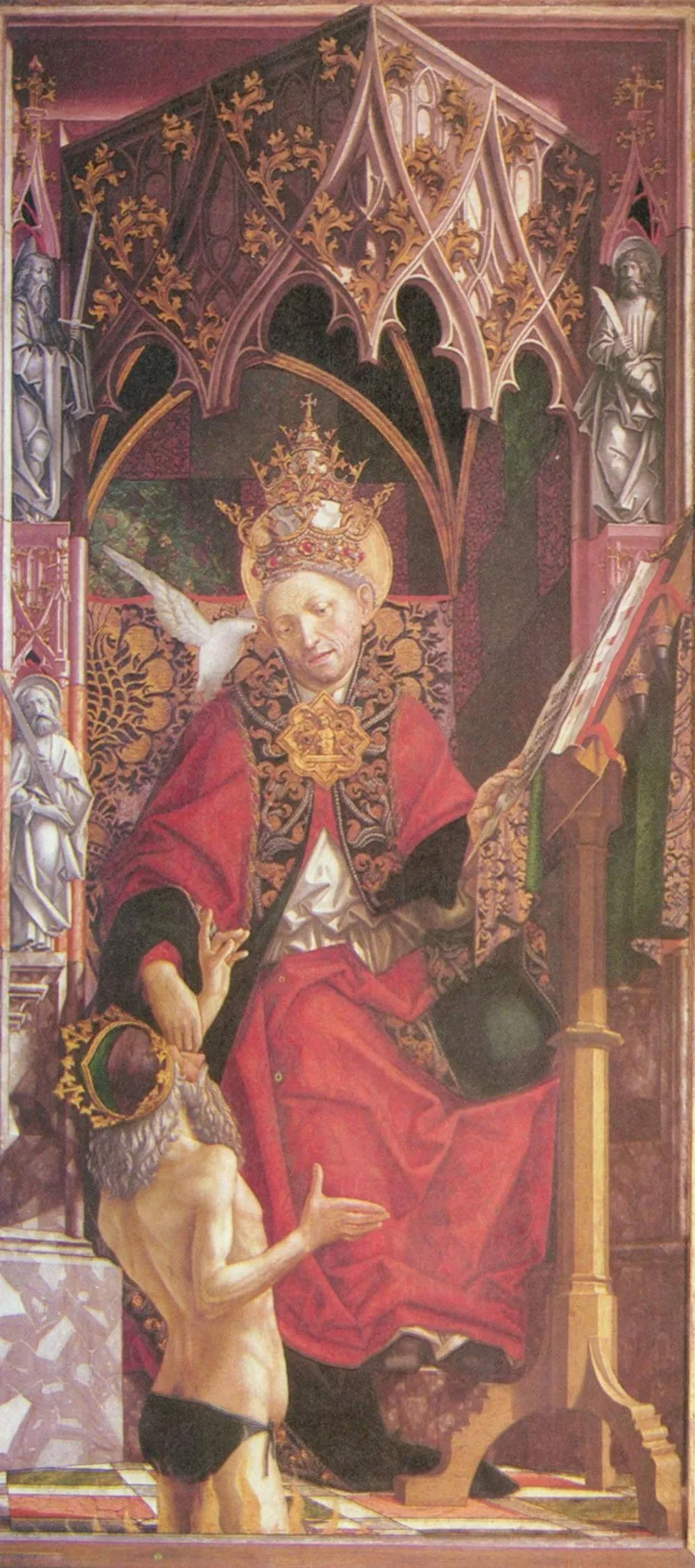
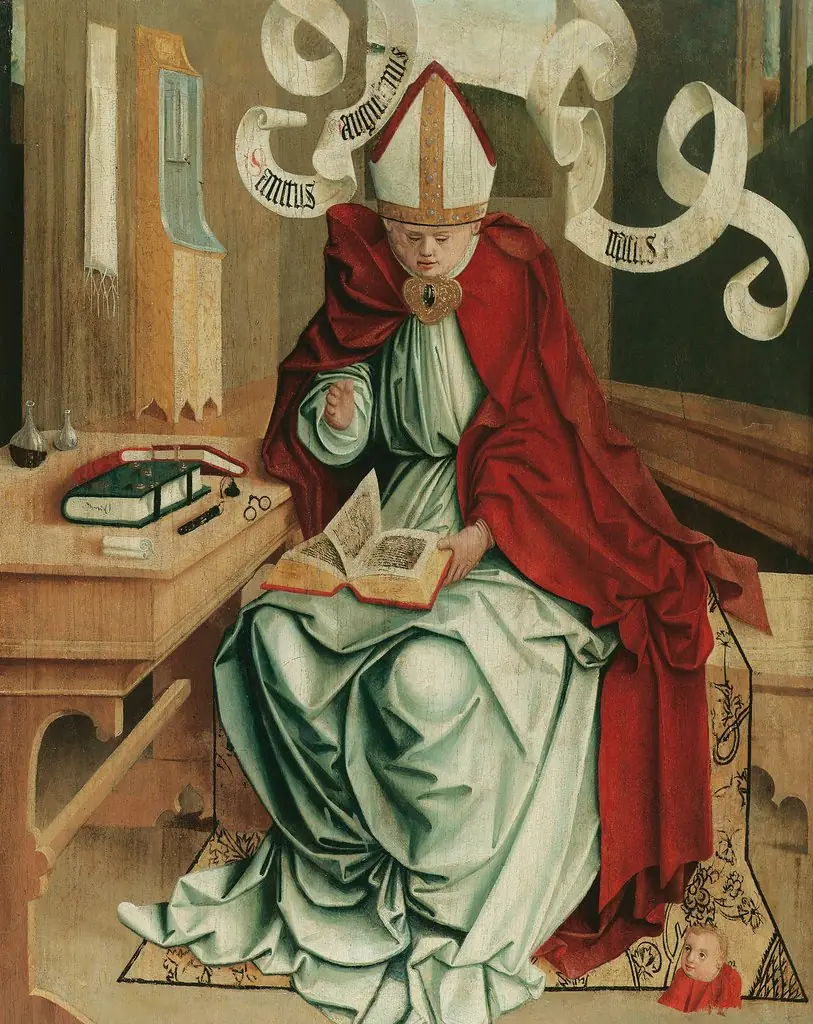
Kirchenväteraltar: Papst Gregor der Große is a wood painting by the Early Renaissance artist Michael Pacher. It dates from 1471 and is held in the collection of the Bavarian State Painting Collections.
About this work
Overview
Created in 1471, the Kirchenväteraltar portraying Pope Gregory the Great is a wooden altarpiece painted by Michael Pacher, a Tyrolean artist active in the late fifteenth century. The work combines sculptural carving with painted surface, forming a unified devotional object that originally functioned within a church setting. It is now part of the Alte Pinakothek’s collection.
Subject & Meaning
The central figure is Pope Gregory the Great, shown in richly embroidered red robes, a gold crown set with red gems, and a scepter, emphasizing his papal authority. He is flanked by smaller statuary figures rendered in various poses, suggesting a narrative of ecclesiastical hierarchy and the saint’s intercessory role.
Technique & Style
The painted surface displays a restrained palette of earth tones and gold highlights, while careful modeling of textures—fabric, metal, and stone—creates depth.
Pacher employed a meticulous approach that blends painted illusionism with three‑dimensional carving. The painted surface displays a restrained palette of earth tones and gold highlights, while careful modeling of textures—fabric, metal, and stone—creates depth. Architectural motifs such as pointed arches and intricate tracery frame the scene, reflecting early Renaissance interests in perspective and realism within a Germanic visual tradition.
History & Provenance
The altarpiece was produced as part of Pacher’s larger program of wood‑based ecclesiastical commissions. After serving its original liturgical function, the piece entered the collection of the Alte Pinakothek, where it remains on display as an example of early Renaissance synthesis of painting and sculpture in northern Europe.
Context
Pacher’s work marks a transitional moment when Renaissance principles—such as naturalistic rendering and spatial coherence—were being incorporated into the German artistic milieu. The Kirchenväteraltar illustrates how regional artists adapted Italian innovations while retaining local devotional formats, contributing to the broader diffusion of Renaissance aesthetics across the Alps.
Artist & collection
Artist
Michael Pacher (c. 1435 – August 1498) was a painter and sculptor from Tyrol active during the second half of the fifteenth century. He was one of the earliest artists to introduce the principles of Renaissance painting…

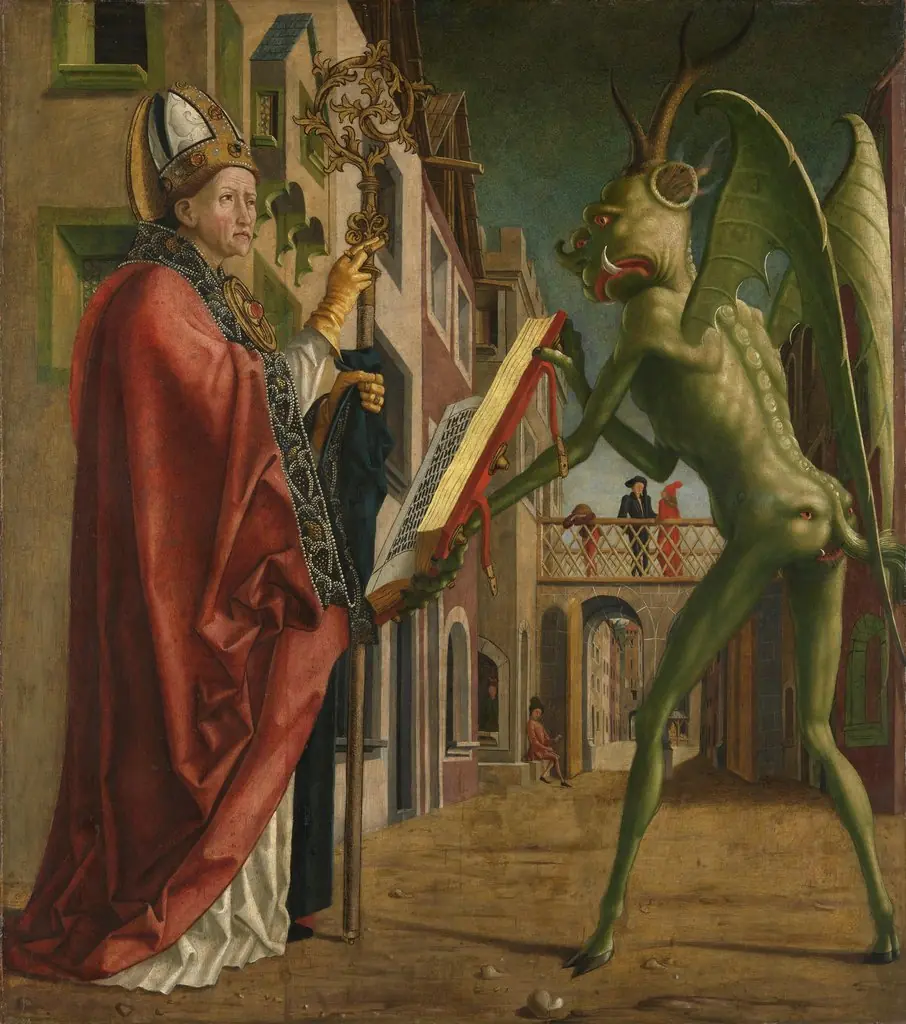 Kirchenväteraltar, Flügelaußenseite: Der Teufel weist dem hl. Augustinus das Buch der Laster vor
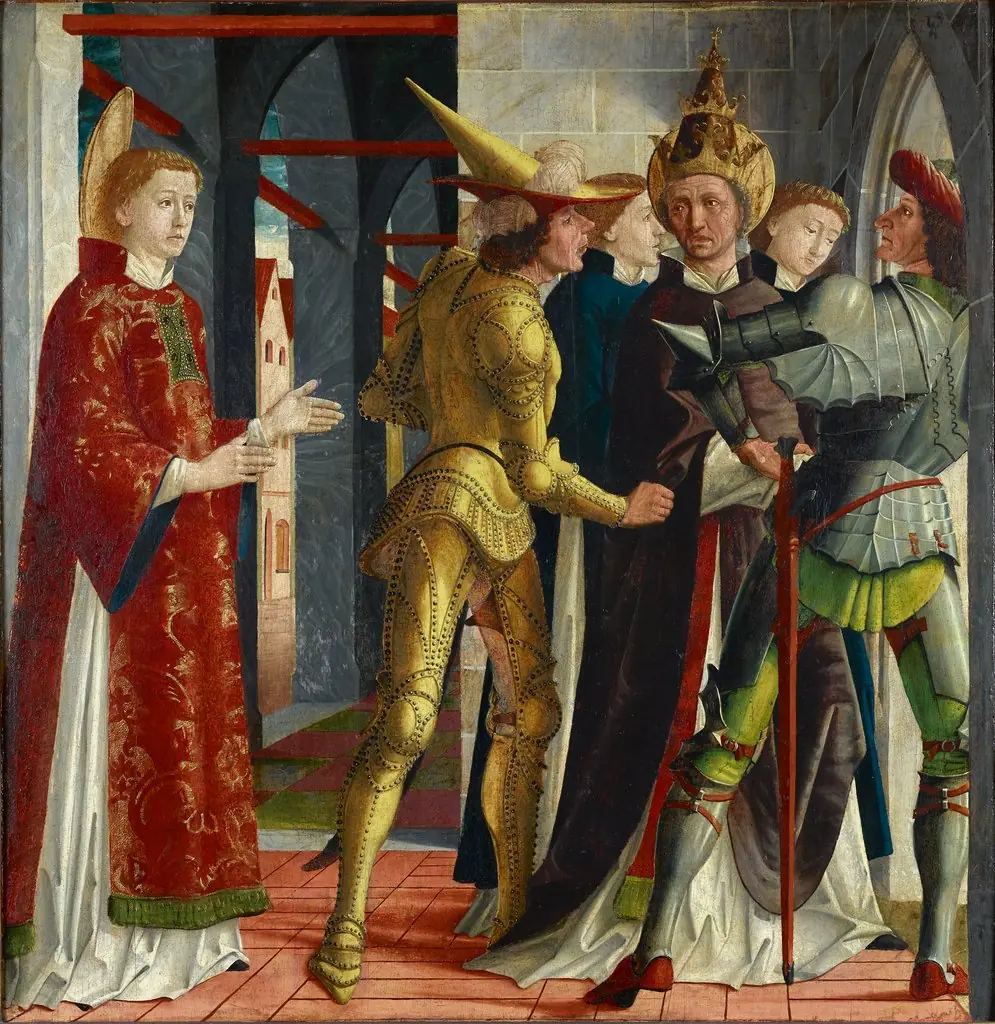 Pope Sixtus II. bids farewell to St. Lawrence
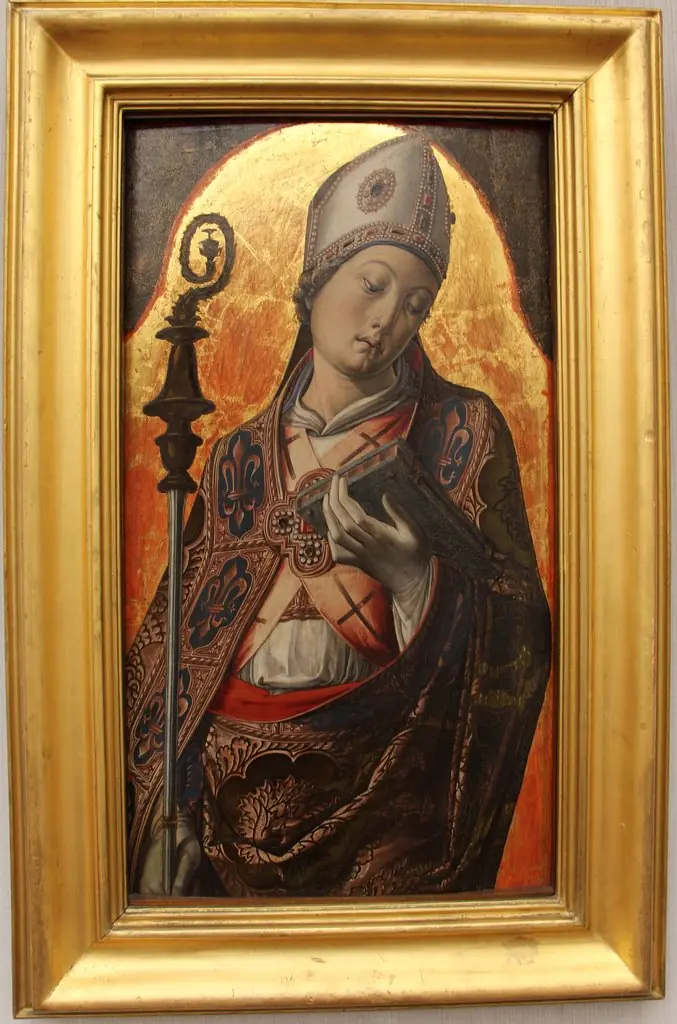
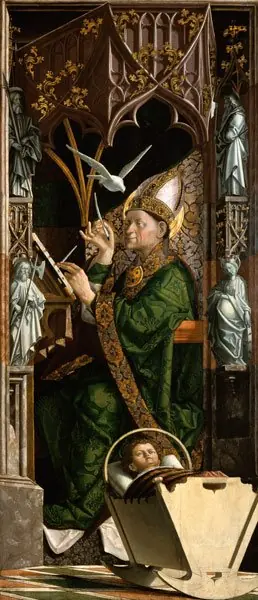 Saint Ambrose from Milan
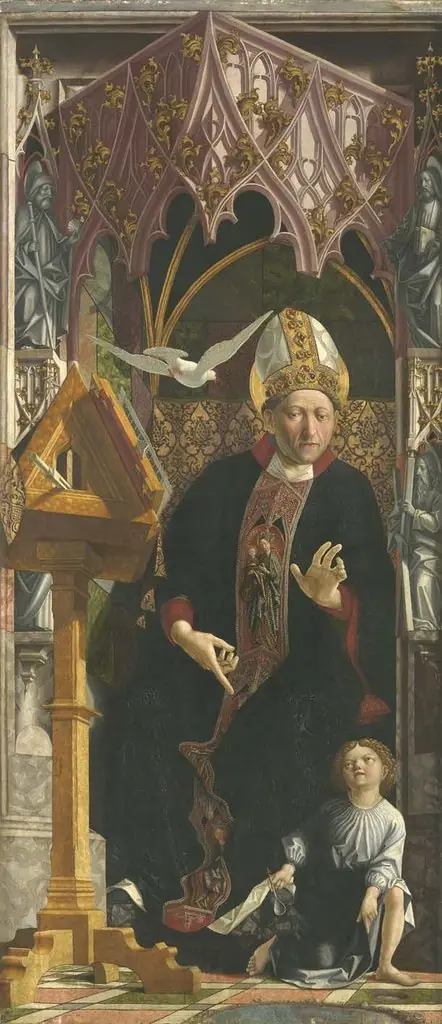 Kirchenväteraltar: Hl. Augustinus
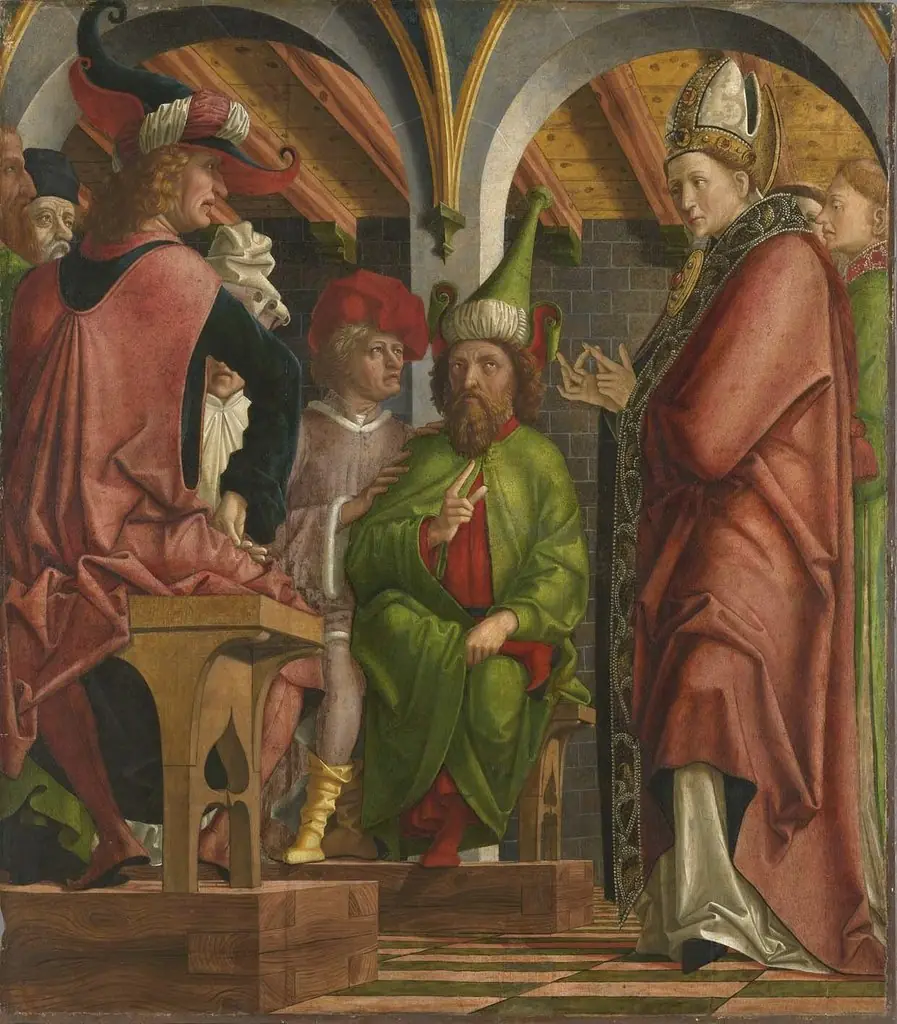 Kirchenväteraltar, Flügelaußenseite: Disputation des hl. Augustinus mit den Häretikern
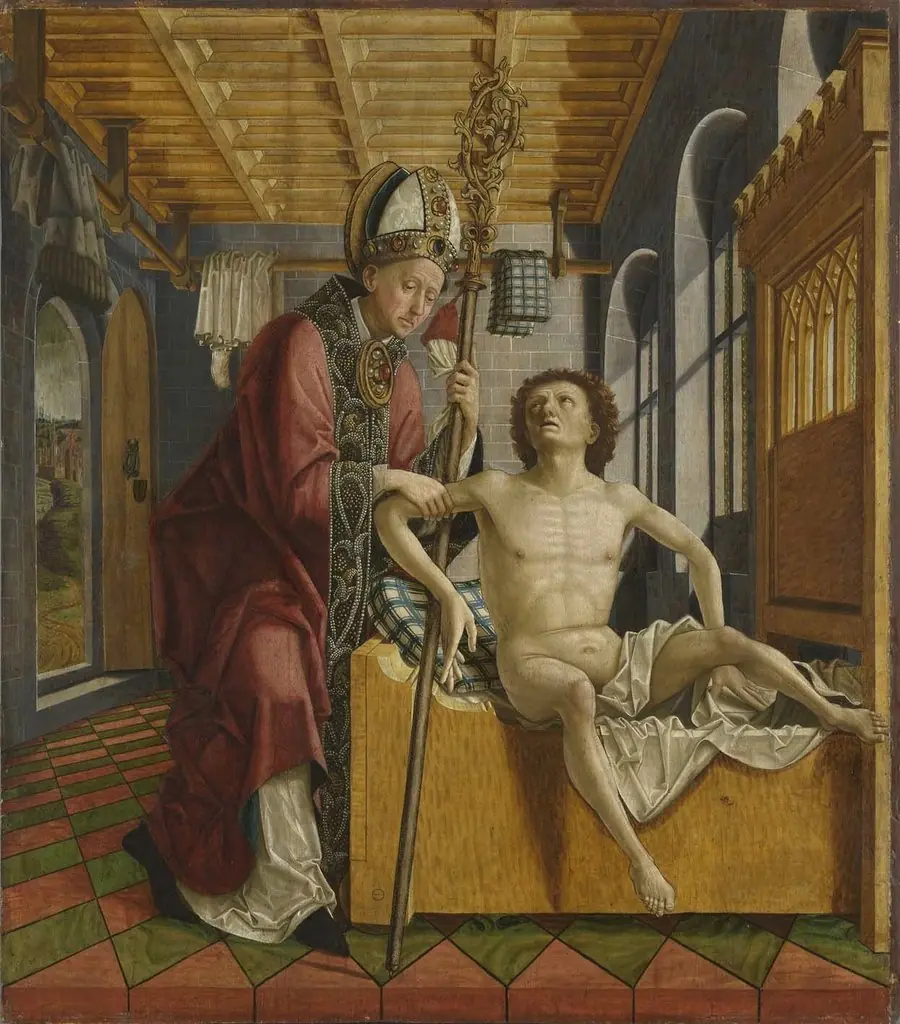 Kirchenväteraltar, Flügelaußenseite: Der hl. Augustinus heilt den Stiftsprobst
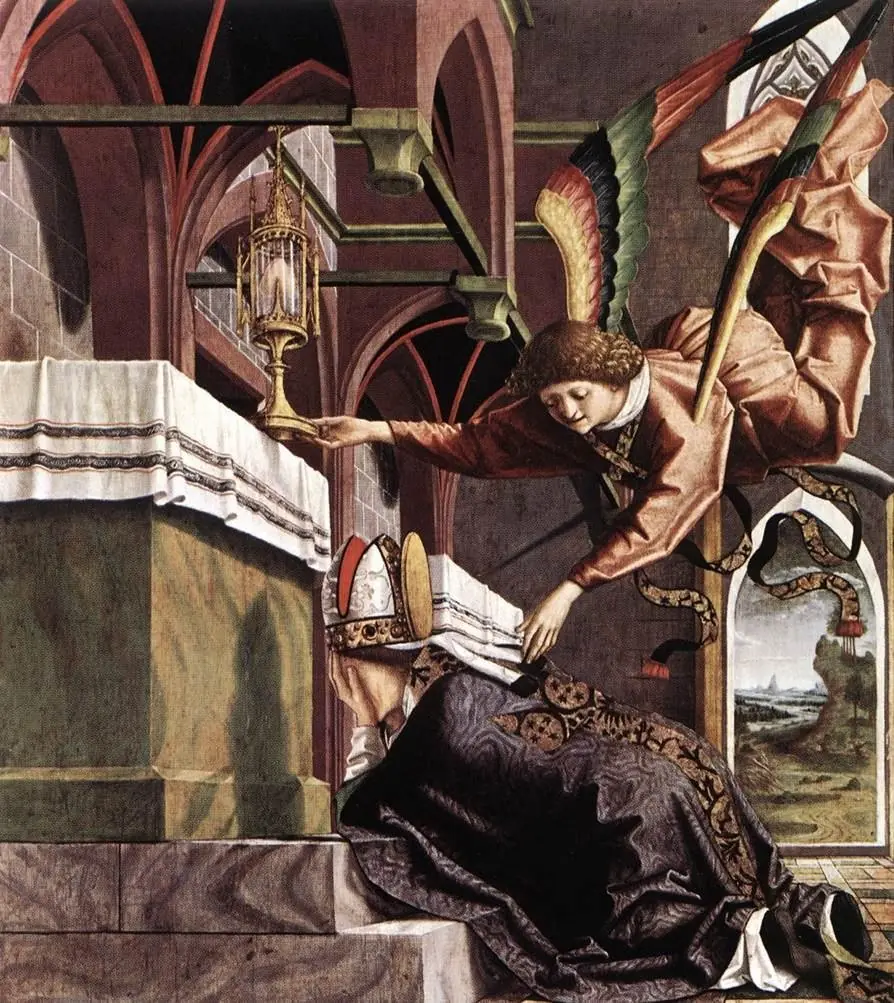 Altarpiece of the Church Fathers: Vision of St Sigisbert
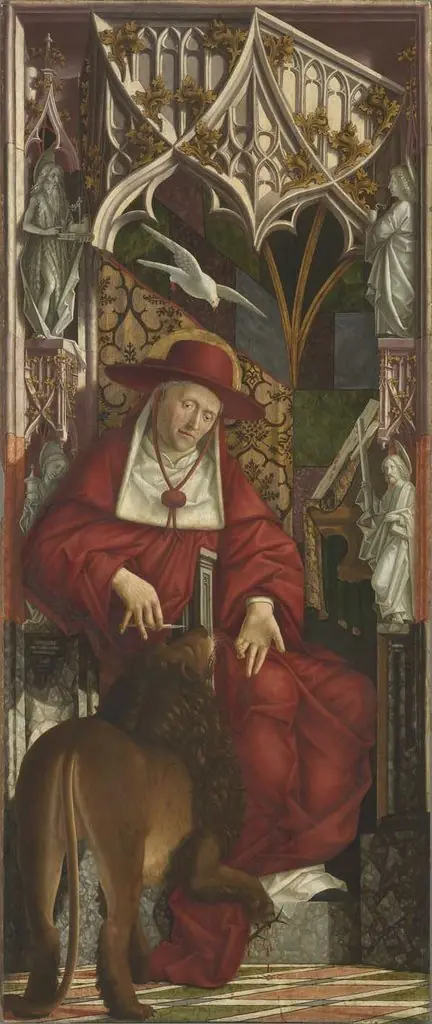 Kirchenväteraltar: Hl. Hieronymus