Artwork
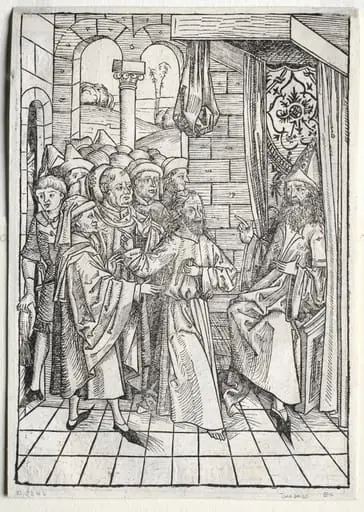
Der Schatzbehalter: Moses Found by Pharaoh's Daughter (recto); Der Schatzbehalter: Christ before Caiaphas (verso)
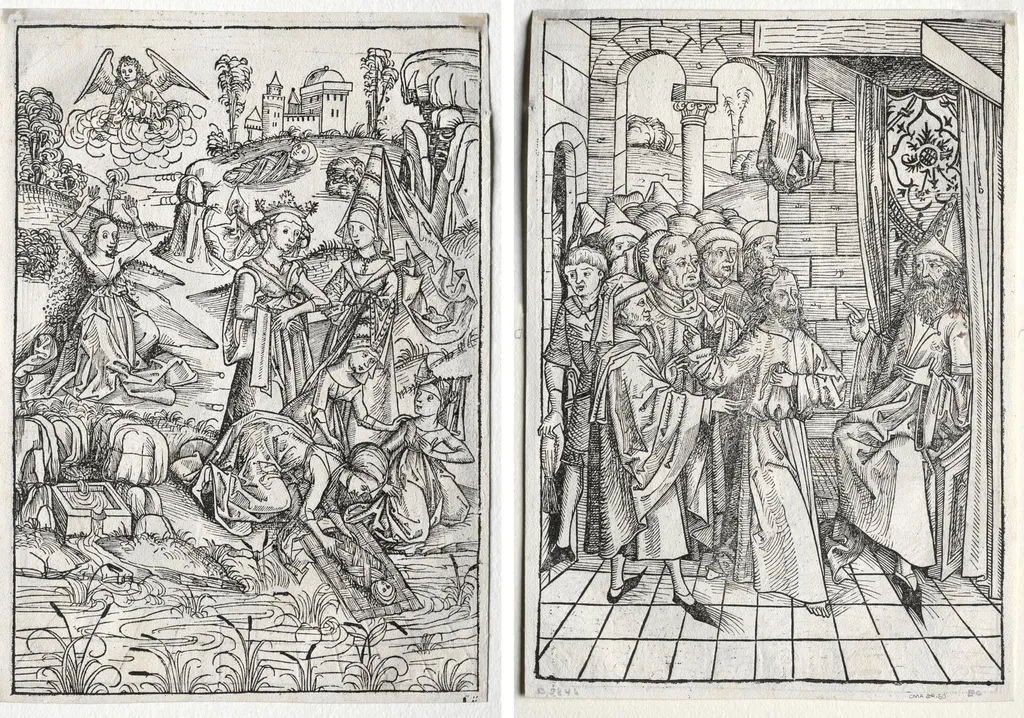
Der Schatzbehalter: Moses Found by Pharaoh's Daughter (recto); Der Schatzbehalter: Christ before Caiaphas (verso) is a print by the Renaissance artist Michael Wolgemut. It dates from 1491 and is held in the collection of the Cleveland Museum of Art.
About this work
Overview
Produced in Wolgemut’s Nuremberg workshop, it reflects the period’s demand for devotional imagery.
Created in 1491 by Michael Wolgemut, this double-sided woodcut panel pairs two biblical narratives: the discovery of Moses by Pharaoh’s daughter on the recto and Christ’s interrogation before Caiaphas on the verso. Produced in Wolgemut’s Nuremberg workshop, it reflects the period’s demand for devotional imagery. The work’s dual-sided format suggests use in private devotion or liturgical contexts, where flipping the panel could shift focus between Old and New Testament themes.
Subject & Meaning
The recto illustrates Moses’ rescue from the Nile, emphasizing divine providence through the intervention of an Egyptian royal woman. The verso portrays Christ’s trial, highlighting tension between authority and truth. Together, the scenes frame salvation history: Moses as precursor to Christ, both figures marked by peril and divine purpose. The pairing invites contemplation of continuity between covenant and fulfillment, a common theological motif in late medieval Germany.
Technique & Style
Wolgemut employed fine, controlled lines typical of late Gothic woodcut printing, with careful attention to drapery, facial expression, and spatial arrangement. Figures are arranged in distinct groups, their gestures conveying narrative tension. While not using chiaroscuro in the Renaissance sense, the contrast between dense shadowed areas and open spaces creates depth. The precision of the carving suggests collaboration with skilled artisans within his workshop.
History & Provenance
The panel emerged from Wolgemut’s prolific workshop, known for producing religious prints for both ecclesiastical and private patrons. Its survival in a single, intact double-sided form is rare, as such objects were often separated or worn down through use. Early records link it to Nuremberg collections, though its exact path from the 15th century to modern holdings remains partially undocumented.
Context
In late 15th-century Nuremberg, religious imagery served both devotional and didactic roles. Wolgemut’s workshop catered to a growing literate middle class seeking accessible biblical scenes. The pairing of Moses and Christ aligns with contemporary sermons and illustrated Bibles that emphasized typology—Old Testament events as foreshadowings of New Testament truths. Woodcuts like this were more affordable than paintings, expanding access to sacred narratives.
Legacy
Wolgemut’s workshop trained Albrecht Dürer, whose later prints would refine the techniques seen here. While this panel lacks the expressive intensity of Dürer’s mature work, it exemplifies the technical foundation he inherited. The double-sided format influenced later devotional objects, and its preservation offers insight into how religious narratives were visually structured for private contemplation before the Reformation.
Artist & collection
Artist
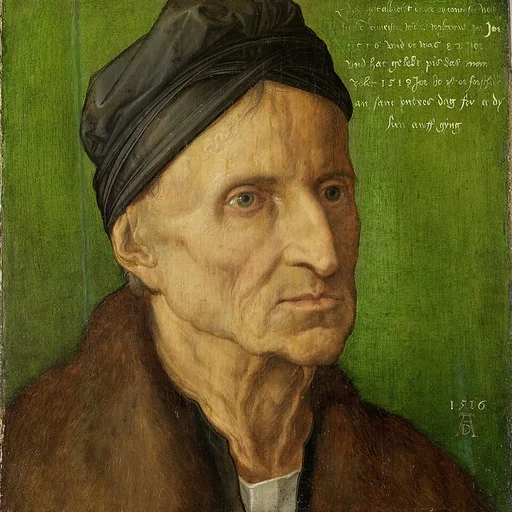
Michael Wolgemut (formerly spelt Wohlgemuth; 1434 – 30 November 1519) was a German painter and printmaker, who ran a workshop in Nuremberg.

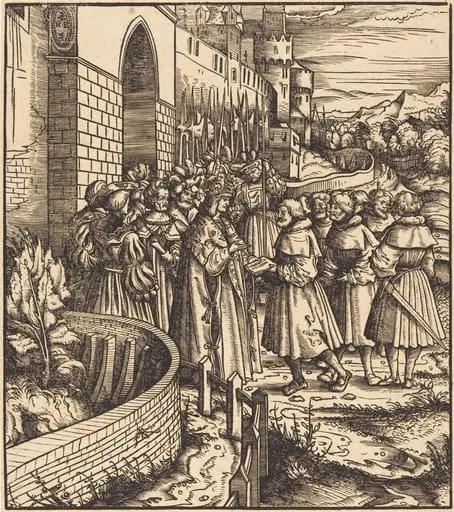 The Swiss Embassy against the Blue King
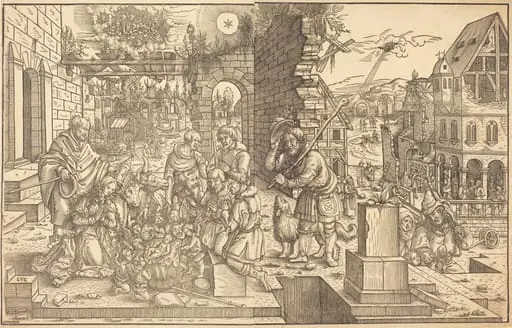 The Adoration of the Shepherds
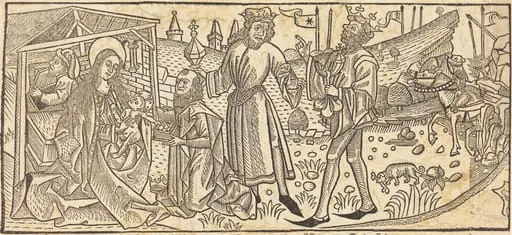 The Adoration of the Magi
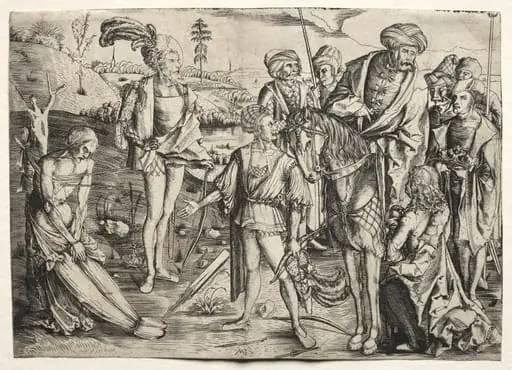 The Story of the Dead King and his Three Sons
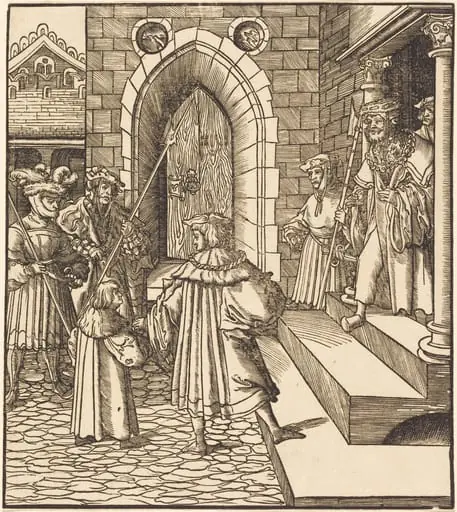 Three Men and a Boy in the Court of a Castle, to the Right Three Men on a Staircase
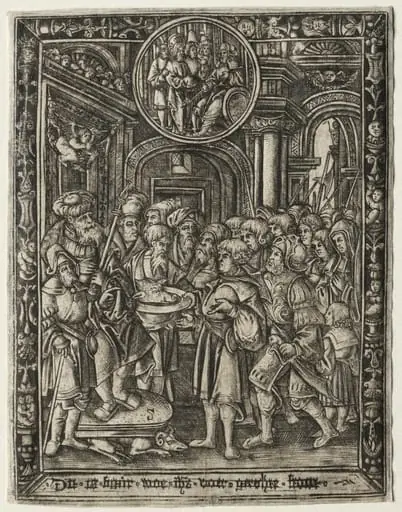 The Old King on His Throne
 The Ball
 The Massacre of the Innocents
 Christ Tells His Disciples of the Last Judgment