Artwork
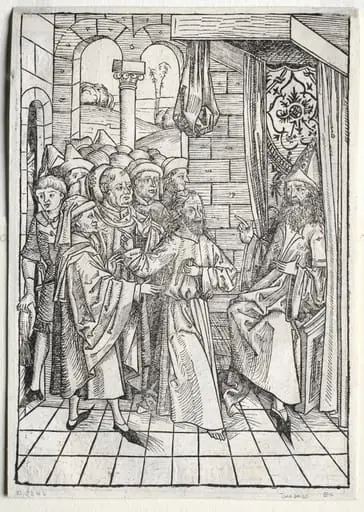
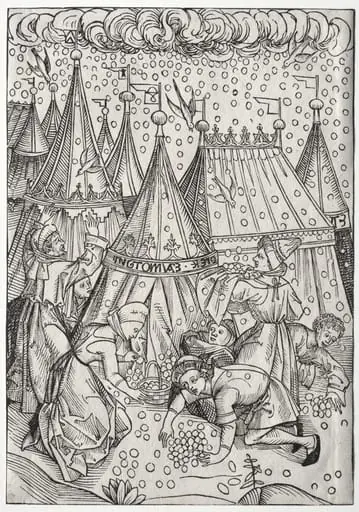
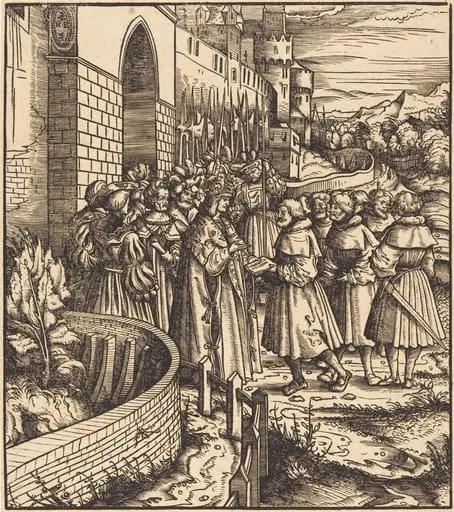
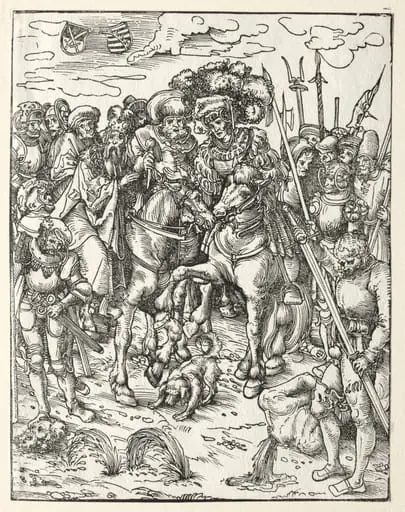
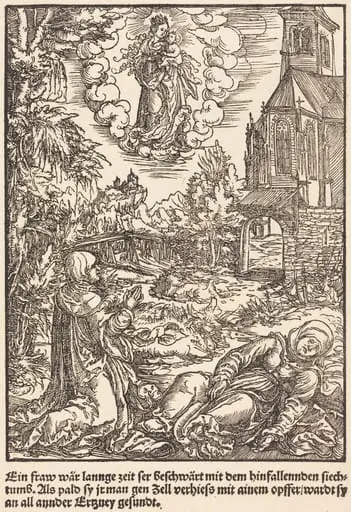
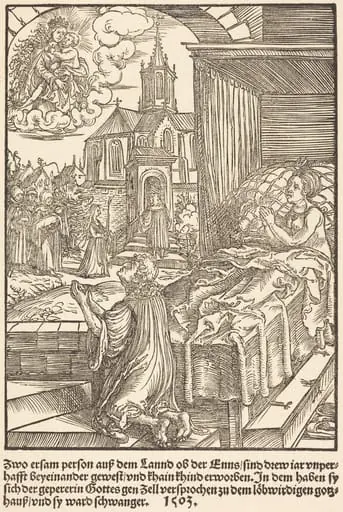
Der Schatzbehalter: The Return of Tobias to Tobit; The Arrival of Tobias' Wife; The Angel Bringing Food and Drink to Elijah in the Desert
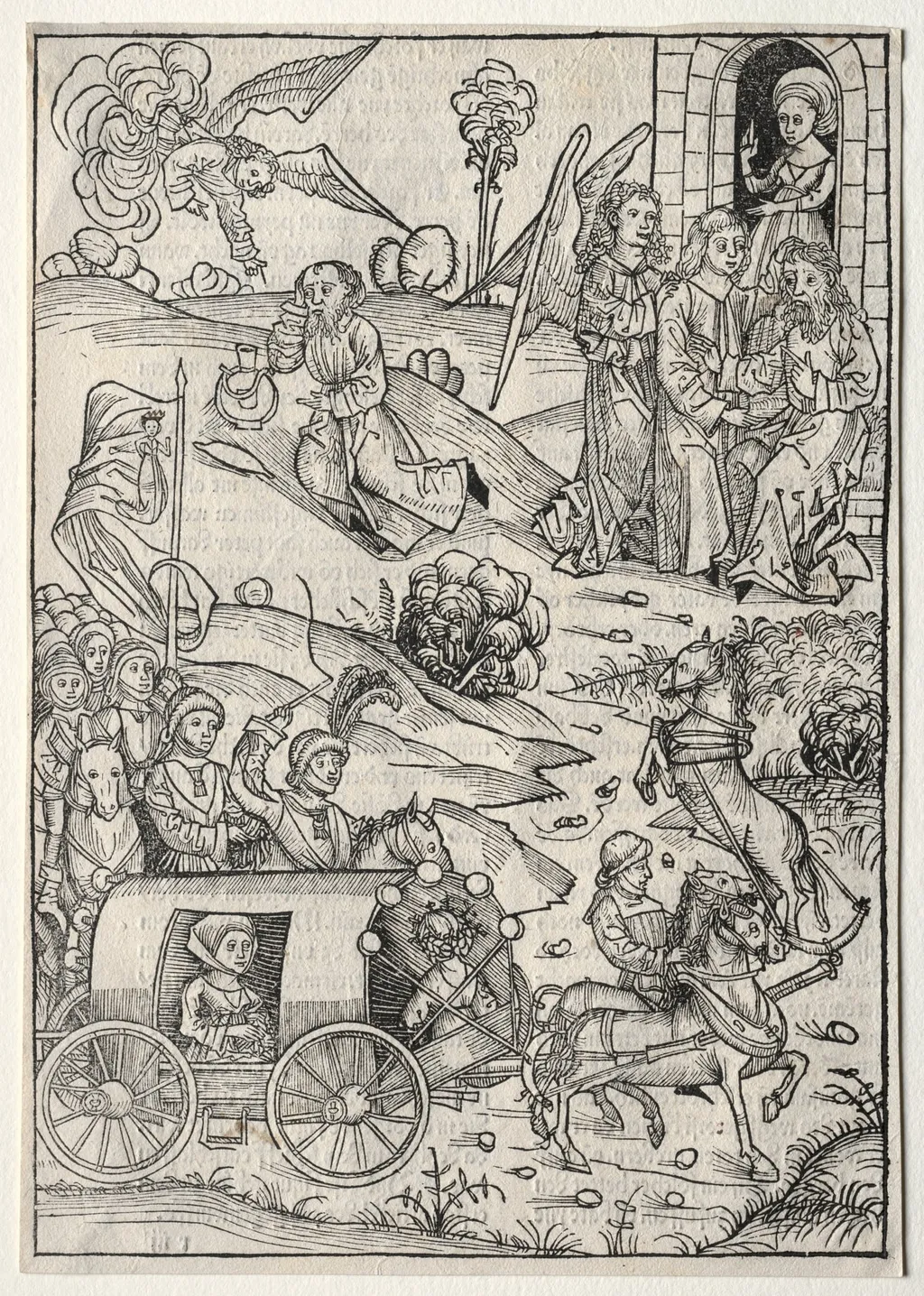
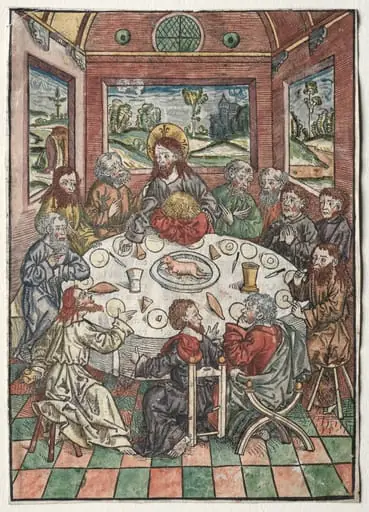
Der Schatzbehalter: The Return of Tobias to Tobit; The Arrival of Tobias' Wife; The Angel Bringing Food and Drink to Elijah in the Desert is a print by the Renaissance artist Michael Wolgemut. It dates from 1491 and is held in the collection of the Cleveland Museum of Art.
About this work
Overview
Wolgemut, known for his large workshop and influence on young artists like Albrecht Dürer, specialized in religious imagery for printed texts.
Created in 1491 by Michael Wolgemut of Nuremberg, this woodcut is one of many illustrations produced for a devotional book. Wolgemut, known for his large workshop and influence on young artists like Albrecht Dürer, specialized in religious imagery for printed texts. The print combines three distinct biblical episodes into a single composition, reflecting the demand for compact, narrative-rich visuals in late 15th-century Germany.
Subject & Meaning
The scene merges three stories from scripture: Tobias’s return home with his wife and the angel Raphael, the angel’s provision of food to the prophet Elijah in the desert, and the moment Tobias retrieves the fish’s heart and gall. Each episode is rendered with symbolic cues—halos, angels, and specific gestures—to guide viewers familiar with biblical narratives. The compression of events suggests a didactic purpose, reinforcing faith through layered storytelling.
Technique & Style
Wolgemut employed sharp, incised lines typical of German woodcut craftsmanship, creating dense, rhythmic patterns to define figures and architecture. The composition is tightly packed, with overlapping forms and minimal spatial depth. Details like folds of fabric, architectural elements, and angelic wings are rendered with precision, emphasizing clarity over naturalism. This approach prioritized legibility and symbolic clarity for a devotional audience.
History & Provenance
The print was made as part of a series for a printed devotional volume, likely commissioned by a Nuremberg publisher. Wolgemut’s workshop produced hundreds of such woodcuts for religious texts, which circulated widely across German-speaking regions. While the original book’s full set is rare, individual sheets survive in major European collections, attesting to the print’s early popularity and the workshop’s commercial reach.
Context
In the decades before the Reformation, illustrated religious books were vital tools for teaching scripture to lay audiences. Wolgemut’s work emerged within a thriving print culture centered in Nuremberg, where artists collaborated with printers to meet growing demand. His integration of multiple biblical scenes reflects a tradition of visual exegesis, where complex theological narratives were made accessible through compact, symbolic imagery.
Legacy
Wolgemut’s approach to narrative compression influenced later printmakers, including his apprentice Dürer, who refined similar techniques with greater spatial coherence. While his style was eventually superseded by Renaissance ideals of perspective and naturalism, his woodcuts remain important examples of how medieval visual storytelling adapted to the new medium of print, bridging manuscript illumination and early modern publishing.
Artist & collection
Artist
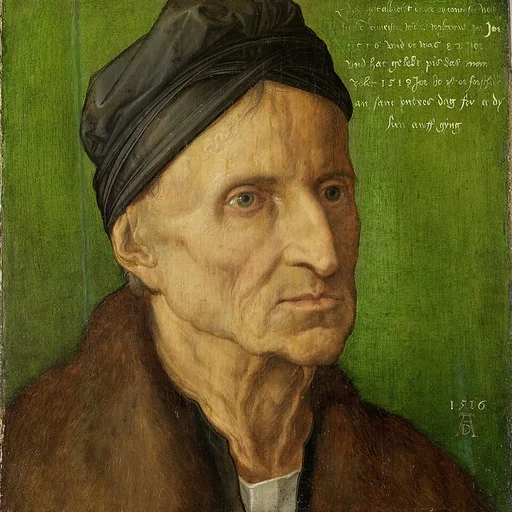
Michael Wolgemut (formerly spelt Wohlgemuth; 1434 – 30 November 1519) was a German painter and printmaker, who ran a workshop in Nuremberg.