Artwork
Judith with the Head of Holifernes
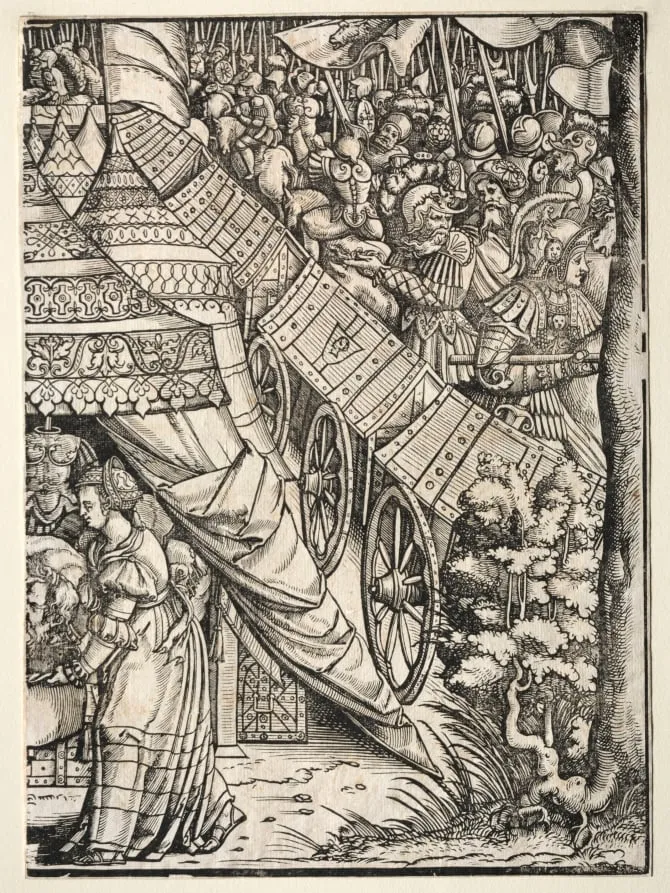
Judith with the Head of Holifernes is a print by the Renaissance artist Unknown. It dates from 1504 and is held in the collection of the Cleveland Museum of Art.
About this work
Overview
This black-and-white print depicts a moment from the biblical story of Judith, capturing her after she beheaded the Assyrian general Holofernes.
This black-and-white print depicts a moment from the biblical story of Judith, capturing her after she beheaded the Assyrian general Holofernes. The composition centers on Judith, dressed in a flowing garment, holding a wrapped head, while a servant carries the severed head on a tray. A distant fortress looms behind them, anchoring the scene in a narrative of siege and deliverance. The image balances quiet composure with violent consequence within a compact frame.
Subject & Meaning
Judith, a widow from the Book of Judith, is shown as a figure of moral resolve, having saved her people by deceiving and killing the enemy commander Holofernes. The wrapped head symbolizes both triumph and the cost of violence. Her calm expression contrasts with the gruesome object she carries, suggesting inner strength and divine purpose. The servant’s presence underscores the act’s secrecy and the weight of its consequence.
Technique & Style
Rendered in monochrome, the print uses sharp contrasts and fine linework to define form and mood. The artist compresses spatial depth, placing figures close to the foreground while suggesting distance through simplified architecture. Textural details in fabric and hair are rendered with precision, enhancing the emotional tension. The lack of color focuses attention on gesture, posture, and symbolic contrast rather than visual spectacle.
History & Provenance
The print likely originates from the late Renaissance or early Baroque period, when biblical heroines like Judith were popular subjects in Northern European printmaking. It may have been produced as part of a series illustrating moral or religious narratives for private collectors. Its survival suggests it was valued for its narrative clarity and technical skill, though its specific maker and early ownership remain undocumented.
Context
During the 16th and 17th centuries, prints of Judith were widely circulated as symbols of virtue overcoming tyranny, resonating in regions affected by religious conflict. The image aligned with Protestant and Catholic interests alike, offering a model of righteous female agency. Its compact format made it accessible for domestic devotion or moral instruction, bridging sacred text and visual culture.
Legacy
This print contributes to a broader tradition of depicting Judith as a complex emblem of courage and sacrifice. Its restrained aesthetic influenced later interpretations in painting and print, emphasizing psychological depth over spectacle. Though not attributed to a major name, it reflects the widespread dissemination of biblical narratives through accessible media, shaping public perceptions of heroism for generations.
Artist & collection

 Domestic Scene
 Giacomo and Cardinal Marco, investing Andrea, Abbot of San Zeno, with his Benefice
 The Nymph of Fontainebleau
 Portrait of a Woman
 Madonna and Child with Saints in the Enclosed Garden
 Venus and Minerva
 Family Group of Four on Sofa
 Wall painting from Room H of the Villa of P. Fannius Synistor at Boscoreale
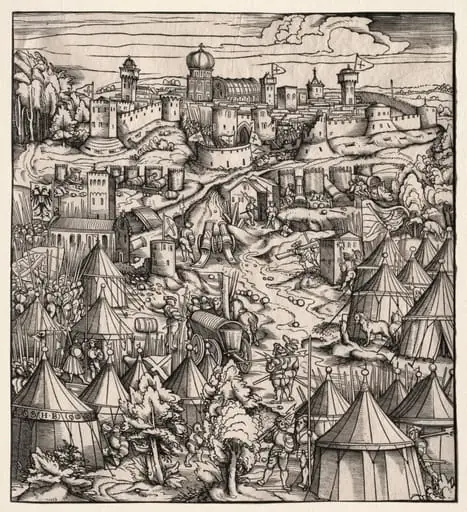 Der Weisskunig (The White King): The Siege of Padua
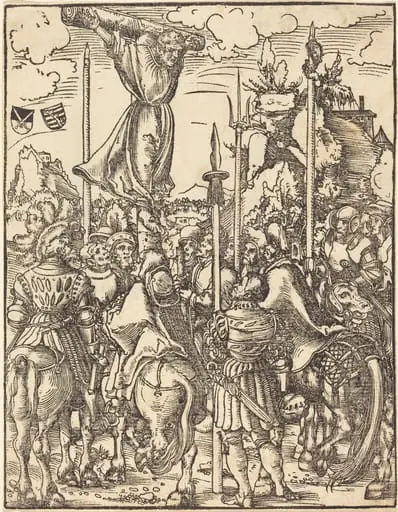 Saint Philip
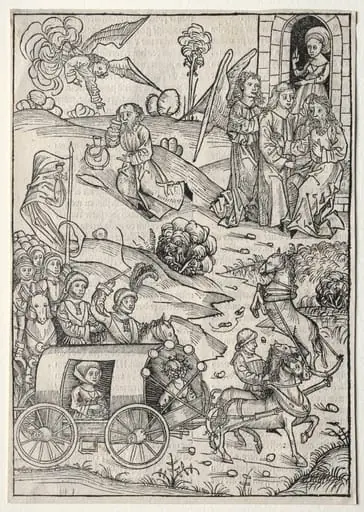 Der Schatzbehalter: The Return of Tobias to Tobit; The Arrival of Tobias' Wife; The Angel Bringing Food and Drink to Elijah in the Desert
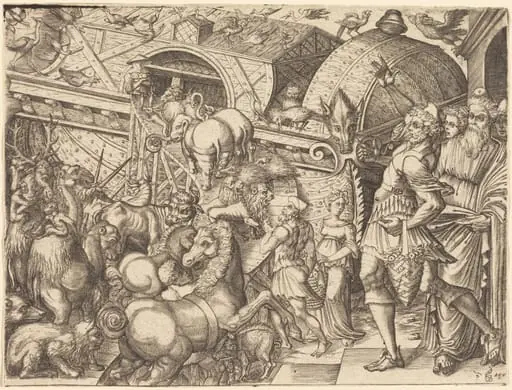 Noah's Ark
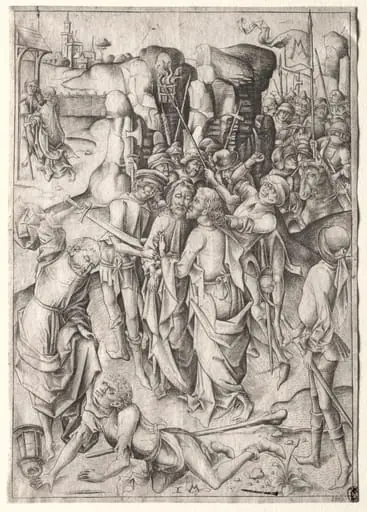 The Passion: Christ Taken Captive
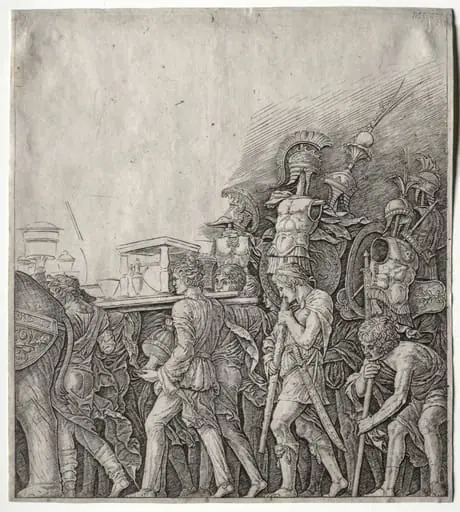 The Triumphs of Caesar: The Corselet Bearers
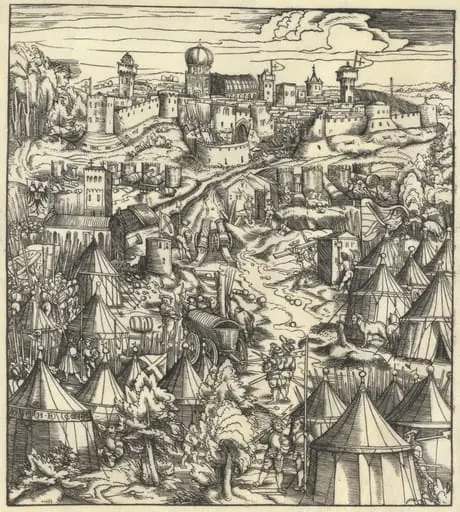 The Battle of Padua
 The Massacre of the Innocents
 Christ Tells His Disciples of the Last Judgment
 The Triumph of Caesar: Soldiers Carrying Trophies
 Army Train and Death
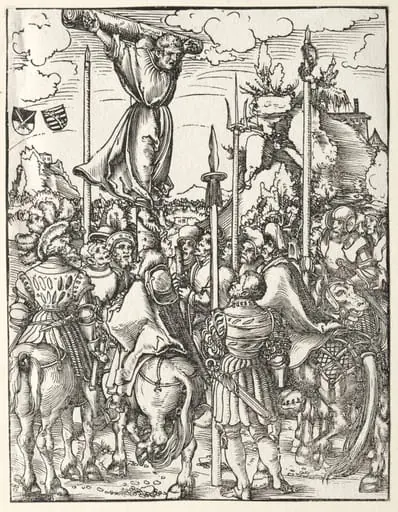 Martyrdom of St. Philip